
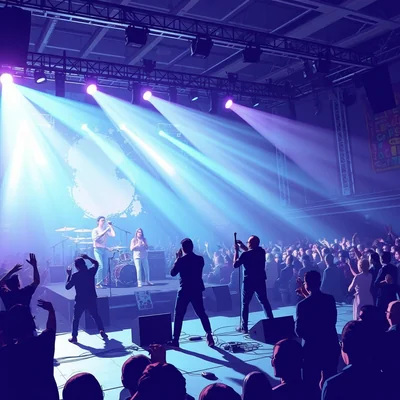
Pittsburgh is a city of steep hills, deep river valleys, and a musical identity forged in the same fires that made it the steel capital of the world. Sitting at the Point — the confluence of the Allegheny, Monongahela, and Ohio Rivers in southwestern Pennsylvania — the city holds roughly 304,000 residents within its borders and more than 2.4 million across the broader metro area. It is a city of 90 distinct neighborhoods carved across a dramatically uneven topography, connected by more bridges than any other city in the world. The mills that defined Pittsburgh for more than a century are gone, replaced by hospitals, universities, and technology companies — Carnegie Mellon University, University of Pittsburgh, Duquesne University, and UPMC anchor an economy that has reinvented itself from heavy industry to healthcare and higher education. But the music that grew from those mill neighborhoods — the jazz clubs of the Hill District, the Croatian and Polish polka halls of the South Side, the hip-hop streets of the North Side — never stopped.
A brief history
The land at the Forks of the Ohio was the strategic prize of the continent's interior waterways, contested by the French, British, and Haudenosaunee (Iroquois) nations through the mid-18th century. Fort Pitt, built by the British in 1761 on the site of the French Fort Duquesne, established the name "Pittsburgh" and the city's role as gateway to the western frontier. The combination of coal deposits in the Appalachian hills and iron ore shipped down the Great Lakes made Pittsburgh the natural birthplace of the American steel industry — Andrew Carnegie's mills in Braddock, Homestead, and Duquesne were the largest in the world by the 1880s. The Homestead Strike of 1892 — the bloody confrontation between Carnegie's Pinkerton agents and the Amalgamated Association of Iron and Steel Workers — remains one of the defining events of American labor history. Waves of immigration from Southern and Eastern Europe — Italians, Poles, Slovaks, Croatians, Ukrainians, Hungarians, and Carpatho-Rusyns — and the Great Migration of African Americans from the South defined the city's neighborhoods and its cultural life through the first half of the 20th century. The collapse of the steel industry in the 1970s and early 1980s devastated the city, driving the population from a peak of 676,000 in 1950 to its current 304,000, but also producing the unemployment and underemployment that would fuel both its music scenes and its film culture.
Music identity
Pittsburgh's most internationally consequential musical legacy is its extraordinary jazz lineage. The Hill District — the densely populated African American neighborhood on the ridgeline above downtown — was the cradle of one of the most concentrated jazz talent pools in American history. Billy Eckstine, born in Pittsburgh in 1914, formed his landmark 1944 big band — arguably the first bebop big band — which included at various points Dizzy Gillespie, Charlie Parker, Miles Davis, Sarah Vaughan, and Art Blakey. Erroll Garner — born on Wylie Avenue in the Hill District in 1921, self-taught and musically illiterate yet one of the most recorded jazz pianists in history — developed his distinctive orchestral stride style in Pittsburgh's clubs before taking it to New York and international stages. Ahmad Jamal — born Frederick Jones in Pittsburgh in 1930 — developed the spacious, rhythmically sophisticated trio format that influenced Miles Davis so profoundly that Davis credited Jamal repeatedly. Art Blakey, the thunderous bebop drummer and founder of the Jazz Messengers who launched the careers of Lee Morgan, Wayne Shorter, Freddie Hubbard, and Keith Jarrett, grew up in Pittsburgh's Hill District. Roy Eldridge, the trumpeter who bridged swing and bebop, was Pittsburgh-born. Mary Lou Williams — the pioneering jazz pianist, arranger, and composer who wrote for Duke Ellington and Benny Goodman — spent her formative years in the Hill District. The Crawford Grill at 2141 Wylie Avenue was the Hill District's legendary jazz room, hosting Eckstine, Garner, Jamal, and every major touring jazz artist from the 1930s through the 1970s.
Pittsburgh's second great contribution is to death metal and extreme metal. Cannibal Corpse was formed in Buffalo but relocated to Tampa; more central to Pittsburgh's metal heritage is the city's role in sustaining and developing the genre through clubs like the Metropol (Millvale) and a fierce DIY scene. Madball, Agnostic Front, and a network of hardcore touring acts treated Pittsburgh as a key mid-Atlantic stop. The city's metal scene runs deep through the South Side and Lawrenceville neighborhoods.
Pittsburgh's 21st-century claim to national attention is its hip-hop scene. Wiz Khalifa — born Cameron Thomaz in Minot, North Dakota, but raised in Pittsburgh's North Side neighborhoods — released Show and Prove (2006) and Kush & OJ (2010) before breaking nationally with "Black and Yellow" (2010), the unofficial Pittsburgh anthem that explicitly name-checked the city's black-and-gold sports identity. Mac Miller — born Malcolm McCormick in the Point Breeze neighborhood — released But My Mackin' Ain't Easy (2007) and built a following through Pittsburgh mixtapes before signing to Rostrum Records (the Pittsburgh-based label founded by Benjy Grinberg that was also home to Wiz Khalifa) and releasing Best Day Ever (2011) and Blue Slide Park (2011), which debuted at number one on the Billboard 200. Rostrum Records is the most important label in Pittsburgh's modern music history, bridging the local hip-hop scene to national distribution in the 2000s and 2010s. Kevin Gates, though Louisiana-based, made Pittsburgh a key touring hub. The broader Pittsburgh hip-hop community runs through the North Side, East Liberty, and Homewood neighborhoods.
Pittsburgh's punk and indie rock scene has been active since the late 1970s. Don Caballero — the instrumental math-rock group formed in Pittsburgh in 1991 — was one of the foundational bands of the post-rock genre, cited as a direct influence on Explosions in the Sky, Tortoise, and dozens of subsequent acts. Chet and the city's hardcore circuit sustained a continuous underground scene through the 1990s and 2000s. The Commonheart — the Pittsburgh soul-rock band — and a vibrant Lawrenceville indie scene represent the contemporary guitar music community.
Donnie Iris — the pop-rock vocalist who recorded "Ah! Leah!" (1980) and "Love Is Like a Rock" (1981) for MCA Records — remains one of the city's most beloved local rock figures, his radio-friendly melodic rock the soundtrack of the steel-mill collapse era. The Pittsburgh Symphony Orchestra at Heinz Hall and the Pittsburgh Opera round out the city's classical and operatic life.
Venues and neighborhoods
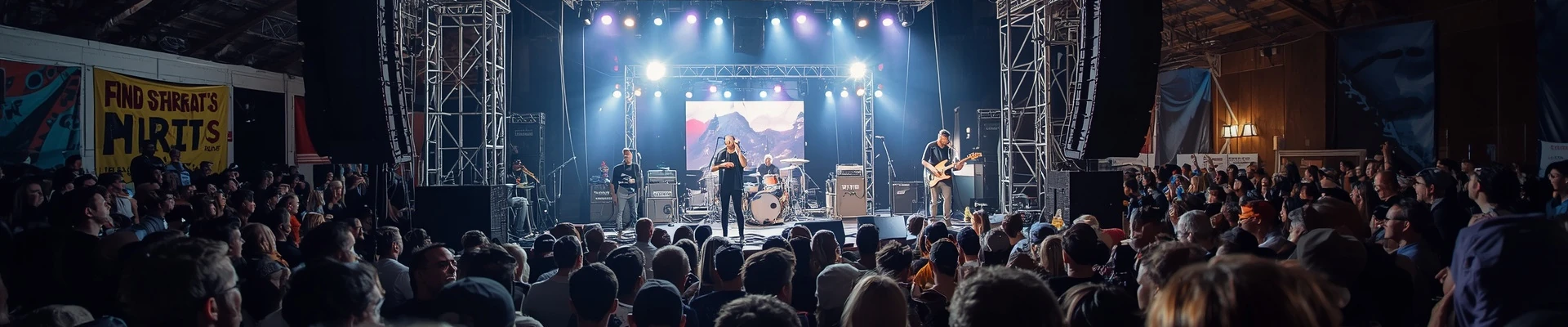
Pittsburgh's venue ecosystem reflects its topography — venues are scattered across neighborhoods rather than concentrated in a single district. The anchor is PPG Paints Arena (the 18,387-capacity downtown arena opened in 1999, home of the Penguins, hosting the biggest touring rock, country, pop, and hip-hop shows). The midsize tier includes Stage AE (the 5,500-capacity indoor/outdoor venue on the North Shore of the Allegheny River that anchors the city's midsize concert market), The Roxian Theatre (the 1,000-capacity McKees Rocks room), Carnegie of Homestead Music Hall (the historic 1,800-seat hall in Munhall, part of the Carnegie Library system built by Andrew Carnegie), and Petersen Events Center (the University of Pittsburgh's 12,508-capacity arena that programs major acts beyond just collegiate sports).
The club layer runs through multiple neighborhoods. The South Side (along East Carson Street) is the city's most concentrated entertainment district, with Rex Theater (the 650-capacity South Side venue that has hosted indie, punk, and metal tours for decades), Cattivo, and a strip of bars with live music programming. Lawrenceville on Butler Street has become the city's hippest neighborhood, home to Spirit (the converted church that is Pittsburgh's premier underground music venue), WNEP (New Experimental Playhouse), and a dense cluster of bars with music. Bloomfield and Garfield anchor the Italian-American and Eastern European folk music traditions. The Hill District's Crawford Grill closed in the early 2000s, but the neighborhood's jazz legacy is being reclaimed by the August Wilson African American Cultural Center.
Festivals and signature events
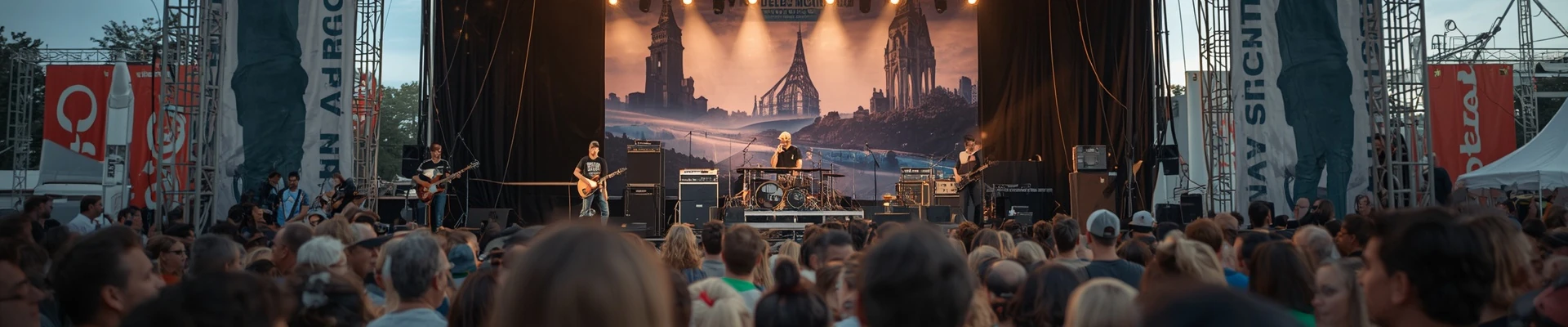
Pittsburgh's festival calendar reflects its musical range. Pittsburgh International Jazz Festival (the premier summer jazz event, honoring the city's extraordinary jazz heritage) has programmed Herbie Hancock, Wynton Marsalis, Esperanza Spalding, and dozens of major jazz artists. Three Rivers Arts Festival (the Pittsburgh Cultural Trust's massive June outdoor festival in Gateway Center, running since 1960 with music, visual art, and performance) draws 500,000+ over 11 days. Thrival Innovation + Music Festival (which programmed major indie and electronic acts before concluding in 2019) was the city's most ambitious attempt at a destination music festival. Pittsburgh Folk Festival (one of the oldest in America, running since 1956 and celebrating the city's extraordinary immigrant heritage through music and food) takes place annually at the David L. Lawrence Convention Center. Pittsburgh Blues Festival programs regional and national blues acts in Point State Park. Pittsburgh Pridefest programs local and national LGBTQ+ acts. SteelStacks in nearby Bethlehem — the massive arts campus built in the shadow of the Bethlehem Steel blast furnaces — programs Musikfest (one of the largest free music festivals in America, drawing 1.1 million each August) within easy reach of the Pittsburgh metro.
The city's Polish, Slovak, Croatian, and Ukrainian communities sustain polka and folk music traditions through ethnic clubs and social halls across the South Side Slopes, Brentwood, and Baldwin neighborhoods.
What ties it all together
Pittsburgh's musical soul is inseparable from its working-class identity. The Hill District's jazz giants — Garner, Jamal, Eckstine, Blakey — came from families who migrated from the South to work the mills and found their genius in cramped clubs along Wylie Avenue. Wiz Khalifa's "Black and Yellow" named the city's sports colors but also its cultural code: loyalty to a place that has always had to prove itself against bigger, wealthier cities. Mac Miller's Blue Slide Park was named after a real park in Point Breeze where he grew up — the same hyperlocal specificity that drove the jazz giants. Pittsburgh doesn't produce music that aspires to be somewhere else. It produces music that is unapologetically about being here, on these hills, at these river confluences, with these people.