
Charleston, South Carolina
Charleston sits at the confluence of the Ashley and Cooper rivers where they empty into a broad harbor that faces the Atlantic, roughly halfway down the South Carolina coast. The city occupies a low-lying peninsula — the "peninsula city" or simply "the peninsula" to locals — bounded by marshland, tidal creeks, and a chain of barrier islands. The climate is subtropical: long, humid summers that breed outdoor music culture and mild winters that keep the festival calendar running nearly year-round. With a metro population that exceeds 800,000, Charleston functions as the region's economic capital even though the city limits enclose only about 132,000 people, most of them packed onto that distinctive peninsula of antebellum townhouses, cobblestone alleys, and centuries-old church steeples.
The economy is layered: a busy container port, Boeing's 787 assembly plant, a large military footprint (Joint Base Charleston), a massive tourism industry, and a booming technology and life-sciences sector that has accelerated since 2010. That economic diversity shapes the music scene — there is money for ticketed concerts and boutique venues, a large student population from the College of Charleston and The Citadel, and a constant influx of tourists willing to spend on entertainment.
Musical Roots: The Gullah Tradition and the Charleston Dance
No single city in the American South carries a heavier musical origin story than Charleston. The Gullah Geechee people — descendants of enslaved West and Central Africans who retained remarkable cultural continuity across the Sea Islands of South Carolina and Georgia — preserved African rhythmic and melodic traditions that diffused through American vernacular music for centuries. Ring shouts, praise house singing, the spiritual repertoire, and the syncopated percussion patterns that Gullah communities maintained are traceable antecedents of the blues, gospel, and ultimately rock and roll itself.
The city's most internationally recognized export is the Charleston, the 1920s jazz dance that swept American and European ballrooms. The song was written by James P. Johnson and introduced in the 1923 Broadway show Runnin' Wild, though the dance step itself was already circulating in Black communities along the Carolina coast before Broadway took notice. The Charleston dance became a symbol of the Jazz Age and remains one of the most globally disseminated American rhythmic inventions of the twentieth century.
DeFord Bailey, the harmonica virtuoso who became the Grand Ole Opry's first Black star, spent formative years in the region. The gospel and spiritual traditions that fed into the broader African American musical canon ran deep in the area's AME churches — the Emanuel African Methodist Episcopal Church on Calhoun Street, Mother Emanuel, is among the oldest AME congregations in the South and has long served as a sanctuary for community song.
The Blues, Jazz, and Post-War Decades
Charleston was never Nashville or New Orleans in terms of commercial recording infrastructure, but it supported a lively African American entertainment district through the mid-twentieth century. King Street and sections of Meeting Street hosted Black-owned clubs and juke joints where blues and jazz acts performed for local and touring audiences. The Mosquito Fleet — a working waterfront culture that connected the peninsula to the Sea Islands — carried musical traditions back and forth across the harbor.
Regional bluesmen circulated through the Lowcountry, and the proximity to Georgia meant the Charleston area absorbed influences from the Atlanta and Savannah scenes. By the 1960s, local soul and R&B bands were active, playing fraternity parties and beach clubs along the Grand Strand — the coastal strip stretching toward Myrtle Beach that became the home of beach music, a laid-back, shuffled R&B style uniquely South Carolinian in character.
Beach Music and the Shag
Beach music and its signature dance, the shag, occupy a corner of American regional culture almost entirely unknown outside the Carolinas. The style draws on 1950s and '60s R&B — shuffled rhythms, walking bass lines, horn sections — and the shag is the official state dance of South Carolina. Charleston and Myrtle Beach are the twin capitals of this scene. Bands like The Embers, Band of Oz, and The Tams (the latter out of Atlanta but beloved here) built careers playing beach music circuits, and clubs like The Windjammer on Isle of Palms kept the tradition alive across generations.
The Modern Rock Era
The 1990s and 2000s saw Charleston develop a credible alternative and indie rock scene anchored by a cluster of mid-size clubs. The Music Farm, opened in 1991 on Columbus Street, became the city's flagship indie venue — a former fertilizer warehouse that hosted Widespread Panic, Hootie and the Blowfish (the Columbia band that conquered the mid-1990s), Widespread Panic again, and hundreds of touring acts who treated it as a southern anchor date. The Music Farm burned down in a 2023 fire, a loss that registered as a genuine cultural wound for the local scene.
Hootie and the Blowfish are worth dwelling on even though they are properly a Columbia, SC band: their regular presence in Charleston and deep ties to the Lowcountry collegiate circuit made them part of the sonic fabric of the region. Their 1994 debut Cracked Rear View became one of the best-selling albums of the decade, and the band's success opened ears to what the South Carolina college-bar circuit could produce.
Charleston's own artists include Shovels & Rope — the husband-and-wife duo of Cary Ann Hearst and Michael Trent, who record and tour out of Charleston and built a national audience for their gritty, roots-inflected folk and country-rock. Their 2012 self-titled LP and 2014's O' Be Joyful earned widespread critical praise and positioned Charleston as a viable home for artists who didn't need to relocate to Nashville or New York. The duo runs the High Water Festival, which brings national acts to the Charleston waterfront every April.
Brave Baby, Susto, and Dead 27s represent a younger cohort of Charleston indie and alt-country acts with national profile. Susto in particular has earned college-radio traction with their psychedelic Americana, drawing on the region's gothic landscape — the moss-draped live oaks, the tidal marshes, the crumbling plantation sites — for imagery and atmosphere.
Venues and Neighborhoods
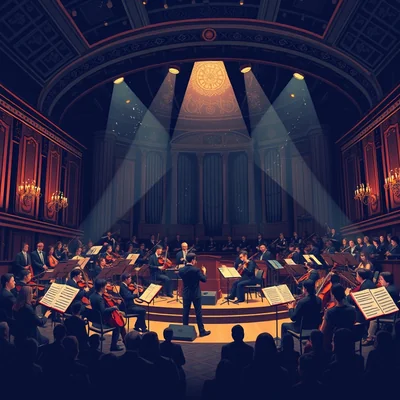
North Charleston hosts the region's arena-level entertainment. The North Charleston Coliseum (capacity ~13,000) handles major touring acts — the kind of stadium shows that require a parking lot the peninsula cannot accommodate. The attached Performing Arts Center seats about 2,300 and handles Broadway touring productions and orchestral performances by the Charleston Symphony Orchestra.
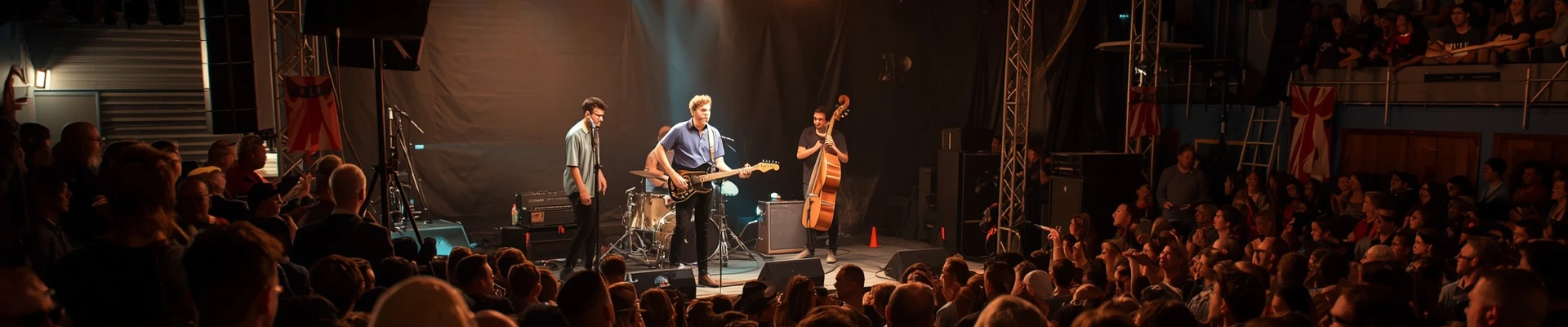
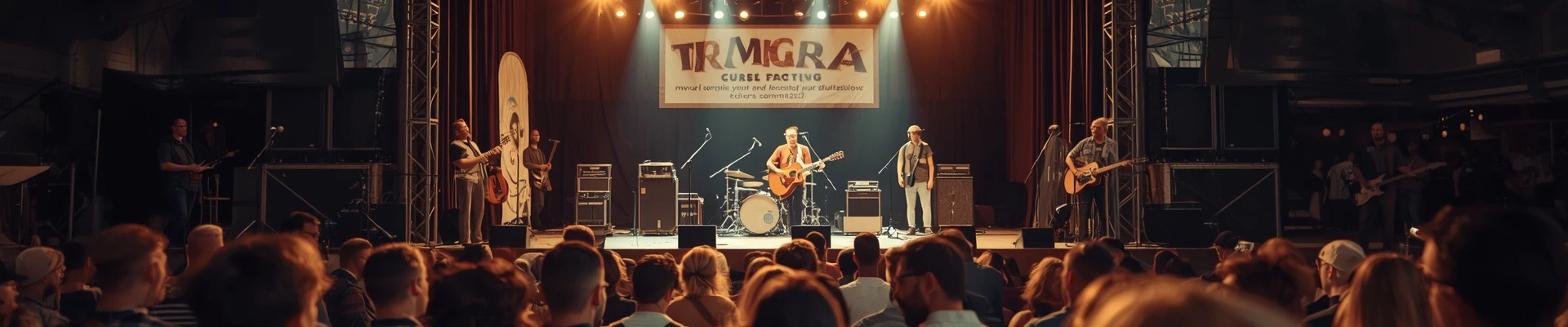
On the peninsula, the live music ecosystem runs along Upper King Street — a corridor that has gentrified rapidly since 2010 but retains a concentration of bars, restaurants, and small venues. The Pour House on James Island (just across the Ashley River) is a beloved mid-size room that books regional and national touring acts in a comfortable 500-capacity setting. The Charleston Pour House is a genuine community anchor — covered outdoor stage, relaxed vibe, the kind of place where acts as varied as Blitzen Trapper, Caroline Rose, and local favorites share the calendar.
The Historic Charleston Music Hall on Meeting Street, a restored 1930s-era space seating around 950, hosts folk, country, classical, and special events in a room that trades on its architectural dignity. The Riviera Theater (also on upper King) is a more intimate space with 600-capacity and a rock and indie booking philosophy.
The Commodore on Meeting Street serves as a reliable club-level room, and Tin Roof books beach music and country acts. The Charleston Jazz nonprofit runs the Charleston Jazz Festival in February, anchored at Gaillard Center, and advocates for jazz year-round.
The Gaillard Center — a 1,800-seat performing arts hall that opened after an extensive renovation in 2015 — is the city's premier mid-size concert hall. Named for J. Palmer Gaillard, it hosts the Charleston Symphony, major touring performers, and community events, and its riverfront location in the upper peninsula has become a gathering point.
Festivals
The Spoleto Festival USA is Charleston's most internationally prestigious cultural event — a 17-day performing arts marathon held every May–June. Founded in 1977 by composer Gian Carlo Menotti as the American counterpart to the Festival of Two Worlds in Spoleto, Italy, Spoleto USA fills the city's churches, theaters, and outdoor spaces with opera, theater, chamber music, jazz, and dance. While not strictly a rock festival, Spoleto shapes Charleston's identity as a serious arts destination and brings an international audience to venues like the Dock Street Theatre, Cathedral of St. Luke and St. Paul, and the College of Charleston's outdoor Cistern Yard.
Piccolo Spoleto, running concurrently with Spoleto USA and organized by the city itself, features free and low-cost performances throughout the peninsula, including outdoor concerts in Marion Square and neighborhood parks.
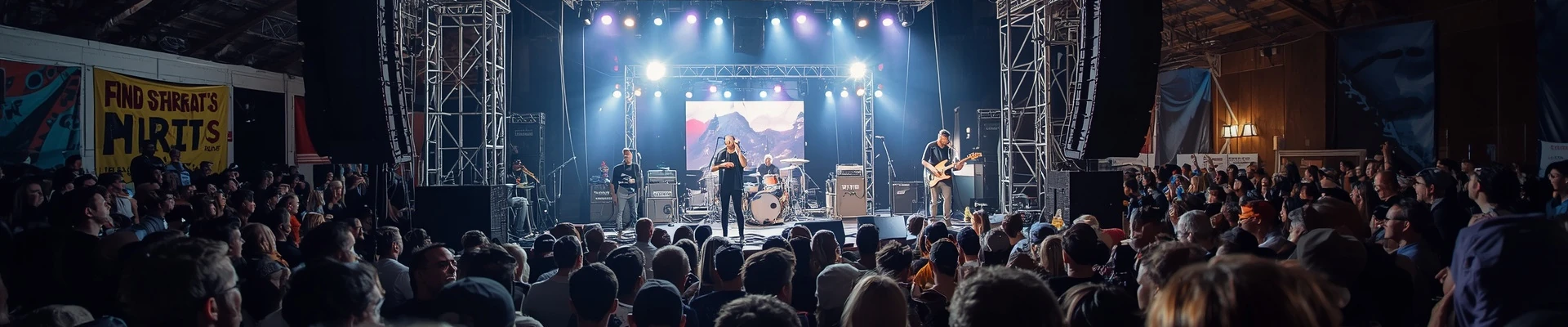
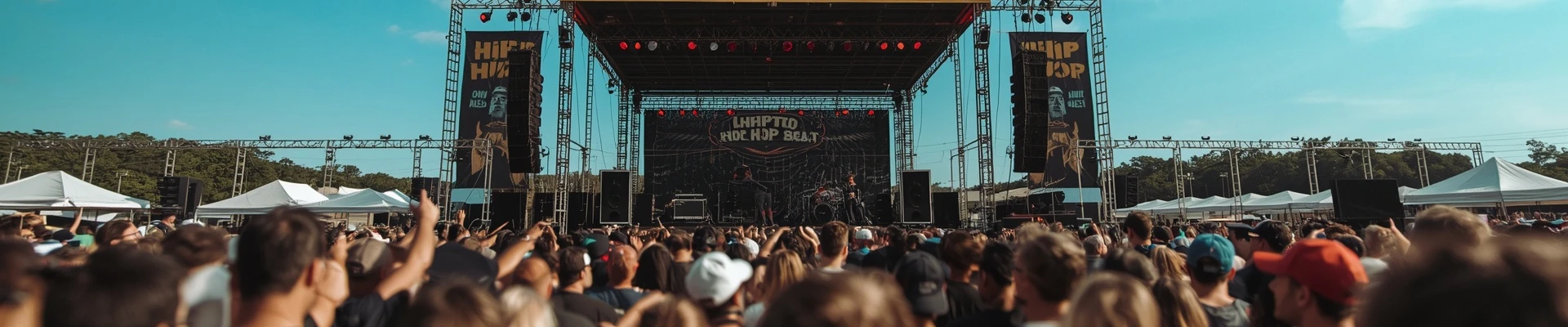
The High Water Festival, co-curated by Shovels & Rope, is an Americana and roots-focused outdoor festival held at Riverfront Park in North Charleston each April. It has drawn Nathaniel Rateliff, Jason Isbell, Tanya Tucker, and other roots luminaries, and has cemented Charleston's credibility as an Americana city.
MOJA Arts Festival celebrates African American and Caribbean arts every fall, with music, dance, visual art, and literary events that honor the Gullah Geechee heritage and the city's African diaspora communities. It has run since 1984 and remains a key counterweight to the city's dominant "antebellum tourism" narrative.
What Ties It All Together
Charleston's defining musical signature is contradiction held in suspension: a city built on the labor of enslaved people who gave the world the Charleston dance, the shag, and a river of spiritual song; a city that now draws heritage tourists to plantation tours while African American artists and Gullah Geechee cultural advocates work to tell a more complete story. The music that has emerged here — from the ring shouts of the Sea Islands to the Americana of Shovels & Rope, from the beach music shuffle at the Windjammer to the chamber compositions premiered at Spoleto — carries that tension productively. Charleston doesn't have a monolithic sound the way Detroit has techno or Nashville has country. What it has is depth of memory and a present-day scene energetic enough to transmit that memory in new forms.