
Columbia is the capital city and most populous city of South Carolina, sitting at the geographic center of the state where the Broad, Saluda, and Congaree Rivers converge to form the Congaree River — a confluence that gives the city its foundational character. With roughly 142,000 residents inside the city limits and nearly 900,000 across the Columbia Metropolitan Statistical Area, Columbia anchors the Midlands region of South Carolina, equidistant between the coastal lowcountry (Charleston is about ninety miles to the southeast) and the Upstate foothills (Greenville-Spartanburg is roughly ninety miles to the northwest). The city's economy is dominated by state government, the University of South Carolina (enrollment over 35,000, the largest university in the state), and Fort Jackson — the largest and most active Initial Entry Training base in the United States Army, processing approximately 50,000 soldiers per year. Columbia's identity is one of institutional permanence anchored by the State House dome and the horseshoe of the USC campus, cut through by a music scene that has consistently punched above its weight.
A brief history
The site was chosen as South Carolina's capital in 1786, deliberately located in the state's interior to balance the coastal wealth of Charleston and the growing Upstate population. The original grid plan — a precise two-mile square of broad, named streets — still defines downtown Columbia's bones. The city grew steadily through the antebellum period as a planter-class inland capital and university town. General William T. Sherman's Union Army occupied and largely burned Columbia in February 1865 — the cause of the fire remains disputed between Union and Confederate accounts — leaving the city's postwar rebuilding as a defining chapter in its history. The South Carolina State House, begun in 1851, carries bronze stars on its exterior walls marking where Union artillery shells struck the still-unfinished building. Through Reconstruction, the Jim Crow era, and the Civil Rights movement, Columbia's dual character — capital of a state with a complicated racial history and home of a major research university with an activist student body — shaped its social and musical life in equal measure.
Music identity
Columbia's most internationally recognized musical contribution arrived from an unlikely direction: four University of South Carolina students who met in the early 1980s and built a sound so warmly received they became a phenomenon. Hootie & the Blowfish — Darius Rucker (lead vocals), Mark Bryan (guitar), Dean Felber (bass), and Jim Sonefeld (drums) — formed at USC in 1986, spent years building a following on the Southeast bar circuit, and released Cracked Rear View in 1994. It sold over 21 million copies in the United States alone, making it one of the best-selling debut albums in American history, and it was recorded at a time when Columbia's bar scene at Five Points and along Gervais Street was the laboratory for their sound. The band's Southern rock-inflected alternative pop made Columbia the unexpected home of a mainstream breakthrough that defined mid-1990s adult alternative radio. Rucker later launched a successful country solo career, further deepening Columbia's country connections.
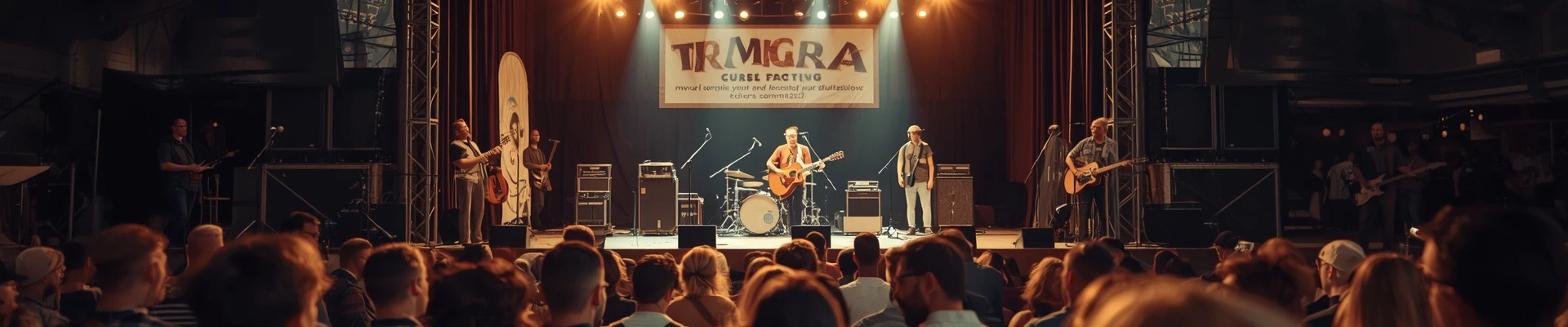
Beneath the Hootie story, Columbia built a genuine punk and alternative underground through the 1980s and 1990s. The Five Points neighborhood — centered on the intersection of Harden, Blossom, and Greene Streets adjacent to the USC campus — functioned as the city's music incubator, with bars, clubs, and venues feeding a circuit that connected to Athens, Charlotte, and Raleigh. Group Therapy on Harden Street was the central punk and alternative venue through much of the 1990s, hosting national touring acts alongside local bands. The city's proximity to Chapel Hill and Athens meant regular cross-pollination with both the North Carolina indie scene and the Georgia college-rock world.
Columbia's hip-hop scene developed largely out of the public view of coastal markets but with genuine substance. Lil Jon (born Jonathan Smith in Atlanta but raised partly in Columbia) is the most globally prominent figure with direct Columbia connections — his crunk style drew heavily from South Carolina and Georgia club culture. The city produced a generation of Southern rap and trap artists in the 2000s and 2010s, including Scotty ATL, who spent formative years in Columbia before building his Atlanta career. Local Columbia artists including Wax, Rapsody (North Carolina-rooted but with significant South Carolina ties), and a cluster of DIY hip-hop labels operating out of Northeast Columbia and West Columbia kept the scene active through lean commercial years.
The city has a strong blues and gospel tradition running through the historically African American Waverly and Eau Claire neighborhoods, with connections to the broader Piedmont blues tradition. Booker T. Washington High School produced musicians who fed into the regional jazz and blues circuits of the mid-20th century. The USC School of Music and the Koger Center for the Arts anchor a classical music and opera presence that is significant for a city of Columbia's size.
Columbia's country and Southern rock connections are deep. The city sits in a region that claims both the Appalachian influence of the Upstate and the Gospel-soaked traditions of the coastal lowcountry, and the Five Points bar scene has always programmed a mixture of rock, country, and Americana alongside its alternative roster. Edwin McCain (South Carolina-raised, whose ballads "I'll Be" and "I Could Not Ask for More" became late-1990s staples) built his base on the Columbia-to-Charleston bar circuit.
Venues and neighborhoods
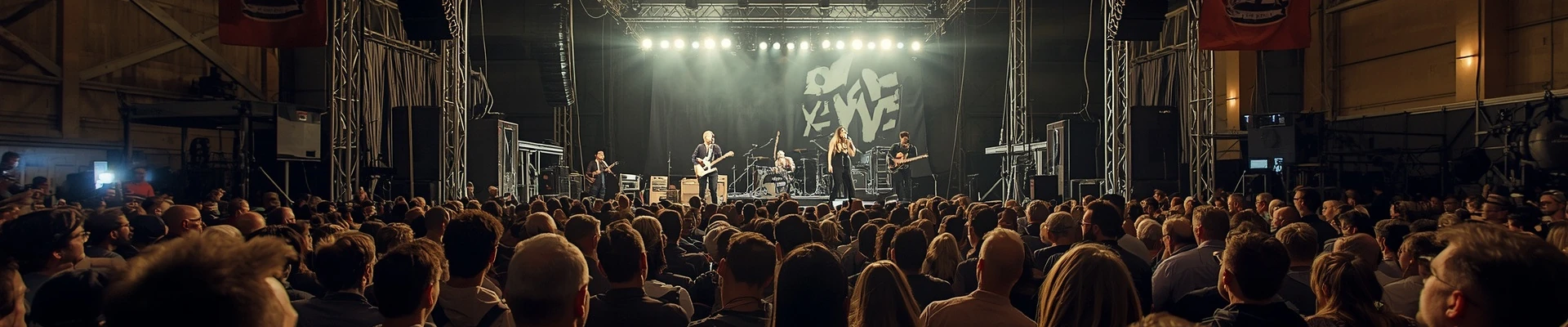
The venue geography has shifted considerably over the decades but retains a core corridor. Township Auditorium — the 3,200-capacity city-owned venue built in 1929 on Taylor Street — is Columbia's historic flagship indoor space, hosting everything from classical concerts to major touring rock and hip-hop. The Colonial Life Arena (seating 18,000, on the USC campus, opened in 2002) handles arena-scale shows and Gamecocks basketball. The Koger Center for the Arts (2,257 seats, USC) programs orchestral, opera, dance, and major touring performances.
At the mid-size and club level, the Music Farm Columbia (on Assembly Street, part of the Southeast Music Farm chain) hosts 1,000-capacity touring shows. New Brookland Tavern in West Columbia (across the Congaree from downtown) is the city's essential DIY and punk venue, running for over two decades and remaining one of the few small venues in the Southeast with a genuine commitment to underground touring acts. Tin Roof on Assembly Street programs country, rock, and cover bands in a reliable bar-venue format. The Senate anchors the electronic music and DJ scene. Conundrum Music Hall operates as an intimate all-ages space. The Five Points corridor — Delaney's, Art Bar (the city's longest-running alternative bar, famous for its eclectic décor), and a rotating cast of bars and small venues — remains the foundational scene geography even as development has pushed some clubs out.
West Columbia, across the river on the Cayce/West Columbia side, has emerged as a secondary arts district with the State Farmers Market area, a growing gallery scene, and New Brookland Tavern as its anchor music venue. The Vista — the renovated former warehouse district between Main Street and the Congaree riverfront — has become the primary entertainment district for restaurants and bars with regular live music, though it skews toward cover bands and mainstream programming. Main Street hosts Harbison Theatre and several live music bars. Eau Claire and North Columbia are undergoing revitalization efforts that include community music programming.
Festivals and signature events
Columbia's festival calendar reflects the university town calendar and the city's Southern outdoor-event culture. Indie Grits Film Festival (the annual independent film festival rooted in Southern and DIY culture, held in spring and programming music alongside film) is one of the city's most distinctive cultural events. Famously Hot New Year celebrates New Year's Eve on the Main Street corridor with live music and fireworks. Carowinds in neighboring Charlotte serves as the regional amusement park with summer concert series. Trustus Theatre programs music-adjacent theatrical productions year-round. The USC Gamecock football home season brings 80,000 fans to Williams-Brice Stadium each fall, generating one of the most intense college football atmospheres in the Southeast and driving massive music bookings around game days. Lexington County Peach Festival and the State Fair (one of the largest in the Southeast, drawing 600,000 attendees each October) program stages with regional country and Southern music acts.
The Columbia Museum of Art programs music events in its public spaces. Soda City Market — the Saturday morning farmers market on Main Street — has become a consistent venue for local acoustic and roots music. Congaree National Park, thirty minutes south of the city through old-growth bottomland hardwoods, provides the backdrop for periodic acoustic music events and is one of the country's most underappreciated natural spaces.
Neighborhoods and cultural geography
Columbia's musical geography splits along a few clear axes. The USC campus and Five Points corridor define the college-music scene — from Hootie's mid-1980s rehearsals in dorm rooms to the current generation of indie and alternative acts working the bar circuit. West Columbia anchors the DIY and punk underground through New Brookland Tavern. The Vista anchors mainstream live music and the event-bar scene. Waverly and Eau Claire carry the city's Black musical heritage — gospel, blues, and the hip-hop that grew from those foundations. Forest Acres and the suburban northeast host the city's country and contemporary Christian music scenes.
What ties it all together is the specific energy of a capital-city college town in the American South — where the rhythms of university semesters, legislative sessions, football Saturdays, and military base rotations create an audience that is perpetually transient and perpetually large. Columbia has never become a music-industry capital, but it has consistently produced artists — from Hootie & the Blowfish to Edwin McCain to a generation of Southern hip-hop figures — who built national careers on the foundation of the Five Points bar circuit and the USC crowd's appetite for live music. The Congaree's low banks and the State House dome have provided backdrop for a music scene that is, like the city itself, more consequential than its size suggests.