
Memphis is the second-largest city in Tennessee and the 28th-largest in the United States, with roughly 633,000 residents inside the city limits and more than 1.3 million across the surrounding metropolitan area, which spans into northern Mississippi and eastern Arkansas. Sitting on the high bluffs above the Mississippi River at the southwestern corner of Tennessee, ringed by the cotton fields and bottomlands of the Mississippi Delta, it is the largest city on the Mississippi River between St. Louis and New Orleans and one of the most foundationally consequential music cities in the world. Memphis sits at the geographic and cultural crossroads of the Delta blues tradition coming up from Mississippi, the gospel and country traditions coming down from the Tennessee hills, and the jazz tradition coming up from New Orleans — and that crossroads has produced a continuous musical lineage that includes the blues, the birth of rock and roll, Memphis soul, gospel, and an outsized share of modern American hip-hop.
A brief history
The land on the Chickasaw Bluffs was Chickasaw territory before American settlers founded the town of Memphis in 1819, naming it for the ancient capital of Egypt on the Nile. Through the 19th century the city grew as the largest cotton port in the world, the gateway between the Mississippi Delta cotton economy and the eastern markets, and a major rail hub. The 1878 yellow fever epidemic killed more than 5,000 residents and bankrupted the city; reconstruction was slow but the postbellum era brought a massive Black migration into Memphis as Delta sharecroppers moved to the city for industrial work and as the Beale Street corridor became, by the 1880s and 1890s, one of the great Black entertainment districts in America. Through the 20th century Memphis grew as a manufacturing, distribution, and music industry center; the 1968 assassination of Martin Luther King Jr. at the Lorraine Motel (now the National Civil Rights Museum) and the broader collapse of Beale Street and downtown through the 1960s and 1970s shaped the modern city. The 1990s and 2000s revival of Beale Street as an entertainment district, the rise of FedEx (Memphis-headquartered) and AutoZone, and the steady population of the Memphis metropolitan area as a Mid-South industrial and logistics hub have shaped the modern economy. Memphis is roughly 64% Black, the largest Black-majority major city in the United States by percentage.
Music identity
Memphis's musical history starts with the blues. W.C. Handy, the "Father of the Blues," was based on Beale Street from 1909 onward and published "Memphis Blues" (1912) and "Beale Street Blues" (1916), helping codify the blues as an American popular music form. Beale Street in the 1920s, 1930s, and 1940s was the defining Black entertainment district of the Mid-South. B.B. King, the King of the Blues, came up through Beale Street's clubs in the late 1940s and recorded his first sessions for Memphis-area labels before moving to Memphis as a young DJ and adopting his stage name (a contraction of "Beale Street Blues Boy"). Bobby "Blue" Bland, Junior Parker, Howlin' Wolf's Memphis years, Albert King, and a deep electric blues lineage ran through the city. Memphis Minnie, the country-blues guitarist, recorded extensively in Memphis. The Memphis jug band tradition, anchored by the Memphis Jug Band and Cannon's Jug Stompers in the 1920s, was one of the great early American folk-blues styles.
The defining Memphis musical innovation, however, is the birth of rock and roll. Sam Phillips founded Sun Records in 1952 at 706 Union Avenue to record local Memphis-area blues, country, and gospel artists. In July 1954, a 19-year-old Memphis truck driver named Elvis Presley walked into Sun Studio and recorded "That's All Right (Mama)" — a session that, with Scotty Moore's guitar and Bill Black's slap bass, helped invent rockabilly and the broader sound of rock and roll. Phillips's Sun roster also included Carl Perkins ("Blue Suede Shoes"), Jerry Lee Lewis ("Great Balls of Fire," "Whole Lotta Shakin' Goin' On"), Johnny Cash (early career), Roy Orbison, Charlie Rich, and a generation of Memphis-and-Mid-South musicians whose Sun sessions remain foundational documents of American popular music. Elvis Presley went on to become the best-selling solo artist of all time, and his 1957 purchase of Graceland — the Memphis mansion where he lived until his death in 1977, now one of the most-visited celebrity homes in the world — anchored the city's musical identity for the next 70 years.
The 1960s remade the city again with the rise of Memphis soul at Stax Records. Founded in 1957 by Jim Stewart and Estelle Axton (the label's name is a contraction of their last names) and based at 926 East McLemore Avenue in a converted movie theater, Stax built one of the most influential Black music catalogues in American history through Otis Redding, Carla Thomas ("the Queen of Memphis Soul"), Rufus Thomas (Carla's father, the longtime Memphis radio personality and entertainer), Sam & Dave ("Soul Man," "Hold On, I'm Comin'"), Booker T. & the M.G.'s (the Stax house band, integrated at a time when most Memphis institutions were segregated), Eddie Floyd, Albert King's Stax years, Isaac Hayes (whose Hot Buttered Soul and Shaft are Stax landmarks), The Staple Singers' Stax era, Johnnie Taylor, The Bar-Kays, and a deep roster of Memphis soul artists. The Stax sound — built around the M.G.'s rhythm section of Booker T. Jones, Steve Cropper, Donald "Duck" Dunn, and Al Jackson Jr. — became the gritty, horn-driven, Southern counterpart to Detroit's smoother Motown sound and one of the foundational Black music traditions of the 20th century. Otis Redding's death in a December 1967 plane crash and the broader collapse of Stax through the 1970s ended the label's golden era, but the catalog remains foundational. Hi Records, the parallel Memphis soul label founded in 1957 and based on Royal Studios on South Lauderdale, built its own legendary catalog through producer Willie Mitchell, Al Green ("Let's Stay Together," "Tired of Being Alone"), Ann Peebles ("I Can't Stand the Rain"), O.V. Wright, and Syl Johnson.
Memphis's gospel tradition runs continuously from the 19th century to the present, anchored by Black churches across the city — particularly Mason Temple (international headquarters of the Church of God in Christ, where Martin Luther King Jr. delivered his "I've Been to the Mountaintop" speech the night before his assassination). The Reverend C.L. Franklin (Aretha Franklin's father) preached at New Salem Baptist Church before moving to Detroit. Mahalia Jackson played Memphis constantly. Ron Brown's gospel tradition continues through Bishop Paul S. Morton's ministry. The Five Royales's Memphis tour stops, The Soul Stirrers, and a generation of touring gospel acts ran through Memphis venues.
The 1990s and 2000s remade the city again with the rise of Memphis hip-hop. 8Ball & MJG, formed in Memphis in 1991, became one of the most influential Southern hip-hop duos through Comin' Out Hard (1993). Three 6 Mafia, formed in Memphis in 1991 by DJ Paul, Juicy J, and a rotating roster including Lord Infamous, Crunchy Black, Koopsta Knicca, and Gangsta Boo, built one of the most influential Southern hip-hop catalogues in history through albums like Mystic Stylez (1995) and When the Smoke Clears (2000). Their 2006 Academy Award for "It's Hard Out Here for a Pimp" (from Hustle & Flow) made them the first hip-hop group to win an Oscar. The Three 6 Mafia / Hypnotize Minds aesthetic — dark, distorted, lo-fi, sample-heavy — would become one of the most internationally influential hip-hop sounds of the 2010s and 2020s, directly seeding the entire trap and lo-fi rap waves that have defined modern hip-hop. Project Pat (Juicy J's brother), La Chat, Lil Wyte, Frayser Boy, Yo Gotti (one of the most commercially successful Memphis rappers of the past 20 years and the founder of CMG, the Label), Don Trip, Starlito, Young Dolph (Memphis's beloved independent rapper, killed in a 2021 shooting), Key Glock (Young Dolph's protégé and PRE Records collaborator), Moneybagg Yo (one of Yo Gotti's CMG signees and a major modern Memphis rapper), NLE Choppa, Pooh Shiesty (whose Memphis sound through GloRilla's emergence has reshaped 2020s hip-hop), and GloRilla (whose 2022 breakthrough "F.N.F. (Let's Go)" made her one of the most acclaimed modern Memphis rappers) anchor the modern Memphis hip-hop scene. The Memphis sound in 2020s hip-hop is one of the most dominant regional aesthetics in the country.
Memphis's rock and country scenes also remain active. Big Star, formed in Memphis in 1971 by Alex Chilton and Chris Bell, built one of the most influential power-pop catalogues in American music — directly influencing R.E.M., the Replacements, and a generation of indie rock. Alex Chilton's solo career, The Box Tops (Chilton's earlier teen-pop group), Sid Selvidge, and a deep singer-songwriter circuit anchor the rock tradition. Justin Timberlake, raised in suburban Millington, came up through the Memphis-area church choir circuit and Star Search before joining 'N Sync. Lucero, the Memphis country-punk band formed in 1998, has built one of the most beloved cult catalogues in modern Americana. The North Mississippi Allstars anchor the Hill Country blues revival.
Venues and neighborhoods
Memphis's venue ecosystem is anchored by foundational music institutions. At the top sit FedExForum (home of the Grizzlies and the city's largest indoor concerts), Liberty Bowl Memorial Stadium, the Cannon Center for the Performing Arts (home of the Memphis Symphony), the Orpheum Theatre (the legendary 1928 movie palace), the Halloran Centre, and the Live at the Garden outdoor concert series at the Memphis Botanic Garden. The midsize tier includes Minglewood Hall, the New Daisy Theatre on Beale Street, Lafayette's Music Room, Levitt Shell at Overton Park (the venue where Elvis played his first paid concert in 1954), the Soundstage at Graceland, and the Cadre Building. Beneath them is a deep club layer — B.B. King's Blues Club on Beale Street, the Rum Boogie Cafe, Silky O'Sullivan's, Jerry Lee Lewis's Cafe & Honky Tonk, Alfred's, Blues City Cafe, and a string of bars along the Beale Street entertainment district. Wild Bill's (the legendary Hollywood-area juke joint), the Hi-Tone Cafe (one of the most beloved indie rock and Americana clubs in the South), Lafayette's Music Room, Murphy's, Bar DKDC, Growlers, Railgarten, the Cooper-Young corridor's small venues, and a network of bars and DIY rooms across Midtown, Cooper-Young, and Crosstown anchor the local scene. Royal Studios is still operating and remains one of the most acoustically significant studios in American music history. Sun Studio and the Stax Museum of American Soul Music operate as both museums and active recording venues.
Different neighborhoods carry different musical identities. Beale Street anchors the blues, soul, and tourist circuits. Downtown anchors the larger venues and the FedExForum. Midtown and the Cooper-Young district anchor the indie rock, country, and alt-country scenes. South Memphis, particularly along South Lauderdale and Soulsville USA, anchors the historic Stax and Hi Records district. Whitehaven, the neighborhood that contains Graceland, anchors the Elvis tourism economy. North Memphis, Frayser, and Orange Mound anchor the modern hip-hop scene. Hollywood and the broader east-side corridors anchor the historic juke-joint and blues tradition.
Festivals and signature events
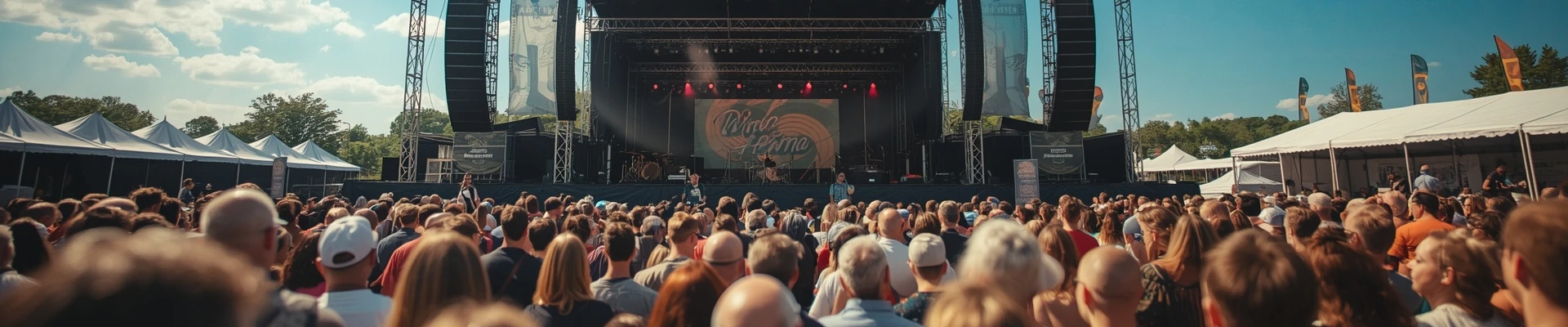
The festival calendar is anchored by Memphis in May, a month-long civic celebration that includes the Beale Street Music Festival at Tom Lee Park each May (one of the largest free music festivals on the Mississippi River, drawing more than 100,000 attendees per day), the World Championship Barbecue Cooking Contest, and the International Festival. Mempho Music Festival at Memphis Botanic Garden is the city's modern indie and Americana festival. Stax Records' "Soulsville" programming, the International Blues Challenge at the Orpheum (the largest blues competition in the world, drawing musicians from more than 40 countries each January), the Memphis Music & Heritage Festival, Elvis Week in mid-August (which draws hundreds of thousands of fans to Graceland and the surrounding area for the anniversary of Elvis's death), the Cooper-Young Festival, Crosstown Concourse's programming, Memphis Pride, Africa in April, Cinco de Mayo, Latin Festival, Memphis Italian Festival, and the Mid-South Fair's music programming round out the calendar. Sun Studio offers daily tours and continues to be used as an active recording studio.
What ties it all together is the city's deep, continuous musical lineage — running from W.C. Handy's Beale Street through Sun Records, Stax, Hi Records, Three 6 Mafia, and GloRilla. Memphis is the city where the blues was given its first commercial codification by W.C. Handy, where B.B. King and Bobby "Blue" Bland built electric blues, where Elvis Presley invented rock and roll at Sun Studio in 1954, where Otis Redding and Booker T. & the M.G.'s built Memphis soul at Stax, where Al Green built Hi Records soul at Royal Studios, where Big Star built American power pop, where Three 6 Mafia laid the foundations of modern trap and lo-fi hip-hop, where Yo Gotti and Young Dolph built modern Memphis hip-hop, and where GloRilla and Moneybagg Yo are remaking American hip-hop in real time. It is one of the most foundationally consequential music cities in the world.