
Nashville is the capital of Tennessee and the 21st-largest city in the United States, with roughly 689,000 residents inside the consolidated city–county limits and more than 2 million across the surrounding Middle Tennessee metropolitan area. Sitting on the Cumberland River in the rolling hills of the Highland Rim, ringed by the cedar glades and the Cumberland Plateau, it is — by trademark, by industry, and by self-identification — "Music City, USA." Nashville is the world capital of country music. It is the headquarters of three of the four largest country and Christian music labels, the home of the Grand Ole Opry (the longest-running radio program in U.S. history, on the air continuously since 1925), and the location of more music publishing companies, recording studios, songwriting rooms, and music industry offices than any other American city outside New York and Los Angeles. But Nashville's musical identity reaches well beyond country: it is also a major contemporary Christian music capital, a deep R&B and gospel city, the home of one of the most respected jazz programs in the country at the Tennessee State University and Belmont University, and an increasingly consequential indie rock, Americana, and hip-hop city.
A brief history
The land along the Cumberland was Cherokee, Creek, Chickasaw, and Shawnee territory before American settlers established Fort Nashborough on Christmas Eve, 1779. The town was renamed Nashville in 1784 and incorporated in 1806. Tennessee became a state in 1796 with Nashville as its capital from 1843 onward. Through the 19th century the city grew as a river port, rail hub, and education center — Vanderbilt University was founded in 1873, Fisk University (one of the country's preeminent historically Black universities) in 1866, Tennessee State University in 1912, and Belmont University (now home to one of the country's largest music business programs) in 1890. The 1925 founding of WSM-AM's Saturday night barn dance — quickly renamed The Grand Ole Opry — and the 1942 founding of Acuff-Rose Music Publishing by Roy Acuff and Fred Rose laid the foundations of Nashville's country music industry. The 1950s and 1960s rise of Music Row (the cluster of recording studios and label offices on 16th and 17th Avenues South), the construction of the RCA Studio B in 1957, and the codification of the smooth, orchestrated "Nashville Sound" by producers like Chet Atkins and Owen Bradley turned the city into the world capital of country music. The 1990s and 2000s brought enormous population growth, a reshaping of the country industry, and the rise of contemporary Christian music as a parallel industry. The 2010s and 2020s explosive growth — driven by tech, healthcare, and a steady stream of California and Northeast relocations — has transformed the city into one of the fastest-growing metros in the United States.
Music identity
Nashville is the headquarters of country music, full stop. The genre's commercial center moved to Nashville in the late 1940s and 1950s and has remained there ever since. Hank Williams, Patsy Cline, Loretta Lynn, Tammy Wynette, George Jones, Merle Haggard, Willie Nelson, Waylon Jennings, Dolly Parton, Johnny Cash, Conway Twitty, Charley Pride, Reba McEntire, Garth Brooks, Shania Twain, Vince Gill, Alan Jackson, Tim McGraw, Faith Hill, Toby Keith, George Strait (Texas-based but Nashville-recorded), Brad Paisley, Kenny Chesney, Carrie Underwood, Taylor Swift (whose career began in Nashville), Miranda Lambert, Eric Church, Luke Bryan, Jason Aldean, Blake Shelton, Luke Combs, Morgan Wallen, Chris Stapleton, Lainey Wilson, Zach Bryan — all built their careers through Nashville's labels, studios, and writing rooms. Music Row's major-label complex, the Country Music Hall of Fame and Museum, the Country Music Association (CMA), the Academy of Country Music (ACM) awards (held in Las Vegas but Nashville-industry-driven), and the annual CMA Music Festival anchor the genre's institutional life.
The country tradition is broader than its arena-headlining stars. Nashville is also home to bluegrass through the careers of Bill Monroe, Earl Scruggs and Lester Flatt, the Stanley Brothers, the Osborne Brothers, Ricky Skaggs, Alison Krauss, the Del McCoury Band, and the broader bluegrass association centered at the International Bluegrass Music Association. Americana — the looser, more eclectic country-folk-roots-rock genre — has its institutional home at the Americana Music Association and its annual AmericanaFest in September; artists like Jason Isbell, John Prine, Emmylou Harris, Steve Earle, Margo Price, Sturgill Simpson, Kacey Musgraves, Tyler Childers, The War and Treaty, Brandi Carlile, The Avett Brothers's Nashville recording, and Shovels & Rope route through Nashville constantly. Country soul and outlaw country — through Willie, Waylon, Kris Kristofferson, and Tompall Glaser — built much of their catalogs in Nashville's Music Row studios.
Nashville is also a major Black music city, although that history is often overshadowed by country. The Fisk Jubilee Singers, founded at Fisk University in 1871, popularized African-American spirituals worldwide and remain one of the most important Black choral ensembles in history. DeFord Bailey, the harmonica virtuoso, was the first Black performer on the Grand Ole Opry (joining in 1927). Jefferson Street in North Nashville — the Black music corridor that ran parallel to but separated from Music Row — was, from the 1940s through the 1960s, one of the great R&B, blues, and jazz districts in the South. Etta James, Ray Charles, Jimi Hendrix (who lived briefly in Nashville and played the Jefferson Street circuit in the early 1960s), Little Richard, B.B. King, Otis Redding, and a generation of touring R&B and soul acts played the Club Baron, the Del Morocco, and the New Era Club alongside local stars like Jimmy Church, Frank Howard, and Marion James. The 1968 King assassination, urban renewal, and the construction of Interstate 40 cutting Jefferson Street in half largely destroyed the historic Black music district. Black gospel continues through churches across North Nashville. Hip-hop has its own Nashville lineage through artists like Young Buck (a major member of G-Unit), Starlito, Yo Gotti's tour stops, All-Star Cashville Prince, and a current generation of trap and drill artists. R&B continues through artists working out of the city's churches and studios.
Contemporary Christian music (CCM) has its world headquarters in Nashville. Word Records, Provident Music Group, and Capitol Christian Music Group (each affiliated with a major label) all operate from Nashville. Amy Grant, Michael W. Smith, Steven Curtis Chapman, dc Talk, Jars of Clay, MercyMe, Casting Crowns, Lecrae, TobyMac, Bethel Music, Hillsong United's American operations, Lauren Daigle, Cory Asbury ("Reckless Love"), and the broader CCM industry route through Nashville's recording studios and writing rooms. The GMA Dove Awards are held in Nashville, and the city's megachurches (especially Cross Point and Brentwood Baptist) anchor the worship music industry.
The 21st century has remade the city again with the rise of Nashville rock and indie through bands like Kings of Leon (raised in Mt. Juliet, just east of Nashville), The Black Keys (relocated from Akron, Ohio in 2010), Jack White (relocated from Detroit and based in Nashville since 2005, where his Third Man Records anchors a thriving indie ecosystem), Paramore (Franklin, Tennessee-based), Bully, Hurray for the Riff Raff, Be Your Own Pet (the early-2000s teen rock band), Daniel Romano's Nashville recording, Margaret Glaspy's Nashville ties, Soccer Mommy, Lana Del Rey's Nashville recording, and a current generation of indie rock acts. Latin music — primarily Mexican, Honduran, and Salvadoran — runs through clubs across Antioch, La Vergne, and the Murfreesboro corridor. Kurdish music has a small but distinctive presence (Nashville has the largest Kurdish population in the United States, in the South Nashville "Little Kurdistan" neighborhood). Vietnamese, Egyptian, and Somali scenes round out the immigrant music ecosystem.
Venues and neighborhoods
Nashville's venue ecosystem is unmatched in scale and depth for any city of its size. At the top sit Bridgestone Arena (home of the Predators and the city's largest indoor concerts), Nissan Stadium (host of stadium tours), First Horizon Park (occasional stadium concerts), the Grand Ole Opry House at the Gaylord Opryland Resort (the home of the Opry since 1974, with a 4,400-capacity hall that broadcasts the show every Friday and Saturday night), the Ryman Auditorium (the legendary 1892 "Mother Church of Country Music," the Opry's home from 1943 to 1974, now one of the most acoustically respected venues in America), the Schermerhorn Symphony Center (home of the Nashville Symphony), the Tennessee Performing Arts Center (TPAC, housing the Andrew Jackson Hall, James K. Polk Theater, and Andrew Johnson Theater), and Ascend Amphitheater (a riverfront outdoor amphitheater downtown). The midsize tier includes the Marathon Music Works, the Nashville Municipal Auditorium, Brooklyn Bowl Nashville, Mercy Lounge (closed in 2022 after 19 years and recently relocated), the Cannery Ballroom (also closed/relocated), the Eastside Bowl, the Basement East, Exit/In (the legendary midtown rock club, in operation since 1971), the Bluebird Cafe (the storied songwriters' listening room in Green Hills, founded in 1982 and the site of legendary in-the-round writers' nights), and 3rd and Lindsley. Beneath them is one of the deepest club and honky-tonk layers in America — Robert's Western World, Tootsie's Orchid Lounge (the legendary lower Broadway honky-tonk where Willie Nelson, Patsy Cline, and a generation of country songwriters drank and wrote), Layla's, The Stage, Nudie's Honky Tonk, Honky Tonk Central, Acme Feed & Seed, The Listening Room Cafe, The Country Music Hall of Fame Ford Theater, Station Inn (the legendary bluegrass listening room in the Gulch, in operation since 1974), Douglas Corner Cafe, The Local, The 5 Spot in East Nashville, The Basement, The End in Elliston Place, The Cobra, and a network of bars, listening rooms, and DIY spaces across Lower Broadway, Music Row, East Nashville, the Gulch, the Nations, Madison, and Hillsboro Village. Third Man Records' Blue Room (Jack White's storefront venue), Grimey's New & Preloved Music's in-store performances, and a long lineage of independent record stores anchor the indie ecosystem.
Different neighborhoods carry different musical identities. Lower Broadway (Honky Tonk Highway) anchors the country, country-pop, and tourist circuits through Tootsie's, Robert's, and a string of multi-story bar venues. Music Row anchors the country, Christian, and CCM industries through major label offices, Studio B, and the historic recording infrastructure. East Nashville anchors the indie rock, Americana, and DIY scenes through the 5 Spot, the Basement East, the Cobra, and a dense bar and venue strip. The Gulch anchors a higher-end bar and listening-room circuit through the Station Inn and Marathon Music Works. The Nations has emerged in recent years as an indie corridor. North Nashville retains the historic Black music identity through Jefferson Street and Fisk University. South Nashville anchors the immigrant music scenes (Kurdish, Latin, Vietnamese). Franklin and Brentwood in the southern suburbs anchor the country and CCM artist communities. Hendersonville, north of the city, is a historic country-artist neighborhood (Johnny Cash, June Carter, Roy Orbison, Conway Twitty all lived there).
Festivals and signature events
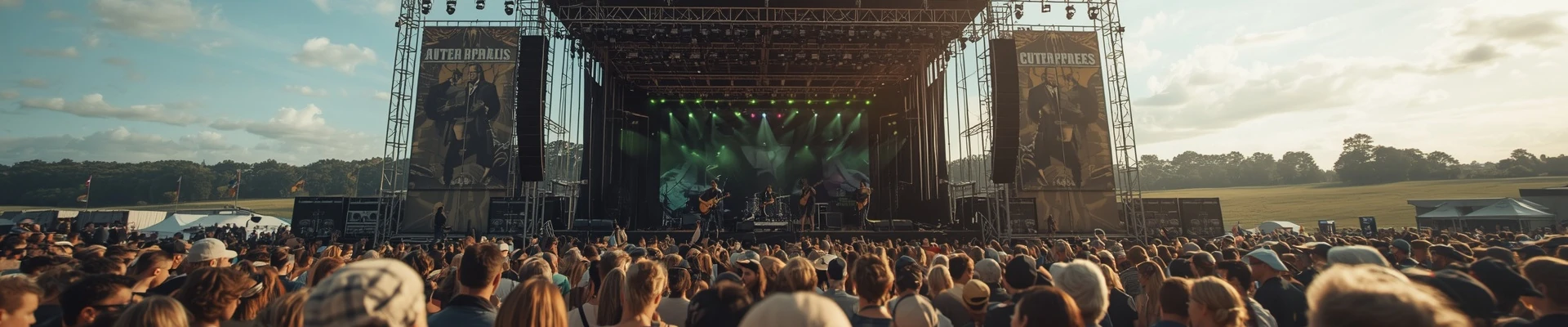
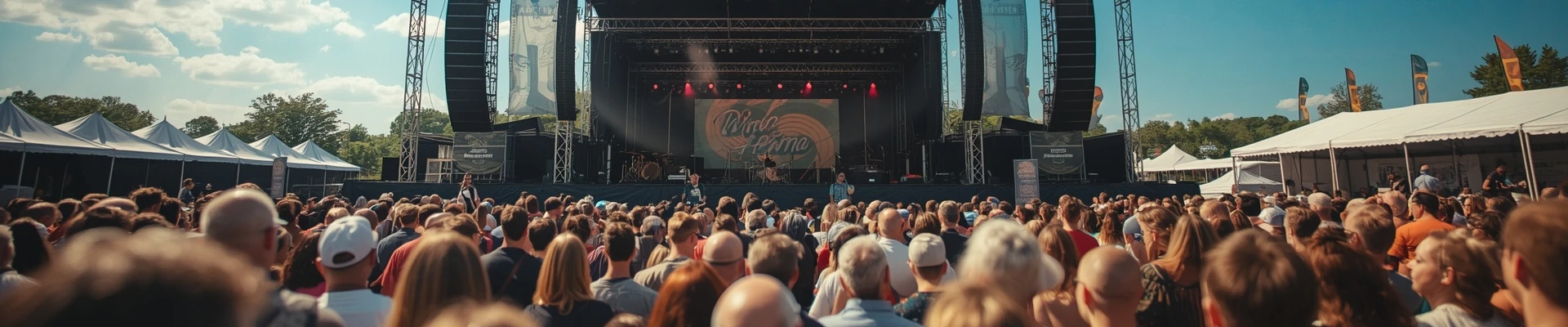
The festival calendar reflects the city's industry-anchored identity. CMA Music Festival in June (formerly Fan Fair, founded in 1972) is one of the largest country music festivals in the world, drawing more than 80,000 attendees per day across multiple stages including LP Field/Nissan Stadium. Bonnaroo Music & Arts Festival in nearby Manchester, Tennessee (90 minutes southeast) is one of the largest U.S. festivals, drawing on the Nashville audience. AmericanaFest in September is the world's most important Americana industry showcase, programming hundreds of bands across dozens of venues over six days. Tin Pan South in March is one of the country's most respected songwriter festivals. Nashville Pride, Music City Hot Chicken Festival's music programming, Nashville Earth Day Festival, Tomato Art Fest in East Nashville, East Nashville Beer Festival's music programming, CMA Awards (broadcast nationally each November), GMA Dove Awards, IBMA World of Bluegrass, Nashville Symphony's Pops at the Schermerhorn, Live on the Green in Public Square Park, Musicians Corner in Centennial Park, Nashville Cherry Blossom Festival, St. Jude Rock 'n' Roll Marathon's music programming, Hispanic Heritage Festival, Nashville's Big Backyard Festival, and the Country Music Hall of Fame and Museum's year-round programming round out the calendar. The Grand Ole Opry's Friday and Saturday night broadcasts have been continuous since 1925 and remain one of the city's most important weekly cultural events.
What ties it all together is the city's identity as the world capital of country music — and the broader American songwriting industry that has grown around it. Nashville is the city where Hank Williams broke through on the Opry, where Patsy Cline and Owen Bradley built the Nashville Sound at Quonset Hut, where DeFord Bailey was the first Black star on the Opry, where Bill Monroe and Earl Scruggs invented bluegrass, where Willie Nelson wrote "Crazy" while living above Tootsie's, where Taylor Swift came up at the Bluebird Cafe at age 14, where Jack White rebuilt independent rock infrastructure at Third Man, where Lecrae and Lauren Daigle built the modern CCM industry, and where every Friday and Saturday night the longest-running radio program in U.S. history is still broadcasting from the Opry House to a nationwide audience.