
Garland is a city of roughly 237,000 people in Dallas County and Collin County, Texas, sitting immediately northeast of Dallas along the natural transition zone where the urban core of the Dallas–Fort Worth Metroplex begins its spread into the North Texas prairie. Bounded by Lake Ray Hubbard to the east, the city of Rowlett to the northeast, Sachse and Wylie to the north, and Dallas along its western and southern edges, Garland is one of the largest suburban cities in Texas by population — larger than many American cities far more widely known. Founded in 1887 and incorporated in 1891, it grew through the 20th century as a manufacturing and residential community, and by the 1990s had diversified dramatically, becoming one of the most ethnically diverse cities in the American South. Today Garland is roughly 40 percent Hispanic, 18 percent Asian (predominantly Vietnamese), and 15 percent Black, giving it a cultural richness that routinely surprises those who think of it only as a Dallas suburb. The city's economy spans light manufacturing, logistics, healthcare (the Baylor Scott & White Medical Center at Garland anchors the healthcare sector), and the enormous commercial hub of Firewheel Town Center. Garland is also home to Spring Creek, several lake parks, and a historic downtown square that, while modest in scale, anchors civic life in a way that distinguishes it from more thoroughgoing bedroom communities.
A brief history
The land that became Garland sits in the ancestral territory of the Caddo Confederacy, the dominant Indigenous civilization of East Texas, whose farming and trading communities extended across the Piney Woods and Blackland Prairie for centuries. European settlement came slowly to this portion of the North Texas prairie, and the area that became Garland was sparsely settled farmland until the arrival of the Missouri-Kansas-Texas Railroad in the 1880s. The town was named in 1887 after Augustus Hill Garland, the Attorney General of the United States under President Grover Cleveland — a fact that pleased early settlers more for the railroad politics it implied than for any deep affection for the man himself.
Garland grew steadily through the early 20th century as a farming and light manufacturing community, gaining water and power infrastructure and a small downtown commercial district. The city incorporated in 1891 and remained relatively modest in scale through the first half of the century. World War II brought defense manufacturing to the DFW region, and Garland's proximity to Dallas made it an attractive site for light industrial development in the postwar decades. The city expanded rapidly through the 1950s and 1960s as suburban Dallas sprawl pushed northeastward, and by 1970 Garland had surpassed 80,000 residents.
The transformation of the following decades was demographic as much as physical. The wave of Southeast Asian refugees that reshaped many American cities after 1975 was particularly significant in the DFW area, and Garland emerged as a major destination for Vietnamese families — creating a community that by the 1990s was large enough to anchor its own commercial corridors, temples, churches, radio programming, and music scenes. The Vietnamese community clustered particularly along the Garland Road corridor and the adjacent areas of northeast Dallas, and Garland became — alongside Arlington — one of the twin centers of Vietnamese Texas. The Hispanic community, with deep roots in Mexican labor migration to North Texas stretching back to the early 20th century, grew in parallel. By 2000 Garland was among the most diverse mid-size cities in the South.
Music identity
Garland's music identity is shaped by three parallel and largely independent currents: the DFW suburban rock-and-country circuit that the city has participated in since the 1970s, the Vietnamese music community that has sustained its own concert economy since the 1980s, and the heavy metal and hardcore underground that has drawn on North Texas's substantial suburban youth culture for decades.
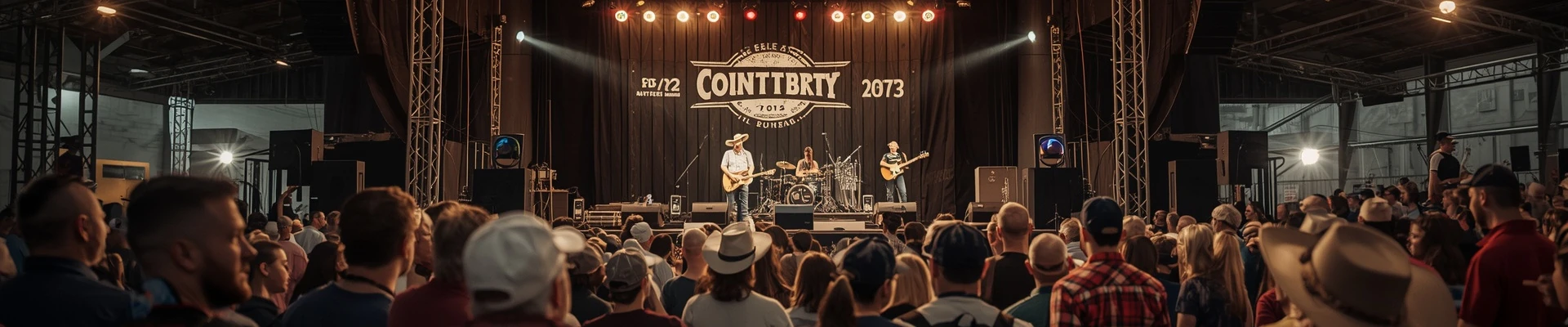
DFW rock and country are the city's foundational popular music traditions. Garland sits close enough to Dallas to participate fully in the Metroplex's club circuit — Deep Ellum, the historic Dallas entertainment district roughly twelve miles west, has been Garland musicians' primary professional proving ground since the 1980s, and the reverse flow of Dallas touring acts into Garland venues has given the city a continuous supply of live music across country, classic rock, blues, and pop. The Granville Arts Center, a performing arts complex anchored by Plaza Theatre (a restored 1940s movie palace) and the outdoor Brownlee Amphitheater, programs touring acts, theatrical productions, and community concerts — it is the city's primary professional performing arts venue and has hosted acts spanning country, jazz, Broadway, and roots music. Pat Green, the Texas country singer-songwriter who became one of the defining voices of the early 2000s Texas music scene with albums like Three Days and Wave on Wave, has DFW-area roots and represents the kind of Texas-specific country that suburban North Texas has sustained for decades. Garland's taverns, dance halls, and honky-tonk bars have historically been part of the broader North Texas two-step circuit — a modest but durable live music infrastructure that sustains Texas country performers at every level of regional recognition.
The Vietnamese music community in Garland is, by population proportion, one of the most substantial Vietnamese music ecosystems in the United States outside of California. The Vietnamese diaspora brought with it a rich and complex popular music tradition — nhạc vàng (golden music, the pre-1975 South Vietnamese pop canon), nhạc trữ tình (romantic ballads), bolero-influenced Vietnamese pop, and a growing contemporary V-pop scene — that has been maintained in Garland through church communities, Tết (Vietnamese Lunar New Year) celebrations, private social clubs, karaoke venues, and occasional larger concert productions. The concentration of Vietnamese restaurants, businesses, and cultural organizations along the Garland Road corridor in northeast Dallas and the adjacent Garland neighborhoods provides the infrastructure for a music scene that largely operates parallel to and independent of Anglo-American popular music. Vietnamese karaoke — a serious social institution rather than a novelty — is embedded throughout the community's nightlife. The annual Tết festival in Garland brings Vietnamese music performance to a broader audience and has grown substantially in scale as the community has established itself across generations.
Heavy metal and hardcore have a long history in suburban DFW, and Garland has contributed to that tradition. The North Texas suburbs — Garland, Mesquite, Irving, Grand Prairie — sustained a substantial metal underground through the 1980s and 1990s that fed into the Dallas club scene. Acts from Garland and adjacent suburbs appeared regularly at Trees, Curtain Club, and Club Dada in Deep Ellum, and the city's high schools and community college campuses (Eastfield College is nearby; Richland College serves the area) have been consistent generators of band formation. Thrash, groove metal, and nu-metal all had followings in the suburban DFW area during the 1990s, and contemporary metalcore and progressive metal continue to draw Garland musicians into the regional circuit. The city's independently operated practice spaces and rehearsal studios — a quiet infrastructure that suburban American music depends on — have supported this scene through multiple generational cycles.
Gospel and contemporary Christian music represent a significant but often-overlooked strand of Garland's music culture. The city's large African American church community, concentrated in the historic neighborhoods of north Garland and along Miller Road, sustains gospel choirs, praise bands, and community singing traditions with roots stretching back to the Great Migration and the establishment of Black Baptist and Methodist congregations in the Dallas suburbs. The city's Hispanic community has its own parallel sacred music tradition in Spanish-language Catholic and evangelical congregations, where mariachi, norteño, and regional Mexican music appear in liturgical and social contexts year-round.
Latin popular music — particularly norteño, cumbia, reggaeton, and banda — runs through Garland's substantial Mexican American community. Quinceañeras, community dances, and Mexican Independence Day celebrations provide recurring public venues for this music, and a network of Spanish-language radio stations serving DFW (including KLNO 94.1 and KFLC 1270) reflects the scale of the Latin music audience in the Metroplex.
Venues and neighborhoods
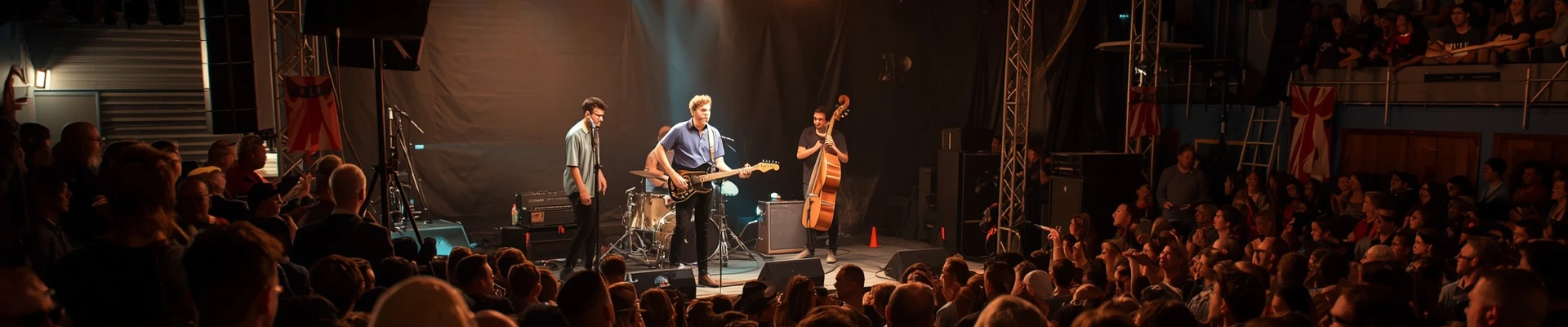
Garland's venue infrastructure is anchored by the Granville Arts Center complex, which includes Plaza Theatre (a 1,400-seat restored 1940s cinema converted into a performing arts venue), the outdoor Brownlee Amphitheater (capacity varies by setup, typically 2,000–4,000 for outdoor concerts), and the Atrium event space. The Garland Performing Arts Center programs smaller-scale events. Firewheel Town Center, the city's major retail and dining complex on the eastern side of the city, hosts outdoor concerts and seasonal music events in its outdoor amphitheater space. The city's taverns, sports bars, and restaurant venues provide the informal live music infrastructure for cover bands, regional country acts, and singer-songwriters working the suburban North Texas circuit.
The Historic Downtown Garland square — anchored by Fifth Street and Main Street — is the center of the city's civic cultural life, hosting Garland Brew & Music Fest, the Garland Market, and seasonal events. The Rowlett Creek and Spring Creek greenbelt parks host outdoor events during warmer months. Lake Ray Hubbard, east of the city, draws large-scale outdoor events including the annual Garland 4th of July celebration.
Different neighborhoods define different musical cultures. Central Garland around the historic downtown and the older postwar residential grid is the heart of the civic music scene. The Garland Road corridor — where Garland's northeastern neighborhoods meet the adjacent Dallas areas — is the center of the Vietnamese commercial community and its associated music venues, karaoke bars, and cultural institutions. North Garland (the newer planned subdivisions surrounding Sachse Road and the Firewheel corridor) is primarily a suburban family residential area whose music consumption is shaped by DFW country radio, megachurch worship music, and the family-oriented programming at Firewheel events. South Garland and West Garland, closer to the Dallas border, are the historically diverse areas where African American, Hispanic, and Vietnamese communities have overlapped longest.
Festivals and signature events
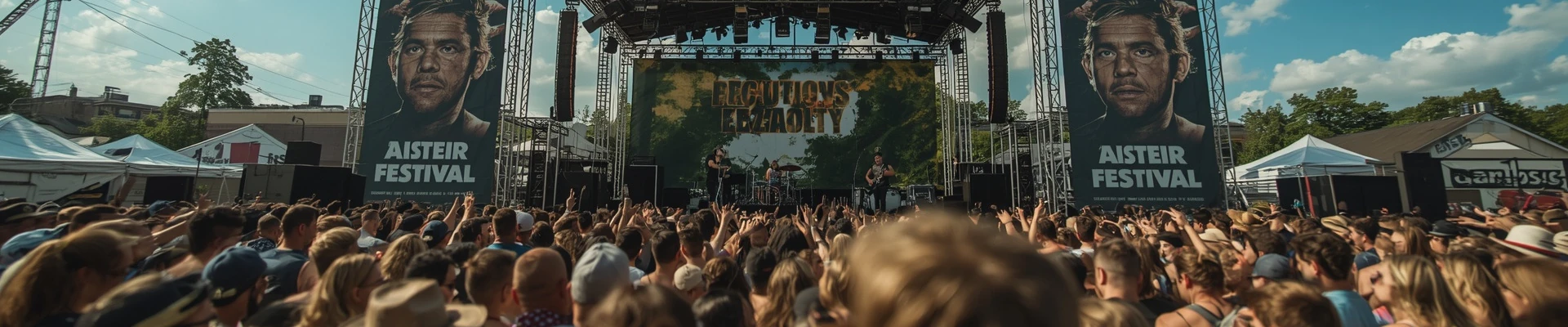
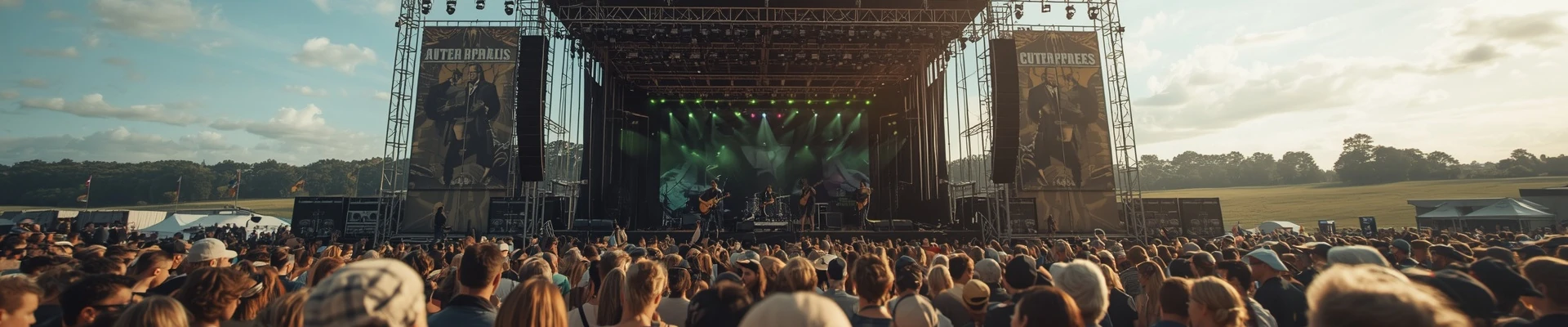
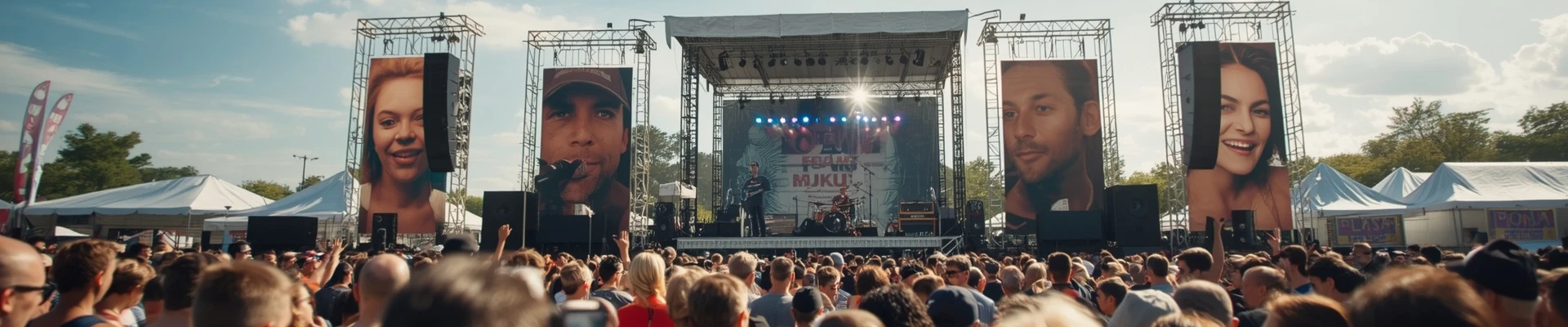
The Garland Brew & Music Fest — held annually in Historic Downtown Garland — is the city's signature music festival, combining local and regional craft beer with a stage program of DFW-area bands spanning country, rock, blues, and Americana. Garland GardenFest brings community programming to the city's parks. The Tết Festival in Garland, typically held in late January or early February at a large venue or fairground in the area, is one of the largest Vietnamese Lunar New Year celebrations in North Texas, with music, dance, food, and cultural performance drawing tens of thousands from across the DFW Vietnamese community. Garland's Independence Day celebration at Lake Ray Hubbard is among the largest in the Metroplex, with outdoor concerts preceding the fireworks display. TexFest and various Fiesta events in the city's Hispanic community neighborhoods bring regional Mexican music and Tejano performers into the area on a seasonal basis. The Granville Arts Center operates a year-round performing arts season including touring theatrical productions, classical concerts, and popular music events.
What ties it all together
What distinguishes Garland musically is not a single scene or a defining sound but the density and simultaneity of its cultural plurality. On any given weekend in Garland, a Vietnamese wedding band is performing bolero arrangements for 400 guests at a restaurant banquet hall, a Texas country cover act is working a sports bar on Northwest Highway, a praise band is leading 2,000 worshippers at a megachurch, and a local metal act is loading into rehearsal space before a Deep Ellum show. None of these scenes is fully aware of the others; each operates in its own institutional infrastructure, language community, and social network. Garland is not a city that has produced a famous sound or a landmark album, but it is a city that has sustained music-making at every level of formality and ambition — in temples, churches, bars, living rooms, and civic amphitheaters — across a population that brings some of the richest and most varied musical traditions in the world into sustained, daily proximity.