

Lubbock sits on the flat, windswept Llano Estacado — the Staked Plain — of West Texas at an elevation of roughly 975 metres, nearly 500 km from Dallas and 300 km from Amarillo, making it one of the most geographically isolated large cities in the contiguous United States. With approximately 249,000 residents and another 330,000 across the Lubbock Metropolitan Statistical Area, it is the 11th-largest city in Texas, the largest city in the South Plains region, and the economic and medical hub for a vast agricultural territory stretching across 100 counties. The city is home to Texas Tech University (roughly 40,000 students), the Texas Tech Health Sciences Center, and a cotton-based agricultural economy that makes the Lubbock MSA one of the top cotton-producing regions in the world. The South Plains are hot, dry, and subject to the famous Lubbock wind — a near-constant presence that defines the region's character as much as any cultural feature — and a tornado tore through the city centre in 1970 causing 26 deaths and reshaping much of downtown. Lubbock is roughly 70% non-Hispanic white and 33% Hispanic, with a Mexican-American population concentrated in the East Side neighbourhoods that anchors a vibrant conjunto, norteño, and Tex-Mex musical tradition alongside the Anglo country and rock heritage.
A brief history
The Lubbock area was traditional territory of the Comanche people, whose raiding and hunting range extended across the Llano Estacado for more than a century before the Red River War of 1874-1875 pushed them to reservations in Oklahoma. The town of Lubbock was founded in 1891 by a merger of two competing settlements — Lubbock and Monterey — and grew steadily through dryland farming, ranching, and the arrival of the Santa Fe Railway in 1909. Cotton production expanded dramatically through the early 20th century, driven by irrigation from the Ogallala Aquifer beneath the Llano Estacado. Texas Technological College (later Texas Tech University) was founded in 1923, giving the city its defining institutional identity. The 1950s saw the emergence of Lubbock's most consequential cultural contribution — the West Texas rock and roll scene centred on Buddy Holly and the Crickets — at the same moment the city's cotton economy reached its postwar peak. The 1970 tornado prompted a decade of downtown reconstruction and the development of the suburban commercial corridors that now define much of the city's commercial landscape.
Music identity — Buddy Holly and the West Texas sound
Lubbock's contribution to American music history is, per capita, almost impossibly large. Buddy Holly — born Charles Hardin Holley in Lubbock on September 7, 1936 — is arguably the most important single figure in the transition from country and rhythm and blues to rock and roll, and the template for the self-contained singer-songwriter-guitarist-producer that has defined popular music ever since. Holly grew up in Lubbock singing country and bluegrass, began performing at local dances and on KDAV radio (the first all-country radio station in the United States, founded 1953) in his early teens, and was recording with the Crickets — Jerry Allison on drums, Joe B. Mauldin on bass, and Niki Sullivan and later Tommy Allsup on rhythm guitar — at Norman Petty's studio in Clovis, New Mexico by 1956. The recordings made at Petty's studio produced "That'll Be the Day," "Peggy Sue," "Maybe Baby," "Rave On," "Oh, Boy!," "Not Fade Away," and "Everyday" — a sequence of singles that defined the sound of rock and roll and influenced virtually every important rock and pop act of the 1960s. The Beatles took their name partly as a tribute to the Crickets; Keith Richards, Bob Dylan, Elvis Costello, Paul McCartney, Bruce Springsteen, and virtually every significant rock songwriter of the last 60 years has cited Holly as foundational. Holly died in the "Day the Music Died" plane crash near Clear Lake, Iowa on February 3, 1959, at age 22, cutting short a career whose influence vastly exceeded its two-year commercial span.
Lubbock's musical gravity extends well beyond Holly. Waylon Jennings — born in Littlefield, Texas, 75 km northwest of Lubbock — cut his musical teeth in Lubbock, played bass in Buddy Holly's final touring band (he gave up his seat on the fatal flight to Holly bassist Tommy Allsup), and went on to become the outlaw country patriarch whose 1970s work with Willie Nelson, Johnny Cash, and Kris Kristofferson redefined Nashville. Jennings was permanently shaped by the West Texas country and rock hybrid sensibility he developed in Lubbock's honky-tonks and dance halls.
Terry Allen — one of the most distinctive artists ever to come out of West Texas — was born in Lubbock in 1943 and has produced a body of work across music, visual art, and theatre that encompasses the 1979 album Juarez, the 1979 Lubbock (On Everything) (a heartbroken and funny portrait of life on the Llano Estacado), and decades of work that established the West Texas art-country tradition before "alt-country" was a genre category. Allen's songs are performed by Robert Earl Keen, Joe Ely, and the broader Lubbock school of songwriters.
Joe Ely, Jimmie Dale Gilmore, and Butch Hancock — the Flatlanders — are the triumvirate of Lubbock songwriters who defined the 1970s and 1980s West Texas sound. The three met in Lubbock in the early 1970s, briefly recorded together in Nashville (their 1972 session was shelved for years), and went on to parallel solo careers that placed them among the most respected singer-songwriters in American music. Ely's driving West Texas rock (his late 1970s band opened for the Clash and Bruce Springsteen), Gilmore's spectral country mysticism, and Hancock's prolific, absurdist lyricism collectively constitute the Lubbock school — a tradition of thoughtful, lyrically ambitious, guitar-driven songwriting rooted in the flat landscape and working-class culture of the South Plains. The Flatlanders reunited for Now Again (2002) and have performed together sporadically since. Ely's 1978 self-titled debut and 1981 Musta Notta Gotta Lotta are landmarks of the Texas singer-songwriter tradition.
The Lubbock school influenced Robert Earl Keen (Waco-born but a Texas Tech graduate who absorbed the South Plains tradition), Lyle Lovett (Houston but deeply connected to the Texas independent scene), and the broader alt-country and Americana lineage. Natalie Maines — lead singer of the Dixie Chicks (now The Chicks) and daughter of Lubbock steel guitarist Lloyd Maines — grew up in Lubbock; Lloyd Maines is one of the most important pedal steel and lap steel session musicians in Texas, having played on hundreds of albums in the Texas country and Americana tradition and produced extensively for Joe Ely, Terry Allen, and Robert Earl Keen.
The tradition continues with Josh Abbott Band (formed at Texas Tech), Cleto Cordero and Flatland Cavalry (Idalou, Texas, just east of Lubbock), and a younger generation of singer-songwriters working the Texas country circuit from a Lubbock base.
Tex-Mex, conjunto, and Hispanic music
The East Side of Lubbock anchors a vibrant conjunto, norteño, and Tex-Mex music tradition that runs parallel to and frequently intersects with the Anglo country scene. The region's large Mexican-American agricultural community has sustained a club and dance hall circuit running through Avenue Q and the East Lubbock corridors for decades. Polka-rooted conjunto — accordion-driven dance music — is a weekly presence at weddings, quinceañeras, and community celebrations, and the Lubbock area has produced a number of working conjunto and norteño acts that tour the Texas circuit. Cumbia, banda, and contemporary regional Mexican music play in the clubs and at the South Plains Fair throughout the season.
Venues and neighbourhoods
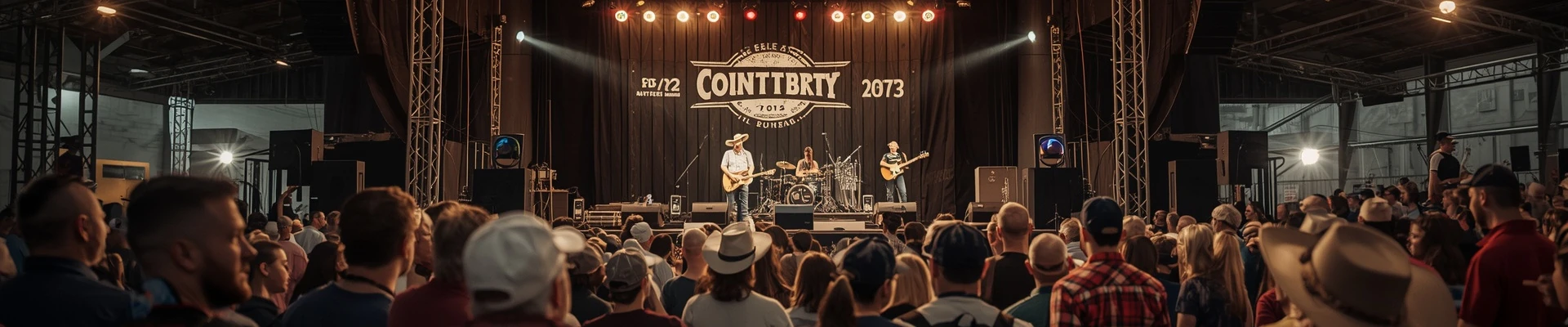
The venue anchor for major concerts is the United Supermarkets Arena at Texas Tech (capacity 15,000, opened 1999), which hosts the largest touring acts when they come through Lubbock. Below that sits the Lubbock Memorial Civic Center, the Buddy Holly Hall of Performing Arts and Sciences (the 2,200-seat performing arts centre opened 2020, designed by Antoine Predock, containing the Buddy Holly Hall and the smaller Helen DeVitt Jones Studio Theatre), and the Mahon Library Amphitheatre for outdoor events. The mid-size and club tier includes The Lone Star Oyster Bar (the historic West Texas dive and music room), Jake's Bar & Grill (Lubbock music institution), Bash Riprock's (Texas Tech-adjacent rock club), The Blue Light Live (the Lubbock country and Americana institution on Broadway Street), Crickets Brewing Co. (the craft brewery named for the Crickets), and the broader circuit of Texas Tech-adjacent clubs along University Avenue. The South Plains Fair (the major September fair at the Lubbock Fairgrounds) programs country, Latin, and rock acts at its grandstand, making it one of the most important regional music events in West Texas.
Neighbourhood music corridors are concentrated on Broadway (the main East-West commercial axis, anchoring The Blue Light and several clubs), University Avenue (the Texas Tech corridor anchoring the student music scene), and the East Side (the Mexican-American music corridor running through Avenue Q and East Broadway). The Depot District downtown — the historic warehouse and freight district — has hosted music venues and nightlife development in recent years.
Buddy Holly's physical legacy
Lubbock preserves Holly's legacy with unusual thoroughness. The Buddy Holly Center (a cultural arts centre and museum on Crickets Avenue) contains the official Buddy Holly Gallery — Holly's Fender Stratocaster, his thick-framed glasses, his red vest, original recordings, and extensive ephemera from his short career. The Buddy Holly Statue and Walk of Fame at 8th Street and Buddy Holly Avenue is one of the most-visited landmarks in West Texas — a bronze statue of Holly with his Stratocaster, surrounded by Walk of Fame plaques honouring West Texas musicians including Waylon Jennings, Joe Ely, Jimmie Dale Gilmore, Butch Hancock, Terry Allen, and Lloyd Maines. Holly's childhood home at 1911 Sixth Street still stands. Holly's grave is in the City of Lubbock Cemetery.
Festivals and signature events
The Buddy Holly Music Festival is the city's signature music event, held in early September at the Depot District, programming Americana, rock, and tribute acts in Holly's honour. The South Plains Fair (late September, Lubbock Fairgrounds) programs major country, Latin, and rock acts at its grandstand and is one of the most-attended events in West Texas. The Lubbock Arts Festival (spring) programs live music alongside visual arts in Mackenzie Park. The Lights on Broadway festival (December) brings holiday music programming to the Broadway corridor. Texas Tech football game weekends effectively function as major music events, driving capacity crowds to the clubs and bars around the stadium across six or eight autumn Saturdays. The National Cowboy Symposium and Celebration includes cowboy music and poetry. The West Texas Con has grown to include music programming.
What ties Lubbock together is the peculiar combination of isolation and productivity that the Llano Estacado seems to breed — flat land, hard wind, and not much between you and the horizon except imagination. Buddy Holly invented rock and roll here at 19. Waylon Jennings played his first serious gig here. Joe Ely and the Flatlanders built a songwriting school that had no model anywhere else in Texas. Terry Allen turned the flatness and the loneliness into art. Lloyd Maines turned steel guitar into a career that touched hundreds of Texas records. The Buddy Holly Center and the Walk of Fame statues stand on Buddy Holly Avenue not as nostalgia but as testimony — Lubbock is a city that built a global musical legacy in the honky-tonks and radio studios and Norman Petty's Clovis sessions of a decade and a half in the mid-20th century, and whose students keep showing up to the Blue Light and the Depot stages to do it again.