

McKinney is a city of roughly 163,000 residents in Collin County, Texas, sitting at the northern edge of the Dallas–Fort Worth metroplex approximately 30 miles north of downtown Dallas. For two decades running it was one of the fastest-growing cities in the United States, expanding from around 54,000 people in 2000 to more than three times that by the mid-2020s as the DFW suburban corridor pushed relentlessly northward into the rolling Blackland Prairie. Despite that explosive growth, McKinney has worked hard to preserve its pre-boom character — the Historic Downtown Square, an eight-block corridor of 19th-century commercial architecture anchored by the 1875 Collin County Courthouse, gives the city a tangible sense of place that distinguishes it from neighboring Plano and Frisco. The arts economy that clusters around that downtown square, including independent music venues, galleries, and performing arts spaces, has made McKinney a notably culture-conscious community within a metroplex where suburban growth often swamps local character entirely.
Geography and context
The city occupies the gently rolling terrain of the Blackland Prairie, a deep-black clay soil belt that was once some of the most productive cotton land in Texas. The Heard Natural Science Museum & Wildlife Sanctuary, within the city limits, preserves 289 acres of original prairie, creek bottom, and woodland along the Wilson Creek corridor — a reminder of the pre-settlement landscape. McKinney sits between US 75 (Central Expressway) to the west and US 380 running east-west through the city center, with the Sam Rayburn Tollway (SH 121) and SH 5 adding further highway infrastructure as growth has demanded. The city is positioned inside the Collin County technology and corporate corridor; major employers include Raytheon, CHRISTUS Health, Emerson Electric, and dozens of mid-size technology firms drawn by the county's educated workforce and favorable tax climate. McKinney Municipal Airport serves private and charter aviation. The elevation is roughly 187 metres (614 feet) above sea level.
A brief history
The area was part of the Peters Colony land grant in the 1840s, attracting settlers to what was then the northern edge of the Texas frontier. The town of McKinney was platted in 1849 and named for Collin McKinney, a signer of the Texas Declaration of Independence and early Texas statesman. Collin County was itself named for him. The town grew as a cotton market center through the late 19th century; the Courthouse Square that anchors historic downtown was established in the 1870s and 1880s when the brick commercial buildings that survive today were constructed. The arrival of the Missouri, Kansas and Texas Railway (the "Katy") in 1872 cemented McKinney's role as a regional agricultural trading center. Through the 20th century McKinney remained a modestly-sized county seat — under 20,000 people as recently as 1990 — before the DFW northward growth wave transformed it into one of the most rapidly expanding cities in American history.
Music identity
McKinney does not have a defining original sound in the way that Dallas has its own deep blues and R&B lineage or Denton its art-rock and experimental tradition. Its music identity is instead that of a high-quality suburban live music ecosystem — a city that has made a deliberate institutional investment in the arts and created infrastructure that supports working musicians within the DFW orbit. That positioning, reinforced by the historic downtown's walkable character and the city's relatively affluent and arts-engaged demographic, has produced a genuine if compact scene.
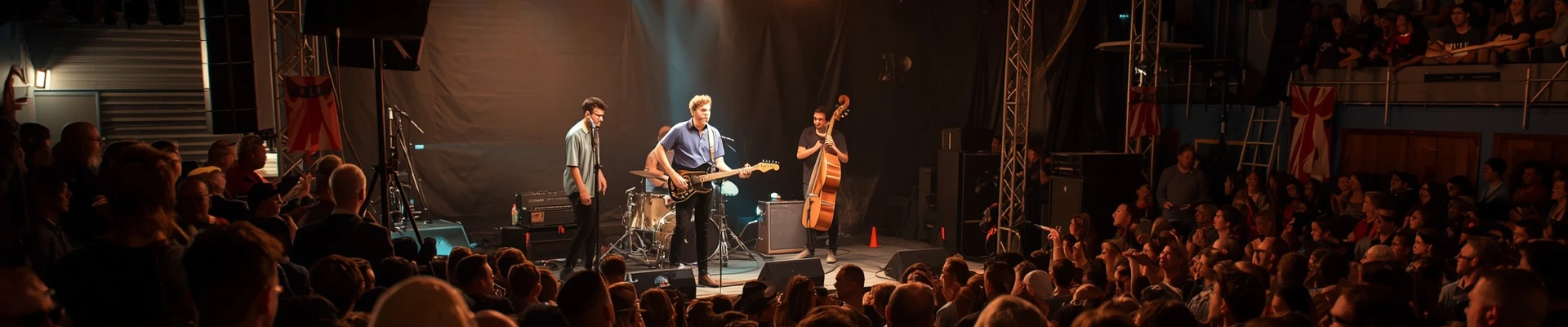
The most important institutional anchor is The Sanctuary (sometimes referred to as Sanctuary McKinney), a converted church venue that became one of the area's most praised intimate listening rooms before transitioning through various operators and formats. Tupps Brewery, a craft brewery and event space on North Tennessee Street, established itself as a key mid-size outdoor and indoor concert venue drawing regional acts and occasional national touring artists across country, rock, and Americana. Cadillac Pizza Pub on Tennessee Street emerged as a beloved neighborhood live music bar hosting local and regional acts several nights a week.
The Historic Downtown McKinney corridor as a whole functions as an arts district — the McKinney Performing Arts Center (MPAC), housed in the restored 1875 Collin County Courthouse building, programs theatrical productions and musical performances year-round. The Heard-Craig Center for the Arts, a 1900 Victorian mansion converted to a performing arts and events space, hosts chamber music, recitals, and acoustic performances with an emphasis on classical and heritage genres. The Stage West connection — the Fort Worth-based theatre company has longstanding influence on the DFW performing arts community — and the broader DFW theatre ecosystem give McKinney residents access to a deep regional performing arts network.
McKinney's proximity to Denton (about 30 miles west on US 380) is musically significant. Denton's unusually dense experimental, indie, and art-rock scene — incubated by the University of North Texas music program and venues like Rubber Gloves Rehearsal Studios and Dan's Silverleaf — provides a creative counterweight to the more mainstream-oriented McKinney scene, and many musicians working in McKinney are embedded in the broader Denton–Plano–McKinney corridor. The UNT One O'Clock Lab Band, among the most celebrated jazz ensembles in the world, gives the region a jazz credibility that benefits the entire North Texas corridor.
Within country and Texas country specifically, McKinney fits into the DFW country orbit that includes acts raised across the Metroplex suburbs. Roger Creager, a Texas country staple, has connections to the Collin County area. The broader Texas country and red dirt movements — centered on artists like Pat Green, Robert Earl Keen, Cross Canadian Ragweed, and Randy Rogers Band — are deeply embedded in suburban DFW life, and McKinney's bars and venues have always been natural stops on that circuit.
McKinney's gospel scene reflects the city's large and growing evangelical Christian community; several megachurches including Prestonwood Baptist Church (headquartered in Plano but with a significant McKinney presence through its North Campus) operate music programs and contemporary worship productions of considerable scale, giving a meaningful number of working musicians employment in sacred music contexts.
Venues and neighborhoods
Historic Downtown Square is the cultural and geographic center. The blocks surrounding the Courthouse host the highest density of bars, restaurants with live music, and arts spaces in the city. Rick's Chophouse, a steakhouse in the historic downtown, has hosted regular live jazz and blues. The Celt Irish Pub has been a reliable anchor for acoustic nights and folk. Spoons Coffee House and similar independent coffee venues have provided low-pressure performance opportunities for singer-songwriters.
Tennessee Street running north from the downtown square into the older residential neighborhoods has developed as a secondary live music corridor anchored by Tupps Brewery and Cadillac Pizza Pub. The West Side neighborhood and the broader historic residential grid near the square contain a dense cluster of music-friendly businesses.
The McKinney Arts District designation, encompassing the downtown square and several adjacent blocks, formalizes the concentration of galleries, performing arts spaces, and music venues that has grown organically around the courthouse. The city government has actively supported arts programming through the McKinney Arts Commission, funding public art installations, outdoor performance series, and venue-improvement grants.
Festivals and events
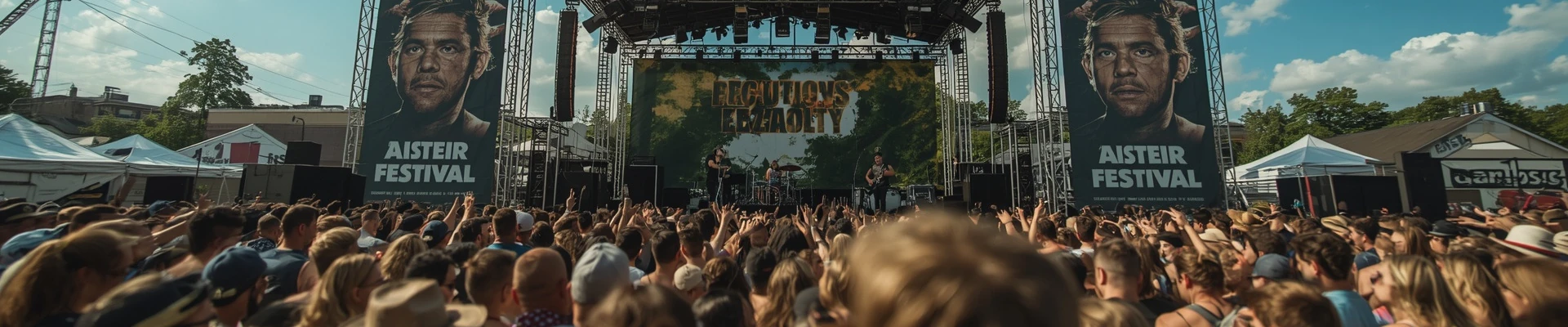
Oktoberfest McKinney is one of the largest beer festivals in North Texas, held annually in the historic downtown with substantial live music programming across multiple stages covering country, rock, and Americana. Tupps Harvest Festival and Tupps Summer Outdoor Concerts have been among the most popular warm-weather live music events in Collin County.
The Heard Natural Science Museum hosts Critters After Dark and seasonal outdoor events that incorporate acoustic and folk music within the nature sanctuary setting. The McKinney Performing Arts Center presents an annual season of theatrical and musical programming including Broadway touring productions, classical concerts, and family events. First Monday Trade Days, one of the oldest and largest flea markets in Texas — held monthly in the nearby town of Canton — draws visitors from across the region and has historically incorporated live country, bluegrass, and gospel performances within its sprawling outdoor market.
Frisco's Sci-Fi Film Festival and neighboring cities' event calendars integrate with McKinney's arts calendar, creating a North Texas suburban cultural corridor that works collectively in ways individual cities could not manage alone.
Demographics and community music
McKinney's population is approximately 70% white non-Hispanic, with growing Hispanic (approximately 15%) and Asian-American (approximately 8%) communities reflecting broader DFW demographic trends. The Hispanic community — primarily Mexican-American with roots in the agricultural and construction labor forces that drove the county's earlier growth — sustains norteño, cumbia, and regional Mexican music scenes anchored in South McKinney and the older working-class neighborhoods west of US 75. Quinceañeras and family celebrations in those communities generate sustained demand for live music that supports working musicians year-round. The expanding South Asian community, concentrated in the technology-worker corridor across Collin County, has brought Bollywood dance events and classical Indian music performances into McKinney's cultural programming, particularly through community organization events at local banquet halls and parks.
What ties it all together
McKinney's musical identity is ultimately that of a suburb that has chosen to take the arts seriously — a deliberate positioning that distinguishes it within a metropolitan area where sprawl can easily erase local character. The Historic Downtown Square, the McKinney Performing Arts Center, and the brewery and pub venues along Tennessee Street form a coherent, walkable live music infrastructure for a city of its size. It draws on Denton's experimental energy to its west, Dallas's deep blues and R&B roots to its south, and the Texas country circuit that runs through the entire region. It is not a city that has produced a genre or a legendary label, but it is a city where a working singer-songwriter can find a room, where a jazz quartet can find a weekend residency, and where an Americana band can find an audience that has cultivated genuine musical taste alongside its prosperity.