
Roanoke is the largest city in southwest Virginia and the urban centre of the Roanoke Valley, with roughly 100,000 residents inside the city limits and more than 300,000 in the broader metropolitan statistical area. It sits at the foot of the Blue Ridge Mountains — specifically at the intersection of the Roanoke River and Tinker Creek valleys — approximately 380 kilometres southwest of Washington D.C. and 240 kilometres west of Richmond. At an elevation near 900 feet (275 metres) above sea level, Roanoke occupies a distinctive geography: a mountain city in the piedmont transition zone, where the Blue Ridge Parkway descends from the western ridgeline and the Appalachian Trail passes within a short drive. The city is the commercial, medical, and cultural anchor for a large swath of rural southwest Virginia — a region that was historically dependent on coal, timber, furniture manufacturing, and most of all the railroad.
A railroad city in the mountains
Roanoke's identity was forged in iron and steam. Before 1882 the site was a modest agricultural village called Big Lick, with barely a few hundred residents. That year the Shenandoah Valley Railroad and the Norfolk and Western Railway chose the location as the junction point for their lines — and almost overnight, Big Lick exploded into a railroad boomtown. The town was incorporated as Roanoke in 1882, named after the Algonquian word for shell money, and within a decade it had grown to 25,000 residents, earning the nickname "The Magic City." The Norfolk and Western Railway shops — a vast complex of machine shops, foundries, and yards that employed thousands — anchored the local economy for nearly a century. By the early 20th century Roanoke was the most important railroad city in the American South Atlantic region, and the Hotel Roanoke (opened 1882, rebuilt and expanded repeatedly, now a Hilton Curio Collection property) anchored downtown commerce.
The Mill Mountain Star — a neon star perched on the ridge overlooking the city, first illuminated in 1949 as a Christmas display and made permanent after popular demand — became Roanoke's defining symbol. At 88.5 feet tall, it claims to be the world's largest freestanding illuminated man-made star. It glows white on most nights, red during the Christmas season, and blue when a traffic fatality has occurred in the county — a civic ritual that gives it an emotional resonance the city's boosters rarely fully account for.
The railroad era declined sharply through the second half of the 20th century. Norfolk and Western merged with Southern Railway to form Norfolk Southern in 1982, and the company headquarters eventually relocated to Atlanta. The machine shops shrank. Roanoke diversified — healthcare (the Carilion Clinic health system, the city's largest employer, operates the regional medical centre), higher education (Virginia Tech's Roanoke satellite campus and the Carilion School of Medicine, Hollins University in the northern suburbs, Roanoke College in Salem), and retail have gradually replaced the railroad as the economic backbone. Downtown Roanoke experienced a genuine revival in the 2000s and 2010s: the Center in the Square arts complex, the Taubman Museum of Art, the Roanoke City Market (the oldest continuously operating open-air market in Virginia), the Hotel Roanoke renovation, and a cluster of breweries, restaurants, and independent businesses along Campbell Avenue and Market Street have made downtown a regional attraction.
Music identity
Roanoke's music identity is rooted in the broader Appalachian and Virginia country tradition. The region around the Roanoke Valley sits at the intersection of several crucial lineages: the old-time string band music of the Virginia Blue Ridge, the Piedmont blues tradition that runs from North Carolina through southern Virginia, and the bluegrass idiom that Roanoke-area musicians absorbed from both the east (Bill Monroe's Kentucky tradition) and the southwest Virginia mountains (the Carter Family, Ralph and Carter Stanley). The city is only about 80 kilometres from the Floyd County epicentre of the Virginia old-time revival, and that proximity matters — old-time fiddle and banjo traditions have never entirely disappeared from the Roanoke Valley.
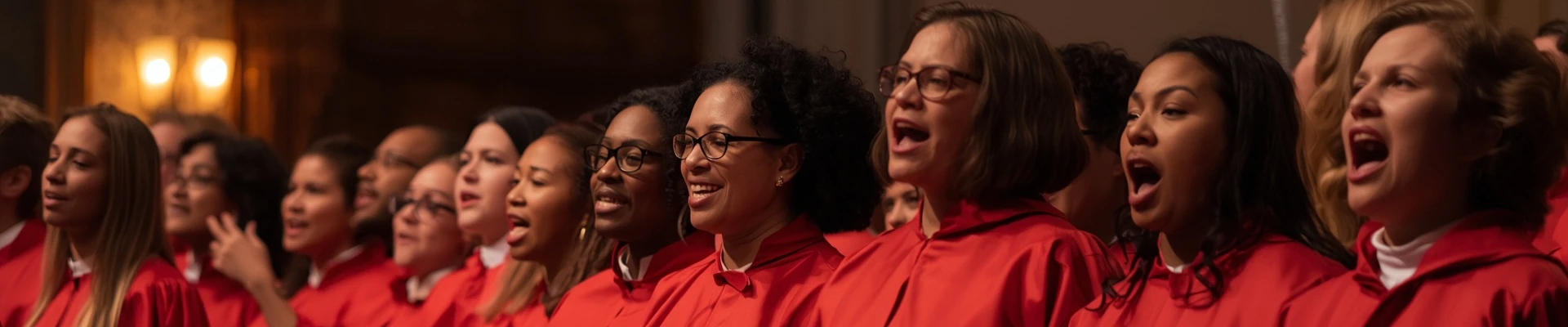
The most internationally consequential music figure associated with Roanoke is Wayne Newton, who was born in Norfolk but grew up in the Roanoke area before his family moved to Arizona — a tenuous claim, but Newton himself has cited Roanoke as a formative home. More robustly, the Roanoke Valley produced Rick Lee James and the extended world of Virginia gospel — the African American churches of Roanoke's historically Black Gainsboro and Hurt Park neighbourhoods have sustained a deep gospel tradition, with choirs that travel regionally and musicians who have fed into the broader Southern gospel and contemporary gospel circuits.
The most important music story Roanoke can credibly claim is its role in the Virginia country and roots circuit of the 1970s through 2000s. Larry Sparks, the hard-driving bluegrass guitarist and singer raised in Ohio but a longtime circuit regular in this region, has performed and recorded in the Roanoke Valley for decades. The Starr Hill era of the Dave Matthews Band — formed in Charlottesville but deeply connected to the Virginia live music circuit — touched Roanoke through the regional touring network that ran from Charlottesville south through Lynchburg and into Roanoke. Local artists like the country singer Josh Turner (who has strong Virginia circuit connections, though he is a South Carolina native) and roots artists from nearby Floyd and Salem have regularly used Roanoke as a circuit hub.
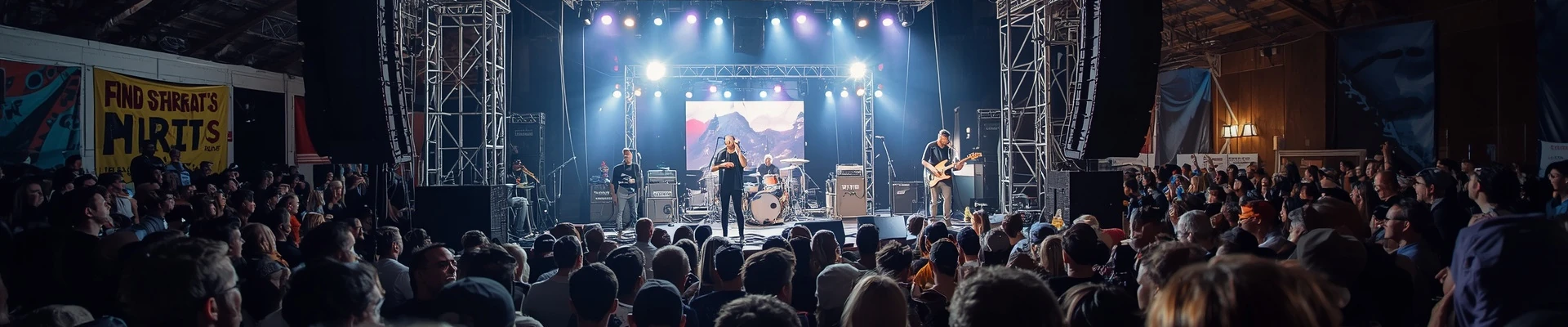
Roanoke's most distinctive contemporary music identity is its independent rock and Americana scene, which has operated with real energy since the 1990s. The Elmwood Park outdoor amphitheatre, the Jefferson Center (the converted 1921 Jefferson High School building, now a major community arts venue), and a cluster of independent clubs sustained a local scene that at its peak in the 2000s and early 2010s produced several bands with regional followings. Spooky Foote (the drummer and multi-instrumentalist), local Americana acts, and a network of musicians centred around the Music Lab community studio fed an active original music community. The city's craft brewery boom — Starr Hill (the Charlottesville brewery opened a Roanoke tasting room), Big Lick Brewing Company, Parkway Brewing Company (in Salem, with deep Roanoke connections), Olde Salem Brewing Company — has reinforced live music as a core brewery experience in a way that has genuinely strengthened the club-level scene.
The hip-hop and R&B scene in Roanoke is real but less documented externally. Roanoke's African American community — historically concentrated in the Gainsboro, Melrose, Hurt Park, and Lincoln Terrace neighbourhoods — has produced local rap, R&B, and gospel artists who circulate through the Roanoke Valley, Lynchburg, and southwest Virginia circuit. The city's proximity to Danville and Martinsville — the textile mill towns that were once a hub for Virginia blues and soul — has kept some of that tradition alive.
Americana, country, and folk remain the strongest genres in the region. The FloydFest festival (in Floyd, 50 kilometres south of Roanoke) is one of the most acclaimed roots music festivals in the mid-Atlantic, and Roanoke musicians and audiences travel to it routinely. The Blue Ridge Music Festival at Elmwood Park has programmed national roots acts. The Down by Downtown festival — a multi-venue original music festival modelled loosely on South by Southwest — ran for several years in Roanoke's downtown and showcased the city's original music community across multiple genres.
Venues and neighborhoods
The central live music corridor runs through downtown Roanoke, particularly along Campbell Avenue, Market Street, and the adjacent blocks. At the top of the capacity ladder sits the Berglund Center (formerly the Roanoke Civic Center, a 10,000-capacity arena that hosts the biggest touring acts that route through southwest Virginia — country headliners, rock national acts, wrestling, and family entertainment). The Elmwood Park Amphitheatre (an outdoor venue in the city's central park, capacity several thousand) programs summer concerts, festivals, and community events. The Jefferson Center (the converted 1921 school, with the Harvie Hall main auditorium at about 900 seats and several smaller spaces) programs jazz, chamber music, folk, lecture-concerts, and community events with real ambition.
At the club level, the Martin's Downtown (now The Martin, a restaurant and bar with live music) and Jack Brown's Beer & Burger Joint represent the downtown bar scene that anchors original music. Corned Beef & Co. (the longtime downtown bar) has hosted live music for decades. The Spot on Kirk (in the Grandin Village neighbourhood) and the Mill Mountain Theatre (a community and professional theatre in Center in the Square) offer alternative programming. The Wonju Street Café and various other neighbourhood bars round out the smaller live music layer.
The Grandin Village neighbourhood — Roanoke's artsy residential district west of downtown — anchors the city's independent arts and music community, with the Grandin Theatre (a 1930s movie palace, restored and active), several independent restaurants, and a sensibility that has attracted musicians and artists. Old Southwest — the Victorian neighbourhood immediately south of downtown — is the historic residential anchor for the city's arts community. Gainsboro — the historically Black neighbourhood north of downtown — was once a thriving cultural district (Roanoke had its own Black main street with nightclubs and entertainment through the mid-20th century) and is the subject of ongoing revitalization efforts.
Festivals and signature events
Roanoke's festival calendar is modest in scale but genuine in character. Festival in the Park (the long-running Memorial Day weekend arts, crafts, and music festival at Elmwood Park) is the city's signature community event — free, outdoors, with regional music acts and a strong local attendance. Roanoke GO Outside Festival (outdoor recreation, music, and community) reflects the city's growing identity as a Blue Ridge outdoor recreation destination. StellarFest (a roots and Americana festival at the Jefferson Center) programs national acts with regional roots connections. The Roanoke Valley Horse Show, the Salem Fair, and the Virginia State Championship Chili Cook-Off anchor the family-entertainment calendar. Virginia's Blue Ridge Marathon (one of the most challenging road marathons in the eastern United States, running up and over Mill Mountain) has grown into a regional draw with music along the course.
Halloween on the Star — the annual lighting of the Mill Mountain Star in orange for the Halloween season — is the city's most distinctive seasonal ritual, drawing crowds to the overlook for the view of the glowing star over the city below.
The city's cultural calendar runs through the Center in the Square complex — which houses the Roanoke Symphony Orchestra (founded 1953, one of the oldest community orchestras in Virginia), the Harrison Museum of African American Culture, the Taubman Museum of Art (in its own building nearby), and various smaller arts organizations. The RSO programs classical, pops, and educational concerts across the season, and its Star City Jazz series has introduced jazz programming to the regional audience.
What ties it all together
Roanoke is, at its core, a railroad mountain city that outlasted its original industry and found new purpose in healthcare, education, outdoor recreation, and a stubborn local culture that refuses to disappear into the regional blandness of corporate growth. The music scene is not nationally famous — no major label has ever colonized it, no genre-defining movement has been exported from it to the world. What Roanoke has instead is depth of tradition: the old-time fiddle lineage of the Blue Ridge, the gospel choirs of Gainsboro, the country circuit that connects the Roanoke Valley to Floyd and the broader southwest Virginia music world, and a downtown indie and Americana scene that has regenerated itself through the brewery era with genuine creative energy. The Mill Mountain Star hangs over all of it — illuminated, watchful, and specifically Roanokan in a way that no other city can claim.