

Everett is a city of roughly 108,000 people on the eastern shore of Port Gardner Bay, a sheltered inlet of Puget Sound, in Snohomish County, Washington — the county seat and the largest city in a sprawling suburban-to-rural county that stretches east from the Sound into the Cascades. It sits approximately 48 kilometres north of downtown Seattle and 40 kilometres south of Bellingham, making it the largest city in the northern end of the Greater Seattle metropolitan area (population over 4 million). The city is defined by its industrial waterfront — Naval Station Everett, the only deep-water naval installation on the West Coast north of San Diego, sits at the southern edge of the port — and by the Boeing Everett Factory in the Paine Field area at the city's northern edge, which at roughly 13.4 million cubic feet of interior space is the largest building by volume in the world. Those two anchors have given Everett an economy and identity distinct from its wealthier, tech-oriented southern neighbours: this is a working waterfront city, a labour town, with a music culture shaped by the same blue-collar restlessness that electrified the Pacific Northwest in the late 1980s and early 1990s.
A brief history
The land around Port Gardner Bay was home to the Snohomish people and broader Coast Salish nations for thousands of years before European and American contact. The modern city was platted in 1890 by a syndicate of investors that included John D. Rockefeller, who envisioned Everett as the dominant industrial and commercial port of Puget Sound — a rival to Seattle and Tacoma. The early boom years brought sawmills, shingle mills, and a smelter, and the city briefly had more capital investment per capita than almost any city in America. The Industrial Workers of the World (IWW) found fertile ground in Everett's timber and mill workforce; the Everett Massacre of November 5, 1916 — when sheriff's deputies and deputized businessmen shot into a boatload of IWW members arriving from Seattle, killing at least seven — was one of the defining violent confrontations between American capital and organised labour in the 20th century.
The Boeing Company arrived at nearby Paine Field in 1967, building the massive factory complex that would assemble the 747, 767, 777, and later the 787 Dreamliner. Boeing transformed Everett's economy and drew waves of workers to the region, stabilizing a city that had never quite fulfilled Rockefeller's grand ambitions but had carved out a durable industrial identity. The naval station deepened Everett's military economy, and the Port of Everett grew into a significant cargo and recreational harbour. The 1990s brought demographic change — significant Hispanic/Latino immigration, primarily from Mexico, has made that community one of Everett's largest, and more recent arrivals from Southeast Asia, East Africa (particularly the Somali and Eritrean diaspora communities of the broader Puget Sound region), and South Asia have diversified a city long dominated by white working-class families of Scandinavian, German, and British descent.
Music identity
Everett's most internationally consequential musical contribution is its role in the Pacific Northwest rock and grunge ecosystem of the late 1980s and early 1990s. The city was not the centre of that movement — Seattle's Capitol Hill, the Central District, and the U-District were — but Everett fed the broader regional scene with bands, venues, and a working-class intensity that found its way into the music.
Soundgarden, Nirvana, Pearl Jam, Alice in Chains, and Mudhoney came out of Seattle, but the highway between Everett and Seattle was a constant artery for bands moving between the two cities' club circuits. Several musicians with Everett connections moved to Seattle to participate in the grunge explosion; the Everett house show and basement circuit of the late 1980s was part of the broader regional infrastructure that produced the grunge generation. The most direct Everett connection to the grunge canon is Candlebox, the Seattle-formed hard rock band whose self-titled 1993 debut sold over 4 million copies — bassist Bardi Martin and drummer Scott Mercado are both from the greater Everett area, and the band built early local momentum in the Snohomish County circuit before breaking nationally.
The city's metal and hard rock tradition runs deep. Everett has produced and nurtured heavy metal, thrash, and hardcore bands through decades of club shows, practice spaces in industrial buildings near the waterfront, and a continuous DIY scene fed by working-class kids with more time than money. Nevermore, the progressive metal band formed in Seattle with deep Everett-area connections — vocalist Warrel Dane was born in the greater Puget Sound area and grew up partly in the Snohomish County corridor — became one of the most critically acclaimed progressive metal acts of the 1990s and 2000s, releasing albums on Century Media Records and Sanctuary Records that set a standard for progressive thrash in the Pacific Northwest and beyond. Warrel Dane's death in 2017 in São Paulo, Brazil, during the recording of a solo album, marked one of the heaviest losses the Pacific Northwest metal community had felt since the grunge era.
Skid Row's Sebastian Bach lived in Everett for a period during the mid-2000s and became an enthusiastic local presence, playing the club circuit and integrating into the Snohomish County rock community. A Day to Remember (from Ocala, Florida) has deep touring connections to the Everett market, and the broader post-hardcore and metalcore scene has found consistent audiences in the city's mid-size venues. The emo and pop-punk scene of the early 2000s also ran through Everett — Kill Hannah (Chicago-based but with strong Pacific Northwest connections) and dozens of regional acts played the Everett Performing Arts Center circuit and smaller clubs.
On the country and Americana side, Everett's Scandinavian and Pacific Northwest working-class heritage connects it to a durable tradition of honky-tonk and outlaw country. The Eagles Aerie and similar fraternal halls have long hosted country dances and touring country acts that serve the rural-to-urban Snohomish County population.
The city's Latino music scene — driven by a Hispanic population that now exceeds 15% of city residents — sustains an active circuit of cumbia, norteño, banda, and regional Mexican music through clubs, community events, and the annual festivals that run through the south Everett and Marysville Road corridor. Cinco de Mayo celebrations and Mexican Independence Day events bring significant live music programming.
R&B and hip-hop connect Everett to the broader Seattle rap scene — the city has produced several MC and production figures who operate within the greater Seattle orbit, and the influence of Seattle's internationally significant hip-hop tradition (which produced Sir Mix-a-Lot, Macklemore, Ryan Lewis, and Shabazz Palaces) is felt strongly in Everett's Black and multiracial music communities.
Venues and neighborhoods
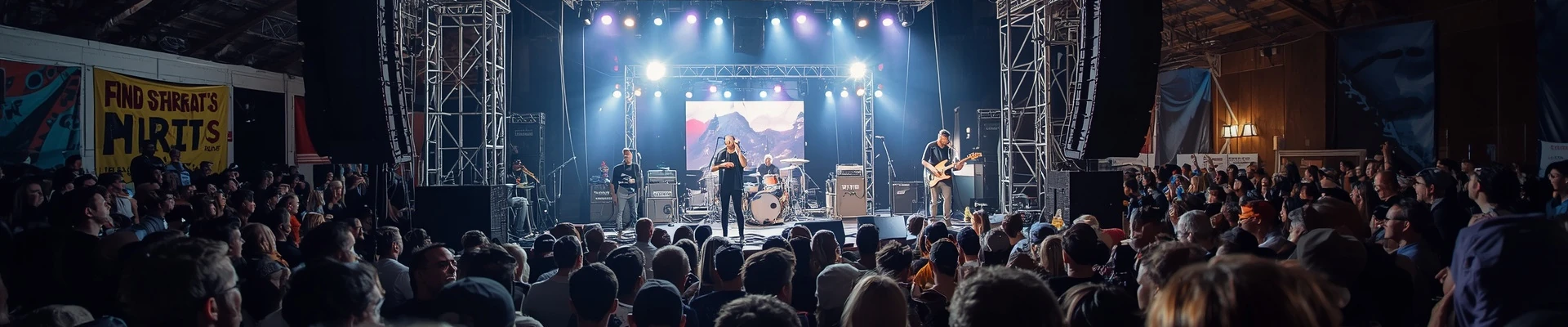
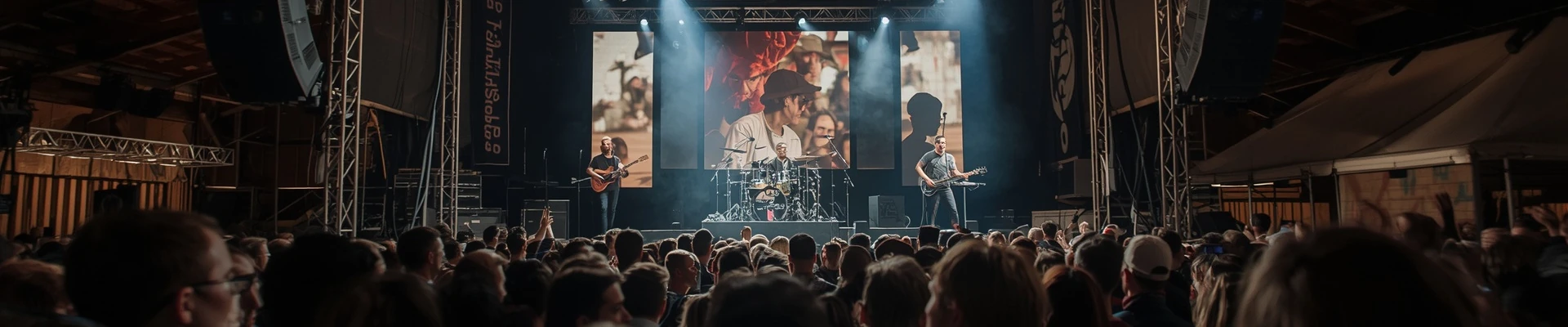
The anchor of Everett's performing arts scene is the Angel of the Winds Arena (formerly Xfinity Arena and before that Comcast Arena), the 10,000-capacity multi-use arena at the city's waterfront that opened in 2003. The arena has hosted major touring acts — Bruce Springsteen, Metallica, Lady Gaga, Blake Shelton, Elton John, The Lumineers, and dozens of others — and serves as the home of the Everett Silvertips, the WHL junior hockey team that draws significant community loyalty. The arena is the largest music venue between Seattle and Vancouver, BC, giving Everett genuine regional significance as a touring stop.
The Everett Performing Arts Center (1,000-seat theatre at the Everett Station Grounds) hosts mid-scale theatre, dance, and concert performances. The Schack Art Center runs cultural programming including smaller musical events. Historic Colby Avenue downtown anchors a cluster of bars with live music — Tony V's Garage was long one of the city's defining rock clubs, with a stage that hosted local and regional acts through the 2000s and 2010s. The waterfront redevelopment around Port Gardner Bay has brought new restaurant and bar venues.
Paine Field (Snohomish County Airport) opened a commercial passenger terminal in 2019 and hosts the Boeing Future of Flight Aviation Center, which anchors aviation-themed tourism in the Paine Field neighborhood at the city's northern edge — home to the Boeing factory complex.
Neighborhoods tell the city's story. Downtown Everett along Hewitt and Colby Avenues is the commercial and entertainment core. South Everett along Highway 99 (the old Pacific Highway) anchors the city's most diverse corridor, with Latino groceries, Vietnamese restaurants, and immigrant-community businesses. The Bayside and Riverside districts near the waterfront are the city's historically working-class waterfront zones. The Pinehurst and Silver Lake areas in the northern parts of the city are predominantly suburban.
Festivals and signature events
The Everett Blues Festival ran for over a decade as a summer anchor at the waterfront, programming regional and national blues acts in an outdoor format. The Angel of the Winds Arena touring calendar constitutes the most significant festival and concert programming — the arena runs 60–80 ticketed events per year. Cinco de Mayo celebrations, Everett Pride, Foss Waterway Seaport events on the historic waterfront, and the Holiday Arts Market round out the civic calendar. The Silvertips playoff runs bring significant community celebration energy to the downtown. Boeing tours (pre-pandemic a major draw for aerospace enthusiasts visiting the factory) have resumed at reduced capacity and connect Everett to a national tourism circuit unlike any other city its size.
The Imagine Children's Museum runs arts and education programming that feeds the next generation of Everett music participants. Everett Community College sustains a performing arts program. The Snohomish County Music Scene is broader than Everett alone — neighbouring cities like Lynnwood, Marysville, Mukilteo, and Monroe contribute to a Snohomish County circuit that keeps regional bands working.
What ties it all together
What ties Everett together musically is the city's position as the working-class northern anchor of the Puget Sound rock corridor — a city that fed the grunge generation from the margins, that gave the Pacific Northwest metal scene some of its most enduring voices in Nevermore and Warrel Dane, that hosts the largest concert arena between Seattle and Vancouver at the Angel of the Winds, and that sustains a community music culture built on the same industrial grit and waterfront restlessness that makes Everett distinct from its wealthier neighbours to the south. The Boeing factory may be the city's most famous landmark globally, but it is the clubs along Colby Avenue, the house shows in the shadow of the Cascades, and the persistent hard-rock and metal tradition that define Everett's musical soul.