

Renton sits at the southern tip of Lake Washington, roughly 19 kilometres southeast of downtown Seattle in King County, Washington. With approximately 100,000 residents, it is the twelfth-largest city in Washington State — a densely grown suburb that has been steadily urbanising since the 1990s as Seattle's housing costs pushed residents south and east. The city is best known industrially as home to Boeing's Commercial Airplanes division, specifically the massive Renton assembly plant that has been building 737 aircraft since 1967 — at peak production one of the most efficient manufacturing operations in the world, turning out a completed 737 every few hours. The Seahawks' Virginia Mason Athletic Center (VMAC), the NFL franchise's primary training and headquarters facility, sits on Renton's north side. And in Greenwood Memorial Park on the city's west side, beneath a marble gazebo, lies the grave of Jimi Hendrix — the man widely acknowledged as the greatest rock guitarist in history, who was born in nearby Seattle and is buried in the city where his family had roots.
That last fact — that Renton is where Jimi Hendrix rests — defines the city's relationship with music history more than any local scene ever has. Renton is not a music-generating city in the way that Seattle, its massive neighbour to the north, has been. It is a working city, a Boeing city, a suburb that has grown and diversified without developing the bohemian density or arts infrastructure that births major scenes. But it exists inside the gravitational field of one of the great music cities in American history, and some of that influence flows back.
A brief history
The land at the south end of Lake Washington was home to the Duwamish people for thousands of years before European settlement. The Duwamish — whose name means "people of the inside," referring to the inside passage of the river — built longhouses along the Black River, which once connected Lake Washington to the Duwamish River and the Sound. The 1855 Point Elliott Treaty pushed the Duwamish from their lands; the tribe was denied federal recognition despite continuous occupancy and remains unrecognized to this day.
White settlers arrived in the 1860s and the community of Renton was platted in 1875, named for a local mining entrepreneur. The area's coal deposits made it an early industrial site — the Renton Coal Mine opened in the 1870s and operated for decades, and the Seattle and Walla Walla Railroad (later Northern Pacific) reached town in 1877. Clay deposits supported brickworks and the city's Renton Brickyard supplied material for much of the post-1889 fire rebuilding of Seattle. By the early 20th century Renton was an established working-class industrial town.
The transformation came with World War II. Boeing — which had been building aircraft in Seattle since 1917 — selected Renton as the site of a massive new manufacturing plant, initially building the B-29 Superfortress bomber and then converting to commercial aircraft production after the war. The 737 line, which arrived in 1967 and has never left, cemented Renton's identity as a Boeing city. Boeing remains the city's largest employer and the most significant economic force in its history.
The postwar decades also brought Japanese-American families back to the South King County area after the forced relocation and internment of 1942–1945. Renton and the surrounding valley — Kent, Auburn, Tukwila — became home to a significant Japanese-American community that had deep roots in the region's agricultural and fishing industries. Southeast Asian immigration followed in the 1980s and 1990s: Vietnamese, Cambodian, Lao, and Hmong families settled throughout South King County, with Renton as a significant node. More recently, East African immigration — Somali, Ethiopian, Eritrean — has shaped the city's south side, and a growing South Asian community has added further diversity.
The Jimi Hendrix connection
James Marshall Hendrix was born on November 27, 1942, at King County Hospital in Seattle. He grew up in various Seattle neighbourhoods — Leschi, Central District, Queen Anne — in what he later described as a difficult and unstable childhood. His father, Al Hendrix, was from the Vancouver, B.C. area with family roots in the Seattle region. When Jimi died in London on September 18, 1970, at 27 years old, his father arranged to have him buried at Greenwood Memorial Park in Renton, where Al himself eventually chose to rest as well.
The original grave was modest — a simple headstone in a family plot. In 2002, Al Hendrix and the Hendrix estate completed a far more elaborate memorial: the Jimi Hendrix Memorial, a large marble gazebo surrounding an etched-granite monument with Jimi's image and the words "Forever in Our Hearts." The memorial draws Hendrix pilgrims from around the world year-round — fans leaving guitar picks, flowers, handwritten notes, marijuana, guitar strings, and other offerings. It is one of the most visited music-memorial sites in the Pacific Northwest and unquestionably the most significant pilgrimage destination in Renton.
Hendrix's grave does not represent a local scene that Renton nurtured or sustained — he left Seattle for Nashville and then the Army before anyone had heard of him, and he became famous in London before America caught up. But his resting place makes Renton an essential stop on any serious Northwest music history tour.
Music identity
Renton's indigenous music scene is modest relative to its proximity to Seattle. The city sits at the edge of a metropolis that produced Jimi Hendrix, Quincy Jones, Heart, Nirvana, the Sub Pop explosion, Macklemore, Soundgarden, Alice in Chains, and dozens of other internationally significant artists. That shadow is large. What Renton contributes is real but quieter.
The city's most significant home-grown music connection is Mick Fleetwood, who does not have deep roots here, and more locally, the post-grunge and hard rock scene that has always orbited the south Seattle suburbs. Kendall Paige, local metal and punk bands playing the dive-bar circuit between Renton, Burien, Tukwila, and the south Seattle venues — the same working-class rock scene that has always existed in Boeing-and-warehouse country. The Boeing workforce culture is fundamentally working-class rock, country, and classic rock — the jukebox bars along Rainier Avenue and East Valley Road run classic rock and country, not experimental jazz.
The city has produced a few notable musicians. Bryce Avary of The Rocket Summer grew up in the broader South King County area. The prolific composer and arranger Quincy Jones — perhaps the most important figure in 20th-century American popular music production — was born in Chicago but grew up in Seattle's Central District; while not a Renton native, he spent formative years just north of here. Dave Matthews Band guitarist Tim Reynolds has area connections. But these are loose threads rather than a coherent scene.
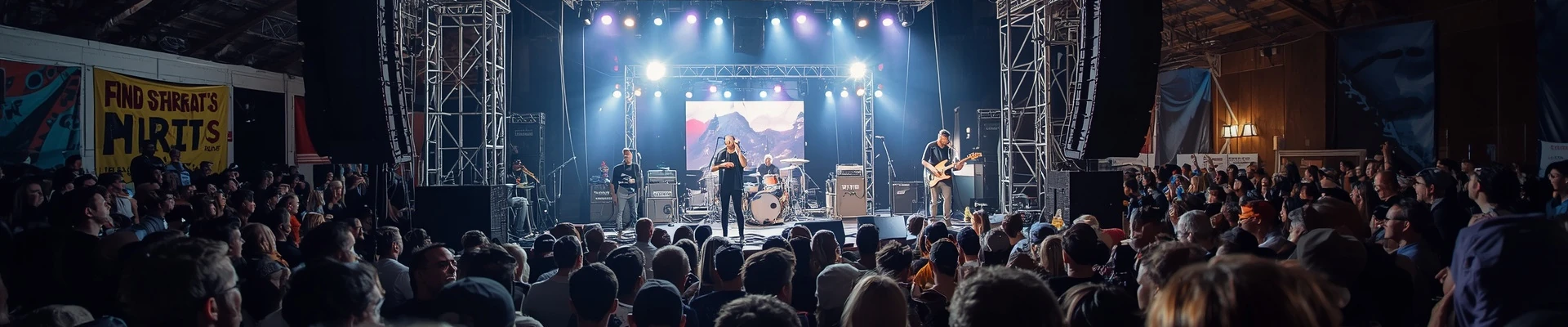
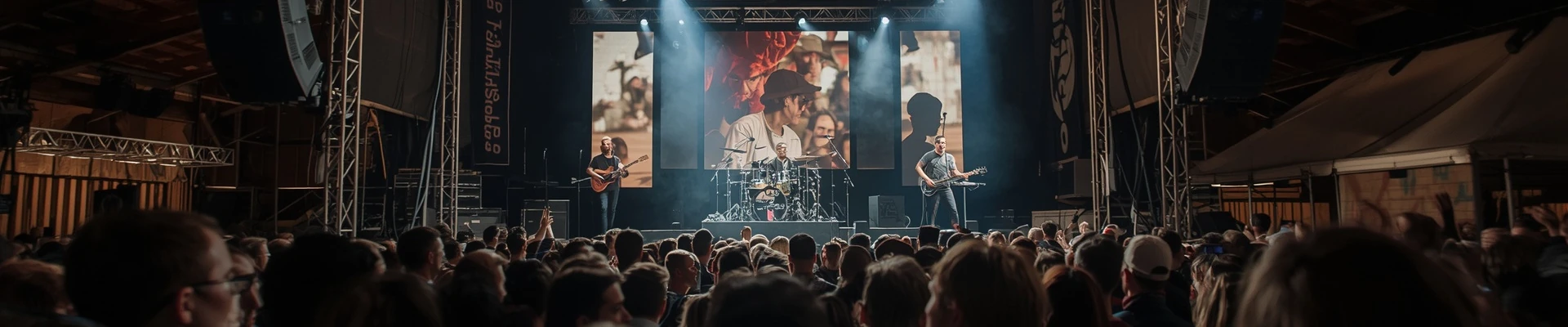
What Renton does have is a working local venue ecosystem fed by the sheer density of South King County. Renton Pavilion Event Center hosts community events, concerts, and dances. Carco Theatre in Renton's Carco Park programs community theater and occasional musical performances. The bars and taverns along South 3rd Street and Rainier Avenue — Henry's Tavern, Sip & Ship, various brewpubs — host local and regional acts. The Renton Farmers Market programs live music through the summer. The Renton Community Center and Maplewood Golf Course host outdoor events. And the broader South King County DIY scene — basement shows, VFW halls, church halls — operates continuously.
The city's East African community has built a notable music presence. Renton's Somali community — concentrated on the south and east sides — sustains a lively diasporic culture that includes live music, wedding bands, and a connection to the broader Somali music scene of Seattle. The Vietnamese and Southeast Asian communities have their own karaoke culture, Vietnamese pop scene, and cultural events. The South Asian community programs Bollywood events and classical Indian music through cultural associations.
The South King County hip-hop scene flows through Renton. A continuous chain of local MCs and producers — loosely connected to the broader Seattle hip-hop world that produced Macklemore, Grynch, Sol, and the Sportn' Life Records era — work out of home studios and small venues across South King County, with Renton as part of the fabric.
Venues and neighborhoods
Renton's venue landscape is characterised by community spaces and bars rather than dedicated music halls. The Renton Pavilion Event Center on South 3rd Street is the city's primary event venue, hosting weddings, community dances, and the occasional concert. Carco Theatre (500 seats) in Renton's Earlington neighbourhood programs the city's community theater productions and some musical events. The Gene Coulon Memorial Beach Park — a 57-acre lakefront park on the north shore — hosts summer outdoor events including the annual Renton River Days festival.
The bar and tavern circuit runs through Downtown Renton (the South 3rd Street corridor), The Landing (the big-box retail and restaurant development on the former Boeing plant site near the Seahawks VMAC), and along Rainier Avenue South. Brewpubs — Renton Brewing Company, Brickyard Brewing — program acoustic and small-band shows. The Renton Technical College campus hosts occasional student and community musical events.
The VMAC (Virginia Mason Athletic Center) itself, while not a music venue, pulls significant resources and brand into the city and hosts the Seahawks' various entertainment and community events.
Festivals and signature events
Renton River Days — the city's largest annual community festival, held each summer at Gene Coulon Memorial Beach Park — is the most significant recurring event. It programs live music, typically local and regional acts across country, classic rock, and popular genres, over multiple days, alongside food, vendors, and family activities. The Renton Farmers Market (May–October, Tuesdays downtown) programs live music weekly through the season. The Renton Arts & Culture department programs periodic events through the Renton History Museum and community centres.
The Seahawks' training camp (open practices at the VMAC) draws thousands of fans each summer and generates significant community energy, though it is sports rather than music.
More significant than any local festival is Greenwood Memorial Park's continuous role as a pilgrimage site. There is no formal event attached to Hendrix's grave — the pilgrimage is organic, year-round, and international. Fans visiting from Germany, Japan, the UK, and Brazil are not unusual. November 27 (Hendrix's birthday) and September 18 (his death anniversary) see concentrations of visitors.
What ties it all together
Renton is fundamentally a Boeing city sitting in the shadow of Seattle — a working-class industrial suburb that has never generated a scene on the scale of its neighbour but whose relationship with music history is defined by one of the greatest musicians who ever lived. Jimi Hendrix's grave at Greenwood Memorial Park is the city's most internationally significant cultural asset, drawing pilgrims from across the world to a quiet cemetery on the west side of town. The Seahawks' VMAC, the Boeing plant, and the demographic diversity of South King County — Somali, Vietnamese, South Asian, Latino, Japanese-American — give the city a cultural richness that expresses itself in community events, diaspora music scenes, and the perpetual hum of a working city rather than a curated arts district. What Renton lacks in flashy scenes it carries in something quieter: the knowledge that the man who redefined what a guitar could do is buried here, on the south shore of Lake Washington, not far from where Boeing builds its planes.