

Seattle is the largest city in Washington and the 18th-largest in the United States, with roughly 781,000 residents inside the city limits and more than 4 million across the surrounding Puget Sound metropolitan area, which includes Bellevue, Tacoma, and Everett. Built across a chain of hills between Lake Washington and Puget Sound, ringed by the Olympic Mountains to the west and the Cascade Range to the east, dominated by the snow-capped peak of Mount Rainier to the south, it is one of the most geographically dramatic American cities and the unmistakable cultural and economic capital of the Pacific Northwest. Seattle is home to Boeing's historic operations, Microsoft (in suburban Redmond), Amazon, Starbucks, Costco, Nintendo of America, and one of the largest container ports on the U.S. West Coast — but its musical identity, more than any other major American city's, is defined by a single decade. Seattle in the late 1980s and early 1990s gave the world grunge, and that legacy has never quite let the city go.
A brief history
The Duwamish and Suquamish peoples lived around the Puget Sound shoreline for thousands of years before American settlers arrived in the early 1850s. The town was named for Chief Si'ahl (Seattle), the leader of the Duwamish and Suquamish peoples. The 1897 Klondike Gold Rush turned Seattle into a major staging ground and shipping port for prospectors heading to the Yukon, and the city's growth accelerated through the early 20th century with timber, salmon canning, and shipbuilding. World War II brought enormous federal investment in Boeing's aircraft plants and the surrounding shipyards, and the postwar founding of the University of Washington's research culture, the 1962 World's Fair at Seattle Center, and the 1970s and 1980s rise of Microsoft, Boeing, and the early personal computing industry built the modern city. The 1990s grunge explosion, the 1999 WTO protests, the 2000s rise of Amazon and the broader Seattle tech industry, and the explosive 2010s population growth have all left their mark. Successive waves of migration — Black Americans during and after the Great Migration, large Filipino, Chinese, Japanese, and Vietnamese populations, very large Somali and Ethiopian communities since the 1990s, and a steady stream of tech-era arrivals from across the United States and the world — have built a city that is increasingly diverse but also increasingly expensive and rapidly displacing.
Music identity
Seattle's most internationally famous musical chapter is the explosion of grunge — and the broader Pacific Northwest alternative rock scene — in the late 1980s and early 1990s. The convergence of long winters, cheap rents in a then-affordable city, a thriving college rock scene anchored by KEXP's predecessor KCMU, and the founding of Sub Pop Records in 1986 by Bruce Pavitt and Jonathan Poneman produced one of the most consequential rock movements of the 20th century. Nirvana, formed in nearby Aberdeen in 1987 by Kurt Cobain and Krist Novoselic, signed to Sub Pop, released Bleach (1989), and then broke globally with Nevermind (1991) — an album that, more than any other, ended the 1980s in popular music. Pearl Jam, formed in Seattle in 1990 by members of the earlier Mother Love Bone and Green River, became one of the best-selling rock acts of the decade. Soundgarden, formed in Seattle in 1984 by Chris Cornell, Kim Thayil, Hiro Yamamoto, and Matt Cameron, built one of the heaviest and most acclaimed catalogs of the era. Alice in Chains, formed in Seattle in 1987 by Jerry Cantrell, Layne Staley, Mike Starr, and Sean Kinney, took grunge into its darkest and most metallic territory. Mudhoney, Tad, Mother Love Bone, Temple of the Dog, Mad Season, Screaming Trees (Ellensburg-based but constantly playing Seattle), Melvins (Aberdeen-Seattle), the Wipers (Portland-based but a Pacific Northwest touchstone), and a deep current generation built the broader scene. Sub Pop itself became one of the most iconic independent labels in the world, going on to sign the Postal Service, the Shins, Iron and Wine, Fleet Foxes, the Head and the Heart, Father John Misty, Beach House, and Clipping. The K Records label in nearby Olympia, the Up Records label, and a deep regional college-rock infrastructure fed the broader scene.
The grunge era overshadows but does not erase the rest of Seattle's musical history. Jimi Hendrix, born in Seattle in 1942, is one of the most important guitarists in the history of recorded music; his Greenwood Cemetery memorial in nearby Renton has become a pilgrimage site, and the Museum of Pop Culture (MoPOP) at Seattle Center holds one of the world's largest Hendrix archives. Quincy Jones, raised in Seattle from age 10, came up through the city's Central District jazz scene playing with Ray Charles (then a teenage Seattle resident as well) at the Black & Tan Club and other venues on Jackson Street; the Central District in the 1940s was one of the most important Black music corridors in the Pacific Northwest. Bing Crosby spent significant time in Seattle. Heart, the rock band led by sisters Ann and Nancy Wilson, formed in Seattle in 1973 and built one of the most successful arena-rock catalogs of the 1970s and 1980s. Queensrÿche, formed in Bellevue in 1980, became one of the foundational progressive metal bands. Kenny G, born and raised in Seattle, became one of the best-selling jazz artists of all time.
The post-grunge decades remade the city again. Death Cab for Cutie, formed in Bellingham in 1997 and quickly Seattle-based, became one of the most acclaimed indie rock bands of the 21st century. The Postal Service (Death Cab's Ben Gibbard and Jimmy Tamborello) released one of the defining indie pop albums of the 2000s. Modest Mouse (Issaquah-based), Built to Spill (Boise-based but constantly playing Seattle), Sleater-Kinney (Olympia-based, Pacific Northwest cornerstone), The Shins (Albuquerque-formed, Sub Pop-released), Fleet Foxes (formed in Seattle in 2006), Band of Horses (Seattle-formed in 2004), The Head and the Heart (formed in Seattle in 2009), Pickwick, The Cave Singers, Father John Misty (Sub Pop-released), and Iron and Wine (Sub Pop-released) made Seattle one of the most important indie folk and indie rock cities in the country in the 2000s and 2010s. Macklemore, born and raised in Seattle, broke independently with The Heist (2012) and became one of the most commercially successful hip-hop artists of the 2010s without major-label backing — a uniquely Seattle achievement. Sir Mix-a-Lot, the Seattle hip-hop pioneer, broke "Baby Got Back" out of his Seattle independent label Nastymix in 1992. Shabazz Palaces (the Ishmael Butler-led group, Sub Pop-released), THEESatisfaction, Dave B, Travis Thompson, Lil Mosey's Seattle ties, and a current generation of trap and indie hip-hop artists continue the lineage. Brandi Carlile, raised in Maple Valley just southeast of Seattle, has become one of the most acclaimed Americana artists of the 21st century. Mary Lambert, Allen Stone's Seattle ties, and a deep singer-songwriter circuit anchor the city's modern roots scene.
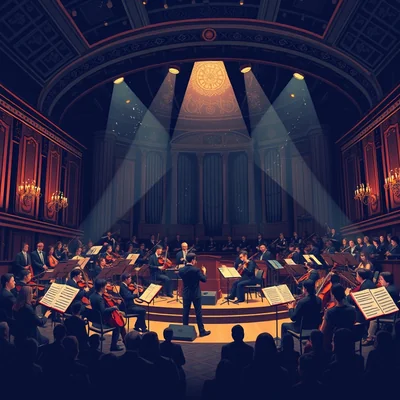
Seattle has also been one of America's most important independent radio cities. KEXP (formerly KCMU), broadcasting from Seattle Center, is one of the most respected non-commercial radio stations in the world, with a global online audience and a programming philosophy built around discovery and community. The KEXP live performance studio has hosted nearly every significant indie artist of the past two decades, and KEXP's role in Seattle's music ecosystem is central. The Seattle Symphony, the Seattle Opera, and Pacific Northwest Ballet anchor a strong classical and contemporary music tradition. Earshot Jazz, the Seattle Jazz Festival, and venues like Tula's (now closed but a long-running anchor) and Dimitriou's Jazz Alley keep jazz central to the city. Latin music — primarily Mexican, Salvadoran, and Honduran — runs through clubs across South Seattle and White Center. East African music — primarily Somali and Ethiopian — runs through community halls in Rainier Valley and Skyway. Filipino, Vietnamese, and Cambodian music scenes run through the Beacon Hill and International District corridors.
Venues and neighborhoods
Seattle's venue ecosystem is well-developed. At the top sit Climate Pledge Arena (home of the Kraken, opened in 2021 on the site of the old Key Arena), Lumen Field and T-Mobile Park, Climate Pledge Arena's smaller WaMu Theater configuration, the Paramount Theatre, the Moore Theatre (Seattle's oldest still-operating theater), the Showbox (a historic 1939 venue downtown that has been threatened with redevelopment for years and remains operational), the Showbox SoDo, Benaroya Hall (home of the Seattle Symphony), and McCaw Hall (home of the Seattle Opera). The midsize tier includes the Neptune Theatre, the Crocodile (the legendary Belltown rock club, originally opened in 1991 and now relocated to a larger space), the Tractor Tavern in Ballard (the city's anchor Americana venue), the Triple Door, and Nectar Lounge. Beneath them is a deep club layer — the Crocodile, the Tractor Tavern, the Sunset Tavern, High Dive, Conor Byrne, the Sunset, Substation, Chop Suey, Barboza, Neumos, Q Nightclub, Funhouse (the long-running punk venue at the base of the Space Needle, demolished and partially reborn), the Vera Project (the all-ages venue at Seattle Center), and a network of bars and DIY rooms across Capitol Hill, Ballard, the University District, Belltown, Georgetown, and South Seattle. Dimitriou's Jazz Alley and the Royal Room in Columbia City anchor the jazz circuit. Rainier Valley and Skyway support the city's East African and Filipino music scenes.
Different neighborhoods carry different musical identities. Capitol Hill anchors the indie rock, electronic, queer, and DIY scenes through Neumos, Barboza, Chop Suey, and a dense bar and venue strip. Ballard anchors the Americana, country, and singer-songwriter circuits through the Tractor Tavern. Belltown retains its grunge-era rock identity through the Crocodile and a smaller bar circuit. Pioneer Square anchors the city's blues circuit through the Central Saloon (Seattle's oldest bar, dating to 1892) and a long lineage of jazz and Americana venues. The University District supports the college and indie scenes. The Central District retains echoes of its historic Black jazz heritage. Rainier Valley and Columbia City support the city's Black, East African, Filipino, and Latin scenes. Georgetown has emerged in recent years as a DIY and warehouse venue corridor.
Festivals and signature events
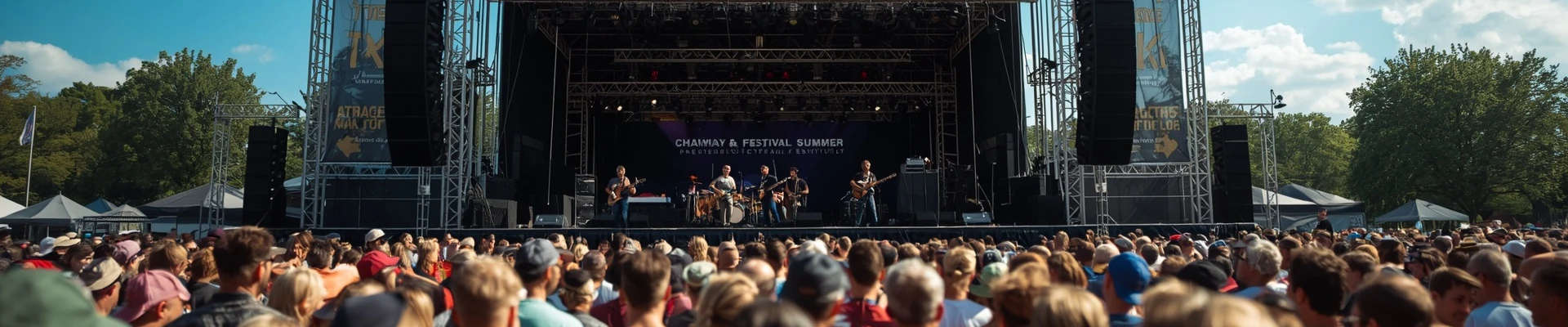
The festival calendar reflects the city's range. Bumbershoot at Seattle Center each Labor Day weekend, founded in 1971, is one of the longest-running urban music festivals in the United States, drawing major rock, hip-hop, and indie acts. Capitol Hill Block Party in late July transforms the neighborhood into a multi-stage festival showcasing the local indie scene alongside national headliners. Sasquatch! Music Festival at the Gorge Amphitheatre (two hours east, but functionally part of the Seattle festival circuit until its 2018 conclusion) was one of the most respected indie festivals on the West Coast. Day In Day Out, Decibel Festival (electronic music), Northwest Folklife Festival (the largest free folk festival in the United States, drawing more than 200,000 attendees over Memorial Day weekend), Earshot Jazz Festival, Upstream Music Fest's legacy, Crocodile's Death Wave programming, City Arts Fest, Seattle Pride, Seafair, Seattle International Film Festival's music programming, Fremont Solstice, Hempfest (with substantial music programming), Festal at Seattle Center (a year-round series of cultural festivals), and Seattle Symphony's Summer Festival keep the calendar full. El Centro de la Raza's Festival de las Américas, Wat Mongkolratanaram's music programming, and the East African Cultural Festival add cultural and community programming.
What ties it all together is the city's combination of geographic isolation, cheap-rent-turned-expensive history, immigrant diversity, and a uniquely Pacific Northwest sensibility — moody, literate, anti-glamorous, and rain-soaked. Seattle is the city where Jimi Hendrix learned to play guitar on Jackson Street, where Quincy Jones came up alongside teenage Ray Charles at the Black & Tan Club, where Heart became Heart in the early 1970s rock circuit, where Sub Pop and KEXP made an alternative music economy possible, where Nirvana, Pearl Jam, Soundgarden, and Alice in Chains rewrote rock and roll in a five-year span, and where Macklemore proved that a Seattle independent could still go to number one in 2012. It is one of the most musically consequential cities of its size in the world.