

Vancouver, Washington sits at the northern bank of the Columbia River, directly across from Portland, Oregon, making it one of the most unusual major American cities — a city of nearly 200,000 people that functions simultaneously as a self-contained municipality and as the northern edge of one of the Pacific Northwest's two dominant metro areas. It is the seat of Clark County, the fourth-largest city in Washington State, and the southernmost anchor of a continuous urban corridor that extends north through Salmon Creek, Battle Ground, and toward Ridgefield. The terrain is characteristically Pacific Northwest: the city sits on a low plateau above the Columbia floodplain, with the Columbia River Gorge opening dramatically to the east, Mount Hood visible on clear days to the southeast, and Mount St. Helens looming to the north. The broader landscape is defined by the working river, extensive wetlands along the Columbia's shores, and the forested hills of Clark County's eastern fringe.
The city's economy has historically been anchored by the Port of Vancouver (one of the largest ports on the Columbia), paper and aluminum manufacturing, and a substantial military presence through Pearson Air Museum and the legacy of Pearson Field — the oldest operating airfield in the United States. In the 21st century, Vancouver has become increasingly integrated into Portland's technology and knowledge economy, drawing workers who prefer Washington State's lack of income tax while commuting across the Interstate Bridge (the aging twin spans on Interstate 5 that have been the subject of contentious replacement debates for decades). This Portland-adjacency is the defining fact of modern Vancouver: the city is perpetually in relationship with its larger neighbor — sometimes orbiting it, sometimes asserting independence from it, always defined partly by proximity.
A brief history
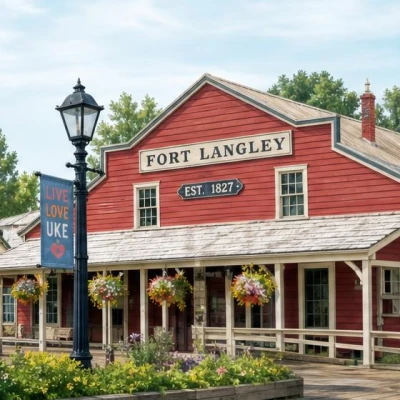
The land along the Columbia's north bank was home to the Chinook people for thousands of years before European contact. The Chinook were sophisticated traders who operated at the confluence of river-based networks stretching from the Pacific Coast to the Plateau and Great Plains. Fort Vancouver, established by the Hudson's Bay Company in 1825 under Dr. John McLoughlin, became the most important fur-trade post in the Pacific Northwest and the de facto capital of the entire Columbia District. The fort's cosmopolitan workforce — French-Canadian voyageurs, Native wives and laborers, Scots, Kanakas (Native Hawaiians), and Iroquois — made it one of the most diverse communities on the continent. American settlement followed with the establishment of Fort Vancouver as a U.S. Army post in 1849, and the city was incorporated in 1857 — predating both Washington statehood and the incorporation of Portland. This history gives Vancouver a claim to preeminence that its current civic identity sometimes forgets to assert: the city was the beating heart of Pacific Northwest commerce before Seattle or Portland existed.
The city's 20th century was shaped by the paper and aluminum industries (the Columbia River's hydroelectric power fed smelters and pulp mills along its banks), the dramatic expansion of the Columbia River Gorge highway infrastructure, and the development of suburban residential neighborhoods driven by Portland workers seeking affordable housing across the state line. The Columbia River Interstate Bridge — opened in 1917 and widened in 1958 — has always been the umbilical cord between the two cities, and Vancouver's identity has long been negotiated across those spans. The city grew sharply from the 1980s onward as Portland's housing costs pushed residents north; by the 2000s, Vancouver was absorbing tens of thousands of new residents per decade.
Music identity
Vancouver's music identity cannot be separated from Portland's, but it has never been simply a satellite of the Rose City's scenes. The two cities share venues, promoters, booking agents, and audiences, but Vancouver has produced artists and spaces with their own character — shaped partly by the working-class and immigrant demographics of Clark County, partly by a tradition of all-ages spaces born of necessity, and partly by the PNW indie rock ethos that ran from Olympia through Seattle and Portland and washed over the Columbia into Vancouver.
The city's most internationally significant contribution to recorded music is The Helio Sequence — the indie rock duo of Brandon Summers (vocals, guitar) and Benjamin Weikel (drums, synthesizers) who formed in Vancouver in the late 1990s and went on to release critically acclaimed albums on Sub Pop Records including Keep Your Eyes Ahead (2008) and Negotiations (2012). The Helio Sequence built their sound in Vancouver's rehearsal spaces and small venues before Portland's scene absorbed them, and their arc from Clark County bedroom recording to Sub Pop signees is a defining story of the PNW indie music corridor. Their dense, looping guitar textures and Weikel's drums-as-architecture approach placed them in the lineage of Modest Mouse, Built to Spill, and the broader Pacific Northwest indie tradition.
The PNW punk and DIY lineage runs deep in Vancouver. The city's proximity to Portland's legendary 924 Gilman-adjacent DIY scene (via the influence of Bay Area hardcore) and its own blue-collar demographic produced a consistent stream of punk, hardcore, and post-hardcore acts through the 1990s and 2000s. Warehouse 23 — the all-ages venue on Lower Main Street — was for years the essential local room for young bands who couldn't legally play Portland's 21+ bars, and the space produced a generation of Pacific Northwest acts who learned stagecraft in its low-ceiling room. The all-ages tradition in Vancouver has been more robust than in many comparably sized American cities, partly because the age-segmented Portland bar scene pushed younger audiences back across the river.
Vancouver's hip-hop scene has grown consistently since the 2000s, shaped by the city's large Latino/Chicano community (particularly in East Vancouver and the Mill Plain corridor) and a West Coast rap tradition that arrived through Portland and the broader Pacific Northwest. Local producers and MCs have built a circuit through Esther Short Park summer events, the Clark County Fair, and cross-river collaborations with Portland hip-hop venues. The city's Russian and Eastern European immigrant community — one of the largest concentrations of Russian-speaking residents in the Pacific Northwest, centered in neighborhoods north of the city center — has sustained its own music traditions, from classical ensembles to Russian folk and Orthodox choral music.
Country and Americana have a consistent audience in Vancouver, reflecting Clark County's rural eastern fringe and its strong connection to the broader Pacific Northwest ranching and logging communities. The Clark County Fair — held annually in August at the Clark County Fairgrounds in Ridgefield — draws major country acts and sustains a local honky-tonk circuit through roadhouses along Highway 99 and Fourth Plain Boulevard.
The city's metal and hard rock scene has been sustained by a network of rehearsal studios, small bars, and the legacy of Northwest heavy rock traditions. The Columbia Gorge region has produced bands in the thrash, doom, and progressive metal traditions that orbit the Portland metal scene while maintaining identities rooted in Clark County. Loowit Brewing (named for the Chinook name for Mount St. Helens) has become a venue anchor for mid-size touring acts in a brewpub setting, part of a broader Pacific Northwest pattern of craft brewing and live music co-location.
Venues and neighborhoods
The flagship concert room in Vancouver is The Kiggins Theatre on West Main Street — a 1936 art-deco single-screen cinema that was restored and reopened as a dual-use movie and events venue, hosting touring musicians, film screenings, and community events in one of the most architecturally distinctive rooms in Clark County. The Kiggins holds approximately 500 and books across indie rock, folk, jazz, and eclectic touring acts. Warehouse 23 (later rebranded through various names) on Lower Main Street has been the backbone of Vancouver's all-ages scene, a critical training ground for young bands and audiences in a city where Portland's 21+ bar culture would otherwise exclude anyone under drinking age.
Loowit Brewing Company on Lower Main Street programs live music in a well-appointed taproom setting, pulling from the Portland-Vancouver touring circuit and sustaining a mid-week and weekend live music calendar. The Trap Door Theatre on Washington Street doubles as a performance and events space for smaller acoustic acts, spoken word, and theatrical productions with live music components. The 789 and The Barrel anchor the neighborhood bar circuit on Main Street and in the Uptown Village district. The Uptown Village neighborhood — Vancouver's most walkable and arts-forward commercial district, concentrated along NW Fourth Plain Boulevard and NW 15th Avenue — is the closest the city comes to a dedicated arts corridor, with galleries, independent shops, and venues clustered in a walkable stretch.
Esther Short Park — a central downtown park and civic gathering space — hosts the Farmers Market and Concert Series in summer, drawing free outdoor performances that serve as both community events and informal showcases for local acts. The Clark County Fair at the Clark County Event Center in Ridgefield anchors the annual large-venue programming, drawing national country and rock headliners.
The Pearson Field Education Center and Fort Vancouver National Historic Site grounds have hosted outdoor concert events, and the Columbia River waterfront — undergoing progressive redevelopment as the Columbia Waterfront project adds residential and commercial density along the old industrial river edge — promises a new cluster of venues as the district matures.
Festivals and signature events
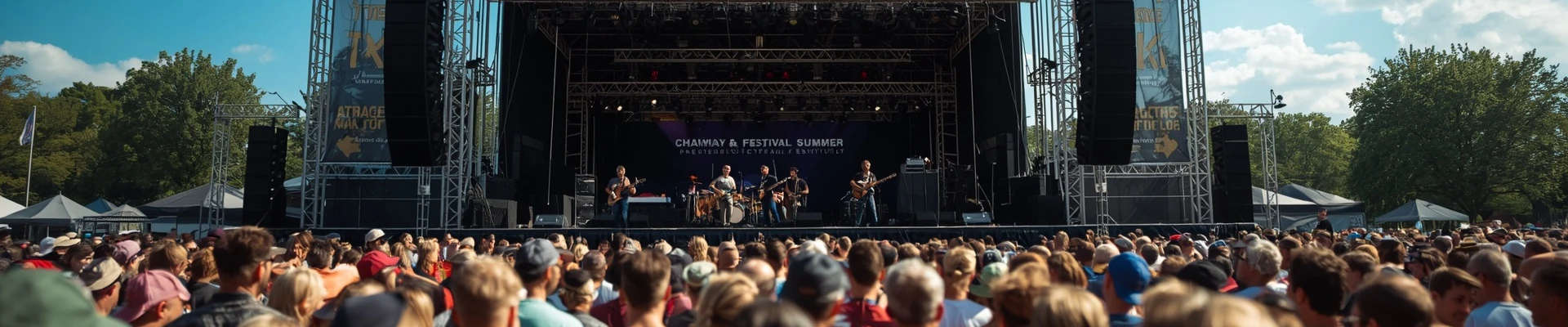
Vancouver's festival calendar is anchored by the Clark County Fair (late August, Ridgefield), which draws 200,000+ visitors over its run and books national and regional acts across country, rock, and pop. The Summer Nights in the Park concert series at Esther Short Park brings free weekly outdoor music through June and July, with bookings weighted toward local and regional acts. The Uptown Village Uncorked festival in the Uptown district pairs wine, food, and live music in a neighborhood block party format. The Battle Ground Heritage Festival in nearby Battle Ground draws acts from across the Portland-Vancouver circuit.
The city's proximity to Portland means that virtually all major national touring acts pass through within a short drive — the Moda Center, Arlene Schnitzer Concert Hall, Crystal Ballroom, and Doug Fir Lounge in Portland serve as the region's anchor venues, and Vancouver residents participate fully in that calendar. This is simultaneously the city's greatest musical advantage (access to world-class programming without local infrastructure investment) and its perpetual challenge (the difficulty of sustaining a locally-rooted venue ecosystem when Portland is fifteen minutes away).
What ties it all together
Vancouver's music identity is the sound of a city perpetually negotiating its relationship with a dominant neighbor. The same economic logic that makes Clark County attractive — no income tax, lower housing costs, a slower pace — also makes it difficult to sustain the kind of dense venue infrastructure that drives music scene formation. What has survived and thrived is built on genuine community: all-ages spaces that serve audiences Portland's bar culture excludes, brewpubs that program music because their owners believe in it, neighborhood festivals that anchor community identity. The Helio Sequence remain the city's most internationally recognized musical voice, but the deeper legacy is in the Warehouse 23 tradition — the rooms where Pacific Northwest bands learn to play before the Columbia River carries them south.