
Green Bay is the third-largest city in Wisconsin, with roughly 105,000 residents inside the city limits and about 330,000 in the greater Green Bay metropolitan area. It sits at the southwestern tip of Green Bay — the large bay on the western shore of Lake Michigan — at the mouth of the Fox River, which drains Lake Winnebago and the broader Fox-Wisconsin waterway corridor southward. The city lies approximately 185 kilometres north of Milwaukee and 270 kilometres north-northeast of Chicago. Green Bay is the seat of Brown County and the economic hub of northeastern Wisconsin, anchored by paper manufacturing (the Fox River Valley is one of the most productive papermaking corridors in North America), health care, food processing (the cheese and dairy economy of the surrounding region), and, above all, the Green Bay Packers — the only community-owned franchise in major North American professional sports and one of the most storied teams in NFL history.
For a city of its size, Green Bay commands a disproportionately large cultural footprint. Lambeau Field (capacity 81,441, opened 1957 and repeatedly expanded) is one of the most famous sports venues in the United States and one of the most significant outdoor concert venues in the upper Midwest. The city's music scene is shaped by the same forces that built it: working-class roots, a strong European immigrant heritage (German, Belgian, Dutch, Polish), a seasonal economy that intensifies indoor entertainment in long Wisconsin winters, and the continuous cultural gravity of a passionate sports identity that funnels community energy into shared ritual. Green Bay is not a music industry city in the way that Nashville, Austin, or Seattle are — it has no nationally recognized scene or genre-defining sound — but it sustains a genuine, local-facing music culture built on rock, country, blues, polka, folk, and an increasingly active indie circuit.
A brief history
The land at the head of Green Bay was home to Menominee, Ho-Chunk (Winnebago), and Oneida peoples before European contact. Jean Nicolet landed near here in 1634, making it one of the oldest sites of European contact in the upper Great Lakes. Fort La Baye was established by the French in 1717, and the settlement that grew around it — first as a fur trading post, later as a military outpost — became the oldest settlement in Wisconsin. Green Bay was incorporated as a city in 1854.
The Fox River and the bay drove the economy for the first two centuries. Lumber, and then paper manufacturing, dominated the 19th and early 20th centuries. The Packers, founded in 1919 by Curly Lambeau (a Green Bay native) and named after the Indian Packing Company that provided the team's first equipment, became a community institution in the 1920s and 1930s, winning multiple NFL championships before the Super Bowl era. The Lombardi era (1959–1967) — five NFL championships in seven years, including the first two Super Bowls — cemented Green Bay's status as a football city of mythological proportions. Vince Lombardi, Bart Starr, Paul Hornung, Ray Nitschke, Jerry Kramer, and the broader Ice Bowl generation are still live references in the city's cultural conversation.
The post-industrial transition began in the 1970s and deepened through the 1980s and 1990s as paper mills consolidated and employment in manufacturing declined. The service economy (health care via Bellin Health and HSHS St. Vincent Hospital, insurance, retail) grew to fill the gap. The Packers remained the cultural anchor through every economic cycle — a publicly owned community institution that cannot be sold or moved, generating hundreds of millions in economic activity annually and providing cultural identity that no other mid-sized American city can quite replicate.
Music identity
Green Bay's music identity is built primarily on working-class rock and country, complemented by a deep polka tradition rooted in the city's German and Belgian heritage, a persistent blues scene along the bars of Broadway and Washington Street, and a small but active indie and alternative circuit centered around the University of Wisconsin-Green Bay and younger venues on the west side.
The most internationally significant musical connection Green Bay can claim is probably Steve Miller — the blues-rock guitarist and songwriter behind the Steve Miller Band grew up in Milwaukee but the broader Wisconsin rock lineage runs through cities like Green Bay. More directly, Violent Femmes (the Milwaukee-formed post-punk band) and the broader Wisconsin alternative tradition of the 1980s reached Green Bay through venues and radio. Bon Iver (Justin Vernon's band, from Eau Claire, 300 km northwest) is Wisconsin's most celebrated indie export of the 21st century, and his influence on the broader Wisconsin singer-songwriter scene extends to Green Bay's independent circuit.
More locally, the city produced The Gufs — the mid-1990s alternative rock band from Green Bay that achieved national attention and a major-label deal (A&M Records) before disbanding in 2001. The Gufs were genuinely representative of the Green Bay rock scene of their era: melodic, hook-driven, guitar-forward, deeply rooted in the Midwest bar-band tradition. Mark Waldoch and John Mulcahey built a following regionally and nationally, and the band remains a touchstone for Green Bay music culture.
The polka tradition runs deep. Frankie Yankovic (the "Polka King," from Cleveland but a figure whose recordings circulated extensively through Wisconsin's German and Polish communities) represents the broader tradition that still manifests in Green Bay through polka dances at VFW halls, church festivals, and events at Titletown Brewing Company and Hinterland Brewery. The Belgian community in Door County (the peninsula north of Green Bay) has its own distinct Belgian folk music tradition — trippe, croye, and a cappella harmonies — that surfaces at Door County festivals attended heavily by Green Bay residents.
The country tradition connects to the broader Wisconsin supper-club and bar-band circuit. Jason Aldean, Eric Church, Dierks Bentley, and other mainstream country acts draw massive crowds when they come through the Resch Center or Lambeau Field. Local country bands work the tavern circuit from the Riviera Supper Club to Kroll's West to venues out in Brown County townships.
The blues scene centers on a handful of longtime venues. Kavarna Coffee (on Dousman Street, known for folk, singer-songwriter, and acoustic blues), The Lyric Room (a downtown listening room for Americana and blues), and the series of summer blues festivals provide the platform. Tony Fabris and other local blues guitarists have built followings through decades of venue work.
Green Bay also has a Latino music scene, driven by a growing Mexican and Central American population in the city's south and west sides. Banda, norteño, cumbia, and regional Mexican acts play venues along South Broadway and at events organized by the Latino community organizations of Brown County.
Venues and neighborhoods
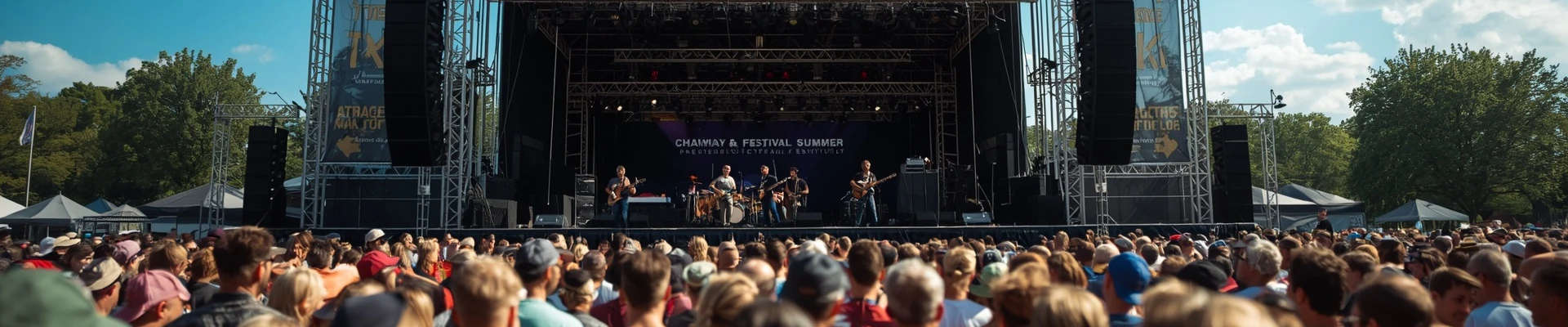
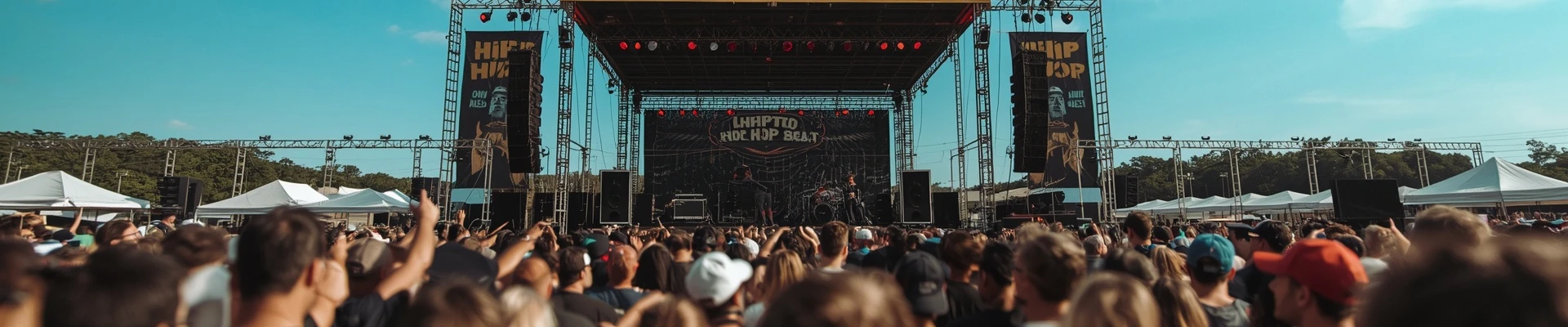
The dominant venue is Lambeau Field — when the stadium hosts concerts (which it does selectively, with major acts playing on the field in summer), it draws 70,000+ attendees and is among the most atmospheric outdoor concert experiences in the United States. U2, Garth Brooks, Kenny Chesney, and Tim McGraw & Faith Hill have all played Lambeau, each drawing enormous crowds in a stadium that charges the air with decades of collective memory.
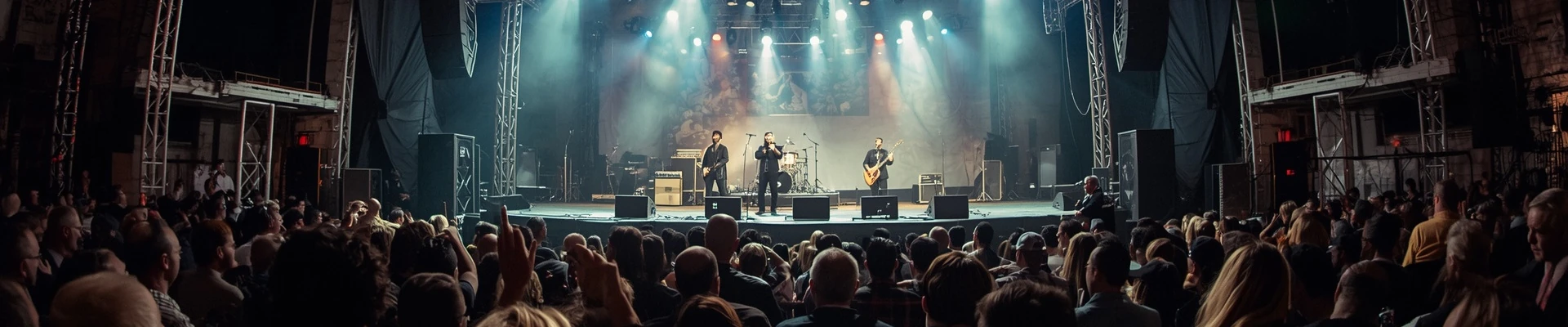
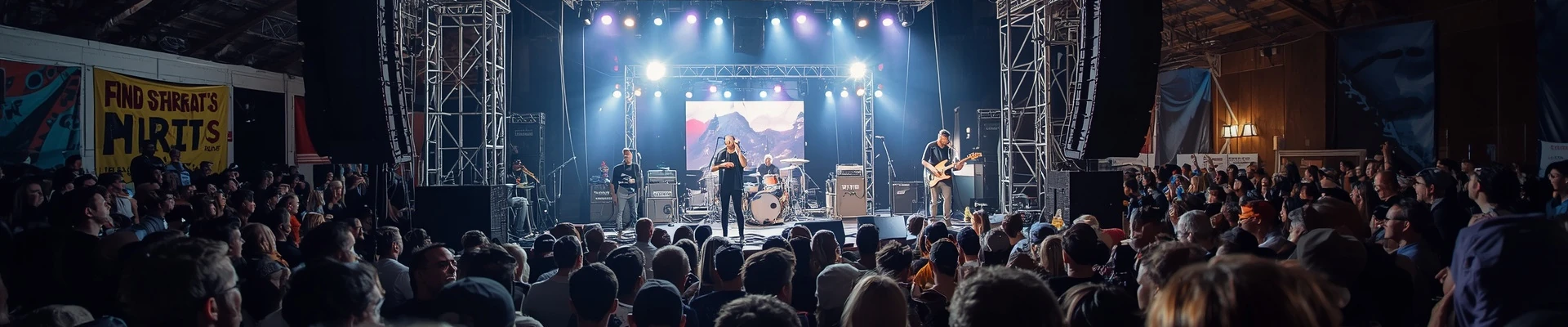
The mid-size tier is anchored by the Resch Center (capacity approximately 10,000, the multi-purpose arena adjacent to Lambeau that hosts touring rock, country, comedy, and family entertainment), the Meyer Theatre (the beautifully restored 1930s movie palace in downtown Green Bay, now a 1,600-seat performing arts and live music venue — the city's premier small-concert hall), and the Weidner Center for the Performing Arts at UW-Green Bay (a 2,000-seat venue that hosts symphony, touring acts, and university productions).
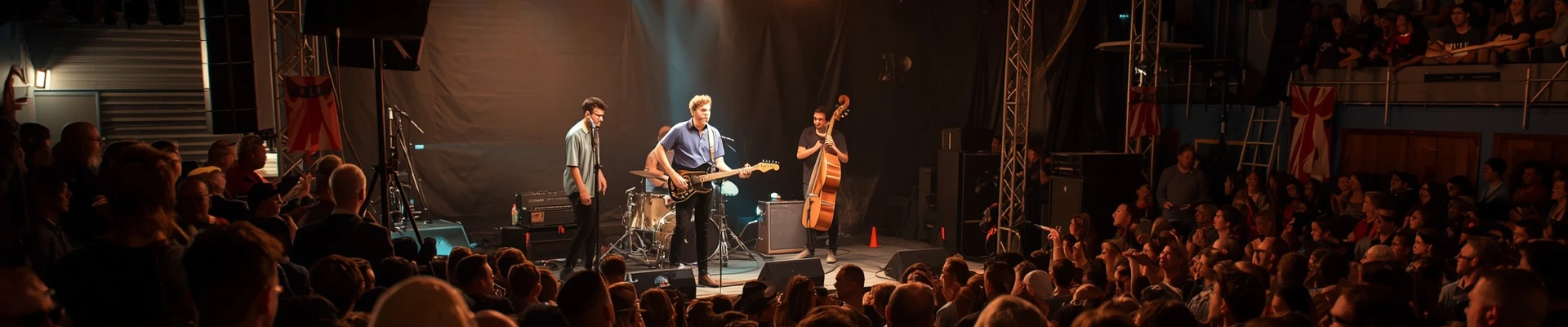
Below them is the club and bar layer. The Lyric Room (downtown, 200-capacity, listening room vibe), Titletown Brewing Company (the craft brewery in a former Chicago and Northwestern Railroad depot, with outdoor summer concerts on the lawn), Hinterland Brewery (a west-side brewery with a music program), Bar 920 (sports bar with live music), the Backstage at the Meyer (the Meyer Theatre's ancillary space for smaller shows), and a network of Broadway District and Washington Street bars anchor the club scene.
The Broadway District (along North and South Broadway) is the traditional entertainment corridor — bars, restaurants, live music on weekends. The Downtown around Walnut Street and Adams Street has seen renewed investment. Titletown District (the mixed-use development adjacent to Lambeau Field, built by the Packers organization) has become an entertainment hub with seasonal programming. De Pere (the adjacent city immediately south of Green Bay) has its own small venue circuit.
Festivals and signature events
Packers training camp (late July into August, open to the public at Lambeau Field's Don Hutson Center and the surrounding practice fields) is not a music festival but is the city's signature annual community gathering — and it incorporates live music, tailgating, and entertainment programming in its broader Festival Foods Fan Zone.
Celebrate De Pere (July, on the Fox River in the adjacent city) programs a multi-day festival with major touring acts on an outdoor stage and draws 30,000+ annually.
Green Bay's Downtown Block Party (summer) brings local and regional acts to the Broadway District with multiple stages.
Bayfest (when active) has programmed major country and rock acts on the waterfront.
Farm Technology Days (when hosted in Brown County) incorporates country music programming alongside its primary agricultural mission.
Summerfest Wisconsin programming extends from Milwaukee's influence across the state, and Green Bay residents routinely make the three-hour drive to Milwaukee's Henry Maier Festival Park for the summer music season.
The Fox Cities Book Festival, Green Bay Jazz Fest, and a rotating calendar of brewery concerts (Titletown, Hinterland, Copper State Brewing) fill the spring and fall calendar with smaller-scale programming.
What ties it all together
What unifies Green Bay's music culture is the same thing that defines the city itself: a fiercely local, working-class pride that doesn't need the validation of national attention to sustain its own traditions. The city's musical life runs through the same taverns, supper clubs, VFW halls, church basements, and festival grounds that it has for generations — German polka at a church festival in Bellevue, country at a bar outside Howard, indie rock at the Meyer Theatre, blues on a Broadway patio in July. The Packers provide the communal ritual that makes Green Bay one of the most cohesive mid-sized cities in America, and that cohesion extends outward into the way the city supports its local bands, its local breweries with music stages, its historic downtown theatre. When Lambeau Field fills for a summer concert, it is not just a stadium full of music fans — it is the entire city taking its living room outside, filling the same ground where Bart Starr threw passes and Brett Favre made memories and Aaron Rodgers won a Super Bowl, and listening together. That continuity between sports identity and music culture — between community ownership of the Packers and community patronage of local venues — is Green Bay's defining musical signature.