
Kenosha sits on the western shore of Lake Michigan in the southeastern corner of Wisconsin, roughly 60 kilometres north of downtown Chicago and 55 kilometres south of Milwaukee. With just under 100,000 residents it is Wisconsin's fourth-largest city — smaller than the metro behemoths that flank it, but large enough to sustain its own identity. The city occupies a long stretch of lakeshore flanked by the Pike River to the north and the Pike Creek corridor inland, and its geography — flat, lakeside, industrial — shapes everything about its character. Kenosha is a working-class manufacturing city that has spent the last three decades reinventing itself after the collapse of the auto industry that once defined it, and its music scene is inseparable from that history of boom, collapse, and stubborn survival.
The city is best known nationally as the birthplace of Orson Welles (born May 6, 1915), the filmmaker, actor, and theatre director whose influence on cinema — particularly Citizen Kane (1941) — was so profound that he was named the greatest film director of all time. Welles grew up in Kenosha until his early teens and always retained his connection to the city. Less internationally famous but equally defining is Kenosha's century-long identity as an auto assembly town — the home of the American Motors Corporation (AMC) plant and later Chrysler, whose sprawling lakefront factories employed tens of thousands of workers and shaped the demographic and cultural character of the city through the mid-20th century.
A brief history
The Potawatomi, Menominee, and Ho-Chunk peoples held this lakeside territory for centuries before French fur traders arrived in the 17th century. The settlement of Southport — as Kenosha was originally named — was platted in 1835, incorporated as a village in 1841, and renamed Kenosha (from an Ojibwe word variously translated as "pickerel" or "pike," referring to the fish of the lakeshore) in 1850, when it became a city. The first half of the 20th century brought heavy industry — Simmons Company (mattress manufacturing), Nash Motors (which would eventually become AMC), Jockey International, and a host of feeder industries that made Kenosha one of Wisconsin's most industrialised cities. The AMC plant on the lakefront became the backbone of the local economy through the 1950s, 1960s, and 1970s, employing at its peak over 14,000 workers and spawning an enormous ancillary economy of bars, diners, and rental housing.
The crash came in 1988, when Chrysler — which had acquired AMC in 1987 — closed the Kenosha assembly plant, throwing more than 5,000 workers directly out of work and devastating the local economy. The closure was a defining trauma for the city, accelerating population decline and producing the complex of empty industrial lots and underutilised infrastructure that shaped Kenosha's character through the 1990s and 2000s. The city has since reinvented parts of its lakefront as a museum, retail, and residential district, anchored by the Kenosha Public Museum, the Civil War Museum, the Southport Light historic lighthouse, and the refurbished streetcar system — one of only a handful of operating electric streetcar lines in the United States.
Music identity
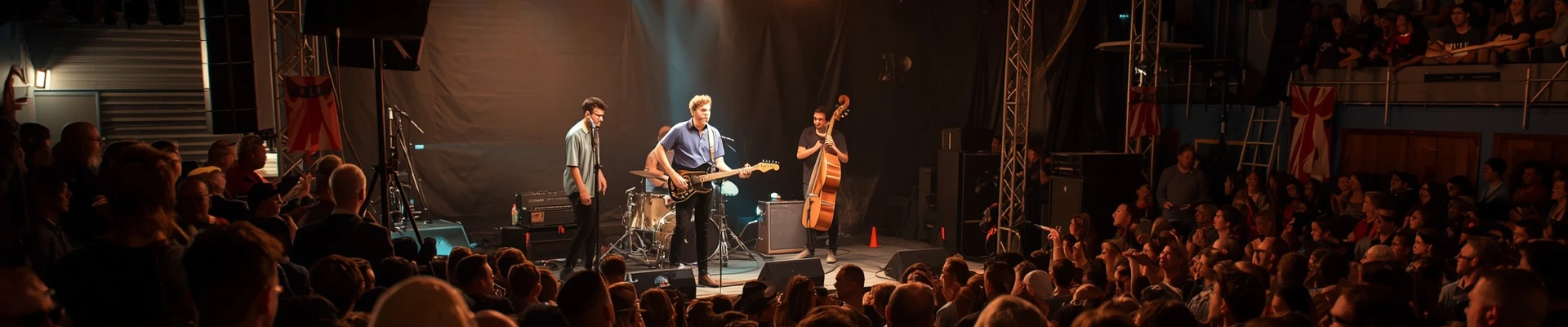
Kenosha's music scene is small, blue-collar, and stubbornly alive. Its most internationally consequential contribution is arguably its proximity to Chicago — close enough that Kenosha musicians, bookers, and fans have always operated as part of the broader Chicago-Milwaukee corridor, drawing from both cities' scenes while sustaining a local circuit built around tavern rock, blues, country, punk, and metal.
The city's most famous musical export is Al Jarreau — the jazz, R&B, and pop vocalist who was raised in Milwaukee but whose family had Wisconsin roots and who played the broader Wisconsin circuit early in his career. More directly, Kenosha is claimed as part of the biography of Johnnie Ray (the 1950s pop singer, also Wisconsin-connected), and the city has produced a continuous stream of working musicians who have found their audiences in the Chicago and Milwaukee club circuits rather than achieving national breakout success.
The blues tradition in Kenosha runs through the African American community that expanded during and after the Great Migration, when Southern Black workers came north to take factory jobs at AMC and Chrysler. Kenosha's Lincoln Park and Uptown neighborhoods anchored the Black community and its music — church gospel, electric blues, and soul — through the mid-20th century. The Studio Cove and smaller recording operations that dotted the city in the 1970s and 1980s captured some of this activity, though most went undocumented.
The punk and hardcore scene that emerged in the late 1970s and early 1980s drew directly from the factory-town working-class ethos. Kenosha bands played the all-ages circuit at VFW halls and church basements alongside touring acts from Chicago and Milwaukee. The Kenosha Kickers and other local acts cut their teeth on this circuit. The broader 1990s alternative explosion — when bands like Smashing Pumpkins and Urge Overkill were redefining Chicago rock — filtered into Kenosha through direct geographic proximity, and local bands absorbed that influence alongside the grunge and post-punk currents of the period.
Country and honky-tonk run deep in the city's blue-collar tavern culture — the Wisconsin tradition of supper-club country, two-stepping, and Friday-night fish-fry live music that fills bars across the state. The rural counties to the west of Kenosha feed a continuous stream of country and bluegrass players into the city's bar circuit.
Hip-hop arrived through the same corridor that brought everything else — Chicago radio, Milwaukee crews, and a local scene built in Uptown and the city's public housing corridors. Kenosha's hip-hop scene has never broken nationally, but it has been consistent and self-sustaining, producing local artists who circulate through the Illinois-Wisconsin regional circuit.
Venues and neighborhoods
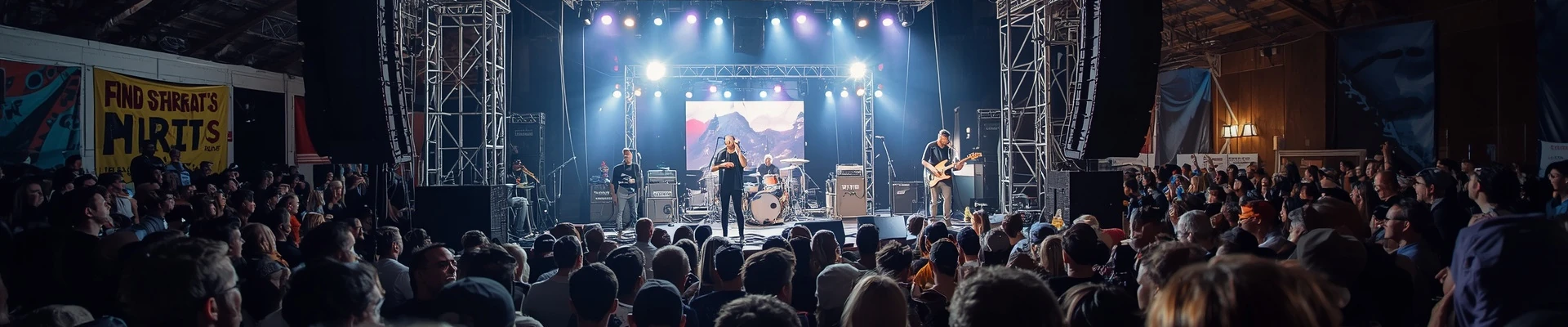
Kenosha's venue landscape is compact. At the top of the scale, the Kenosha Convention Center hosts occasional large-format touring acts and corporate events, but the city lacks a proper mid-size theatre (acts at that level typically play Milwaukee's Pabst Theater, The Riverside, or Chicago's House of Blues instead). The city's live music is concentrated in bars and clubs.
Franks Diner (historic, a Pullman dining car, not a music venue but a civic landmark) and the Civil War Museum anchor the revitalised lakefront. The Rhode Opera House in neighboring Kenosha — a 1927 historic theater in downtown — is the city's most historically significant performance space, hosting theatre, comedy, and occasional music. The Kenosha Civic Theatre programs community productions. The Dinosaur Bar-B-Que Kenosha (a BBQ bar) and taverns along Sheridan Road and through Downtown Kenosha on Sixth Avenue anchor the live music club circuit.
Uptown (the stretch of Sheridan Road north of downtown, Kenosha's historically Black and working-class neighborhood) has been the cultural heart of the city's blues, soul, and hip-hop scenes. Downtown Kenosha along 52nd Street and Sixth Avenue anchors the bar and club scene. The lakefront district (including Simmons Island, Pennoyer Park, and the Harbor Park area) hosts the city's outdoor summer events. Southport (the original city name, now a neighborhood designation) carries its historic identity in the south of the city.
Festivals and signature events
Kenosha's HarborMarket (the summer farmers market on the lakefront, often with live music) and the broader Taste of Wisconsin events mark the warmer months. Dino's Summer Concert Series programs local and regional acts. The Kenosha Festival of Carillons celebrates the city's historic carillon at the St. Matthew's Catholic Church — one of the finest in the Midwest. Lakefront Festival of Art (held at the Kenosha Public Museum grounds) programs live music alongside visual arts. Summer Entertainment Series at HarborPark runs Thursday-night live music through the summer. Mardi Gras on the Water brings a winter-season event to the lakefront.
The city's most culturally significant recurring event is the annual observance of Orson Welles's birthday (May 6) and related Welles-themed programming at the Civil War Museum, the Kenosha Public Museum, and downtown venues — a civic expression of the city's most famous son that draws Welles scholars, cinephiles, and journalists from well beyond the region.
Kenosha's Polish, Italian, and Mexican communities each sustain cultural festivals — Polish Fest events, Italian Fest, and Fiesta Mexicana — that include music, dance, and food reflecting the immigration waves that shaped the city. The city's Mexican-American community, concentrated in the south end, has grown substantially since the 1990s and sustains a norteño, banda, and cumbia circuit through bars and cultural centres along the southern end of 22nd Avenue.
What ties it all together
Kenosha is a city that has always played second-fiddle to the metropolises that flank it — and its music scene reflects exactly that position. It is close enough to Chicago and Milwaukee to drain talent upward and import touring acts from both cities; small enough that its home-grown circuit is built almost entirely on working-class bar culture rather than industry infrastructure. The blues and soul of the Great Migration workers, the punk ethos of the factory town, the country tradition of the Wisconsin supper club, the hip-hop of Uptown's younger generations — these streams have never coalesced into a single marketable "Kenosha Sound," but they have sustained a live music culture that is proportionate to the city's size and honest about its identity.
What the city does have is Orson Welles's birthplace, a civic landmark that gives it a cultural gravity disproportionate to its population; a lakefront campus of museums and parks that provides a summer concert infrastructure; and a working-class toughness — the same quality that sustained the AMC plant town through the boom years and the same quality that has kept bars and clubs open through the decades since the Chrysler closure. In Kenosha, music is not a creative industry amenity. It is a tavern necessity. And that distinction tells you everything you need to know about the city.