

Edmonton is the capital of Alberta and the fifth-largest metropolitan area in Canada, with roughly 1.01 million residents inside the city limits and more than 1.5 million across the surrounding Edmonton Metropolitan Region. Sitting at the northern edge of the Great Plains where the North Saskatchewan River cuts a wide green ravine through the prairie, it is the northernmost city of more than a million people in North America. Edmonton's musical identity reflects that geography and demography: a deep folk and roots tradition tied to the Edmonton Folk Music Festival at Gallagher Park, a working-class rock and metal lineage built on oil-patch and forestry money, a serious indie and DIY scene that has produced an outsized share of Canadian alt-rock, and a fast-growing Filipino, South Asian, West African, and Indigenous music ecosystem.
A brief history
The valley of the kisiskâciwani-sîpiy (the North Saskatchewan River) was Cree, Blackfoot, Nakoda, Tsuut'ina, and Métis territory for thousands of years before the Hudson's Bay Company established Fort Edmonton in 1795 as a fur-trading post. The settlement grew slowly through the 19th century until the 1885 completion of the Canadian Pacific Railway and the 1897 Klondike Gold Rush turned Edmonton into the staging ground for prospectors heading north to the Yukon. Alberta became a province in 1905 with Edmonton as its capital. The 1947 Leduc oil discovery just south of the city transformed Edmonton into one of the centers of the Canadian energy industry, and successive booms in the 1970s, 2000s, and early 2010s drew waves of migration from across Canada and abroad. The 1978 Commonwealth Games and the construction of West Edmonton Mall (the largest shopping mall in North America) put the city on the global map. Since the 2000s Edmonton has become one of Canada's most rapidly diversifying cities, with very large Filipino, South Asian, Chinese, Vietnamese, Somali, Ethiopian, Eritrean, and Latin American communities, alongside one of the largest urban Indigenous populations in the country.
Music identity
Edmonton's most internationally famous musical export is k.d. lang, who was raised in Consort, Alberta and built her early career in Edmonton through the cowpunk band The Reclines before launching one of the most acclaimed alt-country and adult-pop catalogs in Canadian history. Joni Mitchell, though born in Fort Macleod and raised primarily in Saskatchewan, lived in Edmonton during her early career; Tommy Banks, the jazz pianist, bandleader, and later Canadian senator, anchored the city's jazz tradition for half a century. Nickelback, formed in nearby Hanna in 1995, built much of its early career through Edmonton studios, venues, and management before relocating to Vancouver and global stardom; the band's Alberta roots run deeper than is sometimes acknowledged. Stompin' Tom Connors, while New Brunswick-based, recorded several of his most famous albums at Edmonton's Damon Sound Studios.
The 2000s and 2010s remade the city's indie identity. Cadence Weapon (Rollie Pemberton), born and raised in Edmonton and the city's first poet laureate, built one of the most acclaimed Canadian hip-hop catalogs of the era and remains a defining figure in the local scene. Shout Out Out Out Out, The Wet Secrets, Oilers Drinking Songs's artists, Audio/Rocketry, Mitchmatic, The Provincial Archive, and a thriving electronic and indie circuit built around the Mercury Room, The Pawn Shop, Brixx, and The Starlite Room turned Edmonton into one of Canada's most underrated indie incubators. Mac DeMarco, born in Duncan but raised in Edmonton, came up through the city's DIY scene before relocating to Montréal and eventually Los Angeles to build one of the most influential indie-rock catalogs of the 2010s. Purity Ring's Megan James, raised in nearby Corner Brook and Edmonton, built her career in part through Edmonton's electronic and dream-pop scene. Ruby Waters, Shred Kelly's Alberta ties, and a current generation of indie and folk artists continue the lineage.
Edmonton's rock and metal lineage is unusually strong for a prairie city. The Real McKenzies' Alberta connections, Striker, Tea Party's touring base, and a deep working-class hard-rock scene fill venues like the Starlite Room and the Pawn Shop. The city's metal scene runs through The Famine (Dragonforce-adjacent), Krang, Disciples of Power, and a robust extreme-metal and hardcore lineage at venues like Wunderbar and Sewing Machine Factory. Punk and hardcore have a long Edmonton tradition through bands like SNFU (one of Canada's foundational hardcore acts, formed in Edmonton in 1981), The Smalls, The Wheat Pool, and a thriving DIY scene around the Aviary, Bohemia, and the Sewing Machine Factory.
The 21st century has remade the city again. Edmonton's hip-hop scene, anchored by Cadence Weapon, Konflict, AOK, Touch, and a growing trap and drill circuit, has become one of the most-watched in the prairies. The city's vast Filipino community — the largest per-capita Filipino population in Canada — fuels a thriving R&B, hip-hop, and pop scene through artists like Manila Grey's Edmonton ties, Eonity, and a deep DJ tradition. The South Asian community, concentrated in Mill Woods, Castle Downs, and the southwest, fuels Bhangra, Bollywood, and Punjabi-pop scenes that fill venues across the city. East African music — Somali, Ethiopian, Eritrean — runs through community halls, churches, and event spaces in north Edmonton. Indigenous music — including Métis fiddle, powwow drumming, Cree round-dance, and a growing contemporary Indigenous hip-hop and folk scene — runs through venues like Brittle Star Press, the Royal Alberta Museum, and a long lineage of community gatherings on Treaty 6 territory. The Edmonton Symphony Orchestra, the Edmonton Opera, and the University of Alberta's music program anchor the classical tradition; the Yardbird Suite, one of the longest-running jazz clubs in Canada, has been the heart of Edmonton jazz since 1957.
Venues and neighborhoods
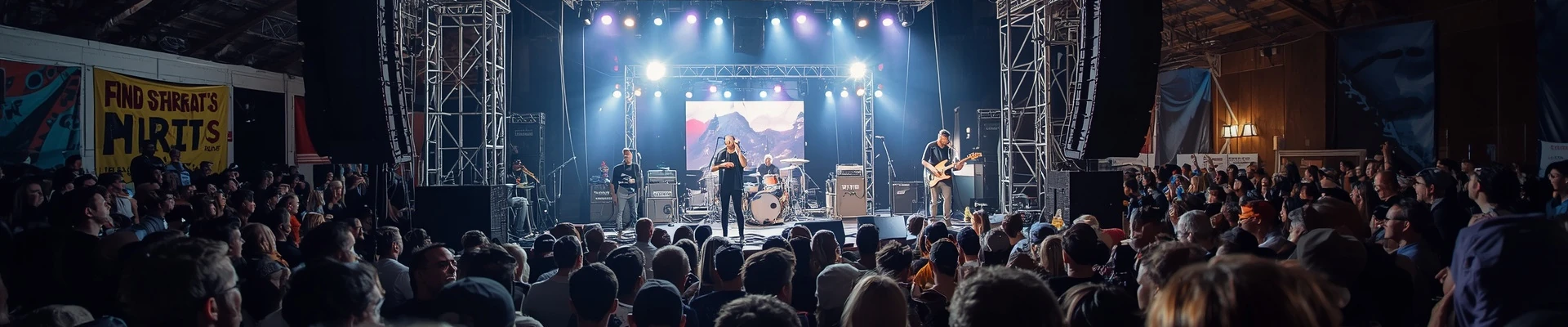
Edmonton's venue ecosystem is well-developed. At the top sit Rogers Place (home of the Oilers and the city's largest concerts), Commonwealth Stadium for stadium tours, the Northern Alberta Jubilee Auditorium, the Winspear Centre (home of the Edmonton Symphony), and the Citadel Theatre complex. The midsize tier includes Midway, Union Hall, the Starlite Room, The Pawn Shop, and the River Cree Resort & Casino event spaces. Beneath them is a deep club layer — the Yardbird Suite, Wunderbar, Sewing Machine Factory, Aviary, Bohemia, The Buckingham, Blues on Whyte (the city's longest-running blues bar), Brittle Star Press, Mercury Room, Brixx, DV8, The Empress Ale House, and a network of bars and DIY rooms across Whyte Avenue, the Quarters, and downtown. Latin and Filipino music have homes at clubs across the city's south side and in Mill Woods.
Different neighborhoods carry different musical identities. Whyte Avenue / Old Strathcona, anchored by the University of Alberta and a dense bar and venue strip, is the heart of the city's indie rock and DIY scenes — and the home of the Edmonton Fringe Festival each August. The Quarters and downtown anchor the larger venue and electronic circuits. Mill Woods, Castle Downs, and the southeast support the city's largest Filipino, South Asian, and Latin scenes. North Edmonton and the northeast are heart of the city's East African and Indigenous communities. St. Albert and Sherwood Park, the major satellite communities, support their own country and rock circuits. Edmonton's river valley — one of the largest urban park systems in North America — hosts most of the city's outdoor festivals.
Festivals and signature events
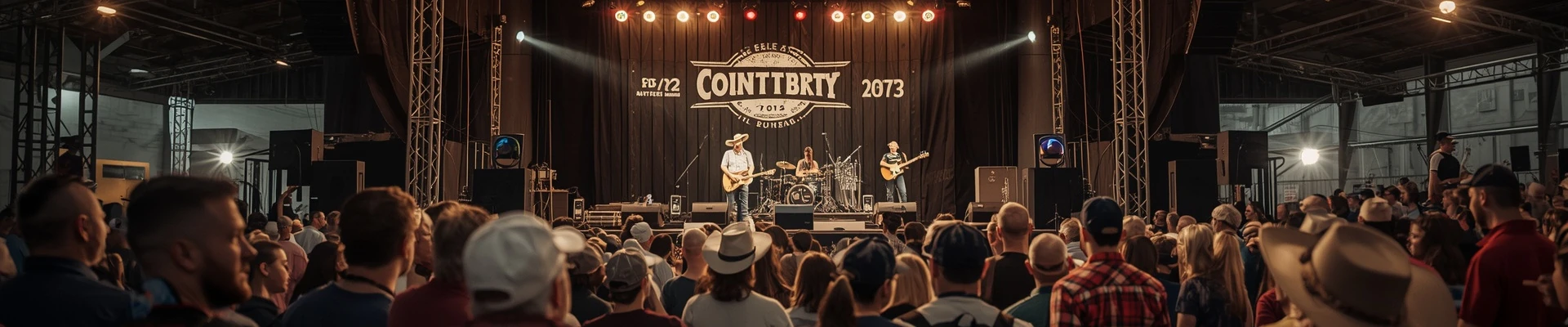
The festival calendar reflects the city's range. Edmonton Folk Music Festival at Gallagher Park each August is one of the longest-running and most respected folk festivals in North America, drawing major international roots, world music, and singer-songwriter acts since 1980. Edmonton International Jazz Festival in late June draws major Canadian and international jazz acts. Sonic Boom (in its various incarnations), Big Valley Jamboree (in nearby Camrose, drawing on the Edmonton country audience), K-Days with its mainstage music programming, Interstellar Rodeo (which ran for several years at Hawrelak Park), Boonstock's Alberta editions, and Up + Downtown keep the festival circuit running. Heritage Festival at Hawrelak Park, the largest multicultural festival of its kind in the world, programs music from more than 100 cultures over three days. Edmonton Pride's music programming, Cariwest (the city's Caribbean carnival), Servus Heritage Festival, Edmonton Filipino Fiesta, and the Dreamspeakers Indigenous Film Festival's music programming add cultural and community programming. Edmonton Fringe Festival in August, one of the largest fringe theatre festivals in the world, includes a substantial music programming track. CCMA (Canadian Country Music Awards) routinely stages in Edmonton.
What ties it all together is the city's combination of oil-patch money, immigrant diversity, and a deep festival culture that turns the river valley into one of the most active outdoor music cities in Canada from May through September. Edmonton musicians grow up in a city where SNFU laid foundations for Canadian hardcore, where k.d. lang became k.d. lang at the Sidetrack Café, where Mac DeMarco recorded his earliest demos in basement bedrooms, and where the Folk Festival has anchored the civic calendar for nearly half a century. It is younger and less canonized than Canada's larger music capitals — but, increasingly, that is its strength.