
Lethbridge is the fourth-largest city in Alberta and the largest city in southern Alberta, with roughly 103,000 residents in the city proper and a regional trade area that draws from southeastern Alberta, southwestern Saskatchewan, and northern Montana. It sits on the high plains of the Milk River Ridge Uplands, cut through by the dramatic Oldman River Coulee — one of the deepest river valley systems on the Canadian prairies — at an elevation of about 920 metres above sea level. The city is warmer, drier, and sunnier than almost anywhere else in Canada: it averages over 2,500 hours of sunshine per year, more than Calgary or Vancouver, and suffers far less snow accumulation despite bitter Chinook wind cycles that can swing temperatures 20°C in a single afternoon. The nearest large city is Calgary (220 km north on Highway 2), and Great Falls, Montana is closer to Lethbridge than Saskatoon is. Waterton Lakes National Park sits roughly 120 km southwest, and the Crowsnest Pass is visible on clear days to the northwest.
The city is at the heart of one of Canada's most productive agricultural regions — sugar beet processing, beef cattle, irrigated crop production, and food manufacturing anchor the economy, alongside the University of Lethbridge, the city's largest employer and its most significant cultural engine. The university draws students from across Canada and internationally, creating a substantial transient population that sustains live music, theatre, and the arts at a level unusual for a city this size. Lethbridge also draws Indigenous people from the neighbouring Kainai Nation (Blood Tribe), Piikani Nation, and Siksika Nation — the three nations of the Blackfoot Confederacy — whose traditional territory the city sits within, and whose cultural presence shapes the city's arts and music scenes in distinctive ways.
History and the coulee city
The Oldman River valley was Niitsitapi (Blackfoot people) territory for millennia before European contact — Fort Whoop-Up, the infamous whiskey trading post established in 1869, sits at the bottom of the coulee where the Oldman meets the St. Mary River and stands today as a museum. The North-West Mounted Police arrived in 1874 as part of the broader colonization of the northwest, and the coal seams visible in the coulee walls drove early industrial development. Lethbridge was officially established as a town in 1890 and became a city in 1906. The Canadian Pacific Railway chose the coulee crossing in the 1890s, building the Lethbridge Viaduct — completed in 1909, the longest and highest railway trestle bridge in the world at the time, a landmark that still defines the city's skyline. Ukrainian, German Mennonite, Japanese-Canadian, and Chinese immigrant communities settled in the region through the late 19th and early 20th centuries, shaping the cultural fabric. Japanese Canadians displaced from the BC coast during the Second World War were sent to southern Alberta in large numbers; many settled in Lethbridge and the surrounding area permanently.
The postwar period brought suburban growth, the establishment of Lethbridge Community College (now Lethbridge Polytechnic) in 1957, and the founding of the University of Lethbridge in 1967 — a decisive moment in the city's cultural history. The university brought Arthur Erickson's striking brutalist-on-the-coulee-edge campus (completed in 1971) and a faculty and student body that have sustained music, visual art, and theatre at a level that outpunches the city's size for decades since.
Music identity
Lethbridge's music scene is shaped by four intersecting forces: the university, the grassroots prairie DIY ethic, the Chinook Country Fairs and rodeo traditions, and the living presence of Blackfoot cultural expression.
Country and roots music has the deepest popular roots. Southern Alberta's cattle culture, rodeo calendar, and geographic kinship with Montana and rural Idaho and Wyoming have kept country music central here in a way that feels less like nostalgia and more like continuity. The Lethbridge Exhibition (now Whoop-Up Days) has always featured country headliners. Local venues and the broader southern Alberta circuit have developed careers of working musicians who record and tour across the Prairies. The alt-country and Americana currents of the 1990s and 2000s found a ready audience here, and the city has sustained a folk and singer-songwriter scene through the Lethbridge Folk Club and the Lethbridge Arts Council.
The University of Lethbridge is the scene's central engine. The university's music department has a distinguished record in jazz, composition, and ethnomusicology — David Braid, the Toronto-based jazz pianist and composer, studied at the U of L, and the school has produced a continuous stream of working musicians across jazz, classical, and contemporary styles. The university's W.A. Young Hall (now part of the Recital Hall complex) and outdoor summer programming give student and faculty musicians performance infrastructure that most Prairie cities this size can't match. The Lethbridge Public Library's programming and the Arts Council's grants have sustained a community arts infrastructure unusual for a city of 100,000.
The city's most internationally consequential musical export is likely Metric bassist Josh Winstead — though Metric is Toronto-formed, several members have Prairie roots. More specifically, Jann Arden (born Jann Arden Richards in Calgary) has been a fixture of southern Alberta's music landscape, and while not Lethbridge-born, her presence at regional events and the city's affinity for her introspective country-tinged pop places her within the region's cultural orbit. The Dudes (the Vancouver-based but Alberta-rooted rock band) and a number of working country and roots acts have Lethbridge connections. The city's most notable recent export is perhaps Ghostkeeper, the experimental country-blues-Indigenous fusion duo rooted in northern Alberta and the Prairies, who have built a following on the international folk circuit — though their roots are further north.
The Indigenous music scene in Lethbridge and surrounding Blackfoot Confederacy territory is distinct and vital. Powwow culture is active at the Kainai, Piikani, and Siksika Nations, and Lethbridge sees significant Blackfoot cultural participation through the University of Lethbridge's Native American Studies program (one of the oldest and most respected in Canada) and events like the annual Blackfoot Cultural Camp. Contemporary Indigenous artists working across hip-hop, folk, and electronic music have emerged from southern Alberta's Blackfoot communities — the intersection of traditional Blackfoot song and contemporary production forms a living creative space that the university's Indigenous studies programs have helped nurture.
Punk and hardcore had a scrappy but genuine run in Lethbridge through the 1990s and 2000s — small all-ages shows at community halls, a local scene with bands that toured the western Canada circuit (Lethbridge to Calgary to Edmonton to Vancouver). That DIY energy persisted into indie rock and more recently into electronic and experimental music sustained by the university community.
Venues and neighborhoods
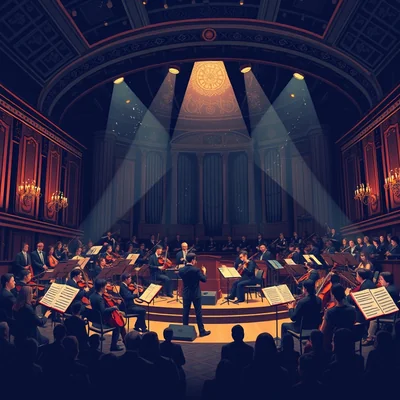
Lethbridge's venue map is modest but covers the essential range. At the top sits the ENMAX Centre (a multi-purpose arena seating roughly 6,500), which hosts mid-size touring acts — country headliners, rock nostalgia tours, family shows. The Sandman Centre (attached to the ENMAX) provides a smaller ballroom configuration. Below that sits the Yates Memorial Centre (a 440-seat proscenium theatre, the city's flagship performing arts venue), which hosts the Lethbridge Symphony Orchestra and touring theatre and classical music. The University of Lethbridge Recital Hall handles university music programming.
At the club and bar level, the main corridor runs through Downtown Lethbridge along 4th Avenue South and the surrounding streets. The Slice (a beloved pizza-and-live-music venue that has hosted touring indie and folk acts for years) and a rotating cast of bars and pubs on 4th Avenue have anchored the downtown live music circuit. Cowboys Saloon and The Owl Acoustic Lounge have provided different ends of the country and acoustic spectrum. The Casa and The Slice have functioned as primary indie and alternative rooms. The University district around the U of L campus generates its own bar and small-venue ecosystem.
The coulee itself is part of the city's identity — the dramatic river valley is used for outdoor events, and the Indian Battle Park at the coulee bottom hosts summer outdoor programming. The Lethbridge Exhibition Park hosts Whoop-Up Days (the city's major annual summer fair and rodeo, with concert headliners) and other large-scale events.
Festivals and signature events
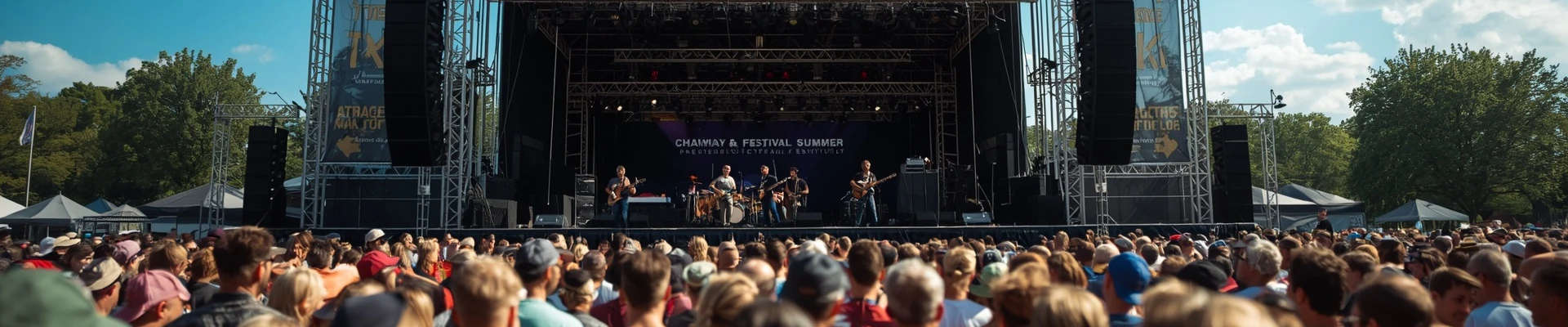
Whoop-Up Days (typically late August) is the city's dominant annual event — a 9-day exhibition and rodeo at Exhibition Park, with a grandstand concert series that brings mid-size country and rock headliners. It is the social and musical peak of Lethbridge's summer calendar. Chinook Country Musical Theatre runs through the year at the Yates Memorial Centre. The Lethbridge International Air Show draws tens of thousands of visitors and has hosted outdoor concerts in its festival programming. Lethbridge Multicultural Festival celebrates the city's immigrant communities — Ukrainian, Filipino, South Asian, Chinese, Japanese-Canadian, and others — with music, food, and dance. The University of Lethbridge's Summer Solstice programming and outdoor events through the academic year add to the calendar. The Southern Alberta Art Gallery and the Bowman Arts Centre run arts events that intersect with musical programming.
The Indigenous arts calendar — powwows at the Kainai, Piikani, and Siksika First Nations reserves within an hour of the city, the Head-Smashed-In Buffalo Jump (a UNESCO World Heritage Site 40 km northwest, with summer cultural programming), and events tied to the university's Native American Studies program — creates a parallel and vital arts ecosystem that the city increasingly acknowledges as central rather than peripheral to its cultural identity.
What ties it all together
Lethbridge is a Prairie city whose musical identity is inseparable from its geography and its university. The Oldman River coulee gives the city a physical drama unusual for the flat-horizon Prairies; the sunshine and the wind and the proximity to the Rockies and to the US border give it a cultural openness that absorbs both country traditions and folk cosmopolitanism. The University of Lethbridge — sitting on the coulee rim in Arthur Erickson's brutalist concrete landmark — is the city's primary cultural engine, sustaining jazz, classical, Indigenous music studies, and the DIY indie scene that circles it. Whoop-Up Days brings the rodeo circuit's country headliners each August. And beneath all of it runs the living cultural presence of the Blackfoot Confederacy — the Niitsitapi whose territory this is, whose songs and ceremonies and contemporary artistic expression remind the city that its deepest musical roots predate the railway, the fort, the viaduct, and the university by thousands of years. That layering — Indigenous, settler-country, university folk, prairie DIY — is what makes Lethbridge more than just a small southern Alberta city. It is the musical crossroads of Canada's sunniest corner.