


Red Deer is Alberta's third-largest city, with roughly 101,000 residents in the city proper and a regional catchment of over 200,000 across central Alberta. It sits almost precisely halfway between Calgary (150 km south) and Edmonton (150 km north) along the Queen Elizabeth II Highway — Canada's busiest interprovincial highway — in the parkland belt where the open prairie of southern Alberta gives way to aspen forest and foothills country. The Red Deer River cuts through the city centre, flanked by one of the most extensive urban trail systems in western Canada. Red Deer is an economic crossroads: the regional service capital for central Alberta's agricultural heartland, and a major service hub for the oil-and-gas sector that drives the province. That geographic position — equidistant from two major metropolitan centres, drawing a regional population that far exceeds the city limits — has defined Red Deer's character: a city that can fill arenas and festivals by pulling from a vast rural catchment, and one that has quietly developed a music and entertainment scene unusually robust for its size.
A brief history
The Red Deer area has been inhabited for at least 8,000 years, with the Blackfoot, Cree, Assiniboine, and other nations using the river valley as a hunting corridor. The first permanent European presence was a North West Company fur trading post established in the 1790s near the modern city. Euro-Canadian settlement accelerated after the Canadian Pacific Railway arrived in 1891, and Red Deer was incorporated as a town in 1901 and as a city in 1913. The early 20th century built a service-centre economy around agriculture — grain, cattle, mixed farming — and the city grew steadily through the mid-century. The oil boom of the 1970s and 1980s transformed Alberta's economy and Red Deer along with it, adding petrochemical and service-industry growth that pushed the population above 50,000 by 1981. Boom-and-bust cycles — the National Energy Program of the early 1980s, the oil-price collapses of 1986 and 2015–2016, and the recovery periods between them — have been Red Deer's economic rhythm ever since. The city absorbed a wave of interprovincial migration during Alberta booms and has diversified its economy around retail, healthcare, education, and regional services over successive decades. Its population crossed 100,000 in the mid-2010s, cementing its status as Alberta's third city.
Music identity
Red Deer's music scene is shaped by three forces: its regional service-centre role (which lets it draw audiences from a vast rural hinterland), its proximity to Calgary and Edmonton (which means local talent circulates freely through the wider Alberta ecosystem), and a genuine do-it-yourself scene that has sustained original music through the city's boom-and-bust economic cycles.
The city's most internationally recognized musical connection is Neil Young, who attended Kelvin Grove Junior High School in Red Deer in the early 1960s before his family moved to Winnipeg — a formative period for the songwriter who would go on to shape folk rock, country rock, and grunge across five decades. Red Deer claims Young with quiet pride as an alumnus who passed through rather than a hometown hero in the conventional sense, but the connection is real and significant.
Country music is the dominant commercial genre in Red Deer and central Alberta, consistent with the agricultural and resource-extraction demographic that defines the region. The Westerner Park complex — anchored by Westerner Days Fair and Exposition (the annual agricultural fair and midway that has been running since 1891) — has been the region's most important concert venue, hosting country touring acts in the Enmax Centennial Centre arena (capacity roughly 5,500) and the Westerner Park Centennial Centre. Country touring acts from Garth Brooks to Keith Urban to Corb Lund (the Taber, Alberta-raised alt-country hero with deep Red Deer connections) have played the complex. George Canyon, the Nova Scotia-born country star who rose to prominence after a stint on Nashville Star in 2004, has played Red Deer multiple times and built a following across Alberta. Terri Clark, the Medicine Hat-born country star, has been a regular draw. The Alberta country ecosystem is broad, and Red Deer sits at its centre geographically.
Rock, metal, and punk have a long history in the city. The DIY rock scene has been active since the late 1970s, running through basement shows, original venues, and the broader Alberta bar-band circuit. Evolution and its successors have been local staples. The city's metal scene has connections to the broader Alberta metal community, with bands circulating between Red Deer, Calgary, and Edmonton. The Waltons, the Canadian pop-rock band led by Jane Hawley, has connections to the Red Deer region. The local punk and hardcore scene has been modest but continuous.
Hip-hop and R&B scenes are smaller but active, particularly among the city's younger demographic and within the growing newcomer and Indigenous communities. Red Deer has a significant Indigenous population — including Cree and Métis community members — with a traditional and contemporary music presence at cultural events and powwows. The Ponoka Stampede and the broader rodeo circuit adjacent to Red Deer's rodeo culture intersect with Indigenous music traditions.
Folk, roots, and Americana run through the local independent scene, with singer-songwriters and acoustic acts performing at coffee shops, small clubs, and community events. The Red Deer Folk Music Club has run acoustic concerts for decades. The Black Powder Coffee House has been a venue for folk and original music. The broader folk tradition in central Alberta sustains acoustic events through the shoulder seasons.
The city has produced or incubated several notable acts in the Canadian indie and alternative ecosystem, circulating through the Alberta scene into broader Canadian recognition. The bar-band and tribute-band circuit has long been active, providing working-musician income between original-act gigs.
Venues and neighborhoods
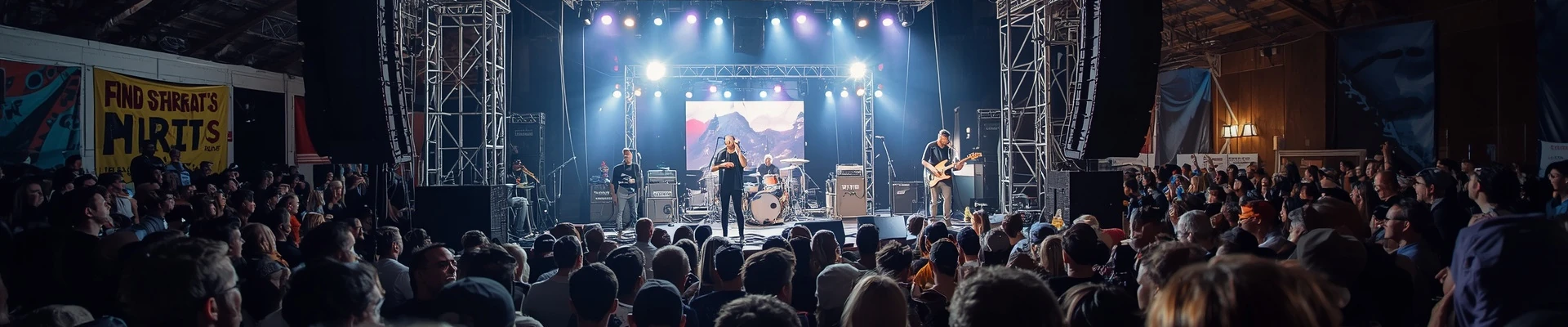
Westerner Park is the city's most important large venue. The Enmax Centennial Centre (within Westerner Park) holds roughly 5,500 and hosts country, rock, and touring acts. The adjacent Westerner Park Centennial Centre amphitheatre and fairgrounds host the Westerner Days music programming, outdoor concerts, and rodeo events.
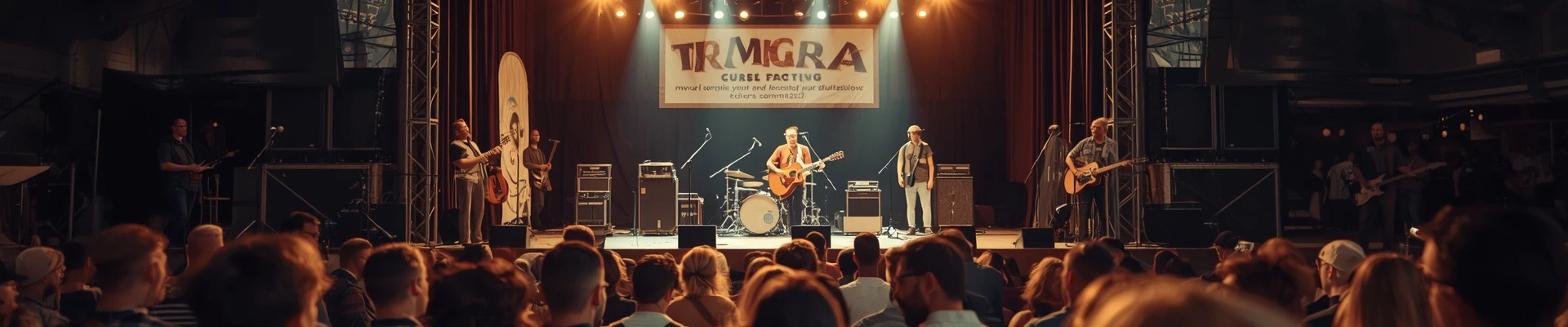
The Vat has been one of Red Deer's most enduring live-music bars — a community staple for rock, country, and original acts, with a long history of supporting local and touring musicians. Bo's Bar and Stage has been a cornerstone of the live music scene, programming rock, metal, and country tribute acts. Moxie's Classic Grill and restaurant-bar chains supplement the live-music calendar. Doolin's Irish Pub has hosted acoustic acts and singer-songwriters.
The downtown core along Ross Street and 49th Avenue anchors the city's nightlife and small-venue scene, with bars and restaurants running live music through the week. The Capri Centre hosts banquets, cultural events, and occasional large concerts. Red Deer Arena (now the Gary W. Harris Canada Games Centre, rebuilt and expanded) and the broader municipal recreation infrastructure host community events.
The Oriole Park and Sunnybrook neighborhoods anchor the city's eastern residential scene; the Riverside Meadows and Bower neighborhoods sit along the river. Michener Hill (the original townsite) and the downtown core around City Hall Park are the historical and civic centre.
Festivals and signature events
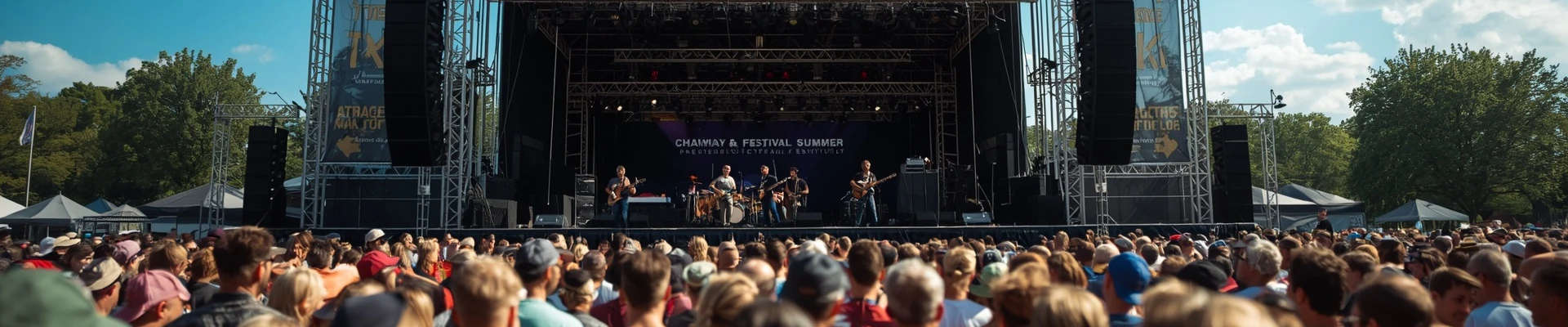
Westerner Days Fair and Exposition is Red Deer's signature event — an annual agricultural fair, midway, rodeo, and concert festival running in late July, drawing 80,000–100,000 visitors from across central Alberta over its five-to-seven day run. Country headliners and major Canadian acts have headlined Westerner Days for over a century; the fair is the region's most important summer gathering point.
Red Deer's Canada Day celebration at Bower Ponds has long featured live music, fireworks, and community programming. Festival of Trees (a charity festival in winter) features entertainment. The Red Deer Polytechnic (the major post-secondary institution, formerly Red Deer College) has run cultural and performance events including concert series and student showcases. The Cannery district near the river has been the site of pop-up arts and music events.
The Red Deer International Airshow draws major crowds and has featured concert entertainment. Cruisin' on Ross — the annual car show along Ross Street — includes live music programming. The broader rodeo-and-fair circuit (Ponoka Stampede, Lacombe Fair, Wetaskiwin fair) draws from the same regional audience as Red Deer events.
Connecting it all
What ties Red Deer's music scene together is its role as the hub of central Alberta — a city that is smaller than Calgary or Edmonton but significantly larger than the agricultural towns that surround it, and that serves as the entertainment and services destination for a vast rural catchment. The Westerner Days festival is the clearest expression of this: a century-old agricultural fair that has grown into one of Alberta's most important concert events precisely because it draws from a region where live music rarely comes to town. Westerner Park's arena and the city's cluster of live-music bars sustain a working scene through the year — country and rock covering the commercial end, original acts and folk running the independent end. Neil Young's passage through Red Deer's school system in the early 1960s is the city's most famous musical connection, a reminder that the Alberta parkland belt has always been part of the broader Canadian musical geography. For Red Deer, music is less a defining scene than a defining function: a city that brings sound — country, rock, folk, Indigenous, hip-hop — to a region that stretches far beyond the city limits, and keeps it there through the cycles of boom and bust that define life in oil-country Alberta.