

Kamloops is the largest city in the interior of British Columbia, Canada, with roughly 104,000 residents in the city proper and approximately 130,000 in the surrounding Thompson-Nicola Regional District. It sits at the confluence of the North Thompson and South Thompson Rivers — a geographic fact that has defined the city since its founding — at an elevation of around 345 metres above sea level in a semi-arid river valley surrounded by sagebrush-covered benchlands, pine forests, and the rolling plateau of the Interior Plateau. Kamloops lies roughly 355 km northeast of Vancouver along the Trans-Canada Highway and the Canadian National Railway mainline, making it the dominant transportation and service hub for a vast region of the BC Interior that encompasses ranching country, forestry operations, mining districts, and the provincial government's Thompson-Nicola administration zone.
The city's name derives from the Secwepemctsín word Tk'emlúps, meaning "where the rivers meet" — and that Secwépemc place-name carries profound contemporary weight. The Tk'emlúps te Secwépemc (Kamloops Indian Band) have inhabited this confluence territory for millennia, and in May 2021 a ground-penetrating radar survey at the site of the former Kamloops Indian Residential School — one of the largest residential schools in Canada — confirmed the presence of approximately 215 unmarked graves, sending shockwaves through Canada and the world, accelerating conversations about residential school history, Indigenous rights, and the ongoing legacy of colonial violence. The discovery reshaped how Kamloops is understood nationally and internationally, and it has deepened the city's engagement with Secwépemc language revitalization, cultural programming, and land acknowledgement in public life, including in the arts and music sectors.
A brief history
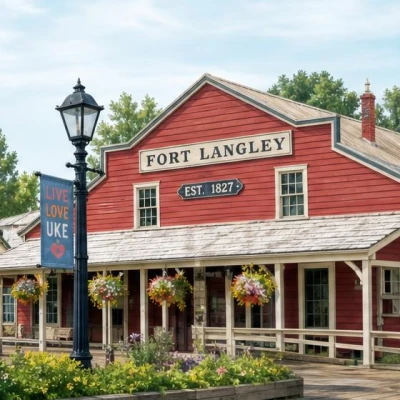
The confluence of the Thompson Rivers made this territory a Secwépemc trading and gathering place long before European contact. The North West Company established a fur trade post, Fort Kamloops, at the confluence in 1812, later absorbed by the Hudson's Bay Company. The Gold Rush of 1858 brought a surge of prospectors through the region on their way to the goldfields of the Cariboo, and the subsequent construction of the Canadian Pacific Railway through Kamloops in 1885 transformed the community into a genuine transportation nexus. The CPR created the economic logic for Kamloops as a division point — a place where trains changed crews, where goods were sorted, where a small city could grow — and the ranching tradition of the Thompson-Nicola grasslands fed both a local cattle economy and the cultural inheritance of country music, rodeo, and western heritage that still marks the region.
Kamloops incorporated as a city in 1893. Through the 20th century it grew steadily on the pillars of the forestry industry (sawmills, pulp operations), mining (copper, gold, and silver from the Highland Valley Copper Mine and other operations in the region), ranching (the Thompson-Nicola remains one of the great cattle-ranching regions of western Canada), and government services (regional headquarters for provincial agencies). Thompson Rivers University (TRU) — established as Cariboo College in 1970, achieving university status in 2005 — brought an academic and creative community to a city that had been primarily shaped by resource extraction, and TRU's approximately 27,000 students (including a large international student population from South and Southeast Asia) have expanded the city's cultural palette considerably. The arrival of Sun Peaks Resort as a major ski and mountain resort destination (about 45 km northeast of the city) in the 1990s and 2000s added a tourism dimension to the economy and drew seasonal populations from across Canada and internationally.
Music identity
Kamloops's music scene is honest, community-rooted, and shaped by its geography. This is an Interior BC city of just over 100,000 people — not a metropolis generating globally consequential musical movements — but it sustains a genuine, multi-generational music culture that reflects the region's ranching heritage, its Indigenous musical traditions, its university community, and its position on the touring corridor between Vancouver and Calgary.
Country and western music is the deep root. The Thompson-Nicola ranching tradition and the city's working-class western heritage have sustained a country and roots music scene across decades — from honky-tonk and classic country in the legion halls and roadhouse bars of the 1970s and 1980s, through to the contemporary country, Americana, and folk scenes that programme at festivals and venues today. Local and regional country artists regularly build careers in Kamloops before graduating to the broader BC Interior and national country circuit, and the city functions as one of the main touring stops for country acts working the Trans-Canada route from Vancouver through to Calgary and beyond.
Indigenous music carries a deep significance in Kamloops that has grown more visible and publicly celebrated in recent years. The Secwépemc tradition encompasses drumming, singing, storytelling, and language-tied ceremonial music that predates European settlement by centuries. Contemporary Indigenous artists from the Tk'emlúps te Secwépemc community and the broader Secwépemc Nation have blended traditional music with contemporary genres — folk, rock, hip-hop, and roots — creating a growing body of work that bridges cultural continuity with modern expression. The Kamloops Powwow, held annually at the Tk'emlúps te Secwépemc grounds, is one of the most important Indigenous cultural gatherings in the BC Interior, drawing drummers, dancers, and singers from across the region. The increased national attention on Secwépemc territory since 2021 has amplified interest in Indigenous cultural programming in the city and created new platforms for Indigenous artists.
Rock, indie, and folk form the backbone of the non-country live music scene. Thompson Rivers University supplies a steady pipeline of young musicians, bands, and audiences — the TRU student body tilts toward rock, indie, electronic, and hip-hop, and the presence of an active student union events program has made TRU a significant concert presenter for the city. The campus and the surrounding downtown core around Victoria Street sustain a club and bar circuit that programmes local originals, touring bands, and open-mic culture. The city has produced a modest but persistent number of artists who have gone on to broader Canadian recognition — primarily in the folk, country, and singer-songwriter traditions that are native to small Interior BC cities — and the Kamloops music scene has a reputation in the broader BC touring circuit as a city that supports live music with genuine enthusiasm relative to its size.
Hip-hop and R&B have grown within the TRU international student community, which includes large South Asian (particularly Punjabi) and Filipino communities. Bhangra, Punjabi pop, and Filipino OPM music are part of the city's social and community event fabric, particularly around TRU-connected cultural associations. The Latin community — smaller but present — brings cumbia and Latin pop to community events.
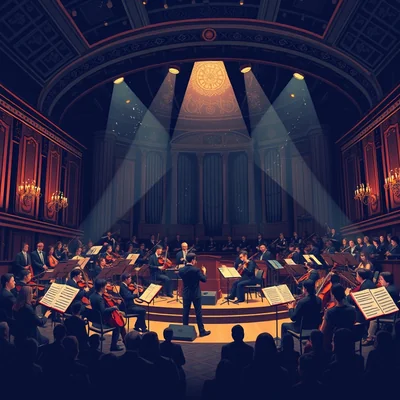
The Kamloops Symphony Orchestra provides the classical anchor, programming a regular season at the Sagebrush Theatre (the city's main performing arts venue, 750 seats). The symphony has collaborated with Indigenous artists and contemporary musicians, reflecting the city's evolving cultural identity.
Local labels and studios are modest in scale — Kamloops is a city where artists record demos and small-run releases rather than major-label albums — but several home and professional studios serve the regional music community, and the city's artists typically record in Vancouver or Calgary for major releases.
Venues and neighborhoods
Sandman Centre is the city's flagship arena — a 5,765-capacity multipurpose venue opened in 1992, home to the Kamloops Blazers WHL hockey team. It is the largest concert venue in the BC Interior west of Kelowna and hosts the major touring acts that pass through Kamloops — country headliners, rock tours, and family entertainment. Acts like Brett Kissel, The Trews, Sam Roberts Band, Nickelback, and The Sheepdogs have played Sandman Centre as part of Interior BC touring loops.
Sagebrush Theatre (750 seats) is the city's main performing arts presenter — home to the Kamloops Symphony and the main theatrical venue for dance, touring stage productions, and mid-scale concert presentations. Thompson Rivers University's Grand Hall and the Campus Activity Centre program a student-oriented concert series, open mics, and cultural events. The Pavilion Theatre (approximately 250 seats) serves as an intimate venue for small touring acts, folk and jazz programming, and local showcases.
The bar and club circuit runs through Downtown Kamloops along Victoria Street, 4th Avenue, and the surrounding blocks. The Blue Grotto has been a live music anchor for the downtown core — a bar and music venue that has programmed local bands, tribute acts, and small touring originals across multiple decades. Cactus Jack's and comparable venues in the entertainment district serve the country and rock circuit. The Interior Savings Centre hosts occasional major events. Sun Peaks Resort (45 km out) brings its own summer concert programming and après-ski entertainment during the ski season — an informal extension of the Kamloops music ecosystem, particularly for outdoor festival-format events.
The downtown core — centred on Victoria Street, 3rd Avenue, and the Stuart Wood neighbourhood — is where most of the live music concentration sits. The North Shore across the Thompson River carries a quieter residential entertainment scene. The TRU campus neighbourhood on the eastern benchland anchors the student-driven music programming.
Festivals and signature events
Kamloops Powwow (Tk'emlúps te Secwépemc Annual Pow Wow) is the city's most culturally significant recurring gathering — a major Interior BC powwow drawing Indigenous drummers, dancers, and singers from across BC, Alberta, and the Pacific Northwest. The 2021 discovery of residential school graves brought heightened public attention to the Tk'emlúps te Secwépemc community, and the Powwow has grown in its public profile and significance.
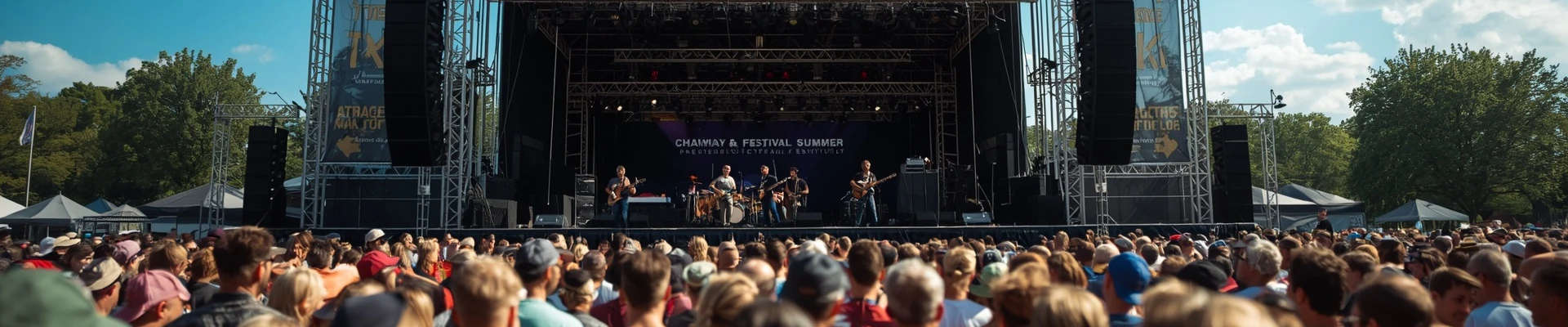
Kamloops Music Festival is the city's long-running competitive music festival — part of the BC Music Festival Association network — programming classical, vocal, and instrumental competition across age groups, and functioning as a community anchor for music education. The Sundog Music Festival has appeared on the Kamloops calendar as a roots and folk festival format, reflecting the region's connection to the Americana and folk tradition. TRU's Events programming brings touring artists and campus concerts to the university community. Canada Day on the River combines outdoor concerts and community entertainment at the waterfront. Ribfest Kamloops includes live music programming alongside the food festival. Sun Peaks Grand and the resort's summer concert series extend the festival calendar into the benchland mountains.
The Kamloops Arts Council and the Western Canada Theatre (the city's main professional theatre company) anchor a year-round performing arts season that complements the music programming.
What ties it all together
Kamloops is a city shaped by rivers, rails, and ranching — three forces that built its economy, defined its geography, and created the cultural inheritance of western Canadian country and roots music that still runs through its bones. The Trans-Canada corridor has always made Kamloops a passing-through city as much as a destination, and that transit geography has given it a steady stream of touring bands working the Vancouver-to-Calgary route, stopping in a city of 100,000 that reliably fills Sandman Centre for a good country show and keeps the bar circuit on Victoria Street alive through the week. The Tk'emlúps te Secwépemc presence has given the city a deep Indigenous musical and cultural tradition that has grown more publicly visible and celebrated — the Powwow stands as one of the Interior's great cultural gatherings, and the work of Indigenous artists connected to the Secwépemc Nation represents some of the most meaningful creative expression rooted in this place. Thompson Rivers University has broadened the city's musical range, bringing South Asian, Filipino, and international student communities whose music adds a global texture to a city whose soundtrack was once almost entirely defined by country and rock. Small, honest, and community-rooted — Kamloops is a city where live music thrives not because of industry infrastructure but because the people who live at the confluence of the Thompson Rivers genuinely love to play and listen together.