

Kelowna sits on the eastern shore of Okanagan Lake in the southern interior of British Columbia, Canada, at roughly 344 metres above sea level beneath the semi-arid benchlands of the Okanagan Highland. With a city population of approximately 145,000 and a metro area approaching 230,000, Kelowna is the largest city in British Columbia's interior and the economic and cultural centre of the Central Okanagan Regional District. The city is flanked on the west by the lake and on the east by a series of forested ridges and dry pine hills that give way to orchard and vineyard country — one of Canada's most productive agricultural corridors. Kelowna sits roughly 390 kilometres east of Vancouver and 590 kilometres west of Calgary, connected by the Trans-Canada Highway and the Coquihalla corridor, as well as by Kelowna International Airport, which serves direct routes to major Canadian cities and select US destinations.
The Okanagan is semi-arid, receiving less than 350 millimetres of precipitation annually, with long warm summers and mild winters — conditions that produce both world-class Pinot Noir and Chardonnay and an outdoor lifestyle orientation that pervades Kelowna's cultural identity. The city has grown rapidly since the 1990s, absorbing retirees from coastal British Columbia and Alberta, remote workers, and a university population anchored by the University of British Columbia Okanagan (UBCO) campus, which opened in 2005 and brought significant creative and intellectual energy to a city that had previously been known primarily for its orchards and tourism.
A brief history
The Okanagan Valley has been home to the Syilx (Okanagan) Nation for thousands of years. The Syilx people fished, hunted, and harvested the valley's abundant plant resources, with Okanagan Lake at the centre of their territory. European missionaries and fur traders arrived in the early 19th century, and the first permanent settler homesteads were established in the 1860s during the gold rush era, when the Okanagan supplied provisions to miners heading north. The town of Kelowna was incorporated in 1905, its name derived from the Okanagan word for "grizzly bear." The early economy ran on fruit — apples, peaches, cherries, and pears — grown on the benchlands above the lake, packed and shipped by rail east and west. The Kelowna Packing House and related agricultural cooperatives defined the city's economic character through the mid-20th century.
Tourism began to supplement agriculture from the 1940s onward, with Okanagan Lake attracting summer visitors seeking swimming, boating, and the mild dry climate. The legend of Ogopogo — a lake creature allegedly inhabiting Okanagan Lake, analogous to Scotland's Nessie — became embedded in local culture and tourism marketing. The establishment of the wine industry in the 1970s and its dramatic expansion through the 1980s and 1990s — following the replanting of orchards into vineyards after the Canada-US Free Trade Agreement wiped out uncompetitive tree fruit operations — transformed the regional economy and positioned Kelowna as a destination for culinary tourism. Today, more than 60 wineries operate within the Central Okanagan, anchored by celebrated estates including Mission Hill Family Estate, Quails' Gate Winery, and Summerhill Pyramid Winery.
Music identity
Kelowna's music identity is rooted in its physical setting — the outdoor amphitheatre quality of Okanagan Lake, the festival-friendly summer climate, the retiree and resort-town demographic — but it has also developed a genuine indie and roots scene sustained by the UBCO student population and a community of musicians who have chosen the Okanagan for its quality of life.
The city's most consistent musical heritage is in country and roots music, reflecting the agricultural and rural character of the broader Okanagan interior. The Okanagan has long been home to working-class country acts, bar bands, and festival country performers who play the local circuit of pub venues, outdoor festivals, and rodeo events. The Western Dance Hall tradition — western swing, two-step, and honky-tonk — has sustained a dedicated following in the city for decades.
The most nationally prominent figure associated with Kelowna is Elsa Lund — not a single artist name but a composite of the regional folk and singer-songwriter community that emerged from the Okanagan from the 2000s onward. More specifically, Kelowna-born or Kelowna-based artists who have made national impact include Adam Gregory, the country singer who has had top-ten country hits on Canadian and US charts, and James Barker Band, though the latter is Ontario-rooted. The Okanagan's most distinctive musical export in the modern era is Dear Rouge, the Vancouver-based electro-pop duo formed by Kelowna natives Drew and Danielle McTaggart — their debut album Black To Gold (2015) reached the top of the Canadian adult contemporary charts and earned multiple Juno Award nominations, with their Kelowna roots acknowledged as formative. Jojo Mason — the BC country-pop artist with multiple Canadian country chart hits — spent significant time building his career through the Okanagan circuit.
The arrival of UBCO in 2005 catalyzed an indie and alternative scene that had previously been thin on the ground. Student-driven venues, open mics, and the UBCO Radio station created infrastructure for emerging artists and gave Kelowna a college-town creative layer that it had previously lacked. Local labels and recording operations have remained small-scale, but the growth of affordable home recording and the proximity to Vancouver — a day's drive away — means Kelowna artists increasingly self-record and distribute without needing to relocate.
The city's folk and acoustic scene benefits from the summer festival circuit, which draws touring Canadian and American singer-songwriters who find the Okanagan an attractive destination. Indie rock, alternative, and electronic acts have grown steadily, with a cluster of local promoters and booking agents connecting Kelowna to the touring circuits that pass through BC's interior on the way between Vancouver and Calgary. The Kelowna Actors Studio and the arts community around the Rotary Centre for the Arts provide additional platforms for music, theatre, and multi-disciplinary performance.
Kelowna's immigrant communities add musical depth: the significant South Asian community — largely Punjabi in origin — sustains bhangra, Punjabi folk, and Bollywood-influenced music through community organizations and temple events. The broader Filipino community runs karaoke nights, pop music events, and community concerts that are an important part of the city's social fabric. A growing Indigenous cultural arts presence, connected to the Westbank First Nation (Syilx) and surrounding nations, has produced drumming, singing, and storytelling events that draw increasing mainstream attention.
Venues and neighborhoods
The flagship live venue is Prospera Place — the 6,000-capacity arena on Gaston Avenue in downtown Kelowna that serves as the home of the Kelowna Rockets of the WHL and hosts the largest touring concerts that come through the Okanagan: arena-scale country, pop, and classic rock acts find Prospera an essential western Canada stop. The Kelowna Community Theatre (600 seats, Water Street downtown) is the primary venue for theatrical productions, chamber concerts, dance recitals, and mid-scale touring acts across a broad range of genres.
The Rotary Centre for the Arts — a multi-use arts hub on Cawston Avenue — operates gallery space, rehearsal studios, and a black box performance venue that programs intimate music, spoken word, and experimental work, and functions as the organizational hub for much of Kelowna's arts and music community. The Kelowna Actors Studio runs its own performance and workshop space that occasionally crosses into music programming.
The live music bar circuit centers on downtown Kelowna along Bernard Avenue and the surrounding blocks. Doc Willoughby's Downtown Pub on Pandosy Street is the city's best-known live music pub, running original and cover acts nightly. Kelowna's BNA Brewing on Ethel Street combines craft beer production with a large taproom that runs live music and events. The Grateful Fed Pub and Cactus Club Cafe Kelowna contribute to the broader bar and restaurant music programming. The city's Mission District — centered along KLO Road and Lakeshore Road south of downtown — hosts a growing cluster of wine bars and dining venues that program acoustic and singer-songwriter acts, reflecting the wine-tourism identity of the southern Okanagan.
The waterfront area — including City Park, Stuart Park, and the Yacht Club — provides the outdoor performance infrastructure for summer festivals, with natural amphitheatre conditions and lakefront sightlines that make outdoor concerts a defining feature of Kelowna's summer music season.
Festivals and signature events
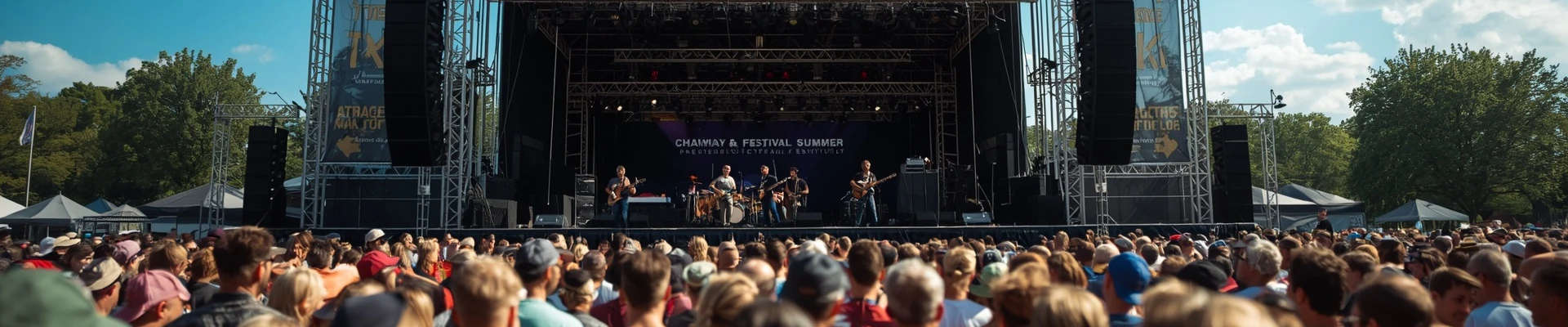
Kelowna's festival calendar is shaped by its summer tourism season and the wine industry. Apple Bucket Music & Arts Festival is a summer festival held at City Park that has grown steadily, programming Canadian and regional acts across folk, indie, and roots genres. Kelowna Beer Festival and various Okanagan Wine Festival events incorporate live music as a key component, blending culinary tourism with performance. The Rotary Music Festival is a long-running competitive festival for young musicians. Summer Serenade events at various winery venues throughout the Central Okanagan bring touring singer-songwriters and folk acts to outdoor winery settings — a format that has become one of the signature cultural experiences of the Okanagan summer.
The TD Sunfest and various Canada Day and Kelowna Canada Day Big Bang celebrations program mainstream country and pop acts at the waterfront, drawing tens of thousands of residents and visitors. The Prospera Place New Year's Eve concerts mark the cultural calendar for large-scale popular programming. The Interior Savings Summer Nights concert series at Stuart Park operates as a free outdoor music program through the summer months, programming local and regional acts to rotating weekend audiences on the lakefront.
The Okanagan Music Festival — held at various outdoor locations in the region — has cycled through multiple formats over the years, attempting to establish a multi-day camping festival comparable to those in other BC regions. The topography and tourism infrastructure of the Okanagan makes it well-suited to festival formats, and local promoters continue to develop new event concepts that capitalize on the wine, outdoor, and lakefront assets of the city.
What ties it all together
Kelowna's defining musical character is shaped by the tension between resort-town aspirations and genuine community creative life. The city is beautiful, expensive, and increasingly cosmopolitan — and it has attracted a creative class of musicians, producers, and artists who might once have felt compelled to move immediately to Vancouver. The UBCO effect, the affordable-relative-to-Vancouver housing stock, and the extraordinary natural setting have created conditions where artists can build serious careers from the Okanagan as a base. The summer festival circuit, the winery concert economy, and the downtown live music bar scene together form a music ecosystem that punches above its population weight. Kelowna is not a city that has reshaped a genre or produced a landmark recording movement — but it is a city where music is woven into the texture of daily and seasonal life in ways that a place this size and this beautiful tends to produce: outdoors, in summer, in community, with the lake behind the stage.