



At the Foot of the Escarpment
Milton occupies one of the most dramatic natural settings of any town in the Greater Toronto Area. The Niagara Escarpment — a UNESCO World Biosphere Reserve — rises directly at the town's northern and western edges, its forested limestone ridges forming an unmistakable skyline backdrop for a community that, as recently as 1990, had fewer than 30,000 residents. Today Milton is home to more than 130,000 people and is consistently ranked among the fastest-growing municipalities in Canada, a demographic transformation that has reshaped virtually every aspect of life in what was once a quiet agricultural market town.
Halton Region's seat of government sits in nearby Oakville, but Milton functions as the region's easternmost anchor, positioned between Mississauga to the east, Burlington and Hamilton to the west, and Brampton to the north. The 401 corridor runs through Milton's southern districts, and the GO Transit Milton line connects commuters to Union Station in downtown Toronto in under an hour — a rail link that has directly fuelled the residential explosion. The town's economy is driven by logistics and warehousing (the stretch of the 401 near Milton hosts major distribution centres for companies including Amazon and Sobeys), advanced manufacturing, and a substantial professional-class commuter workforce that works in Toronto or Mississauga but chooses Milton for its housing value and proximity to outdoor recreation.
The Escarpment itself is the town's defining natural resource. Rattlesnake Point Conservation Area, Crawford Lake Conservation Area, and the Bruce Trail — Canada's oldest and longest footpath — all lie within minutes of the town centre, drawing hikers, climbers, and naturalists year-round. This outdoor identity has shaped the character of Milton's cultural life: the town attracts families and active-lifestyle residents rather than the nightlife-driven urban demographic that sustains dense club scenes in larger cities.
A Town Built on Agriculture and Stone
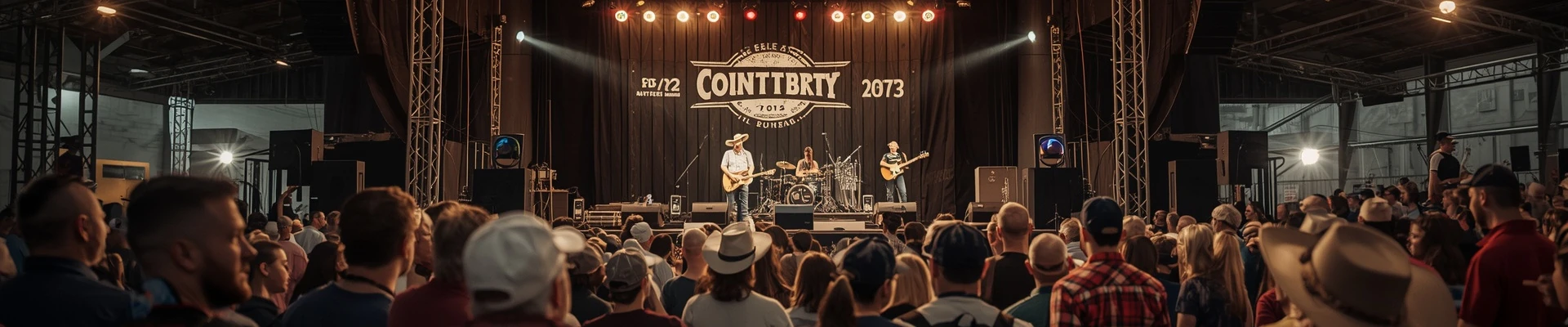
Milton's pre-suburban identity was agricultural and quarrying. The town's name honours the English poet John Milton, and its 19th-century economy was anchored by the limestone quarrying operations that fed the construction booms of nearby Toronto and Hamilton. The Milton Fair, one of Ontario's longest-running agricultural exhibitions, has been held annually since 1834 and remains a fixture of the town's calendar — a fair that has always included entertainment programming alongside its agricultural competitions. That tradition of outdoor community gathering, live music on fairground stages, and the hospitality infrastructure that surrounds such events laid the social foundations for what became Milton's contemporary community arts culture.
The downtown core around Main Street retains elements of its Victorian commercial character — red-brick storefronts, a modest town hall, and the kind of intimate commercial strip that can support small live-music venues, acoustic showcases, and community-arts programming. The Milton Centre for the Arts, which opened in 2010, represented the town's first purpose-built performing-arts facility: a 500-seat proscenium theatre, a blackbox studio, and ancillary gallery and rehearsal space that gave local arts organizations a professional-grade home and allowed the town to book touring acts that would previously have gone only to Mississauga or Burlington.
The Centre for the Arts and Community Programming
Milton Centre for the Arts (MCA) on Ontario Street is the hub of the town's formal cultural life. Operated by the Town of Milton, the facility hosts a programmed season that includes touring theatrical productions, family programming, comedy acts, and, critically for the music scene, a concert series that has brought folk, classical, jazz, and roots artists to Milton audiences. Acts including Royal Wood, Jimmy Rankin, and various artists from the Canadian Country Music Association circuit have appeared on the MCA stage. The venue's 500-seat capacity makes it suitable for artists at the regional-touring level — established enough to sell tickets but below the arena scale — and it functions as a de facto showcase space for the Halton Region arts ecosystem.
Beyond the Centre, Pepperwood Bistro and Pub Italia on Main Street have historically hosted live acoustic and original music in an intimate pub format. The town's restaurant strip, which has expanded substantially along Bronte Street and in the Derry Road commercial corridors, has generated a handful of additional live-music-friendly rooms as the population has grown. None of these venues operates at the level of a full-time original-music club — Milton has not yet produced a dedicated rock or indie club in the tradition of a Hamilton or Toronto room — but the aggregate of pub stages, restaurant showcases, and community-hall events creates a functional ecosystem for local and regional acts.
Origins of a Local Scene
For a town that has grown this rapidly, the local original-music scene is remarkably organized. The Milton Music Coalition, a grassroots network of local musicians, has facilitated open-mic events, band showcases, and instrument-donation programs since the mid-2010s. Artists working out of Milton span folk-pop, country, acoustic rock, and what might be called "suburban indie" — a lightly produced, emotionally earnest singer-songwriter style characteristic of communities where young families are the dominant demographic and the audience is more likely to be at a school talent showcase or a church concert than a bar at midnight.
Nicole Wray, a soul and R&B artist, spent time in the broader Hamilton-Burlington corridor — the western GTA region that Milton connects to — illustrating how the GTA's western satellite cities feed into a shared creative ecosystem rather than generating fully independent scenes. More locally, the high-school music programs at Craig Kielburger Secondary School and Milton District High School (now Bishop Reding Catholic Secondary School for the Catholic stream) have produced trained instrumentalists and vocalists who have gone on to study at Humber College, Mohawk College, and the University of Toronto before returning to the broader region as working musicians.
The town's growth has attracted musicians who relocated from denser urban cores in search of affordable housing and space — home studios have proliferated in Milton's newer subdivisions, and several producers and recording engineers have established working setups in the Derry Road West and Louis St. Laurent Avenue residential corridors. This informal infrastructure — invisible from the street but active on SoundCloud and Spotify — represents Milton's emerging recording culture.
Country, Roots, and the Fair Circuit
Milton's agricultural heritage sustains a genuine country and roots appetite. The Milton Fall Fair entertainment stage has booked country and roots acts across its 180-year history, and the town's proximity to Burl's Creek Event Grounds in Oro-Medonte (roughly 90 minutes north, near Barrie) means that the Boots & Hearts Music Festival — one of Canada's largest country-music events — is within comfortable reach for Milton residents. More locally, the Halton Hills and Halton Region agricultural fair circuit creates recurring seasonal demand for country cover bands and acoustic performers, sustaining a tier of working musicians who do the fair, festival, and winery circuit across Southern Ontario.
Ravine Winery and other Niagara Escarpment winery operations near the Twenty Valley area in neighbouring Lincoln are part of a wine-and-music culture that Milton musicians access. The escarpment's agricultural identity — apple orchards, lavender farms, pumpkin patches — generates the same kind of curated outdoor-event market that has become economically significant for folk and acoustic artists across Ontario.
Hip-Hop and Youth Culture
The town's rapid demographic expansion has brought significant South Asian, Black, and Middle Eastern communities into Milton's newer subdivisions, particularly in the Hawthorne Village, Ford, and Beaty neighbourhoods. These communities carry with them musical traditions that surface in private events, cultural community centres, and an emerging generation of young artists. South Asian bhangra, Bollywood-influenced pop, and gospel traditions have all found footing in Milton's growing faith-community infrastructure, which includes numerous Indo-Canadian temples, mosques, and evangelical churches that maintain active music programs.
A younger generation of Milton residents is oriented toward Toronto's hip-hop and R&B scene — accessible by GO Train in under an hour — and several Milton-based producers maintain collaborative relationships with artists in Brampton and Mississauga, the GTA's most productive hip-hop and Afrobeats communities. Milton itself is too suburban and too newly formed to have produced nationally known hip-hop figures, but its geographic position between Brampton (home to artists in the lineage of Tory Lanez and Maestro Fresh Wes) and Hamilton (home to a durable independent hip-hop community) means Milton youth are culturally fluent in both scenes.
The Halton Regional Context
Understanding Milton's music scene requires understanding Halton Region as a whole. Milton shares a regional administrative structure with Burlington, Oakville, and Halton Hills (Georgetown and Acton). Burlington's FirstOntario Performing Arts Centre and Bridgeworks venue provide the region's most developed mid-size performing-arts infrastructure; Oakville's Oakville Centre for the Performing Arts anchors a wealthier cultural ecosystem. Milton's MCA fits into this regional picture as the newest and fastest-growing of the Halton cultural venues, drawing on a community that is, by median household income and educational attainment, among the most affluent and highly educated in Canada — precisely the demographic profile that sustains performing-arts programming.
The Halton Regional Police Services headquarters is located in Oakville, and the region's shared services model means Milton's arts and cultural programming is partially coordinated through Halton Hills Cultural Programs and the Regional Municipality of Halton arts funding streams, which channel provincial and federal arts grants into smaller community events that supplement what the MCA programs.
What Ties It Together
Milton is a city still becoming itself. Thirty years ago it was a small-town Ontario community defined by limestone quarries and agricultural fairs; today it is one of the GTA's fastest-growing suburbs, with a culturally diverse population, a purpose-built arts centre, and a musical scene that reflects both its youthfulness and its geographic position. The Niagara Escarpment at its back, the GO Train at its front, and the Milton Centre for the Arts at its civic core — these three facts define what Milton is musically: a community close enough to Toronto's creative infrastructure to benefit from it, grounded enough in its own landscape and community life to develop something distinctly local. The original-music scene is small but organized, the community-arts culture is robust, and the demographics virtually guarantee that the next generation of artists emerging from Milton will be more stylistically diverse and internationally connected than anything the town has yet produced.