


Windsor is the southernmost city in Canada, sitting on the north bank of the Detroit River directly across from Detroit, Michigan — meaning that geographically, Windsor is south of Detroit, a fact that still surprises visitors. With roughly 230,000 residents in the city proper and more than 400,000 across the Census Metropolitan Area (including Tecumseh, LaSalle, Amherstburg, and Essex County), Windsor is the largest city in Southwestern Ontario and one of the most strategically positioned cities in North America. The Ambassador Bridge and the Windsor–Detroit Tunnel handle more than $300 million in cross-border trade daily, making the Windsor–Detroit corridor one of the busiest international border crossings in the world. That geographic and economic intimacy with Detroit is the defining fact of Windsor's musical life.
A brief history
The territory that became Windsor was home to the Odawa (Ottawa), Ojibwe (Anishinaabe), and Potawatomi peoples — collectively the Three Fires Confederacy — for centuries before French colonization. French missionaries and traders established a presence at Pointe de Montréal (present-day Windsor) as early as 1701, and Fort Detroit on the Michigan side was founded the same year. The first permanent European settlement on the Canadian side dates to the 1730s, and the area became a destination for Black Americans escaping slavery through the Underground Railroad from the 1820s onward — Windsor and nearby Amherstburg (home of the North American Black Historical Museum) were among the final destinations on the Railroad's northernmost routes. That Black American heritage — families who arrived from Virginia, Kentucky, and the Carolinas — is foundational to Windsor's musical identity.
Windsor was incorporated as a town in 1854 and a city in 1892. The auto industry arrived early: the Ford Motor Company of Canada was established in Walkerville (now part of Windsor) in 1904, one year after Ford's Detroit founding, making Windsor one of the original North American auto manufacturing cities. Throughout the 20th century, Windsor's economy tracked Detroit's closely — the postwar boom, the Big Three's dominance, and the later contraction all hit Windsor with equal force, delayed slightly by the border. This industrial identity shaped the city's working-class music culture: union halls, after-hours clubs, and a tavern circuit that booked talent crossing from Detroit for decades.
Music identity
Windsor's music scene is inseparable from Detroit's, and that cross-border fluidity is its defining characteristic. For decades, Detroit musicians crossed the river to play Windsor's bars and clubs — which, under Ontario's different licensing laws, often stayed open longer, served alcohol to younger patrons, or operated under fewer restrictions than Michigan venues. In the 1950s, 1960s, and 1970s, the Windsor club circuit was a working extension of the Detroit music economy. Motown acts toured the Windsor taverns. Detroit jazz and blues musicians built Windsor residencies. And Windsor's own musicians absorbed Detroit's sounds just across the water — R&B, soul, jazz, blues, funk, techno, and rock all passed through the Ambassador Bridge or the Tunnel like cargo.
Windsor's most celebrated musical contribution is its jazz and blues lineage, anchored by the Windsor Jazz Festival (now Bluesfest Windsor) and a circuit of clubs that has hosted significant talent for decades. The city has long been a jazz town — the Colosseum and a series of clubs on Ouellette Avenue (Windsor's main downtown strip) hosted Detroit and Chicago jazz touring acts from the 1940s onward. Amos Williams, Paul Maybury, and the city's early jazz bandleaders built a local tradition that fed directly into the Detroit scene. Dizzy Gillespie, Oscar Peterson, Count Basie, and Duke Ellington all played Windsor dates.
Windsor's rock and pop lineage carries surprising weight. Gino Vannelli, born in Montreal but who recorded in the region, built part of his early sound in the Ontario circuit. More significantly, Domenic Troiano — one of the most respected guitarists in Canadian rock history — was raised in Windsor, passing through the Mandala and ultimately joining the James Gang and the Guess Who (alongside fellow Winnipeg and Ontario musicians). Jeff Healey, who was raised in Toronto but cut his teeth across Southern Ontario, played the Windsor circuit. Jerry Doucette, the Vancouver rock guitarist whose "Mama Let Him Play" became a Canadian rock staple, is Windsor-born. Junior Wells and Buddy Guy played the Windsor blues clubs repeatedly. The Tragically Hip and 54-40 built fan bases through the Windsor corridor.
The Caribbean diaspora — Jamaican, Trinidadian, Barbadian, and Guyanese communities that arrived from the 1960s onward — sustains a deep reggae, soca, calypso, and dancehall scene. The Caribbean Social Club of Windsor, the West Indian Club, and a network of community halls support Caribbean programming year-round. Carib Fest Windsor, launched in 2003, has grown into one of the larger Caribbean-Canadian festivals in Ontario outside Toronto. A growing West African community — including Nigerian, Ghanaian, and Congolese residents — fuels Afrobeats, highlife, and gospel programming across the city's church halls and community spaces. The Arab-Canadian community (Windsor has one of the highest concentrations of Arab-Canadian residents in the country, particularly from Lebanon, Iraq, and Syria) supports Arabic pop and dabke music through cultural events and restaurants along Ottawa Street and Dougall Avenue.
Windsor's hip-hop scene — inevitably shaped by Detroit's proximity — has produced a working underground circuit. Detroit rap and trap cross the border constantly; Windsor producers and MCs work in both cities. The Windsor–Detroit corridor is one of the more blurred hip-hop zones in North America, with artists operating freely on both sides.
The classical and choral tradition runs through the Windsor Symphony Orchestra (founded 1948), one of the oldest continuously operating orchestras in Ontario, which performs at the Capitol Theatre. The University of Windsor School of Music anchors the academic music tradition. The Essex County surrounding Windsor supplies a folk and country circuit through farm communities.
Venues and neighborhoods
Windsor's venue geography is compact and walkable. The Capitol Theatre (1,226 seats) on University Avenue West is the city's most prestigious room — an Art Deco landmark hosting the Windsor Symphony, Broadway tours, and major touring acts. The Colosseum and the former Rockola Café circuit anchored the 1970s and 1980s rock scene. The Blind Owl (a well-regarded indie and roots venue), Phog Lounge (a listening-room venue on University Avenue West known nationally among Canadian indie circles), and The Villager represent the modern independent club tier. Phog Lounge in particular has become one of the most respected intimate music venues in Southern Ontario, booking national touring acts and local artists at street level without a cover charge culture — a community-first model that has made it a touchstone for the city's indie scene.
Ouellette Avenue is the city's traditional entertainment corridor — bars, clubs, and live music rooms that run from the riverfront north through downtown. The University Avenue corridor anchors the arts and music scenes around the University of Windsor campus. The Walkerville neighbourhood (the original Ford Canada district, now an arts corridor) supports galleries, studios, and a small live music scene. Sandwich Town — one of the oldest European-settled areas in Canada west of Montreal — is undergoing cultural revitalization through community arts programming. Ford City (east Windsor) and South Windsor support community and church-based musical programming.
Festivals and signature events
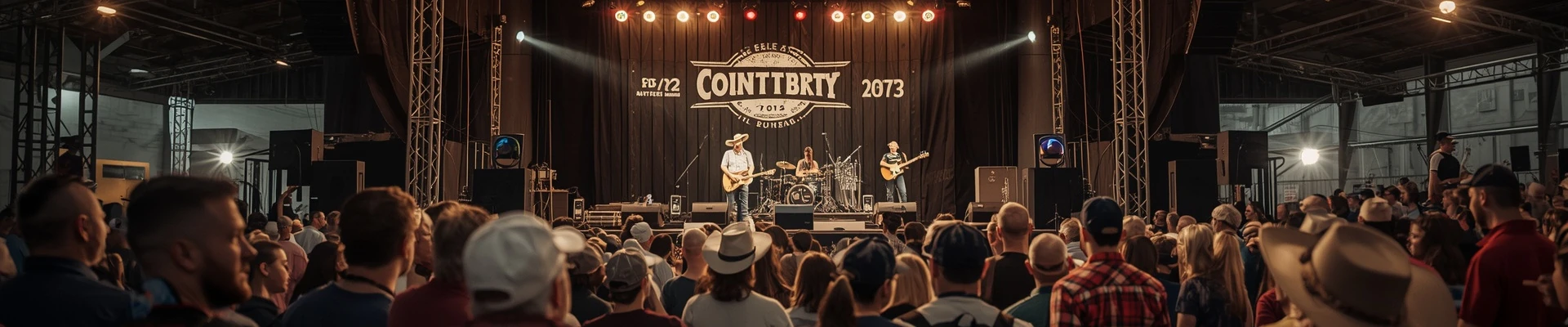
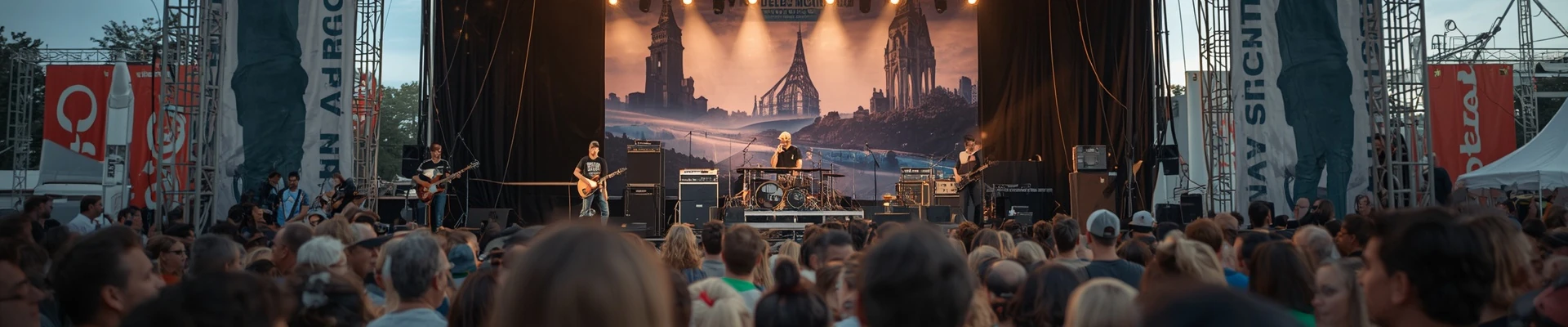
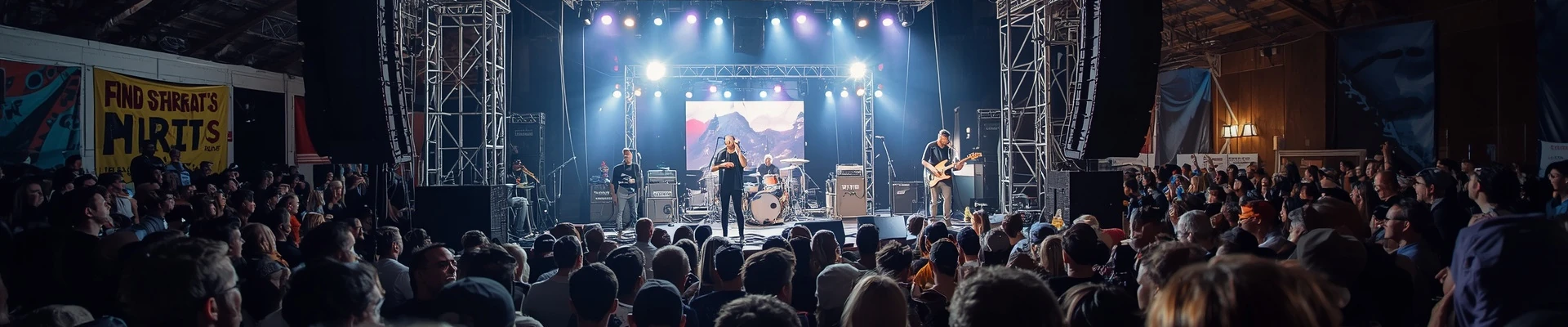
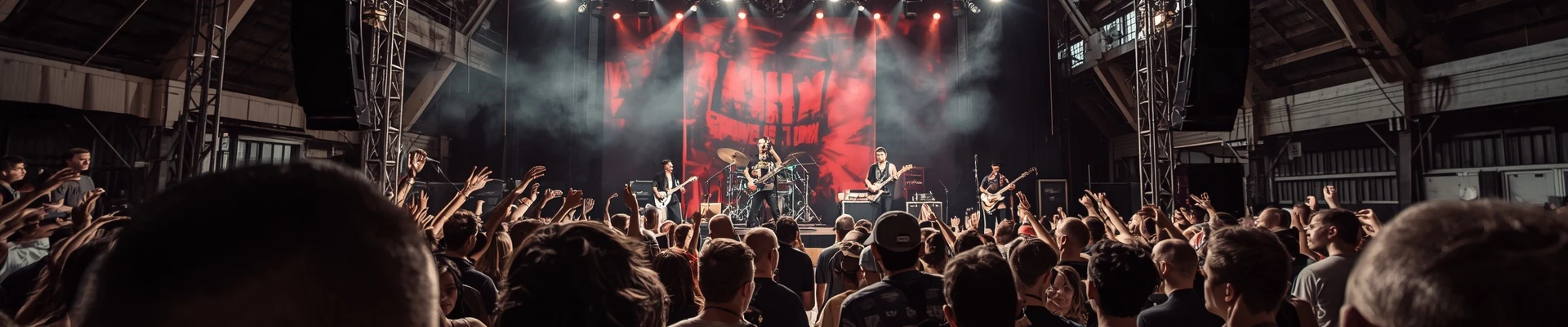
Bluesfest Windsor (formerly the Windsor Jazz Festival, running since 1987) is the city's signature annual music event, drawing 40,000–60,000 attendees over three days along the riverfront in August. The festival has hosted B.B. King, Buddy Guy, Etta James, Keb' Mo', Robert Cray, and major Canadian blues and roots acts across its history. The Detroit River backdrop — with the Detroit skyline glittering across the water — makes the Bluesfest site one of the more visually dramatic outdoor festival settings in Canada.
Carib Fest Windsor programs Caribbean music, dance, and food in the summer. Carrousel of the Nations (organized by the Multicultural Council of Windsor and Essex County) runs pavilions from more than 30 cultural communities, programming live music and dance from Caribbean, Arab, West African, Eastern European, and Southeast Asian communities across two weekends in June. The Windsor–Detroit International Freedom Festival on the Canada Day / Fourth of July weekend draws hundreds of thousands for the joint fireworks over the river — and programs live music on both sides of the border simultaneously. Essex County Wine Trail events in the surrounding county add a folk and roots music circuit. Windsor Fringe Festival programs live music in its theatre-festival context.
What ties it all together
Windsor's musical identity is built on a border — not as a barrier, but as a membrane. Detroit's jazz crossed the river in the 1940s. Motown's road shows played Windsor's taverns in the 1960s. Detroit techno producers rode the tunnel to Windsor warehouse raves in the 1990s. And Windsor's own musicians crossed back — into the Detroit studios, onto the Michigan circuit, into the North American touring economy — building careers that straddle two countries in ways that musicians from any other Canadian city never could. Add the Caribbean soca filling the community halls in July, the Arabic dabke beating through the Dougall Avenue restaurants, the Afrobeats rising in the west-end churches, and the Windsor Symphony playing Elgar in the Capitol Theatre, and the city reveals itself as one of the more quietly cosmopolitan music towns in Canada — a border crossing that has always moved music in both directions.