

Gatineau sits on the north bank of the Ottawa River in southwestern Quebec, directly across from the federal capital of Ottawa, and together the two cities form the National Capital Region — home to roughly 1.4 million people and the heart of Canadian federal life. Gatineau itself has a population of approximately 300,000, making it the fourth-largest city in Quebec and one of the fastest-growing urban centres in Canada. It was created in 2002 through the amalgamation of five former municipalities: Hull, Aylmer, Buckingham, Gatineau, and Masson-Angers — each with its own character, and Hull in particular with its own mythology in Canadian nightlife and music history.
More than 80 percent of Gatineau's population is francophone, making it one of the most distinctly French-speaking cities outside Montreal — a fact that shapes the music scene, the venue culture, the festival calendar, and the way the city relates to its federal-capital neighbour across the river. The Outaouais region, of which Gatineau is the urban centre, has been home to Algonquin (Anishinaabe) peoples for millennia; the Kitigan Zibi Anishinabeg reserve at Maniwaki and the Pikwàkanagàn (Bonnechere Ojibwe) and Timiskaming First Nations are close neighbours, and their cultural presence — in powwow circuits, Indigenous-language arts, and the city's cultural programming — runs through Gatineau's identity in ways that downtown Ottawa's institutional culture often papers over.
A brief history
The area was a hub of the Ottawa Valley lumber trade through the 19th century, when Philemon Wright established the first European settlement at Wright's Town (later Hull) in 1800 and began the massive squared-timber trade that sent Ottawa Valley logs down the river to Quebec City and across the Atlantic. The E.B. Eddy Company paper mill in Hull and the surrounding sawmill economy defined the city's working-class French-Canadian character through the late 19th and early 20th centuries. Hull was always a rougher, louder, more working-class counterpart to Ottawa's civil-servant respectability.
That contrast became central to Hull's — and later Gatineau's — musical and nightlife identity. When Ontario's stricter liquor and bar laws kept Ottawa's nightlife relatively tame through much of the 20th century, Hull's Promenade du Portage and the surrounding streets became the nightlife destination for the entire National Capital Region. The strip was lined with bars, discotheques, and live music venues; Ottawa's university and government crowd would cross the bridges en masse on weekends. The 1970s and 1980s were the peak era of Hull's bar strip — hundreds of venues, live bands seven nights a week, a continuous circuit of cover bands, rock outfits, and Quebec chansonnier acts working the room.
The 2002 amalgamation unified the municipalities politically but did not erase their distinct characters. Aylmer retains an anglophone and upscale suburban identity. Buckingham and Masson-Angers are rural-adjacent. Hull and the downtown core remain the nightlife and music centre of the amalgamated city.
Music identity
Gatineau's music scene is rooted in the francophone Quebec rock and chanson tradition that flows from Montreal through the Outaouais Valley. The city's dominant musical identity is not any single iconic act but a dense, continuous ecosystem of francophone rock, country-folk, and singer-songwriter music nurtured through Hull's bar circuit, the Outaouais university system, and the Quebec provincial arts infrastructure.
The most internationally recognized artist to emerge from the region is Robert Charlebois, the Montreal-born but Outaouais-connected pioneer of joual rock — the genre that fused Quebec vernacular French with electric rock in the late 1960s and permanently changed the direction of French-Canadian popular music. While Charlebois is Montreal by birth and career, his influence on the francophone Outaouais scene is foundational: the idea that Quebec French could be the language of rock, not just chanson, gave the Hull bar circuit its cultural permission slip.
Andréanne A. Malette, one of the most successful Quebec pop artists of the 2010s and 2020s, is from Gatineau — her anthemic French-language pop, built on acoustic guitar and soaring choruses, is deeply rooted in the folk-rock sound that has run through the Outaouais scene for decades. Her crossover success in Quebec radio and streaming has made her one of the most-streamed French-language artists in Canada. Mélissa Bédard, the Quebec City-born singer who broke through on Star Académie, has Outaouais family ties and a fan base concentrated in the region. Claude Dubois, the legendary Quebec chansonnier, has deep roots in the Ottawa Valley francophone community. Les Cowboys Fringants, the Repentigny-based Quebec rock band that became one of the best-selling French-language acts in Canadian history, have always had a fervent following in the Outaouais, where their working-class Quebec rock identity resonates directly.
The English-language side of the Gatineau/Ottawa scene overlaps significantly. The Acorn, the Ottawa-based indie rock and folk group led by Rolf Klausener, emerged from the National Capital Region's bilingual arts community and built one of the most acclaimed Canadian indie catalogs of the 2000s through Glory Hope Mountain (2007) and No Ghost (2010). Alvvays member Kerri MacLellan grew up in the region. The Ottawa/Gatineau jazz scene — centred on the Ottawa Jazz Festival programming that pulls heavily from Quebec artists — runs continuously through university music departments and the city's club circuit.
The Outaouais folk and roots tradition is one of Gatineau's most enduring musical threads. The Quebec trad (traditional Quebec folk) revival of the 1990s and 2000s found fertile ground in the region; groups working in gigue, violon (Quebec fiddle), and acoustic roots music have a continuous presence through festivals, ceildhs, and community halls. The Algonquin and First Nations music of the region — powwow drumming circles, Anishinaabe-language song, and contemporary Indigenous hip-hop and roots — is present through community programming at the Maison de la culture de Gatineau and events tied to the Kitigan Zibi and Timiskaming communities.
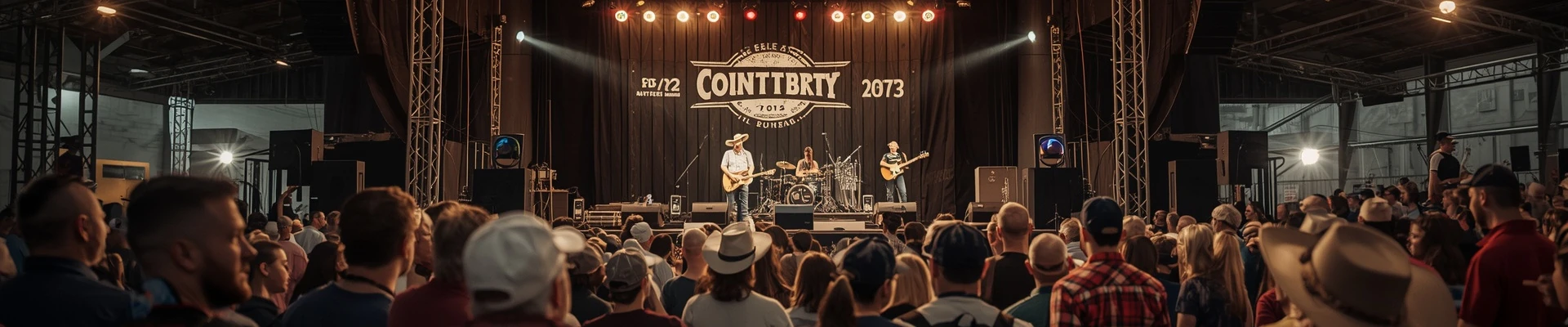
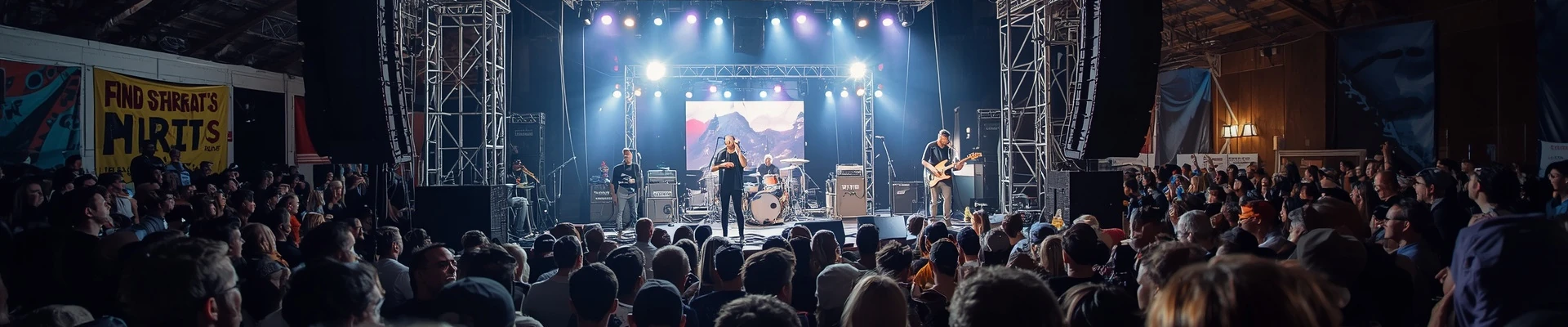
Hull's bar circuit, though much reduced from its 1970s-1980s peak (Ontario liquor laws liberalized through the 1990s and 2000s, closing the regulatory gap), remains active. The strip around Promenade du Portage and the adjacent streets still supports live rock, blues, and cover-band culture for the binationale crowd that crosses the bridges on weekends.
Venues and neighborhoods
Gatineau's flagship venue is the Théâtre de l'Île, a performing arts centre on a small island in the Gatineau River in the Vieux-Gatineau sector — one of the most distinctive venue settings in the country, hosting concerts, theatre, and outdoor summer programming. The Centre du Lac-Beauchamp outdoor amphitheatre in the Gatineau sector hosts large outdoor shows in summer. The Maison de la culture de Gatineau is the city's primary publicly-funded arts venue, programming a mix of classical, folk, and contemporary acts across multiple spaces. The Cabaret de l'Hôtel de Ville in Hull is a midsize room attached to the former Hull city hall.
The neighbourhood music geography follows the Hull/Aylmer/Buckingham divide closely. Vieux-Hull (the Old Hull sector, roughly the area around rue Laramée and boulevard Taché) is the most historically active music district — a dense grid of bars and live rooms that served the nightlife crossroads of the Capital Region for a century. The Promenade du Portage strip, while no longer the wall-to-wall bar district of the 1970s, still anchors the downtown nightlife scene. Aylmer has its own anglophone-leaning bar and restaurant scene along the boulevard Aylmer waterfront. Old Chelsea, just north of Gatineau in the Gatineau Hills, has a thriving café and arts circuit popular with the arts-sector Ottawa/Gatineau crowd.
The Gatineau Park natural reserve, which begins minutes from the urban core, has long been a backdrop for outdoor music events, hiking-themed folk concerts, and the kind of outdoorsy-folk cultural programming common to Quebec's Laurentian communities.
Festivals and signature events
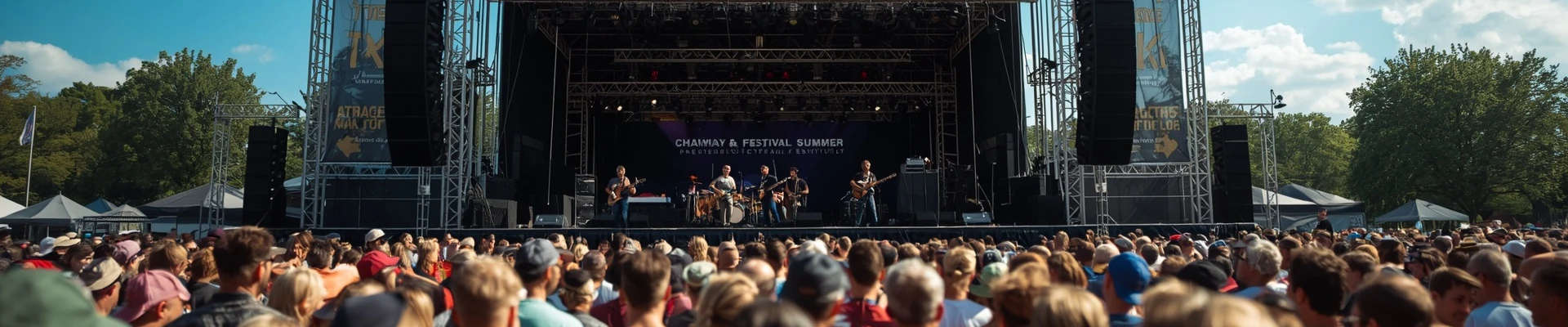
Gatineau en Fête is the city's signature summer festival, running for several days in mid-August with outdoor concerts, family programming, and local and regional acts. The Festival de montgolfières de Gatineau (the Gatineau Hot Air Balloon Festival) is one of the largest balloon festivals in North America and incorporates significant outdoor music programming across its multi-day run each September.
The Ottawa International Jazz Festival, though centred on the Ottawa side, draws heavily from Quebec and Gatineau artists and is routinely accessible from Gatineau by crossing the Portage Bridge or Chaudière Bridge. The Festival Franco-Ontarien in Ottawa programs francophone music for both the Ontario and Quebec sides of the region. Folk on the Rideau and various community folk festivals in the Outaouais serve the region's strong roots audience. The Aylmer Buskers Festival brings street performance and live music to the waterfront each summer.
Bluesfest Ottawa, one of the largest music festivals in Canada by attendance (drawing more than 300,000 over nine days), is Ottawa-based but pulls an enormous cross-river audience from Gatineau and programs occasional Quebec and francophone headliners.
What ties it all together
What defines Gatineau musically is the double exposure — to Quebec's francophone cultural nationalism on one side and to Ottawa's anglophone federal capital culture on the other — and the creative friction that generates. The Hull bar circuit was for decades the place where these two worlds met over live music and cheap pitchers, and the tradition of binationale, bilingual, cross-bridge cultural exchange has shaped the Gatineau scene at every level: francophone rock bands with anglophone fans, Indigenous artists from the Outaouais performing at Ottawa festivals, Andréanne A. Malette building a Quebec pop career from a city that sits in the shadow of Parliament Hill. Gatineau is a city that often gets absorbed into the "Ottawa-Gatineau" metro label and loses its own identity in the process — but its music scene, rooted in the Outaouais francophone tradition, the Hull nightlife legacy, and the Algonquin cultural history of the river valley, is distinctly and stubbornly its own.