
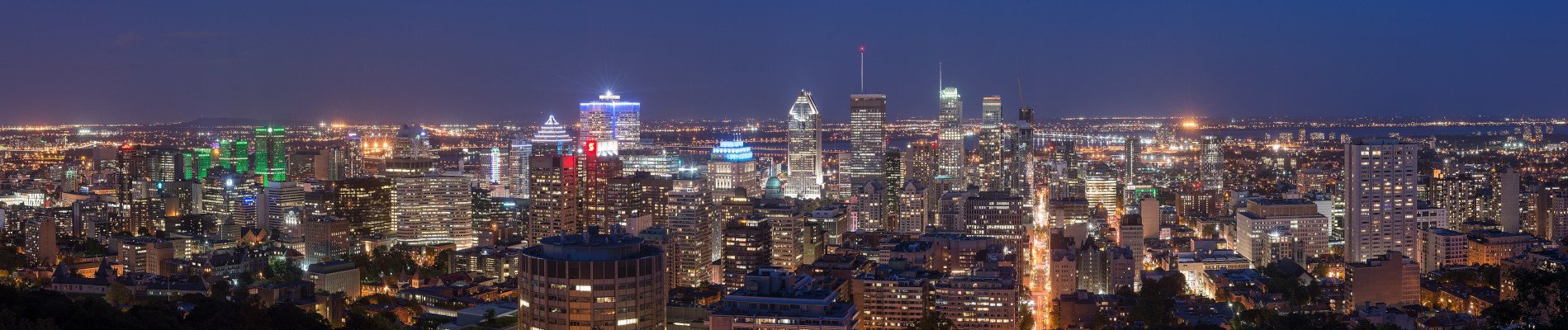
Montréal is the largest city in the province of Québec and the second-largest in Canada, with roughly 1.76 million residents on the island and more than 4.3 million across the surrounding metropolitan area. Built on a long island where the Ottawa River meets the St. Lawrence, dominated by the volcanic plug of Mont Royal and ringed by some of the most architecturally distinct neighborhoods on the continent, it is North America's largest predominantly French-speaking city and one of its most culturally singular places. That French-Anglo-immigrant tension is the engine of its musical life: Montréal is at once a European music city and a North American one, and almost every scene that runs through it draws on both.
A brief history
The Kanien'kehá:ka (Mohawk), Algonquin, Wendat, and Anishinaabe peoples used the island as a meeting and trading place for thousands of years before Jacques Cartier visited in 1535 and Paul de Chomedey de Maisonneuve founded Ville-Marie in 1642. Under French rule the small fur-trading post grew into a colonial center; after the British conquest of New France in 1760 it became the commercial capital of British North America and, through the 19th century, the largest city in Canada. Successive waves of immigration — Irish, Scottish, Eastern European Jewish, Italian, Greek, Portuguese, Haitian, Lebanese, Vietnamese, North African, and West African — built a patchwork of distinct neighborhoods on a city that remained both French-speaking and unusually European in feel.
The mid-20th century Quiet Revolution transformed Québec from a clerically dominated traditional society into a modern, secular, French-language welfare state, and Montréal was at its center. The 1967 Expo 67 world's fair and the 1976 Summer Olympics rebuilt the city's infrastructure and global profile. The Charter of the French Language (1977) and the rise of separatist politics drove much of the Anglo corporate elite to Toronto, but Montréal kept its head start in arts, design, and cultural production. Combined with low rents, generous Canadian and Québécois grant systems, deep public broadcasting (Radio-Canada, CBC), and a famously dense bar and restaurant culture, this turned the city into one of the most musician-friendly metropolises on the continent.
Music identity
Montréal's modern musical history begins in earnest with chanson québécoise — the French-language singer-songwriter tradition that crystallized in the 1960s and 1970s as part of the Quiet Revolution's cultural flowering. Félix Leclerc, Gilles Vigneault, Jean-Pierre Ferland, Pauline Julien, Robert Charlebois, Diane Dufresne, Beau Dommage, and Harmonium built a literate, politically engaged, French-language popular music tradition that remains the bedrock of Québécois culture and continues today through artists like Daniel Bélanger, Cœur de Pirate, Jean Leloup, Les Cowboys Fringants, Pierre Lapointe, Klô Pelgag, and Charlotte Cardin. The same era saw a deep jazz and classical tradition take root through the Orchestre symphonique de Montréal, the McGill and Université de Montréal music faculties, and clubs like the historic Rockhead's Paradise, where Oscar Peterson, Oliver Jones, and a generation of Black Montréal jazz musicians built international careers.
In the 1980s and 1990s the city's Anglo and bilingual rock scene produced everything from prog and hard rock (April Wine, Voivod, Cryptopsy) to alt-rock (the Doughboys, Bran Van 3000, the Dears) and a quietly influential electronic and trip-hop scene through artists like Tiga and labels like Turbo Recordings. The 2000s, however, are the period that put Montréal on the global indie map. Arcade Fire's 2004 Funeral — recorded with members from across the city's anglophone and francophone scenes — became one of the most acclaimed indie albums of the decade and made the Mile End neighborhood internationally famous overnight. Around them grew an extraordinary cluster of bands and labels: Godspeed You! Black Emperor, A Silver Mt. Zion, and the Constellation Records post-rock universe; Wolf Parade, Stars, Patrick Watson, Plants and Animals, the Stills, Malajube, the Besnard Lakes, Suuns, TOPS, Braids, Grimes (who launched her career out of a Mile End loft), Mac DeMarco (briefly Montréal-based), BadBadNotGood's ties, Charlotte Day Wilson's collaborations, and dozens more. The Pop Montréal festival, Constellation, Arts & Crafts's Montréal links, Secret City, Bonsound, and Dare to Care built one of the densest indie label ecosystems in North America.
The 2010s and 2020s have remade the city again. Kaytranada, raised in Saint-Hubert just south of Montréal, became one of the most influential producers of the era, fusing house, hip-hop, and R&B in a sound now exported worldwide. Loud, FouKi, Souldia, Dead Obies, Alaclair Ensemble, Imposs, and the broader rap québécois scene have built a French-language hip-hop tradition that draws on French, American, and Caribbean influences. Haitian Montréal — one of the largest Haitian diasporas outside Haiti — feeds compas, kompa-direk, and modern Afro-Caribbean dance music through artists, DJs, and clubs across Saint-Michel, Montréal-Nord, and Rivière-des-Prairies. Latin, Maghrebi, West African, and Lebanese scenes thrive in their own neighborhoods. Electronic and club culture run deep through the MUTEK festival's experimental electronic programming, the Igloofest outdoor winter rave, the Piknic Électronik outdoor day parties on Île Sainte-Hélène, and a deep techno/house circuit at clubs like Stereo, Newspeak, and the long lineage of after-hours rooms that gave Montréal a reputation as one of North America's great club cities.
Venues and neighborhoods
Montréal's venue ecosystem is extraordinary for the city's size. At the top sit the Bell Centre, Centre Bell in French — home of the Canadiens and the city's largest concerts — the Place des Arts complex (which houses the Maison symphonique, Salle Wilfrid-Pelletier, Théâtre Maisonneuve, and the OSM and Opéra de Montréal seasons), the MTELUS (formerly Métropolis), and Théâtre St-Denis. The midsize tier includes Olympia, Théâtre Corona, Théâtre Beanfield (formerly Corona), L'Astral, Club Soda, Théâtre Outremont, and Théâtre Rialto. Beneath them is one of the deepest club layers in North America — La Sala Rossa and Casa del Popolo in the Plateau (still the heart of the indie scene), Bar le Ritz PDB, L'Esco, Turbo Haüs, Petit Campus, Bar Le "Speakeasy" Electric Avenue, Quai des Brumes, Foufounes Électriques (still operating since 1983), Diving Bell Social Club, MainLine Theatre, the Diving Bell, and a dense network of bars and lofts. Jazz and listening rooms include Upstairs, Diese Onze, House of Jazz, Modavie, and historic spaces in the Old Port. Electronic and club culture run through Stereo, Newspeak, Le Belmont, SAT (Société des arts technologiques), MTELUS late nights, and the warehouse circuit.
Different neighborhoods carry different musical identities. Plateau-Mont-Royal, Mile End, and Mile-Ex anchor the indie, post-rock, and DIY scenes. Saint-Henri, Verdun, and Rosemont have absorbed the post-2010 wave of artists priced out of the Plateau and now host much of the new venue and rehearsal-space ecosystem. Centre-Sud and the Quartier des Spectacles anchor the festival district and most of the city's high-end venues. Côte-des-Neiges, Parc-Extension, and Villeray host enormous South Asian, Greek, Filipino, and West African scenes. Saint-Michel and Montréal-Nord are central to Haitian, Latin, and francophone hip-hop. Hochelaga-Maisonneuve has become a hub for francophone indie and DIY.
Festivals and signature events
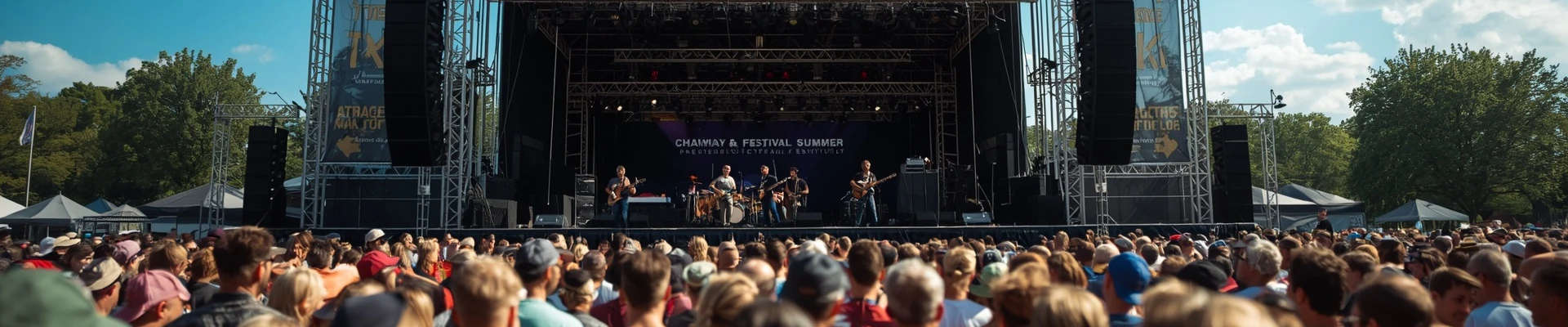
Montréal is one of the great festival cities in the world. The Festival International de Jazz de Montréal, founded in 1980, is the largest jazz festival on earth, drawing more than two million attendees over two weeks each summer with hundreds of free outdoor shows in the Quartier des Spectacles. Osheaga at Parc Jean-Drapeau is the city's flagship modern pop and indie festival; îleSoniq, Heavy Montréal, LASSO, and Festival d'été de Québec's Montréal-area events run alongside. Pop Montréal in the fall is one of the most respected indie discovery festivals in North America. Just for Laughs / Juste pour rire, Montréal en Lumière, Nuits d'Afrique, Mural Festival, Francos de Montréal, MUTEK, Igloofest, Piknic Électronik, Suoni Per Il Popolo, Fantasia (whose film programming overlaps heavily with music), POP Montréal, M for Montréal, and the Festival du Monde Arabe keep the calendar saturated through every season. Cultural processions — Pride / Fierté Montréal, the Carifiesta Caribbean parade, the Saint-Jean-Baptiste national holiday concerts on Mont Royal, Canada Day and Lunar New Year — are themselves rolling music events.
What ties it all together is the city's combination of cheap rent (relative to Toronto, New York, and most of the U.S.), generous public arts funding, deep bilingualism, and a permissive, late-night culture inherited from its European past. Montréal musicians grow up navigating French and English, North American and European traditions, immigrant and settler scenes, and they grow up in a city that programs more outdoor music in July than most cities program in a year.