
Rosemont–La Petite-Patrie is one of the nineteen boroughs of the City of Montréal, Quebec, situated on the central plateau of the island, directly east of the Mile End and Plateau-Mont-Royal districts. With roughly 146,000 residents and a land area of about 15.5 km², it is among the most densely populated and culturally active boroughs in the city. The borough is bounded by rue Saint-Denis to the west, boulevard Pie-IX to the east, rue Jean-Talon to the north, and the Canadian Pacific rail corridor to the south. It encompasses the distinct sub-neighbourhoods of Rosemont, La Petite-Patrie, Nouveau-Rosemont, and Tétreaultville — each with its own commercial character and community history, but sharing the plateau's characteristic flat terrain, leafy residential streets, and a walkable grid that rewards daily life on foot or by bicycle.
The borough is well connected within the Montréal transit network: the Rosemont and Beaubien metro stations (Orange Line) serve its western and central corridors, while De Castelnau provides access to the northern edge. The area is among the most intensively cycled districts in Montréal, with the REVs (réseau express vélo) bike highway running along rue de Castelnau and connecting riders westward to the Mile End and Plateau and eastward toward Anjou. The local economy blends small-scale manufacturing, independent retail, cafés, restaurants, and a growing creative sector — Marché Jean-Talon, the largest open-air market in North America, draws tens of thousands weekly from across the island and anchors the neighbourhood's food identity.
A brief history
The land that would become Rosemont was for centuries territory of the Haudenosaunee and later the Huron-Wendat — the river of La Rivière-des-Prairies to the north and the Saint Lawrence to the south defined the island's use and significance long before European settlement. The area was farmed through the 18th and 19th centuries as part of the broader agricultural hinterland of Montréal. Industrial development came in the late 19th century with the arrival of rail infrastructure and factories; the Angus Shops — the massive Canadian Pacific Railway locomotive maintenance complex established in 1904 in Rosemont — became one of the largest industrial employers in Québec, and the surrounding streets filled with workers' housing, corner stores, and Catholic parishes. The Petite-Patrie ("Little Homeland") district drew large numbers of working-class French Canadians, Italians, and later Greek immigrants, establishing the commercial strips along rue Beaubien and avenue du Parc that remain vital today. Italian immigration through the 1950s and 1960s brought the Italian-Canadian community that gave Marché Jean-Talon and the surrounding streets much of their culinary identity, a legacy maintained by the active presence of Italian grocers, pastry shops, and social clubs. The closure of the Angus Shops in 1992 after the CPR restructured its operations was a blow to the local economy, but the industrial lands were subsequently developed into the Technopôle Angus — a mixed-use sustainable development district that has become a national model for ecological redevelopment and now hosts dozens of small businesses, cooperative enterprises, and creative studios.
Music identity
Rosemont–La Petite-Patrie is one of the core residential and creative neighbourhoods for Montréal's music community — not a scene headquartered in a single venue or tied to one genre, but rather a dense web of apartments, rehearsal studios, record shops, and indie venues that together make the borough one of the most music-saturated boroughs in Canada. The borough's identity within Montréal's music world is closely linked to the broader Plateau–Mile End ecosystem: the francophone indie rock, hip-hop, and experimental music scenes that emerged in the 2000s and 2010s treated this part of the island as a single creative territory, and many of Montréal's most internationally visible artists have lived or worked in Rosemont at some point in their careers.
Francophones and the borough's indie rock roots. The borough is deeply francophone — roughly 80 percent of residents speak French as their first language — and that linguistic character has shaped its music culture. The Francophone indie rock and pop scenes that gave Montréal significant international attention through the 2000s drew their personnel substantially from this part of the island. Malajube — the Montréal art-rock quartet whose 2006 album Trompe-l'œil became a landmark of Québécois indie rock and won widespread praise in France — were fixtures of the Rosemont and Plateau scene. Les Cowboys Fringants, the massively popular Québécois rock band from Repentigny, recorded and performed extensively in the Montréal milieu that Rosemont defines. Koriass — one of the most respected francophone rappers in Québec, known for albums including Love Suprême (2014) and Nouveau Monde (2018) — is rooted in the Montréal francophone hip-hop community that the borough sustains. Galaxie — the rock band led by Olivier Langevin, also known for his work with Grosse Boîte and his guitar contributions across the Montréal scene — have been among the most consistent presences in the borough's clubs and studios for more than two decades.
The hip-hop scene in Rosemont is principally francophone and deeply tied to the community radio station CKUT (McGill's station, programming francophone and independent hip-hop) and to the label infrastructure of 7ième Ciel Records — the Montréal hip-hop label founded by Mike Burns that has released essential work by Souldia, FouKi, Lost, and others, helping define Québec's distinct rap voice through the 2010s. Dead Obies — the bilingual hip-hop group who blended French and English flow in ways that sparked a cultural debate about language and identity in Québec — were a central force in the Montréal hip-hop scene that the borough's clubs and venues hosted.
The borough's experimental and electronic scene has deep roots in the city's long tradition of sound art and avant-garde music. The Montréal electroacoustic tradition — centred on institutions like IRCAM, the Conseil des arts et des lettres du Québec, and the annual MUTEK festival — produces a layer of composers, sound designers, and electronic musicians who live and work throughout the plateau, with Rosemont as one of the primary residential neighbourhoods. Tim Hecker — the internationally acclaimed ambient electronic composer whose albums Ravedeath, 1972 (2011) and Harmony in Ultraviolet (2006) are landmarks of modern electronic music — spent formative years in Montréal, working within the electronic community that the plateau neighbourhoods define. Godspeed You! Black Emperor, the post-rock collective centred in Montréal, maintained rehearsal spaces and connections throughout this part of the island during their foundational years — the dense, industrial-tinged atmosphere of Rosemont's rail corridors and the Angus lands has been cited as an aesthetic influence on the band's documentary visual style.
Venues and neighbourhoods
Rosemont–La Petite-Patrie's venue landscape is defined by small and mid-size neighbourhood clubs and arts spaces rather than arenas or theatres. The borough's most beloved live music room is le Balcon — a club on rue Masson that programs local and regional indie, rock, and folk acts in a warm, neighbourhood setting. L'Escogriffe Bar Spectacle on rue Saint-Denis at the western edge sits just at the Plateau border but is culturally of the Rosemont scene — a storied Montréal indie bar with decades of history programming alternative, punk, and independent acts. Bar Boucheron on boulevard Rosemont provides a local pub context for acoustic and small-band programming.
The rue Masson commercial corridor — the main street of the Rosemont proper neighbourhood — is the cultural heart of the borough: bakeries, record shops, vintage clothing, and the weekly Marché Masson (summer outdoor market) are interspersed with the clubs and bars that create the borough's street-level music presence. Jean-Talon Market itself programs live music in its public spaces during the summer and fall, drawing performers from across Montréal's folk, Latin, and world music communities. The Angus Technopôle arts complex has hosted studio space for musicians and sound artists, extending the borough's creative footprint into a formerly industrial zone.
The broader club geography that Rosemont musicians most use extends into neighbouring Plateau and Mile End: La Sala Rossa, Casa del Popolo, le Ritz PDB, and Fairmount Theatre are all within cycling distance and form part of the same ecosystem from which Rosemont's musicians draw audiences and bookings.
Festivals and signature events
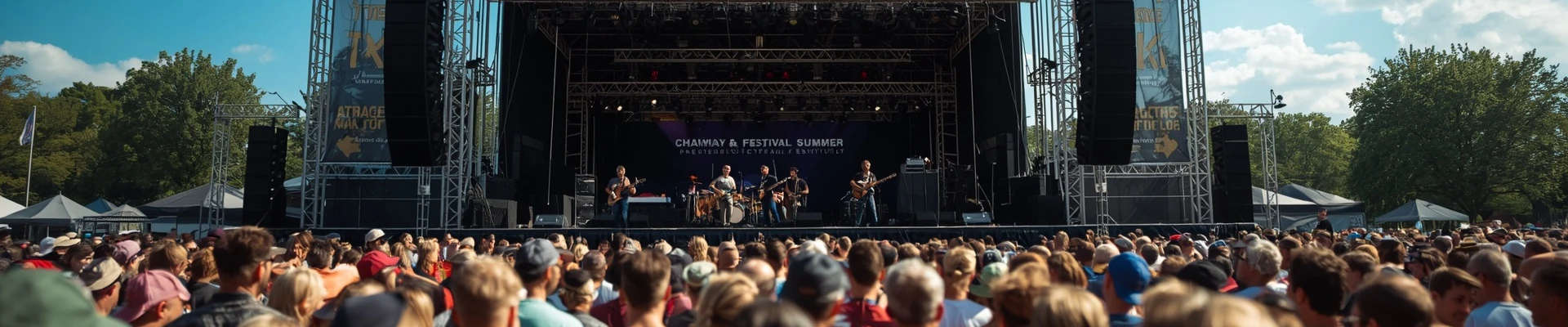
Rosemont–La Petite-Patrie has its own festival infrastructure distinct from the massive downtown Montréal festivals. Fête nationale du Québec (June 24) — the Québec national holiday — is celebrated with particular intensity in francophone neighbourhoods like Rosemont, with street parties, bonfires, and live music across the rue Masson corridor. Jazz Masson — a neighbourhood jazz and music festival on rue Masson — programs local jazz and acoustic acts in an outdoor street format through the summer. Les Bibliothèques de Montréal summer concert series brings free outdoor performances to local parks including Parc Molson and Parc de la Merci, which are central to the borough's public life. The Maison de la culture Maisonneuve (formally in the adjacent Mercier-Hochelaga-Maisonneuve borough but serving the broader east-central plateau) programs affordable arts events including concerts throughout the year. The borough is close enough to the MUTEK festival downtown and the Osheaga festival on Île Sainte-Hélène that its residents form a significant part of the audience base for both.
The borough's Italian-Canadian community sustains the Fiera di Sant'Agata and related cultural events in the Jean-Talon area, with traditional music, food, and street performance that mark the cultural calendar of the borough's oldest immigrant community alongside the broader Québécois cultural life.
What ties it all together
What defines Rosemont–La Petite-Patrie as a music place is not a single iconic venue or a single genre explosion, but a sustained density of creative life — the kind of density that only urban European-style apartment neighbourhoods generate. When francophone Montréal artists talk about living the life of a musician, the Plateau and Rosemont are the geography they describe: the apartment with the rehearsal space, the bike ride to the studio, the walk to the bar where you played last Saturday, the market where you run into the sound engineer who mixed your record. The borough's music identity is inseparable from its identity as a liveable, walkable, and francophone urban neighbourhood — one of the few places in North America where you can build a serious music career within a community small enough to know everyone in it, while still being embedded in a city large enough to generate real audiences, real labels, and real international attention. The rue Masson corridor, the echo of the old Angus Shops, and the hum of Marché Jean-Talon are the acoustic backdrop against which Rosemont's music community — francophone, multilingual, experimental, and deeply local — continues to make work that matters.