
Saint-Jean-sur-Richelieu is a mid-sized city of roughly 98,000 residents in the Montérégie region of Québec, Canada, situated on the western bank of the Richelieu River approximately 45 kilometres south of Montréal and 30 kilometres north of the Canada–United States border. The city sits at the southern end of Lake Champlain's Richelieu River outlet — the historic corridor that has linked the St. Lawrence Valley to the Hudson Valley for centuries — and its position on that strategic waterway has shaped its identity from its earliest days as a French colonial military outpost through to its modern incarnation as a regional hub for manufacturing, education, and one of the most distinctive annual festivals in North America.
The city as it exists today is the product of a 2001 municipal merger that consolidated the City of Saint-Jean-sur-Richelieu with the surrounding municipalities of Iberville, Saint-Luc, L'Acadie, Carignan, and Henryville into a single unified city. This merger nearly doubled the population overnight and created the largest city in the Montérégie south of the South Shore Montréal suburbs — a city that functions as a genuine regional centre with its own economic base, cultural institutions, and civic identity rather than simply a bedroom community of Montréal.
History and character
The Richelieu River corridor has been a human pathway for millennia. Haudenosaunee (Iroquois Confederacy) and Algonquin peoples travelled and fished the river long before European contact. The French colonial settlement known as Fort Saint-Jean was established in 1748 as a military fortification at the point where the Richelieu widens before emptying into the St. Lawrence system — a position of immense strategic value on the invasion route between New France and British New York. The fort changed hands repeatedly through the Seven Years' War and the American Revolutionary War (American forces briefly occupied it in 1775–76 during the invasion of Canada), and its military legacy persists in the form of Fort Saint-Jean / Collège militaire royal de Saint-Jean (the Royal Military College Saint-Jean), which operates on the historic fort site as a Canadian Forces college and French-language military institution.
The 19th century brought industrialization to the Richelieu Valley. Saint-Jean-sur-Richelieu became a significant manufacturing centre — its pottery and ceramics industry, rooted in the local clay deposits along the river, made the city internationally recognized for Saint-Jean stoneware (pottery produced from the 1830s onward), and remnants of that industrial tradition persist in the city's cultural identity. Textile mills, foundries, and food processing plants shaped the working-class character of the city through the early 20th century.
The post-war decades brought the familiar suburban growth pattern of Québec's smaller cities — stable francophone working families, Catholic parish communities, and a manufacturing economy that provided steady employment through the 1960s and 1970s. Deindustrialization hit the region in the 1980s and 1990s, as it did across Québec's secondary cities, but Saint-Jean-sur-Richelieu retained its economic base through diversified services, military spending (the Royal Military College brings federal money and personnel), and its growing role as a commuter hub for the Montréal metro labour market. The 2001 merger strengthened the city's administrative capacity and set it on a more confident regional course.
Music identity
Saint-Jean-sur-Richelieu's music scene is rooted in the French-Canadian cultural tradition that defines Québec's smaller cities. The city is predominantly francophone — over 95% of residents identify French as their first official language spoken — and the local music culture reflects that: chanson québécoise, Québec folk (informed by the trad revival movements of the 1970s and the ongoing vitality of folk-rooted artists in the province), French-language pop and rock, and a blues tradition that has found a particularly devoted local audience.
The most nationally prominent musical export from the region is Ginette Reno, the legendary Québec pop and chanson singer who was born in Montréal but has deep ties to the Montérégie cultural community and remains one of the most beloved figures in French-Canadian music history. The city and its surrounding region have also produced working musicians who circulate through the Montréal music industry — the proximity to Montréal (45 minutes by car, served by the RTM commuter network) means the city functions as a launching pad for musicians who build careers in the provincial capital.
The blues scene is particularly significant in Saint-Jean-sur-Richelieu. The Festival blues de Saint-Jean-sur-Richelieu (the Saint-Jean-sur-Richelieu Blues Festival) has been programming local and regional blues acts for decades, establishing the city as one of the more dedicated blues communities in Québec outside of Montréal and Québec City. Québec has a strong blues tradition — Patrick Norman, Steve Hill, the Montréal-area blues circuit — and Saint-Jean-sur-Richelieu participates in that tradition with genuine local investment.
The folk and trad traditions remain alive in the region. The Richelieu Valley was one of the heartlands of traditional Québec music — reels, gigues, contredanses — and while the folk revival of the 1970s (led by figures like La Bottine Souriante, Garolou, and the broader mouvement folklorique québécois) was centred in Montréal and the regions, it echoed strongly in communities like Saint-Jean-sur-Richelieu. Community venues and cultural associations host traditional music sessions, dances, and folk events throughout the year.
Country music in the French-Canadian tradition — country québécois — has a presence in the city and region, as it does throughout rural and semi-rural Québec. The local radio ecosystem, dominated by French-language stations that program a mix of Québec pop, French chanson, country, and contemporary francophone hits, shapes the musical tastes of the majority of residents.
Gospel and devotional music in the Catholic and evangelical traditions rounds out the local scene — the city's Catholic parish communities, though smaller than in previous generations, still sustain choral and liturgical music traditions.
Venues and neighborhoods
The city's main cultural and performance venue is the Centre Gervais Auto (the multi-purpose arena facility), which hosts concerts, family entertainment, and community events year-round. The Théâtre des Deux Rives is the city's dedicated performing arts theatre — a 700-seat venue that programs local and touring theatrical productions, concerts, and cultural events, and serves as the primary indoor home for serious performing arts programming in the city. The theatre's name (Theatre of Two Shores) evokes the dual-bank character of the Richelieu River city.
The city's commercial entertainment corridor runs through the central districts, with bars and restaurants offering live music programming on weekends. The Vieux-Saint-Jean (Old Saint-Jean) historic downtown core — featuring 19th-century commercial architecture along Rue Richelieu and the surrounding streets — concentrates the city's bar and small-venue scene. The Collège militaire royal de Saint-Jean campus, with its historic fort buildings and grounds, serves as a site for outdoor community events and is a cultural anchor in the western part of the city.
Iberville, the former neighbouring city now integrated into the municipal structure, anchors the eastern side of the river with its own community life and neighbourhood character. The bridge across the Richelieu connecting the two sides of the city is an important social boundary within the merged municipality — old-timers still identify as Ibervillois or Saint-Jeanois rather than simply citizens of the unified city.
The Festival de montgolfières — Saint-Jean's signature event
Saint-Jean-sur-Richelieu's most internationally known institution is the Festival international de montgolfières de Saint-Jean-sur-Richelieu (the International Hot Air Balloon Festival), held each August and consistently ranked among the largest hot air balloon festivals in the world. The festival draws over 550,000 visitors over its nine-day run — an extraordinary number for a city of 98,000, and a figure that briefly transforms Saint-Jean-sur-Richelieu into one of the most-visited tourist destinations in Québec.
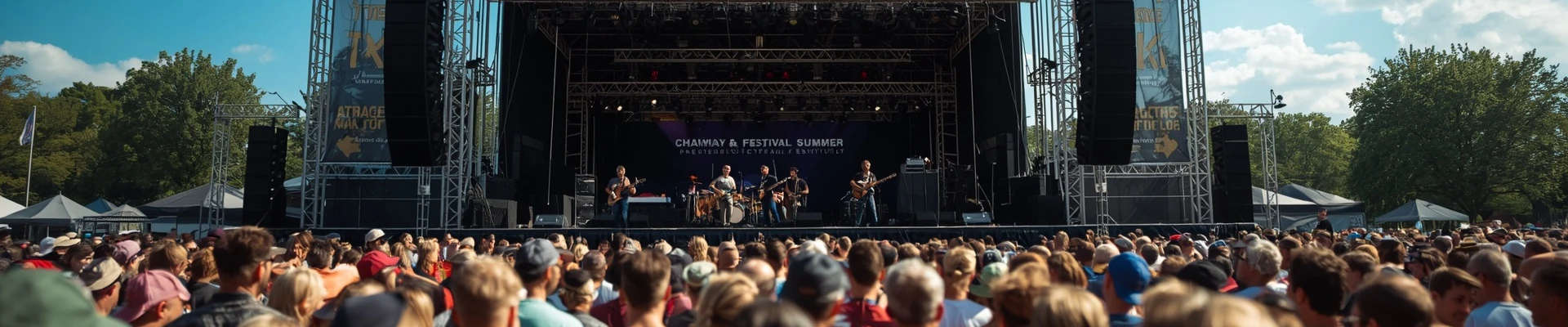
The balloon festival began in 1981 and has grown steadily into a signature provincial and national event. At its peak, more than 125 hot air balloons from around the world launch from the festival grounds — the spectacle of coloured balloons rising over the flat Richelieu plain and the river at dawn and dusk has become one of the most photographed events in Québec. The festival grounds host nightly concerts alongside the balloon programming — the concert stage is the city's largest outdoor music venue by far, drawing a mix of Québec pop stars, established French-Canadian acts, and occasional English-Canadian and American performers. Garou, Marie-Élaine Thibert, Jean-Pierre Ferland, and dozens of other major Québec pop and chanson figures have performed on the festival stage over the years.
The balloon festival's economic impact on the city is enormous — hotels, restaurants, and services across the Montérégie region fill for the duration of the festival, and the event gives Saint-Jean-sur-Richelieu a national and international profile that punches well above its population weight.
Other festivals and cultural events
Beyond the balloon festival, the city programs a seasonal cultural calendar. The Festival blues de Saint-Jean-sur-Richelieu serves the blues community in the spring or fall. The Fête nationale du Québec (June 24) is celebrated with particular civic pride in Saint-Jean-sur-Richelieu — it is also the feast day of Saint John the Baptist, the city's patron saint and the patron saint of French Canadians, which gives the national holiday a special local resonance. Outdoor concerts, bonfires along the Richelieu, and community gatherings mark the Fête nationale each year.
The Festival de la poutine and various food and community festivals dot the summer calendar. The Marché public de Saint-Jean-sur-Richelieu (the public market) hosts summer events with local musicians. The Royal Military College Saint-Jean holds occasional public events including military ceremonies and band performances by the Musique du Royal 22e Régiment and other Canadian Forces bands.
Community and demographics
Saint-Jean-sur-Richelieu is a predominantly francophone, Quebec-born community. Immigration has brought modest diversity to the city — a small but growing Latino community (primarily from Mexico, Colombia, and Central America), a Haitian-Québécois community that reflects the broader Haitian presence in Montérégie (particularly Brossard and Longueuil to the north), and small South Asian and North African communities that have settled in the region. These communities contribute their own musical traditions — Latin dance music, kompa, and others — to the city's cultural fabric, though French-Canadian musical culture remains dominant.
The Royal Military College Saint-Jean brings a rotating population of military personnel, families, and students to the city — an anglophone and bilingual community of several hundred that adds institutional diversity to the predominantly francophone city.
What ties it all together
Saint-Jean-sur-Richelieu's defining musical signature is the Festival de montgolfières concert stage — the moment each August when a city of 98,000 becomes a temporary cultural gathering point for half a million visitors and the biggest names in Québec pop and chanson fill the evening sky above the balloon grounds. Beyond that spectacular annual peak, the city is a faithful representative of the French-Canadian regional music culture that sustains itself in hundreds of Québec communities: the blues clubs along Rue Richelieu, the folk dances at community halls, the Fête nationale bonfires by the river, the Théâtre des Deux Rives programming that brings Québec theatre and music to a loyal local audience. It is a city that knows who it is — francophone, riverine, military-heritage, balloon-festival proud — and its music scene reflects that self-knowledge with unpretentious commitment.