
Des Moines is the capital and largest city of Iowa, with roughly 214,000 residents inside the city limits and more than 700,000 across the broader metropolitan area. The city sits at the confluence of the Des Moines River and the Raccoon River in the south-central part of the state, roughly equidistant between Chicago and Omaha on the rolling terrain of the Des Moines Lobe — a relatively flat, glacially-shaped prairie landscape. Des Moines is the financial, insurance, and governmental hub of Iowa: the city hosts the headquarters of Principal Financial Group, Meredith Corporation, Casey's General Stores, and a cluster of major insurance companies that have earned it the unofficial title of the "Hartford of the Midwest." Drake University, Grand View University, Des Moines University, and AIB College of Business anchor the educational sector. The metro is approximately 81% white, roughly 8% Hispanic, 6% Black, and 5% Asian, with significant Bosnian, Burmese, and Laotian refugee communities that arrived from the 1990s onward.
A brief history
The area at the confluence of the Des Moines and Raccoon Rivers was inhabited by the Sauk and Meskwaki peoples before American military presence arrived in the 1840s. Fort Des Moines was established in 1843, and the town that grew around it was incorporated as a city in 1851, shortly before it became the state capital in 1857. Des Moines grew steadily as an agricultural market center, insurance hub, and railroad junction through the late 19th century, acquiring its dense grid of neighborhoods — East Village, Sherman Hill, Beaverdale, Ingersoll, Drake, South of Grand — that remain the city's residential and entertainment corridors today. The early 20th century brought Des Moines the Iowa State Fair (which had been established in 1854 and by the 1900s was one of the largest and most prestigious state fairs in America) and a growing radio broadcasting industry: WHO Radio (1924) and KRNT Radio became major Midwest broadcasters that carried country, gospel, and popular music across the Plains. The mid-century brought suburbanization, and like many midsize Midwestern cities Des Moines contracted somewhat before a downtown revitalization beginning in the 1990s and 2000s rebuilt the East Village, the Court Avenue entertainment district, and the Western Gateway cultural corridor.
Music identity
Des Moines's most internationally consequential musical export is unambiguous: Slipknot, the nine-piece heavy metal band formed in Des Moines in 1995, who grew into one of the most commercially successful and globally influential extreme metal acts of the late 1990s and 2000s. The band's 1999 debut Slipknot (Roadrunner Records) and 2001 follow-up Iowa — named directly for the state, recorded in part at SR Audio in Des Moines — defined a generation of nu-metal and alternative metal, sold more than 30 million albums worldwide, and remain one of the largest metal acts on earth. Corey Taylor (vocalist), Shawn Crahan (percussionist), Joey Jordison (drummer, deceased 2021), Mick Thomson, Jim Root, Craig Jones, Sid Wilson, Paul Gray (bassist, deceased 2010), and Chris Fehn — most of them born and raised in Des Moines or surrounding Iowa communities — built Slipknot out of the city's working-class suburbs and small club circuit of the mid-1990s. The band's connection to Des Moines is not incidental but constitutive: Iowa is explicitly an album about the state's landscape and working-class psychological landscape. Slipknot's success put Des Moines on the global metal map and remains the city's defining musical identity worldwide.
Beyond Slipknot, the Des Moines rock and indie scene has produced a continuous stream of significant acts. Poison Control Center (the long-running Des Moines indie rock band), The Nadas (the beloved Des Moines Americana and roots rock band that has been a fixture of the Iowa music scene since the mid-1990s, releasing more than a dozen studio albums and building a fiercely loyal regional following), Kyle Dillingham (the acclaimed Western swing and country fiddler), and a rotating cast of indie, punk, and alternative acts have sustained a vibrant DIY circuit. The Des Moines Underground community and the Burroughs area produced a series of punk and hardcore bands through the 2000s and 2010s. Simon Joyner (the acclaimed Omaha-based folk songwriter with strong Des Moines touring ties), Greg Brown (the Iowa folk legend born in Ottumwa but claiming Des Moines as his base for decades), and Bo Ramsey (the Iowa blues and roots guitar hero) are part of the broader Iowa musical identity that Des Moines carries as the state's capital.
The city's jazz and blues roots run through the East Side — historically the center of Black life in Des Moines — and through clubs and society venues along Ingersoll Avenue and in the Court Avenue district. The Des Moines Big Band and the Iowa Jazz Championships have sustained the jazz tradition for decades. WHO Radio's early country and gospel programming in the 1920s and 1930s brought figures from the national Grand Ole Opry circuit through Des Moines, and the Iowa State Fair grandstand became one of the most important mid-level touring stops in the Midwest for country, rock, and pop acts — Elvis Presley, Johnny Cash, Bob Dylan, and dozens of major acts played the Fair's grandstand through the decades.
The city's hip-hop scene, anchored around clubs in the Court Avenue district and through promoters working the Hoyt Sherman Place and Wooly's circuit, has grown considerably since the early 2000s. Nola Darling (the Des Moines rapper), Blaise Moody, and a network of local producers have built a credible regional scene. The Drake Neighborhood and East Village carry an electronic and DJ culture running through clubs and bars along Ingersoll and Grand Avenue.
Des Moines's Bosnian, Burmese, and Laotian communities — which arrived primarily from the mid-1990s through the 2010s as refugee resettlement programs placed significant populations in Iowa — sustain traditional and contemporary music through churches, community centers, and cultural festivals. The Iowa Refugee Music Festival and events organized by the Iowa International Center bring Southeast Asian and Balkan musical traditions into the broader city calendar.
Venues and neighborhoods
Des Moines's venue landscape punches above its population weight for a city of its size. The top of the market is held by Wells Fargo Arena (the 17,000-capacity downtown arena that opened in 2005 as the city's primary indoor venue for major touring rock, country, pop, and metal acts — the venue Slipknot has returned to repeatedly), Hoyt Sherman Place (the grand 1907 mansion-turned-performing arts center with a 1,250-seat theatre that is the city's most beloved mid-size concert hall, programming classical, jazz, singer-songwriter, and rock), and the Iowa Events Center. The midsize circuit is anchored by Wooly's (the 900-capacity East Village club that is the cornerstone of the Des Moines indie and alternative touring circuit, opened in 2009 and consistently cited as one of the best small-market venues in the Midwest), the Val Air Ballroom in nearby West Des Moines (the 1939 former dance hall turned concert venue with 1,500 capacity that programs major touring rock and country acts in a historic ballroom setting), and Hy-Vee Hall at the Iowa Events Center. The club level includes Lefty's Live Music (the East Village blues and rock club), the Gas Lamp (the Ingersoll Avenue bar and live music room), Buzzard Billy's, the Sanctuary, and a rotating collection of Court Avenue bars with live programming. Iowa State Fairgrounds programs major grandstand acts each August at the John T. Hammons Hall and open-air grandstand — one of the most prestigious and longest-running state fair music programs in America.
Neighborhod identities map closely to venue clusters. East Village (the revitalized Victorian-era neighborhood east of the Capitol) anchors Wooly's and the indie circuit. Court Avenue (the downtown entertainment district along the Des Moines River) anchors bars and clubs with live music. Ingersoll Avenue (the midtown commercial strip) anchors mid-size bars and the jazz/blues circuit. Drake (the university neighborhood) sustains a student-driven bar and music scene. The East Side (historically the center of Black Des Moines) carries the blues and gospel tradition. Beaverdale (the northwest residential neighborhood) sustains folk and acoustic programming through coffeehouses and small venues.
Festivals and signature events
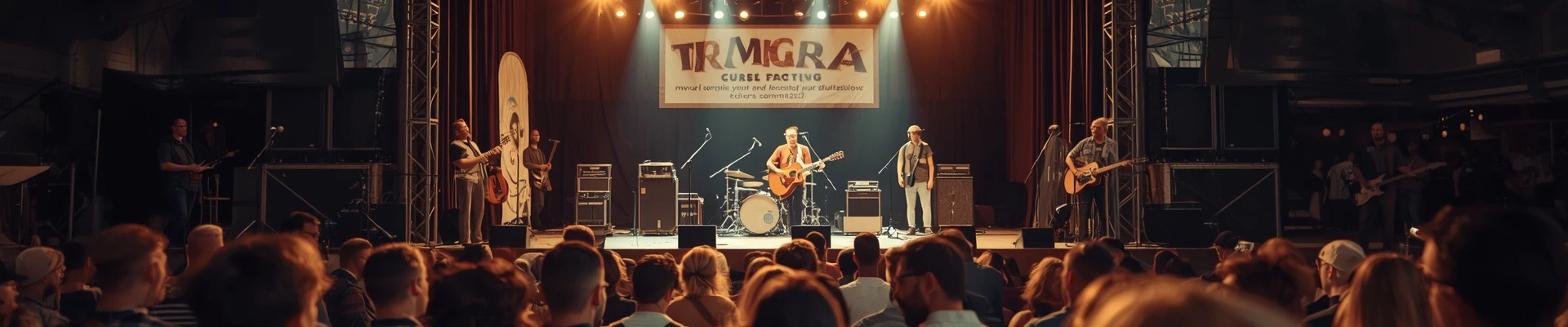
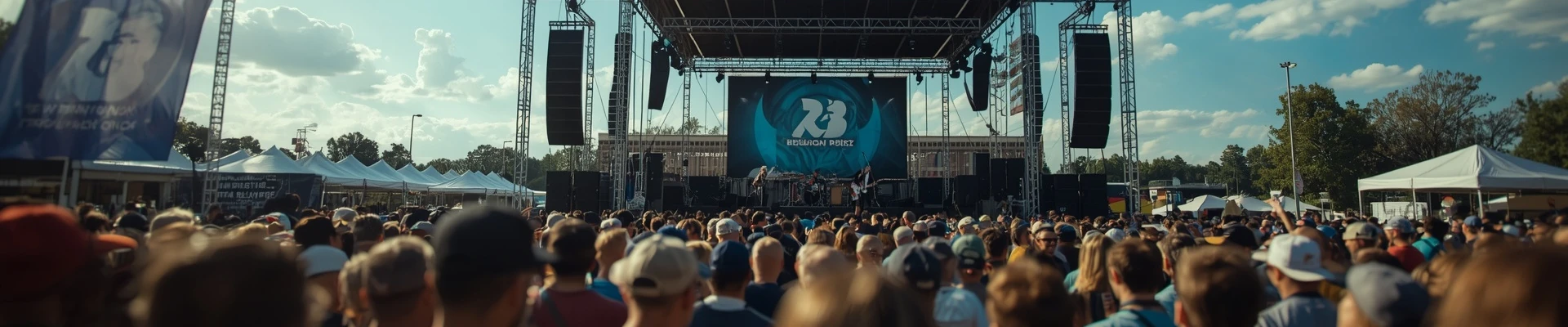
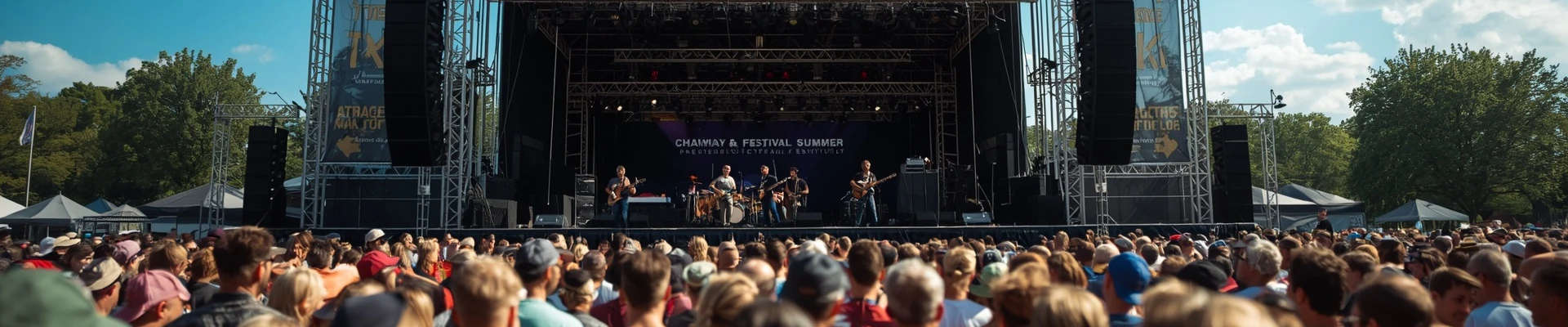
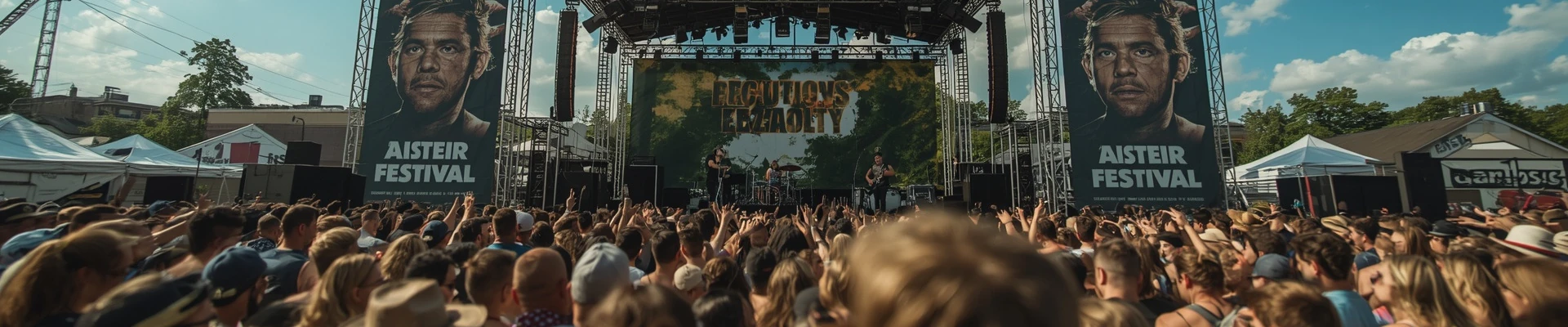
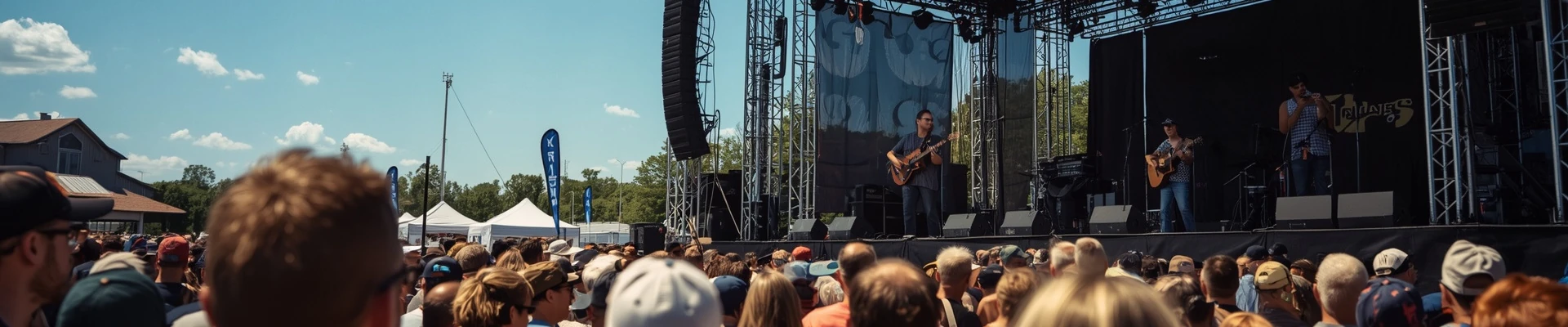
The Iowa State Fair (every August, typically drawing 1 million+ visitors over ten days) is the city's most significant recurring musical event — the grandstand has programmed some of the most consequential touring country, rock, and pop acts in Iowa history, and the fair's heritage music programming at the Susan Knapp Amphitheater and Elwell Family Food Center runs deep. The 80/35 Music Festival (the two-day summer indie rock and alternative festival held in Western Gateway Park since 2008, named for the I-80 and I-35 intersection that meets at Des Moines) is the city's signature curated music event, consistently booking indie rock, hip-hop, and alternative acts with strong regional and national profiles. DMACC's Des Moines Arts Festival programs live music across outdoor stages. The Central Iowa Blues Society's festival and club events program year-round. Bravo Greater Des Moines presents orchestral and classical programming. Jazz in July runs through the summer. Riverfest on the Des Moines River and Ingersoll Summer Concert Series fill the warm-weather calendar with outdoor programming. The Des Moines Symphony's outdoor pops at Nollen Plaza sustain the classical and orchestral tradition.
What ties Des Moines together is its combination of Midwestern capital-city solidity and an outsized, specific musical identity built around Slipknot's global impact, the enduring Nadas roots-rock community, the 80/35 festival's indie ambitions, the Val Air's historic ballroom charm, and the Iowa State Fair's century-long tradition of bringing the biggest touring acts to the center of the Plains. Des Moines is a city where the working-class suburbs produced one of the most extreme and internationally consequential metal bands on earth, where the East Village DIY circuit runs alongside the grandstand shows at the fairgrounds, and where the confluence of the Des Moines and Raccoon Rivers forms a natural civic gathering point that mirrors the way the city gathers musicians from across the Midwest and the world.