
Baltimore is the largest city in Maryland and the 30th-largest in the United States, with roughly 586,000 residents inside the city limits and more than 2.8 million across the surrounding metropolitan area, which is itself part of the broader Baltimore–Washington combined region of more than 9.8 million people. Sitting at the head of the Patapsco River estuary on the Chesapeake Bay, ringed by the historic neighborhoods of Federal Hill, Fells Point, Hampden, Mount Vernon, Locust Point, and the West Side, it is one of the oldest American port cities — founded in 1729 — and a deeply distinctive Mid-Atlantic metropolis. Baltimore is the only major American city whose population peaked nearly a century ago (at roughly 950,000 in 1950) and has lost more than 38% of its residents since; that population loss, the collapse of the city's once-massive industrial base, the rise of the Johns Hopkins / University of Maryland Medical-system "Eds and Meds" economy, and the ongoing tension between deeply segregated neighborhoods have shaped the modern city. But Baltimore's musical identity is one of the most distinctive of any American city of its size: the home of Baltimore club music, a deep R&B and gospel tradition rooted in the historic Pennsylvania Avenue corridor, an outsized indie rock scene that produced Animal Collective, Beach House, and Dan Deacon's Wham City circuit, the lifelong home of John Waters and the Dreamlanders, and a thriving modern hip-hop and Caribbean music ecosystem.
A brief history
The land at the head of the Patapsco was Susquehannock and Piscataway territory before British colonists founded the port of Baltimore in 1729. The town was named for Cecilius Calvert, Lord Baltimore, the proprietary governor of the Maryland colony. Through the 18th and 19th centuries Baltimore grew rapidly as the second-largest American port (after New York) and a major shipbuilding, manufacturing, and immigration hub. The 1814 Battle of Baltimore at Fort McHenry inspired Francis Scott Key to write what became the U.S. national anthem. Through the late 19th and early 20th centuries Baltimore was one of the great American industrial cities, with massive Bethlehem Steel operations at Sparrows Point and a deep manufacturing base. The 20th-century Great Migration brought hundreds of thousands of Black Southerners to the city; by 1950 Baltimore was roughly 24% Black, by 1970 close to 47%, and today roughly 62% Black. The 1968 riots after Martin Luther King Jr.'s assassination, the long postwar deindustrialization, the 2015 unrest after the death of Freddie Gray in police custody, and the ongoing "Two Baltimores" tension between predominantly white affluent neighborhoods (Roland Park, Mount Washington, Federal Hill) and predominantly Black working-class neighborhoods (Sandtown-Winchester, Park Heights, the West Side) have shaped recent civic memory.
Music identity
Baltimore's most foundational musical identity is the city's deep Black music tradition, rooted in the Pennsylvania Avenue corridor of West Baltimore. From the 1920s through the 1960s, "The Avenue" was one of the great Black entertainment districts on the East Coast — anchored by the Royal Theatre (a 1922-built theater that was part of the original "Chitlin' Circuit," hosting Ella Fitzgerald, Billie Holiday, Cab Calloway, Duke Ellington, Pearl Bailey, and a generation of touring Black entertainers), the Sphinx Club, Club Casino, and a long lineage of clubs and dance halls. Billie Holiday, born in Philadelphia in 1915 but raised in Baltimore from age three, came up through the Pennsylvania Avenue clubs as a teenager before moving to Harlem and becoming one of the most important American jazz vocalists of all time. Eubie Blake, the ragtime pianist and Broadway composer, was born in Baltimore in 1887 and built his early career through the city's Black entertainment circuit. Cab Calloway, born in Rochester but raised in Baltimore, came up through Black Baltimore schools and the Royal Theatre circuit before becoming one of the defining 1930s and 1940s big-band leaders. Ethel Ennis, the Baltimore jazz vocalist, anchored the city's jazz scene for decades. Chick Webb (Chester Arthur Webb), the legendary swing-era drummer and bandleader who launched Ella Fitzgerald's career, was born in Baltimore in 1905 and learned to play drums there before moving to New York.
The 1960s, 1970s, and 1980s remade the city again. Frank Zappa, born in Baltimore in 1940 and raised in the city through age six, often referenced his Baltimore roots in his work. John Waters, the legendary independent filmmaker, has lived in Baltimore his entire career, and his 1960s, 1970s, and 1980s films — Pink Flamingos (1972), Female Trouble (1974), Polyester (1981), Hairspray (1988), Cry-Baby (1990) — are functionally set in and about Baltimore, and Waters has become one of the city's most beloved cultural figures. The Dreamlanders, his rotating cast of Baltimore-based collaborators including Divine, Edith Massey, Mink Stole, and David Lochary, anchored a deep underground arts scene rooted in the city. Cherry Vanilla, Tina Peel, The Slickee Boys's Baltimore tour stops, and a thriving 1970s and 1980s underground scene around Charles Street and Hampden venues built the local punk and DIY tradition.
The defining Baltimore musical innovation of the late 20th century, however, is Baltimore club music (also known as "Bmore club"). Built in the late 1980s and 1990s by Baltimore DJs including Frank Ski, DJ Spen, DJ Technics, Rod Lee, Scottie B, and Blaqstarr, Baltimore club is a fast-tempo (typically 130 BPM), break-driven dance music genre built on Lyn Collins's "Think (About It)" and the "sing sing" Mac Reed sample, with heavy use of call-and-response chants and aggressive party-track aesthetics. Baltimore club became the soundtrack of Black Baltimore parties, schools, and roller rinks for two decades and directly influenced Jersey club, Philly club, and the broader 2000s East Coast club scene. K-Swift, the Baltimore club DJ killed in 2008, was the genre's most beloved figure. TT the Artist, DJ Pierre, and a current generation continue the lineage. TT the Artist's 2020 documentary Dark City Beneath the Beat documented the genre's history and ongoing role in Baltimore Black culture.
The 21st century has remade the city again with the rise of an extraordinary indie rock scene. Animal Collective (Avey Tare, Panda Bear, Geologist, and Deakin), formed in Baltimore in the early 2000s and built around childhood friendships from Baltimore-area schools, became one of the most acclaimed American indie rock bands of the 2000s and 2010s through Strawberry Jam (2007), Merriweather Post Pavilion (2009), and a 25-year catalogue. Beach House (Victoria Legrand and Alex Scally), formed in Baltimore in 2004, built one of the most acclaimed dream-pop catalogues in modern indie rock through Teen Dream (2010), Bloom (2012), and Depression Cherry (2015). Dan Deacon, the Baltimore-based composer and electronic artist, has built one of the most beloved underground catalogues in American indie music; his Wham City collective in Hampden anchored an extraordinary scene of Baltimore artists in the late 2000s and 2010s including Future Islands (formed in North Carolina but Baltimore-based for years), Dustin Wong, Lower Dens, Wye Oak, Cex, Ed Schrader's Music Beat, The Death Set, and Ponytail. Beach House, Animal Collective, and Future Islands all built much of their catalogues in Baltimore and continue to anchor the city's indie identity.
The 1990s and 2000s also produced a deep Baltimore hip-hop scene. Comp's emergence, Bossman's Baltimore club–hip-hop hybrids, Mullyman, Tate Kobang (whose 2015 "Bank Rolls" sampled Tim Trees's Baltimore club anthem), Lor Scoota (the Baltimore rapper killed in 2016), Roddy Rackzz, Shy Glizzy's Baltimore-DC orbit, Lor Choc, Tony Williams's Baltimore connections, and a current generation of trap and drill artists fill the city's clubs. Ric Hassani's tour stops, Coochie Brown, Comp's further work, and a current generation continue the lineage. R&B continues through artists like K. Roosevelt, Bobby V's tour stops, and the church choirs of West Baltimore. Latin music — primarily Salvadoran, Honduran, and Mexican — runs through clubs across Highlandtown and East Baltimore. Caribbean music — Jamaican dancehall and reggae, Trinidadian soca — runs through community halls and event spaces in the broader region.
Venues and neighborhoods
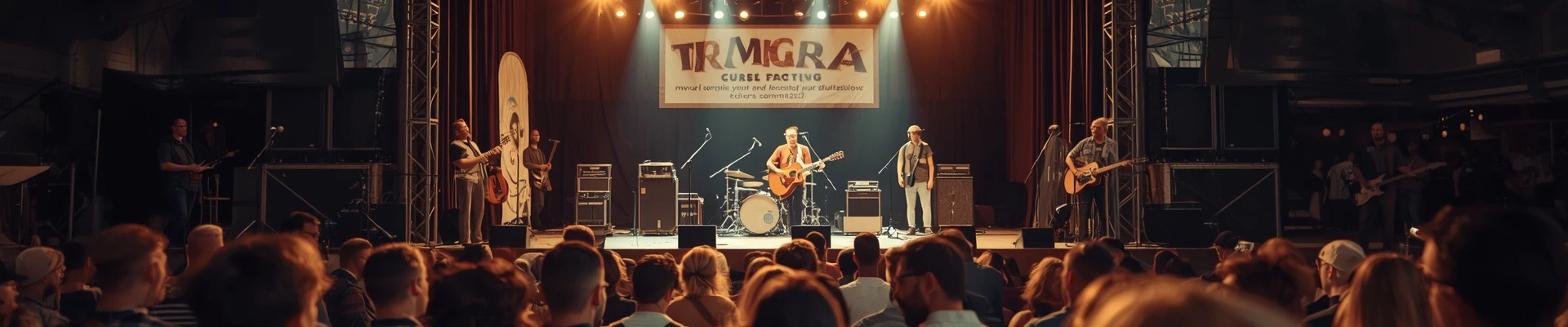
Baltimore's venue ecosystem is well-developed. At the top sit CFG Bank Arena (the city's largest indoor arena, formerly the Royal Farms Arena), M&T Bank Stadium (host of stadium tours), Pier Six Pavilion, the Joseph Meyerhoff Symphony Hall (home of the Baltimore Symphony Orchestra), the Hippodrome Theatre (a 1914 Vaudeville house turned Broadway and concert venue), the Lyric Opera House, the France-Merrick Performing Arts Center, and the Pier Six Concert Pavilion. The midsize tier includes Rams Head Live! at Power Plant Live!, the Baltimore Soundstage, the Modell Performing Arts Center at the Lyric, Maryland Hall in Annapolis, and the Anthem's Baltimore programming. Beneath them is a deep club layer — the Ottobar (the legendary Baltimore indie rock club, in operation since 1997), Metro Gallery, Baltimore Soundstage, 8x10, The Crown (a Korean restaurant turned indie venue in Station North), Sidebar, Talking Head Club's legacy, Floristree, the Wind-Up Space's legacy, and a network of bars and DIY rooms across Hampden, Station North, Federal Hill, Fells Point, and the West Side. An Die Musik anchors the chamber music tradition. The Royal Theatre site is now a vacant lot, but the Sphinx Club's legacy and a slowly recovering Pennsylvania Avenue cultural district continue to anchor the historic Black music corridor. Latin music has homes at clubs across Highlandtown.
Different neighborhoods carry different musical identities. Hampden anchors the indie rock and DIY scenes through the Ottobar and the Wham City–era venues. Station North has emerged in recent years as an arts and small-venue corridor through the Crown, the Charles Theatre, and a string of bars and music venues. Federal Hill anchors a higher-end bar and listening-room circuit. Fells Point anchors a tourist-driven bar and music scene. Mount Vernon anchors the classical and arts circuits through the Meyerhoff and the Walters Art Museum. The West Side retains echoes of the historic Pennsylvania Avenue Black music corridor. Highlandtown anchors the Latin and Asian-American music scenes. East Baltimore supports the hip-hop and modern R&B scenes.
Festivals and signature events
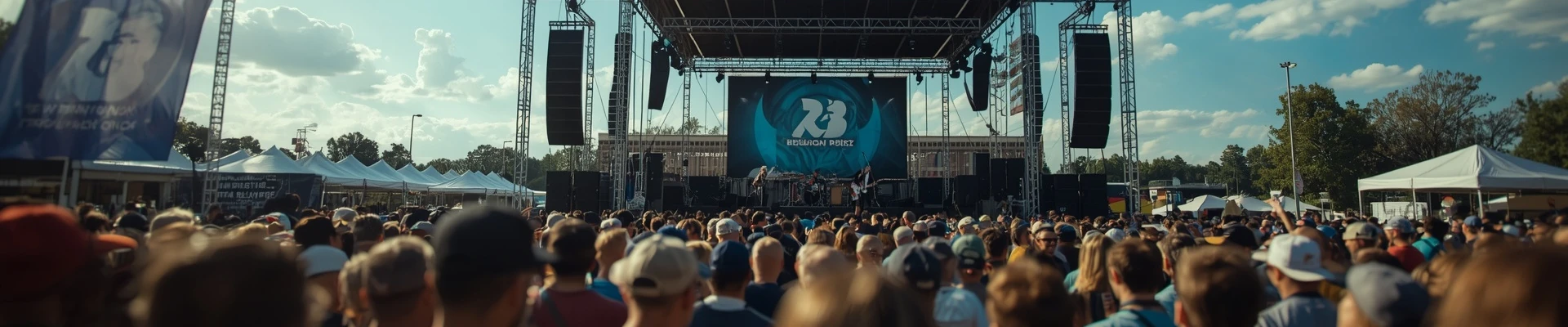
The festival calendar reflects the city's range. Artscape, founded in 1982, is the largest free arts festival in the United States, drawing more than 350,000 attendees over three days each summer with a major music programming track. Baltimore Soundstage's programming, AFRAM (one of the largest African-American cultural festivals on the East Coast, held at Druid Hill Park each June), Baltimore Pride, HONfest in Hampden, Light City music programming, Caribbean Carnival in Druid Hill Park, Baltimore Greek Festival, Latin American Festival, HFStival's legacy programming (the iconic 1990s WHFS festival drew on Baltimore audiences), Preakness Stakes music programming (the second jewel of horse racing's Triple Crown, run at Pimlico Race Course in May with a major InfieldFest concert), Bmore Block Party, and the Hampden Mayhem Festival add cultural and community programming. The Baltimore Symphony Orchestra's Off the Cuff series and Symphony in the City programming anchor the classical tradition.
What ties it all together is the city's combination of working-class Mid-Atlantic geography, deep Black musical history, and an unusually creative underground arts scene. Baltimore is the city where Billie Holiday came up on Pennsylvania Avenue, where Cab Calloway and Eubie Blake learned their trade in West Baltimore, where the Royal Theatre anchored one of the great Chitlin' Circuit stops on the East Coast, where John Waters has built a 60-year filmmaking career rooted in his hometown, where Baltimore club music became the soundtrack of Black Baltimore for two decades and influenced Jersey club and Philly club, where Animal Collective and Beach House built two of the most acclaimed indie rock catalogues of the 21st century, where Dan Deacon's Wham City collective anchored an extraordinary 2010s scene, and where the Ottobar has been programming Baltimore indie since 1997.