
Minneapolis is the largest city in Minnesota and the 46th-largest in the United States, with roughly 411,000 residents inside the city limits and more than 3.7 million across the Minneapolis-St. Paul ("Twin Cities") metropolitan area. Sitting on the Mississippi River at the Saint Anthony Falls — the only natural waterfall on the entire Mississippi, which powered the city's flour mills and built the city's wealth in the late 19th century — and connected by a network of bridges to its twin city of St. Paul immediately to the east, Minneapolis is the financial, cultural, and corporate capital of the Upper Midwest. The city is home to the headquarters of Target, U.S. Bancorp, Ameriprise, Xcel Energy, Best Buy (in suburban Richfield), and dozens of other Fortune 500 companies, the University of Minnesota (with more than 50,000 students at the Twin Cities campus), and the Minneapolis Institute of Art and Walker Art Center. Minneapolis has been one of the most musically consequential cities in North America for half a century — the home of Prince, the birthplace of the Minneapolis Sound, the cradle of one of the most influential American hardcore and indie scenes, and a continuous incubator of jazz, hip-hop, indie, and folk music. The city is roughly 19% Black, 10% Hispanic, and 6% Asian, with a very large Somali-American community (the largest Somali diaspora in North America), a substantial Hmong-American community, and historic Scandinavian and German roots that have shaped the city's musical character.
A brief history
The land at Saint Anthony Falls was Dakota Sioux territory before American settlers arrived in the 1840s and 1850s. Fort Snelling was established in 1820 at the confluence of the Mississippi and Minnesota Rivers; the towns of St. Anthony and Minneapolis grew on opposite sides of the falls and merged in 1872. The 1880s and 1890s saw Minneapolis become the flour milling capital of the world — the Pillsbury and Washburn-Crosby (later General Mills) companies built massive milling complexes along the river that turned Minnesota wheat into flour for the world. Through the 20th century the milling industry declined, the Federal Reserve Bank of Minneapolis anchored the city's financial sector, and the construction of the Skyway system (the world's most extensive enclosed pedestrian walkway network connecting downtown buildings, built to combat the brutal Minnesota winters) defined the modern downtown. The 2010s and 2020s brought significant change — the 2020 murder of George Floyd by Minneapolis police on May 25, 2020, sparked global protests, made Minneapolis the epicentre of a national reckoning on policing, and reshaped the city's social and political landscape.
Music identity
Minneapolis's most internationally famous musical contribution is the Minneapolis Sound and the Prince universe. Prince Rogers Nelson (1958-2016), born and raised in Minneapolis, was one of the most extraordinary musicians of the 20th century — a singer, songwriter, multi-instrumentalist, producer, and live performer whose 1984 album Purple Rain (recorded largely at First Avenue, the Minneapolis nightclub that doubled as the film's location) became one of the best-selling albums in history and made him a global icon. Prince built Paisley Park — his recording complex and home in suburban Chanhassen — into one of the most legendary recording studios in the world, and he produced or wrote for an entire generation of Minneapolis acts: The Time (with Morris Day and Jimmy Jam and Terry Lewis, who became the most successful R&B production duo of the late 1980s and 1990s, producing Janet Jackson, Mariah Carey, Mary J. Blige, and dozens more), Vanity 6, Sheila E., Wendy and Lisa, The Family, André Cymone, Jesse Johnson, and the broader Minneapolis funk-and-R&B network. The Minneapolis Sound — a fusion of funk, R&B, new wave, synth-pop, and rock characterized by syncopated drum machines, prominent synthesizers, and falsetto vocals — became one of the most influential American musical innovations of the 1980s. Prince died at Paisley Park in April 2016; the complex now operates as a museum and is one of the most-visited music pilgrimage sites in America.
Minneapolis is also one of the most consequential cities in American hardcore, post-punk, and indie rock. Hüsker Dü (the Bob Mould-led trio whose 1984 Zen Arcade and 1985 New Day Rising are foundational hardcore-into-melodic-rock albums), The Replacements (the Paul Westerberg-led band whose drunken brilliance through Let It Be, Tim, and Pleased to Meet Me defined the alternative rock template), Soul Asylum, The Jayhawks (the alt-country pioneers whose Hollywood Town Hall and Tomorrow the Green Grass defined the genre), Trip Shakespeare, Babes in Toyland, Walt Mink, and the broader Twin/Tone Records universe of the 1980s built the foundational template for American indie rock. First Avenue and 7th Street Entry in downtown Minneapolis — the legendary nightclub complex housed in a former Greyhound bus depot — has been the centre of all of this, programming the Replacements, Hüsker Dü, Prince's Purple Rain sequences, and a continuous half-century of indie rock, hip-hop, electronic, and pop shows.
The city is also a major hip-hop centre. Atmosphere (the duo of Sean "Slug" Daley and Anthony "Ant" Davis, founders of Rhymesayers Entertainment, whose 1997 Overcast! helped define the underground indie hip-hop sound), Brother Ali (the Wisconsin-raised, Minneapolis-based MC whose Rhymesayers albums made him one of the most respected underground rappers of the 2000s), Doomtree (the collective featuring Dessa, P.O.S., Sims, and Cecil Otter), Lizzo (the Houston-raised, Minneapolis-launched superstar whose breakout came from the Twin Cities scene), Aesop Rock's Rhymesayers releases, and the broader Rhymesayers Entertainment universe (the label that became one of the most important independent hip-hop labels in America) built Minneapolis into a hip-hop capital.
Minneapolis's Bob Dylan connection runs through his teenage and early-adulthood years in nearby Hibbing and his University of Minnesota period in Minneapolis (1959-1961), when he played the Ten O'Clock Scholar coffeehouse in Dinkytown. The Bob Dylan Way runs through Hibbing; Minneapolis's Cedar Cultural Center anchors the contemporary folk scene. Bonnie Raitt's frequent Minneapolis residencies, Greg Brown, Charlie Parr, Trampled by Turtles (the Duluth-formed string band that became one of the best-known American bluegrass acts of the 2010s), and Communist Daughter anchor the contemporary folk scene.
The city's Somali music scene — fed by the largest Somali diaspora in North America — runs through Cedar-Riverside, the Cedar Cultural Center's Somali programming, and a thriving traditional and modern Somali music ecosystem. The Hmong-American community sustains a substantial traditional and contemporary Hmong music scene through community festivals and clubs.
The city's classical tradition is anchored by the Minnesota Orchestra (one of the most acclaimed American orchestras, recently led by Osmo Vänskä) at Orchestra Hall, and the St. Paul Chamber Orchestra in the twin city.
Venues and neighborhoods
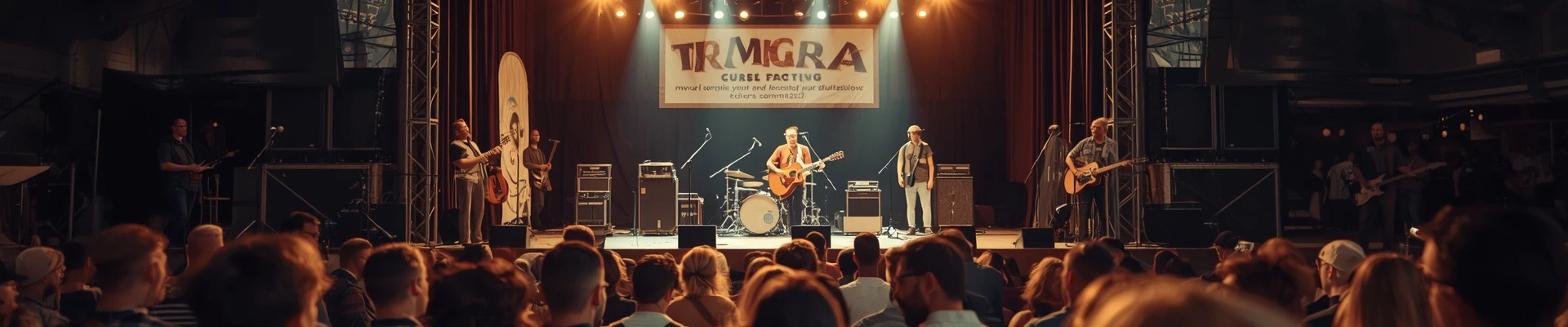
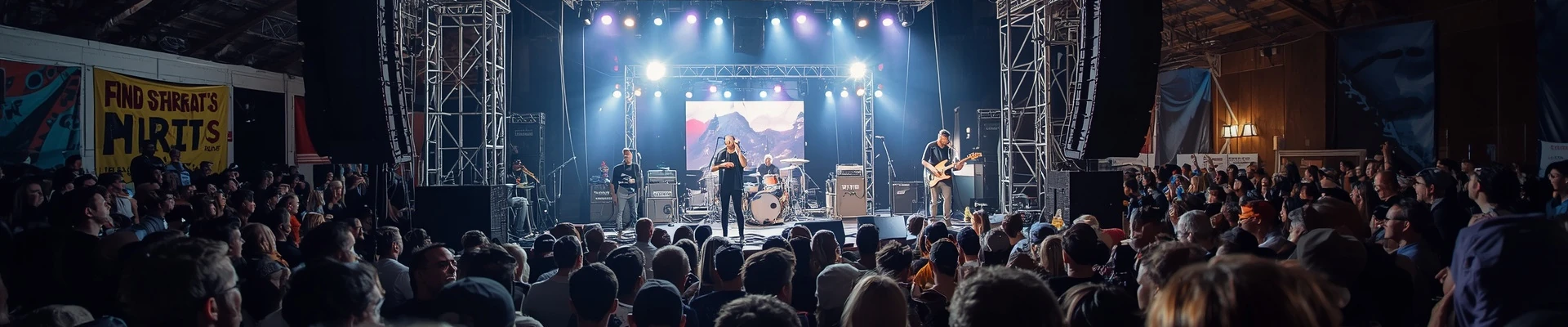
Minneapolis's venue ecosystem is exceptional. At the top sit Target Center (the 19,000-capacity downtown arena, home of the NBA Timberwolves and the city's largest concerts), U.S. Bank Stadium (the NFL Vikings' stadium, hosting the largest stadium tours), Xcel Energy Center in St. Paul (the 20,000-capacity arena home of the NHL Wild), Orchestra Hall (home of the Minnesota Orchestra), and the Northrop Memorial Auditorium at the University of Minnesota. The historic centerpiece is First Avenue and 7th Street Entry (the legendary 1,500-capacity nightclub plus the 250-capacity Entry, in operation since 1970, the centre of the Minneapolis music universe — the Purple Rain venue, the Replacements' home stage, the Hüsker Dü home stage, and continuously one of the most beloved music venues in America). The midsize tier includes the Fillmore Minneapolis, the Palace Theatre in St. Paul, the State Theatre and Orpheum Theatre, the Varsity Theater in Dinkytown, the Cedar Cultural Center (the legendary world-music venue), the Fine Line Music Cafe, the Turf Club in St. Paul, and Icehouse. Beneath them is a deep club layer running through the North Loop, Northeast Minneapolis (the city's arts district), Uptown, and Cedar-Riverside — including the 331 Club, Mortimer's, Bryant-Lake Bowl, and dozens of bars and DIY rooms. Paisley Park in Chanhassen is the Prince pilgrimage centre.
Different neighborhoods carry different musical identities. Downtown Minneapolis anchors the major arena and First Avenue circuit. Northeast Minneapolis is the city's arts and indie corridor. Uptown anchors the historic indie and alt-rock circuit. Dinkytown (around the University of Minnesota) anchors the student and folk scene — including the Bob Dylan-era coffeehouses. Cedar-Riverside anchors the world music and Somali music scenes. North Minneapolis anchors the Black church gospel and hip-hop scenes.
Festivals and signature events
The festival calendar reflects the city's range. Twin Cities Pride (one of the largest Pride events in the Midwest), Soundset (the major hip-hop festival programmed by Rhymesayers, on hiatus but with revival rumors), Rock the Garden at the Walker Art Center (the indie and alt-rock festival programmed by the Walker and 89.3 The Current), Basilica Block Party (the long-running summer festival on the lawn of the Basilica of Saint Mary), Festival Palomino, Cedar Cultural Center's Somali and world-music programming, Twin Cities Hot Summer Jazz Festival, Minnesota State Fair in St. Paul (the second-largest state fair in America, programming major country, rock, and pop acts at the grandstand each August-September), Minneapolis-St. Paul International Film Festival's music programming, and Aquatennial (the city's signature summer festival) round out the calendar. Paisley Park programs annual events for Prince fans on his birthday and on the anniversary of his death.
What ties it all together is Minneapolis's combination of Mississippi River geography, Scandinavian-and-Somali demographics, deep music infrastructure, and a half-century lineage of paradigm-shifting artists. Minneapolis is the city where Prince transformed funk and R&B into the Minneapolis Sound and then turned First Avenue into the world's most famous nightclub through Purple Rain, where Hüsker Dü and the Replacements built the indie rock template at the Entry, where Jimmy Jam and Terry Lewis built the most successful R&B production firm in 1990s pop, where Atmosphere and Rhymesayers turned Twin Cities hip-hop into a major American underground, where Lizzo went from Minneapolis indie shows to global superstardom, and where Paisley Park continues to anchor Prince's enduring presence as the city's most beloved son.