
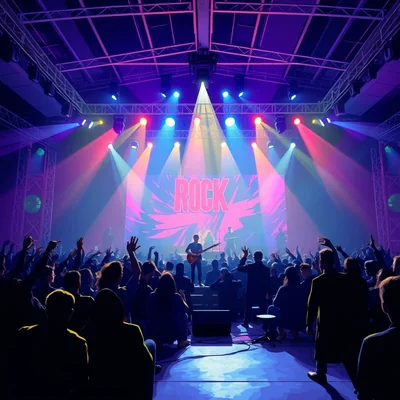
Austin is the capital of Texas and the 11th-largest city in the United States, with roughly 974,000 residents inside the city limits and more than 2.4 million across the surrounding metropolitan area. Sitting where the rolling Texas Hill Country meets the Blackland Prairie along the Colorado River — dammed into the Highland Lakes chain that includes Lady Bird Lake through the heart of downtown — it is one of the most musically self-conscious cities in the United States. Austin's official slogan, registered as a trademark in 1991, is "The Live Music Capital of the World," and few civic identities have been built more intentionally around music: from the 1970s outlaw country scene at the Armadillo World Headquarters, through the long-running PBS series Austin City Limits, to South by Southwest (SXSW) and the Austin City Limits Music Festival, the city has spent half a century branding, exporting, and increasingly commodifying its music scene.
A brief history
The land along the Colorado River was Tonkawa, Lipan Apache, and Comanche territory before Anglo-American settlers established the small village of Waterloo in the 1830s. The Republic of Texas chose the site as its capital in 1839 and renamed it Austin for Stephen F. Austin, the "Father of Texas." Through the 19th century the city remained small, its growth constrained by frontier raids and limited rail access. The 1883 founding of the University of Texas at Austin and the 1888 completion of the State Capitol gave the city its enduring institutional anchors. Through the 20th century Austin grew steadily as a state-government and university town, with a much more bohemian and politically progressive culture than the rest of Texas. The 1980s Dell Computer boom, the 1990s rise of a substantial tech industry around IBM, Motorola, and Samsung, and the 2010s and 2020s relocations of Tesla, Oracle, Apple's expansion, and a flood of California tech transplants have transformed the city into one of the fastest-growing metros in the United States — and reshaped the music scene in the process. Successive waves of migration — Mexican and Mexican-American families through the 20th century, Black Southerners during the Great Migration, and a long stream of musicians and artists drawn by cheap rent and the live-music scene — have built a city that retains a strong Tex-Mex, Black, and Anglo-bohemian musical identity even as gentrification has accelerated.
Music identity
Austin's modern musical identity crystallized in the early 1970s with the rise of outlaw country and the progressive country movement at the Armadillo World Headquarters (1970–1980). When Willie Nelson moved from Nashville back to Texas in 1972 and played the Armadillo, he found an audience of long-haired hippies and rednecks listening to the same music — a fusion that became one of the defining cultural moments in American country. Nelson's Shotgun Willie (1973), Phases and Stages (1974), and Red Headed Stranger (1975), recorded across Texas and Tennessee but rooted in the Austin scene, made him one of the most important country artists of the 20th century. Waylon Jennings, Jerry Jeff Walker, Doug Sahm (who moved between San Antonio and Austin), Michael Martin Murphey, Townes Van Zandt (Texas-born and a constant presence in Austin), Guy Clark, Steve Earle, Lyle Lovett, Nanci Griffith, and Joe Ely built one of the most acclaimed singer-songwriter scenes of the 1970s and 1980s. Asleep at the Wheel moved to Austin from West Virginia in 1973 and built a 50-year Western-swing revival career out of the city. The Cosmic Cowboy sound — country, folk, rock, and Mexican music fused through the Austin bohemian filter — became one of the city's defining exports.
In parallel, Austin's blues scene — anchored by the Vulcan Gas Company and later the Antone's nightclub (founded by Clifford Antone in 1975) — became one of the most important blues venues in America. Stevie Ray Vaughan moved to Austin from Dallas as a teenager and built his career through Antone's and the Continental Club; his Texas Flood (1983) revived blues for a generation, and his death in 1990 turned him into one of the city's most beloved cultural figures. Jimmie Vaughan, The Fabulous Thunderbirds, Lou Ann Barton, W.C. Clark, Marcia Ball, and a deep blues circuit ran through Antone's and the Continental Club. Doug Sahm and Augie Meyers kept Tex-Mex rock and roll alive across the same decades. Roky Erickson and the 13th Floor Elevators had built one of the foundational psychedelic rock catalogs in 1960s Austin, and Erickson's continued presence in the city — through his solo career, his fan-club community, and the Roky Erickson Psychedelic Ice Cream Social at the Threadgill's annual events — kept psychedelia central to Austin's identity through the 2000s.
The 1980s and 1990s remade the city again. The Butthole Surfers, while ultimately associated with San Antonio and Austin, recorded much of their early catalog in Austin. Spoon, formed in Austin in 1993, became one of the most acclaimed indie rock bands of the 21st century. Trail of Dead, Explosions in the Sky (technically formed at the University of Texas), Okkervil River, The Mountain Goats (briefly Austin-based through John Darnielle's residencies), Bright Eyes's Austin ties through Saddle Creek, Shearwater, and a deep indie scene around clubs like Emo's, Stubb's, Mohawk, Beerland, and the Continental Club built one of the most internationally watched indie scenes of the 1990s and 2000s. Daniel Johnston, the celebrated outsider artist and singer-songwriter, lived in Austin for decades and shaped a generation of indie songwriters. Spoon, And You Will Know Us by the Trail of Dead, Explosions in the Sky, The Black Angels (Austin's psychedelic rock revival flagship), and the Levitation festival (founded 2008, originally as Austin Psych Fest) anchored the modern Austin psych and indie identity.
The 2000s and 2010s brought a serious roots, Americana, and hip-hop wave. Gary Clark Jr., raised in Austin and a regular at the Continental Club through his teens, became one of the most celebrated blues-rock guitarists of his generation. Black Pumas, the soul duo of Eric Burton and Adrian Quesada, broke nationally with their 2019 self-titled debut and helped revive Austin's role in modern soul. Shakey Graves, Hayes Carll, Jason Eady, Ryan Bingham (who lived in Austin), Charlie Sexton, Patty Griffin, and Bob Schneider built a deep Americana scene. Hip-hop has its own Austin lineage through artists like Bavu Blakes, Bun B's Houston-Austin connections, Riff Raff (Austin-raised), Megafauna, Jordan Hamilton, and a current generation of trap and indie hip-hop artists. Latin music — Tejano, conjunto, regional Mexican, and Latin urban — runs through East Austin, the historically Mexican-American neighborhood on the east side of I-35. Indigenous music runs through the George Washington Carver Museum's programming and the broader Texas Indigenous arts community.
Venues and neighborhoods
Austin's venue ecosystem is famously dense. At the top sit the Moody Center (the city's largest indoor arena, opened in 2022), the Frank Erwin Center's legacy, Q2 Stadium, Germania Insurance Amphitheater at the Circuit of the Americas, the Long Center for the Performing Arts, Bass Concert Hall at UT, the Paramount Theatre, the Stateside Theatre, and ACL Live at the Moody Theater (home of Austin City Limits TV tapings). The midsize tier includes Stubb's Bar-B-Q (one of the most beloved outdoor venues in the country), Emo's, Mohawk, The Parish, the 3TEN ACL Live, and Scoot Inn. Beneath them is one of the deepest club layers in America — the Continental Club (the storied South Congress room), Antone's (the legendary blues club, still operating in its current location), C-Boy's Heart & Soul, Saxon Pub, Cactus Cafe at UT (the storied folk and singer-songwriter listening room), The White Horse, Hole in the Wall, Sahara Lounge, Beerland's legacy, Hotel Vegas, Empire Control Room, Cheer Up Charlies, Kick Butt Coffee, Carousel Lounge, Donn's Depot, Broken Spoke (the legendary honky-tonk), and a network of bars, dance halls, and DIY rooms across South Congress, East Sixth, Red River, Rainey Street, and South Lamar.
Different neighborhoods carry different musical identities. Sixth Street (especially Red River) anchors the rock, indie, and DIY scenes. South Congress and South Lamar anchor the country, Americana, blues, and singer-songwriter circuits. East Austin, the historically Black and Mexican-American neighborhood, anchors the city's Tejano, hip-hop, and increasingly indie scenes through venues across East Cesar Chavez and East 11th and 12th Streets. Rainey Street has emerged in the last decade as a high-end bar and music corridor. The North Loop and Hyde Park support a smaller cluster of bars and listening rooms. Travis Heights and Bouldin anchor the Continental Club orbit. The Domain and Mueller support newer high-end concert venues.
Festivals and signature events
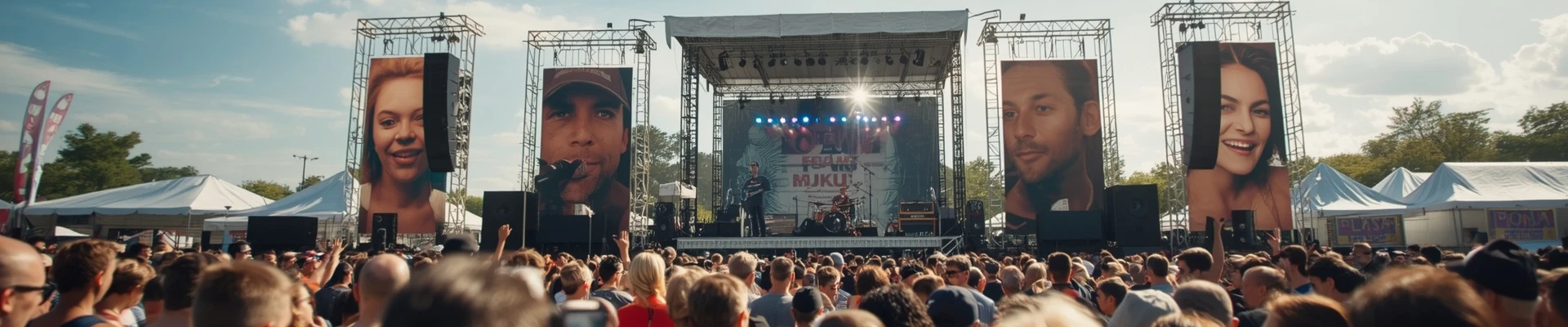
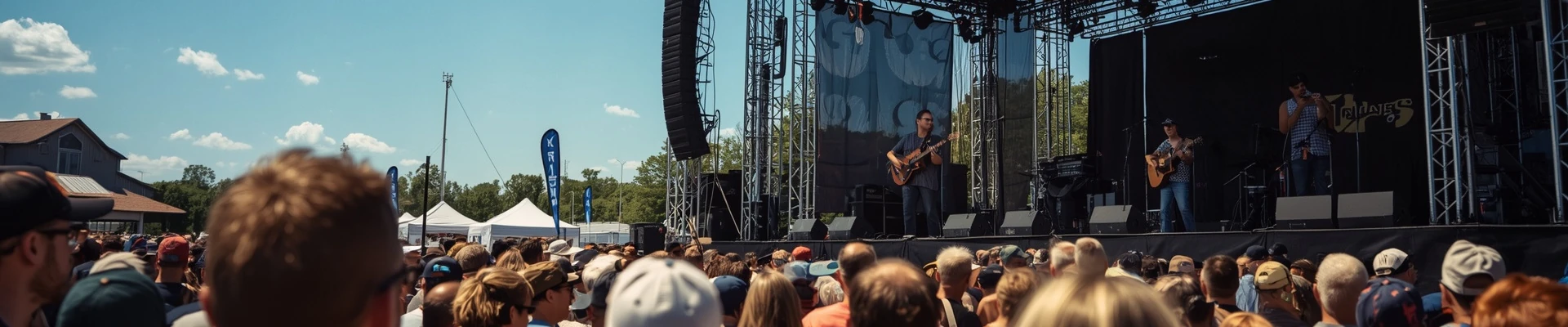
The festival calendar is one of the densest in the world. South by Southwest (SXSW), founded in 1987, runs for 10 days each March across the entire city — programming thousands of bands across hundreds of venues alongside film, tech, and conference programming, and serving as one of the most important music industry events in the world. Austin City Limits Music Festival at Zilker Park each October draws more than 450,000 attendees over two three-day weekends and has been one of the largest U.S. festivals since its founding in 2002. Levitation (formerly Austin Psych Fest), founded in 2008 by the Black Angels, is one of the world's most important psychedelic rock festivals. Old Settler's Music Festival, Pecan Street Festival, Blues on the Green at Zilker Park, Eeyore's Birthday Party, Free Week in early January, Hot Luck Festival, Sound on Sound (in its various incarnations), Float Fest, and Euphoria keep the calendar full. Austin City Limits has been the longest-running music TV program in U.S. history (since 1974), and the Austin Music Awards during SXSW honor the local scene each year. Cinco de Mayo, Diez y Seis, Día de los Muertos in East Austin, Carnaval Brasileiro, Pachanga Latino Music Festival, Carifest, and Austin Pride add cultural and community programming.
What ties it all together is the city's deeply intentional self-identification with live music — and the increasing tension between that identity and the gentrification, rising rents, and tech-driven cost-of-living explosion of the 2010s and 2020s. Austin is the city where outlaw country was given its institutional home at the Armadillo, where Stevie Ray Vaughan rebuilt American blues guitar at Antone's, where SXSW and ACL turned a local scene into a global music industry destination, and where a current generation of soul, indie, and hip-hop artists is wrestling with what "Live Music Capital of the World" means when the venues are closing and the rent is going up.