
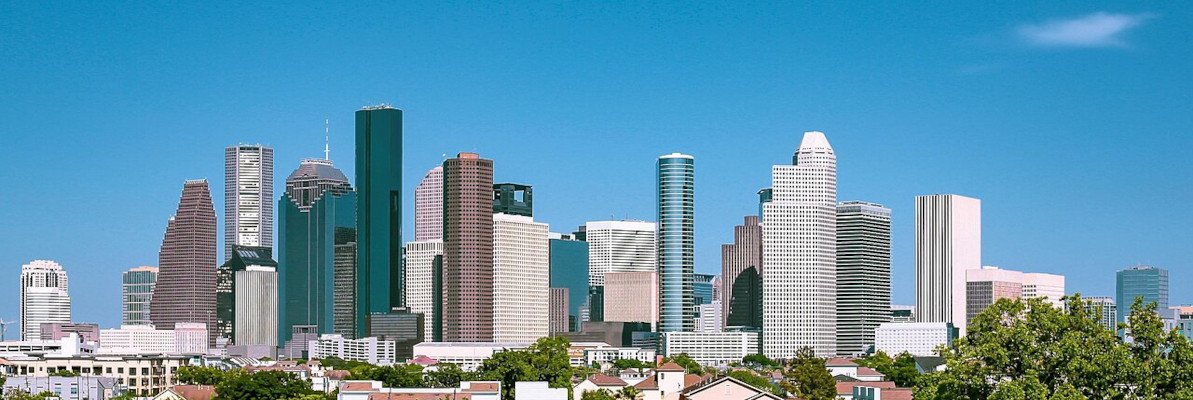
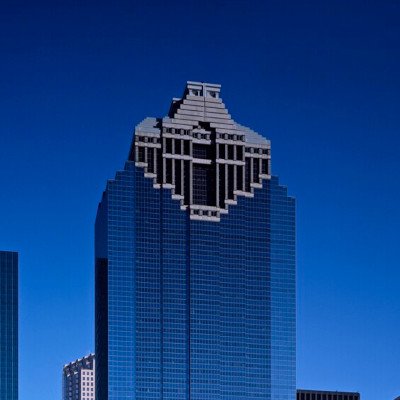
Houston is the largest city in Texas and the fourth-largest in the United States, with roughly 2.3 million residents inside the city limits and more than 7 million across the surrounding metropolitan area. Sprawled across more than 1,650 square kilometers of low coastal prairie about 80 km inland from Galveston Bay, it is one of the most ethnically and linguistically diverse cities in North America — by many measures the most diverse in the United States — with Black, Latino, white, and Asian populations of comparable size and more than 145 languages spoken across its neighborhoods. That diversity, combined with proximity to Louisiana, Mexico, and the Gulf, has produced one of the most distinctive regional sounds in American music.
A brief history
The land between the Buffalo and White Oak Bayous was Karankawa, Atakapa, and later Akokisa territory before Spanish, French, and Anglo-American colonists arrived in the late 18th and early 19th centuries. The Allen brothers founded the town in 1836 and named it for Sam Houston, the first president of the Republic of Texas. After Texas joined the United States in 1845, Houston grew steadily as a cotton, lumber, and rail hub. The 1901 Spindletop oil discovery near Beaumont, the 1914 opening of the deepwater Houston Ship Channel, and the 20th-century rise of the petrochemical industry transformed the city into a global energy capital. World War II's shipbuilding boom, the establishment of NASA's Manned Spacecraft Center (now the Johnson Space Center) in 1961, and successive waves of immigration from Mexico, Central America, Vietnam, India, Pakistan, the Philippines, Nigeria, and the wider African diaspora — accelerated by Hurricane Katrina in 2005, which brought tens of thousands of New Orleans residents — reshaped the city into the polyglot metropolis it is today. Houston has no zoning code, which has produced a sprawling, decentralized geography in which strip-mall venues, warehouse studios, and storefront churches sit alongside one another across hundreds of square kilometers.
Music identity
Houston's musical history starts with blues, gospel, and jazz. The Third and Fifth Wards on the city's predominantly Black east and north sides were major Gulf Coast blues centers from the 1920s onward. Lightnin' Hopkins built one of the great American blues catalogues out of Third Ward bars and recording studios; Albert Collins, Johnny Copeland, Big Mama Thornton (whose original "Hound Dog" was cut for Peacock Records here in 1952), Clarence "Gatemouth" Brown, and Bobby Bland all worked the Houston circuit. Don Robey's Peacock and Duke Records, founded in the late 1940s and based on Erastus Street, became one of the most important Black-owned labels of the postwar era, releasing landmark blues, R&B, and gospel records by the Mighty Clouds of Joy, the Dixie Hummingbirds, and Junior Parker, among many others. The city's gospel tradition, rooted in churches like Wheeler Avenue Baptist and St. John's, fed the rise of the Yolanda Adams generation and shaped the vocal training that would later produce Beyoncé and Solange Knowles.
In the 1960s and 1970s, Houston became a major soul and funk center. Archie Bell and the Drells, Joe Tex, Roy Head, and the Peacock/Duke roster carried the soul tradition; Chicano and Tejano music, descended from the conjunto and orquesta traditions of South Texas, ran in parallel through the Latin neighborhoods of the East End, Magnolia Park, and Denver Harbor. The zydeco and Creole scenes, fed by Louisiana migration, took root in clubs along the Frenchtown corridor in Fifth Ward and continue at venues like the Continental Zydeco Ballroom and the Big Easy.
The defining Houston musical innovation of the late 20th century, however, was Southern hip-hop. The Geto Boys — Scarface, Willie D, and Bushwick Bill — built one of the most influential rap groups of the 1990s out of Rap-A-Lot Records, founded by James Prince in the early 1980s. UGK, the Port Arthur–and–Houston duo of Pimp C and Bun B, codified the slow, organ-driven, country-rap drawl that would define Texas hip-hop and seed the entire Dirty South wave through Outkast, T.I., and beyond. Then, in the early and mid-1990s, DJ Screw in the South Park neighborhood developed the chopped and screwed style — slowing songs down to roughly two-thirds speed, doubling and chopping phrases, and releasing dozens of mixtapes (the Screwed Up Click) that featured Lil' Keke, Big Moe, ESG, Z-Ro, Trae tha Truth, Lil' Flip, and many others. Chopped and screwed became one of the most widely imitated production styles of the 21st century, audible everywhere from Drake to A$AP Rocky to global pop and R&B. Houston's Slim Thug, Paul Wall, Mike Jones, Chamillionaire, and the Swishahouse roster turned the Screw aesthetic into a national mid-2000s commercial wave. Travis Scott, raised in Missouri City, Megan Thee Stallion, Don Toliver, Tobe Nwigwe, Maxo Kream, That Mexican OT, and the CACTUS JACK and 1501 Certified circles continue the lineage.
Houston is also the hometown of Beyoncé and Solange Knowles, raised in the Third Ward; Destiny's Child was assembled at St. John's United Methodist Church and various Houston rehearsal rooms, and Beyoncé's family's continued ties to the city — the Cécred salon, the Knowles-Rowland community center, the Renaissance tour homecoming — have kept Houston central to her work. Khalid moved through Houston; Kelly Rowland, Lyfe Jennings, Rich Brian's Houston ties, and a dense R&B and soul session-musician community remain active.
Beyond hip-hop and R&B, Houston has a deep country, Tejano, and regional Mexican scene at the Houston Livestock Show and Rodeo and at clubs across the East End and southwest. Selena, though based in Corpus Christi, was a constant presence in Houston before her death; the city's Tejano radio market remains one of the largest in the country. Indie rock runs through Montrose and EaDo around venues like Rudyard's, Walters, White Oak Music Hall, and the Continental Club; psych and garage through bands tied to the Roky Erickson lineage out of nearby Austin; and a substantial DIY metal, noise, and drone scene through warehouses and basement venues.
Venues and neighborhoods
Houston's venue map runs the full range. At the top sit Toyota Center, NRG Stadium, the Hobby Center, Jones Hall (home of the Houston Symphony), the Wortham Theater Center (home of Houston Grand Opera and Houston Ballet), the Cynthia Woods Mitchell Pavilion in the Woodlands, and the 713 Music Hall at POST Houston. The midsize tier includes House of Blues, the Bayou Music Center, Revention Music Center's successors, White Oak Music Hall, Warehouse Live, and the Heights Theater. Beneath them is a deep club layer — Walters, Rudyard's, Continental Club, Last Concert Cafe, Big Top Lounge, Satellite Bar, Eight Row Flint, Numbers (one of the longest-running new wave/goth/alternative clubs in the country), Axelrad, the Secret Group, Miller Outdoor Theatre in Hermann Park, and a network of warehouse and DIY spaces across EaDo, Second Ward, and the East End. Blues and zydeco are sustained by the Big Easy, Continental Zydeco Ballroom, and a circuit of small clubs in Fifth Ward and Frenchtown. Latin music has homes at Arena Theatre, El Dorado Ballroom's historic site, and a long list of dance halls across the southwest and east sides.
Different neighborhoods carry different musical identities. Third Ward remains central to Black Houston — blues, hip-hop, and the Knowles-family churches and venues. Fifth Ward and Frenchtown anchor the Creole and zydeco traditions. South Park is the historic heart of Screw culture. Magnolia Park, Denver Harbor, and the East End are core Tejano and Mexican-American corridors. Sharpstown, Bellaire, and the southwest host enormous Vietnamese, Pakistani, Indian, Salvadoran, and Mexican scenes, each with its own venues and recording communities. Montrose, the Heights, and EaDo anchor the indie, punk, and DIY scenes.
Festivals and signature events
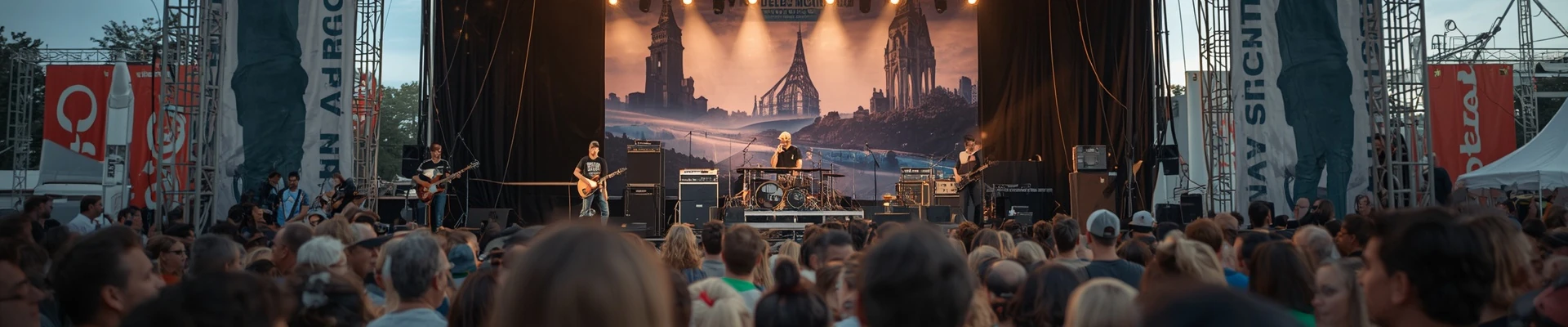
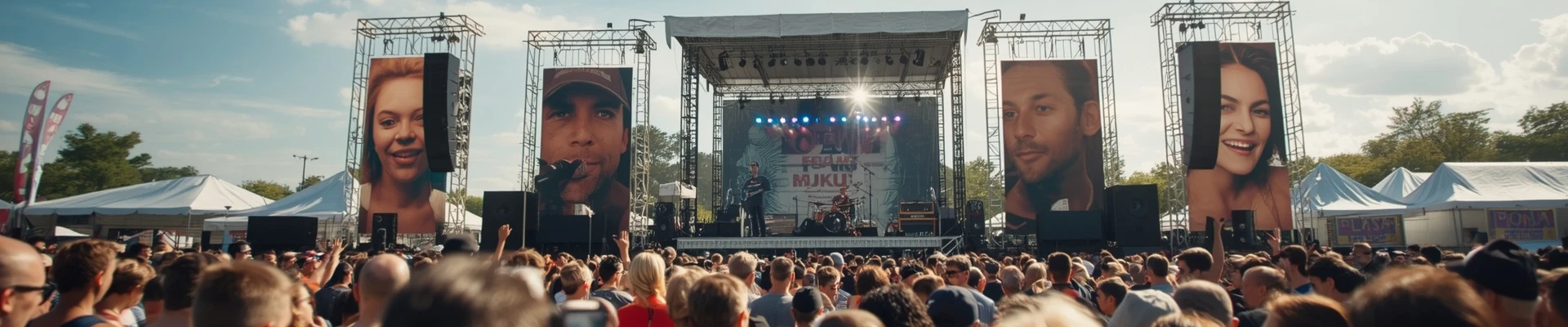
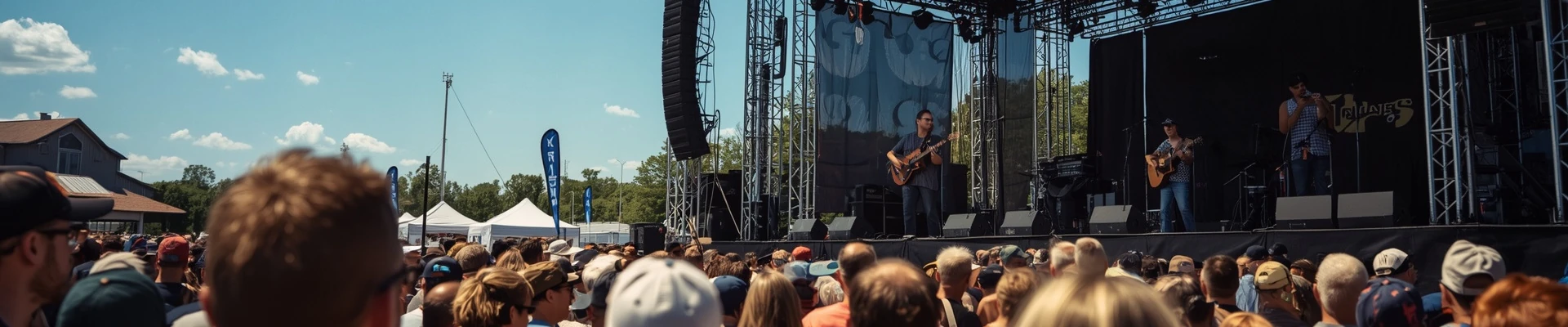
The festival calendar reflects the city's range. The Houston Livestock Show and Rodeo at NRG Stadium is one of the largest ticketed concert series in the world, drawing more than two million attendees over three weeks each spring with a lineup that spans country, Tejano, hip-hop, R&B, and pop. Day for Night (in its various incarnations), In Bloom, Free Press Summer Fest's legacy, Astroworld Festival, Something in the Water's Houston editions, and Mala Luna keep the festival circuit running. The Houston International Festival, Houston Caribbean Festival, Original Greek Festival, Saint Arnold Beerfest, Houston Cinco de Mayo Festival, Houston Whatever Fest, and the Juneteenth celebrations — Juneteenth originated in Galveston and is observed across Houston with major free programming — add cultural and community programming. Cultural processions — the Houston Pride Parade, Mexican Independence Day parades through the East End, Lunar New Year in Asiatown, and the Black Heritage Society MLK Day Parade — are themselves rolling music events.
What ties it all together is the city's combination of scale, sprawl, and relentless cross-cultural mixing. Houston is the place where Mississippi blues met Louisiana zydeco and Texas country, where Black Southern hip-hop slowed itself down into a new aesthetic that the rest of the world copied, where Tejano and Mexican regional music share radio dials with chopped and screwed mixtapes and Vietnamese-language rap, and where one of the world's most powerful R&B vocalists grew up in a Third Ward church choir. It is one of the most underrated, and most influential, music cities in the United States.