

Killeen sits in the heart of Central Texas, straddling Bell County in the rolling limestone country of the Edwards Plateau escarpment, roughly 85 miles north of Austin, 60 miles south of Waco, and 160 miles south of Dallas. The city proper holds approximately 141,000 residents, but that figure captures only a fraction of the metro picture: neighboring Copperas Cove, Harker Heights, Nolanville, and Fort Cavazos itself form a continuous urban fabric that military planners call the Killeen–Temple–Fort Hood metropolitan area, with a combined population approaching 460,000. At the city's structural core is Fort Cavazos — formerly Fort Hood, renamed in 2023 — the largest active-duty military installation in the world by land area, covering more than 340 square miles and garrisoning upwards of 36,000 soldiers. Everything about Killeen flows from this fact: its economy, its demographics, its music culture, and its relationship to Austin, 85 miles south down US-190 and I-35.
A brief history
The land around present-day Killeen was Comanche territory through much of the 19th century. The Leon River watershed and the surrounding limestone cedar country were traditional hunting grounds, and the U.S. Army's displacement of Comanche bands through the 1870s opened the region to Anglo-American settlement. Killeen itself was platted in 1882 as a stop on the Gulf, Colorado and Santa Fe Railway, named after the railroad's general manager Frank Killeen. Through the late 19th and early 20th centuries it functioned as a small agricultural service town — cotton, cattle, and cedar — with a population measured in hundreds rather than thousands.
The decisive transformation came in 1942 when the U.S. Army acquired 340 square miles of Bell County farmland and established Camp Hood as a tank destroyer training center. The camp became a permanent post — Fort Hood — after World War II, and Killeen's population exploded alongside it. Through the Cold War, Vietnam, the Gulf Wars, and the post-9/11 deployments to Iraq and Afghanistan, Fort Hood remained one of the Army's most critical power-projection installations, cycling tens of thousands of soldiers and their families through Central Texas each year. By the 1980s Killeen had grown into a genuine small city, with all of the social complexity — and all of the music — that a perpetually renewing population of young adults brings.
The 2009 Fort Hood shooting — in which a U.S. Army major killed 13 people at the Soldier Readiness Processing Center — marked a traumatic episode in the community's history, followed by a second fatal shooting in 2014. The installation was renamed Fort Cavazos in 2023, honoring General Richard E. Cavazos, the first Hispanic four-star general in U.S. Army history and a Bell County native.
Music identity
Killeen's music scene is shaped by two forces that don't appear together often: the cultural churn of a transient military population and the deep-rooted Tejano and country traditions of Central Texas. The result is a city with genuine stylistic breadth — country honky-tonks, Tejano dancehalls, hip-hop studios, Black gospel choirs, and an active live circuit feeding musicians to Austin — operating at a scale and density that surprises visitors expecting a generic military-town desert.
Country and honky-tonk are the oldest continuous thread in the Killeen sound. Central Texas — the corridor running from Waco south through Killeen, Temple, and Austin — sits in the heart of country music's spiritual geography. The dancehalls and roadhouses of Bell County have been circulating country and Western Swing acts since the 1940s, and Fort Hood's soldiers provided a captive audience who kept that circuit alive through every generation. The Broken Spoke tradition of Austin has its counterpart venues along the Killeen corridor, and local country acts routinely cut their teeth on the roadhouse circuit before testing Austin.
Tejano music runs through Killeen with the same organic force it runs through every heavily Hispanic community in Central Texas. The city's population is roughly 20–25% Hispanic, with deep roots in Mexican-American agricultural communities that predate the military base. The conjunto and Tejano traditions — button accordion, bajo sexto, polka-derived rhythms, and Spanish-language lyrics about love, loss, and border crossing — have thrived in Killeen's dancehalls and community halls for generations. Norteño and cumbia have remained constants on the Killeen Tejano circuit, and the cultural crossover between military and Hispanic communities has produced a particular Central Texas hybrid sound where country chords meet Tejano rhythms in clubs that serve both communities on alternating nights.
Hip-hop is the city's most energetic contemporary scene, driven by the demographic reality that Fort Cavazos draws young soldiers from Black communities across the South and Midwest, many of whom arrive already embedded in regional hip-hop traditions — from Atlanta trap to Memphis rap to Houston's chopped-and-screwed sound. Killeen has produced a string of regional rap acts — most notably Chedda Da Connect, whose viral 2014 track "Flicka Da Wrist" became a national hit and briefly made Killeen the center of hip-hop attention. The city's proximity to Houston (150 miles southeast) means that H-Town's hip-hop culture — the Screwed Up Click tradition, the lean-soaked production of DJ Screw's legacy — has filtered into Killeen's studios and clubs, blending with the Southern trap sonics that soldiers bring from Georgia, Alabama, and the Carolinas.
Gospel is the deep structural music of Killeen's African American community. The city's Black population — roughly 36% of Killeen's residents — sustains a full gospel circuit running through churches from First Baptist Church of Killeen to dozens of nondenominational congregations that serve active-duty and veteran families. The gospel tradition here is not a relic of older Black churchgoing life but a living, competitive scene: mass choirs, praise-and-worship bands, and gospel choir competitions are regular features of the community calendar.
The Austin connection is the defining structural fact of Killeen's music ecosystem. For working musicians in Killeen, Austin — 85 miles south — represents the gravitational center of ambition. Country writers drive down for songwriter nights on 6th Street. Hip-hop producers road-trip to East Austin studios. Young bands test sets at Austin clubs before circling back to build local followings. The Killeen-Austin pipeline has been flowing for decades, and it means that Killeen's scene, while genuinely local, is not sealed off — it breathes with Austin's oxygen while maintaining its own military-town character.
Venues and neighborhoods
Killeen's live music geography is spread across the city rather than concentrated in a single district, reflecting its car-dependent, military-base-adjacent urban form. Imperial Boulevard and the stretch of Fort Hood Street near the main gate concentrate the bars and clubs that serve the soldier population: tattoo parlors, pawn shops, military surplus stores, and live music venues exist in the same block-by-block mix that characterizes gate areas on military installations across the South.
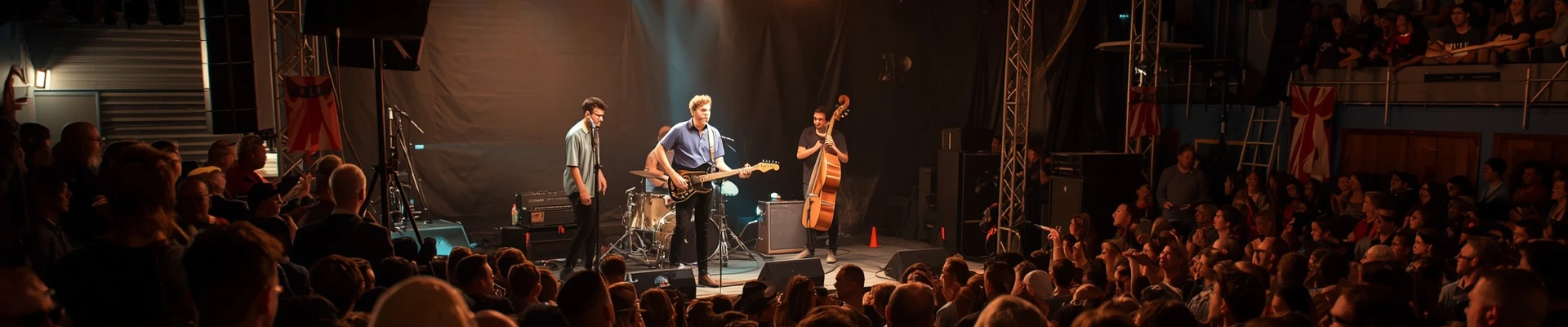
Club Rodeo has been one of the most consistent country and dancehall venues on the Killeen circuit, hosting live country acts alongside DJ nights for soldiers arriving from barracks on weekend leave. The Vive Les Arts Theatre is the city's primary performing arts venue, a 262-seat house that programs local theater, musicals, and occasional live music from touring and regional acts. The Depot and other dive-bar rooms have served as launching pads for local bands across multiple genres.
The Harker Heights suburb — immediately east of Killeen — has developed its own strip of restaurants and bars that provide alternative live-music rooms to the grittier Fort Hood Street corridor. Copperas Cove, to the west, maintains a similar satellite circuit. Together these satellite communities extend the effective Killeen-area venue count well beyond the city limits.
Festivals and signature events
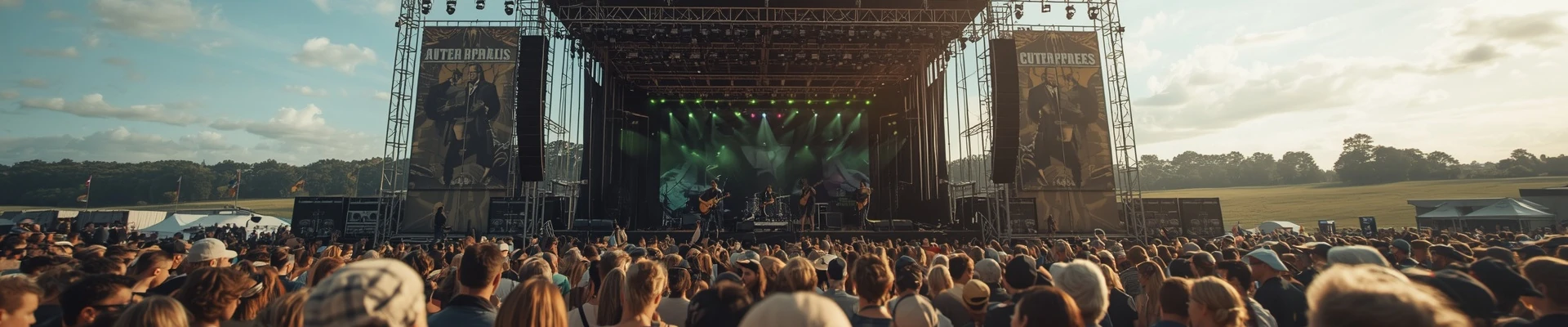
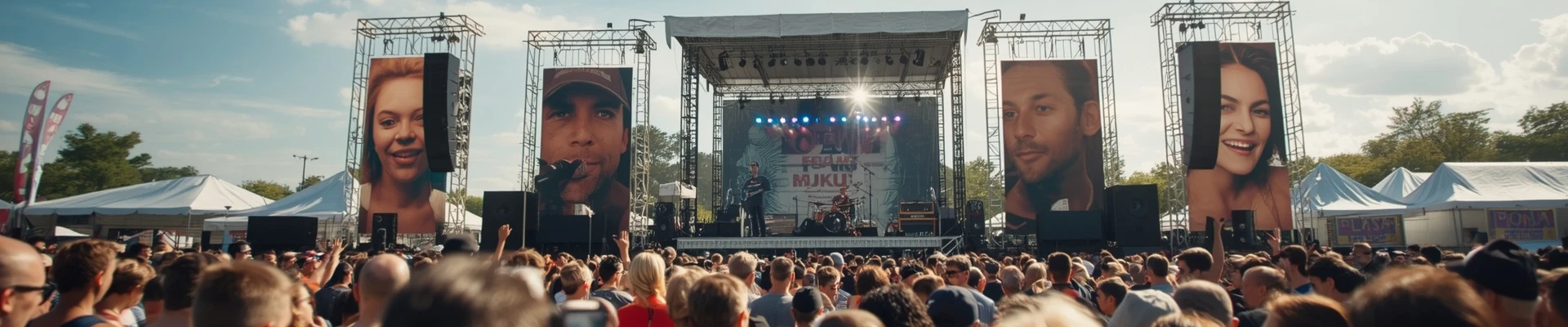
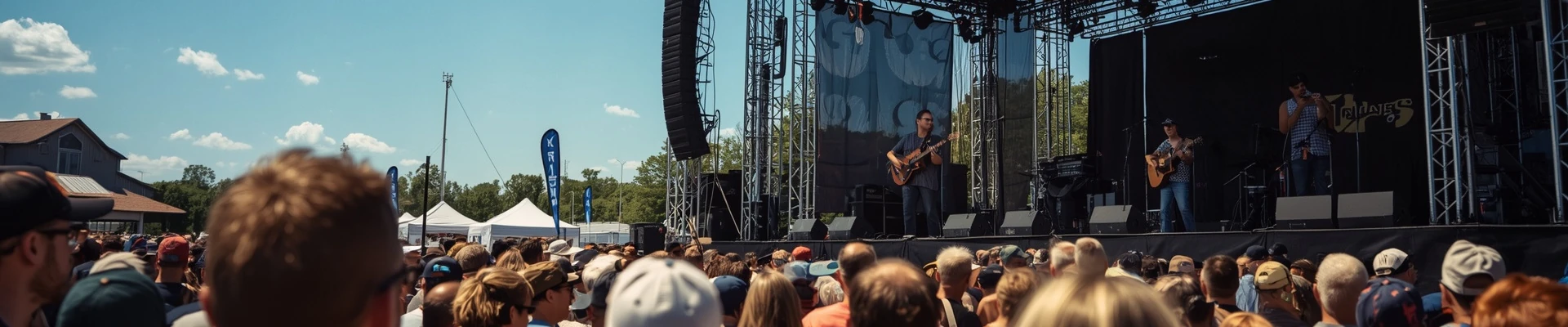
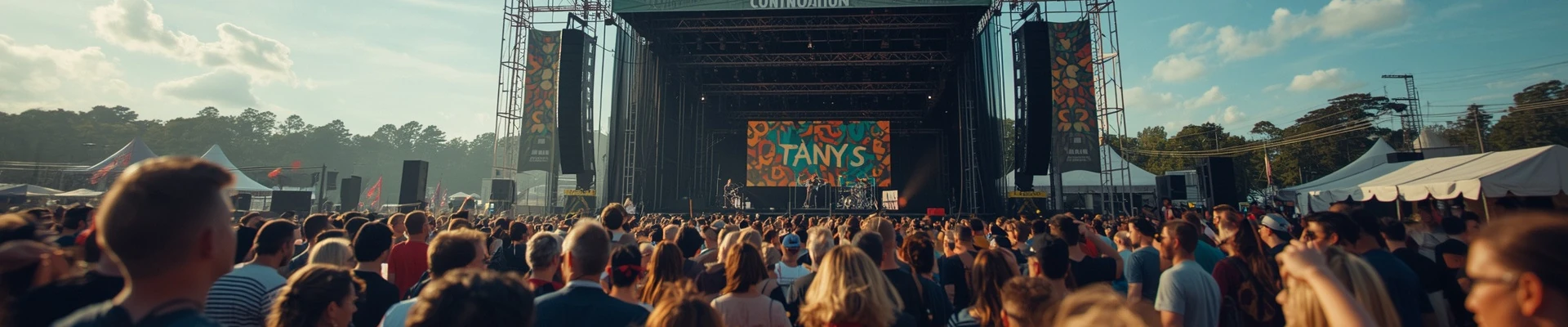
Killeen does not have a marquee music festival with national draw, but it sustains a dense calendar of community events with substantial live music programming. The Killeen Funk Festival has been a recurring celebration of Black music and culture on the local calendar. The Taste of Killeen food festival consistently draws local and regional musicians across country, gospel, and R&B. The Veterans Day and Fourth of July celebrations on the post and in the city produce some of the largest outdoor concert audiences in Central Texas outside Austin, as Fort Cavazos commands the resources and the population to mount major events that draw both military and civilian communities.
The Cedar Jam Music Festival — staged in the cedar-studded parks of the Killeen area — has provided an outlet for local and regional bands in an outdoor festival format. And the city's proximity to Austin means that musicians and fans regularly flow down for South by Southwest, Austin City Limits Music Festival, and the year-round Austin concert circuit, keeping Killeen connected to Texas's dominant music industry hub.
Demographics and cultural texture
Killeen's perpetual demographic churn — the military rotation cycle brings thousands of new residents every year and cycles thousands out — creates a music scene that is unusually cosmopolitan for a city of its size. A soldier from Savannah, Georgia who grew up on Southern trap arrives at Fort Cavazos and finds bandmates from Detroit, Los Angeles, and Chicago. A Tejano family rooted in Bell County for three generations shares a dancehall with Black soldiers from the Mississippi Delta. The result is a city that absorbs musical influences from across the country at a rate that its population size alone would not predict.
The Korean and Filipino communities — sustained by the military's large populations of Korean American and Filipino American soldiers and their families — add further cultural layers, with K-pop and OPM (Original Pilipino Music) represented in informal settings, church fellowships, and community events that rarely make it onto official venue calendars but are very much part of the city's sonic texture.
What ties it all together
Killeen is, at its musical core, a transient city that keeps finding permanent sounds. The Army's rotation cycle should theoretically prevent the accumulation of scene-building capital — the clubs, studios, labels, and multi-generational audiences that usually anchor a distinctive local music culture. Instead, the sheer volume of young, music-hungry people passing through has produced a continuous creative ferment. Country, Tejano, hip-hop, and gospel are not competing in Killeen so much as coexisting in the same venue ecosystem, borrowing from each other across the Fort Hood Street corridor and the Harker Heights strip. The musicians who leave for Austin carry with them a hybrid sensibility — part military-town pragmatism, part Texas traditionalism, part diaspora-driven genre fluency — that is recognizably Killeen even when they're playing 6th Street. It is a city whose music means more than its name suggests.