

The City of Palms on the Border
McAllen sits at the southern tip of Texas in the Lower Rio Grande Valley, sharing the international border crossing at Hidalgo–Reynosa with the Mexican city of Reynosa, Tamaulipas. With roughly 140,000 residents inside city limits — and nearly 1.3 million across the broader McAllen–Edinburg–Mission metropolitan area — the Valley is one of the fastest-growing corners of the United States, and McAllen is its commercial and cultural engine. The city's population is approximately 85 percent Hispanic or Latino, reflecting centuries of border geography that predates both Texas statehood and American nationhood. Spanish and English flow interchangeably here; the local shorthand is simply "the Valley," and McAllen wears that Valley identity with pride.
The economy is anchored by retail (McAllen is one of the highest-volume retail markets per capita in the country, drawing shoppers from across the border), healthcare, international trade through the World Trade Bridge at Laredo and the Pharr International Bridge, and a growing logistics sector. The McAllen International Airport connects the region to major hubs, and the city's annual hosting of large conventions at the McAllen Convention Center reflects its ambition as a regional gathering place.
Roots: Conjunto, Norteño, and the Border Sound
The music that defines McAllen and the broader Rio Grande Valley was not born in a recording studio — it crystallized along the length of the border itself, shaped equally by German and Czech immigrant accordion traditions, the bajo sexto guitar brought up from northern Mexico, and the accumulated rhythm of generations of farmworkers, merchants, and their families. Conjunto, the driving accordion-and-bass sound that Narciso Martínez (born in Tamaulipas, raised in the Valley) codified in the 1930s and Flaco Jiménez later carried to international acclaim, remains the heartbeat of the region. Norteño, the broader Mexican vernacular that sits alongside conjunto, is equally present — border radio carries corridos, cumbias, and polkas to audiences on both sides of the Rio Grande.
The Valley has produced some of the genre's biggest names. Intocable — the norteño powerhouse formed in the early 1990s in Zapata, Texas, just up the river — became one of the bestselling regional Mexican acts of their era, earning multiple Grammy Awards and packing arenas across North America and Mexico. Bobby Pulido, a smooth-voiced tejano singer from Edinburg in the heart of the Valley, charted major hits throughout the late 1990s and early 2000s and remains a local hero. Ram Herrera, another Valley son, built a loyal following on the tejano circuit, while Michael Salgado — from the small border town of Roma — became one of norteño's most celebrated voices, known for his expressive interpretations of rancheras and cumbias.
Tejano itself is inseparable from the Valley's identity. Though San Antonio is tejano's commercial capital and Corpus Christi gave the world Selena Quintanilla-Pérez, the sound has always been made and lived in South Texas communities like McAllen. Local dances, quinceañeras, bailes, and family gatherings sustain a living conjunto and tejano ecosystem that no chart position can fully capture.
Venues and Live Music Infrastructure
McAllen's flagship performance space is the McAllen Performing Arts Center, a state-of-the-art 1,800-seat venue that opened in 2014 and hosts Broadway touring productions, orchestral performances, and major regional concerts. The McAllen Convention Center is the Valley's primary arena-scale venue, capable of configuring for concerts of several thousand, and it draws national touring acts along with the major events of Fiestas Hidalgo.
For intimate and historic character, Cine El Rey — a 1947-era theater in downtown McAllen that was rescued and restored as a performing arts space — offers the most distinctive room in the city. Its marquee is a local landmark, and the venue hosts a mix of local acts, regional touring bills, and community events in a space that carries the weight of decades.
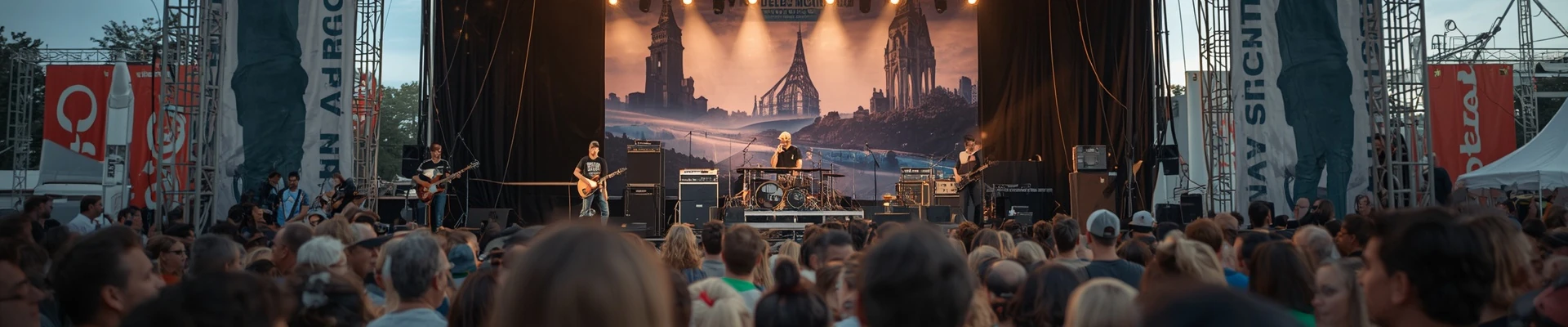
The city's entertainment corridors shift with the energy of a border economy. South 10th Street and the area around Nolana Avenue concentrate bars and clubs with live music, particularly on weekend nights when DJs and live bands draw crowds for norteño, cumbia, and electronic dance music. The downtown McAllen Entertainment District — anchored by the Cine El Rey and a growing number of restaurants and bars — has become a focus for the city's efforts to build a walkable nightlife core.
Across the Valley, regional venues in Edinburg, Mission, Pharr, and Weslaco all draw McAllen residents and contribute to a dense club-and-dance-hall circuit that keeps live music accessible at the community level.
Fiestas Hidalgo and Cultural Celebrations
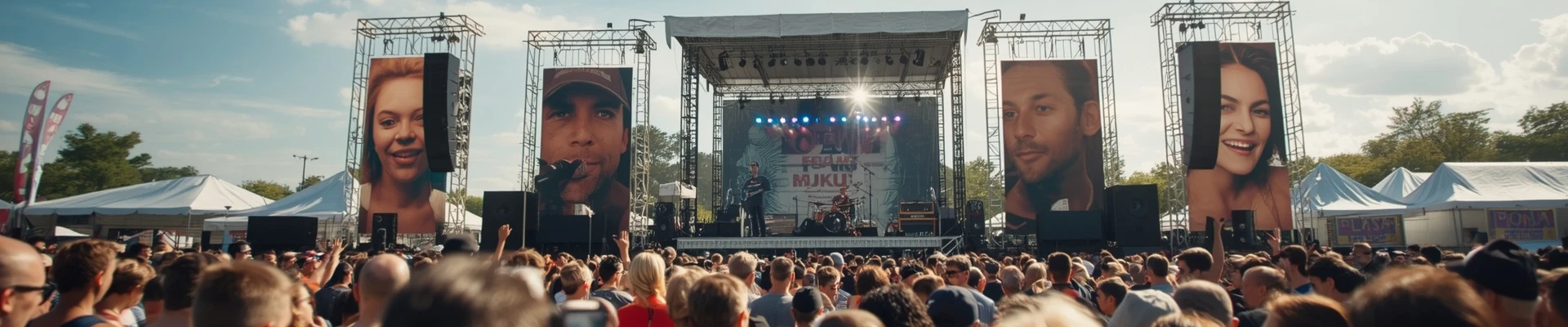
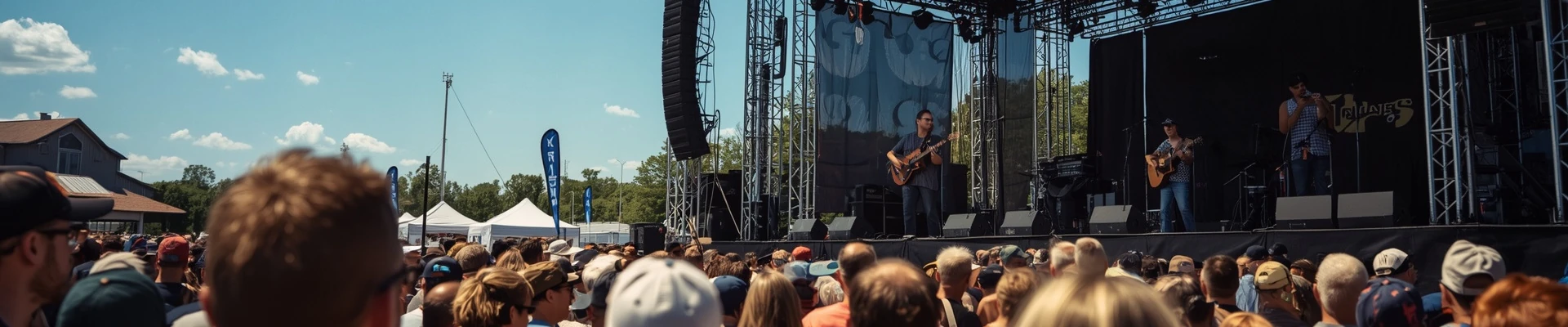
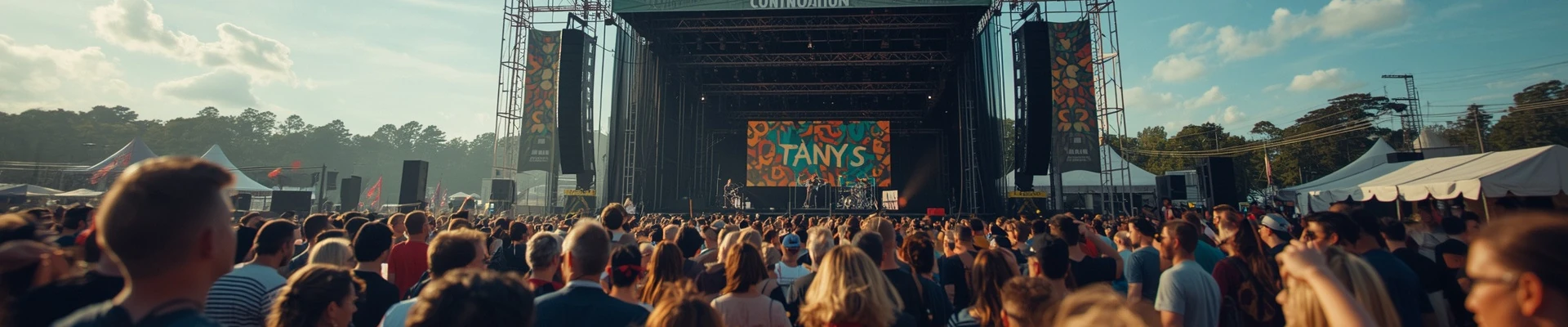
The largest annual event in the Valley is Fiestas Hidalgo, a multi-day outdoor festival that typically draws hundreds of thousands of attendees and serves as the showcase for both norteño and tejano headliners. The festival's Palenque Noche stage — named for the cockfighting arenas where corridos and rancheras traditionally played — books the top names in regional Mexican music: acts like Intocable, Banda El Recodo, Los Tucanes de Tijuana, and Banda MS have all headlined, placing McAllen on the same touring circuit as Houston, San Antonio, and Los Angeles for the regional Mexican market.
The Texas Tropics Music Festival and various other outdoor music events fill out the concert calendar, while the McAllen International Museum and the broader arts community host programming that connects visual culture to the city's musical identity. The Holiday Festival of Lights at Archer Park draws community gatherings that often include live music from local conjunto and mariachi groups.
Radio, Recording, and Border Airwaves
The Rio Grande Valley's radio landscape is a bilingual mix that reflects its population. Spanish-language stations — carrying norteño, banda, tropical, and regional Mexican — dominate the dial, but tejano-formatted stations maintain loyal audiences, and English-language Country and Top 40 stations fill out the spectrum. The border's proximity means Mexican stations bleed across, giving Valley listeners exposure to Monterrey, Tamaulipas, and national Mexican radio programming.
Recording infrastructure in the Valley has historically been lighter than the commercial industry centers of San Antonio or Houston. Many Valley artists record in San Antonio or travel to Los Angeles and Mexico City for major label projects. However, a growing number of home and project studios in McAllen and Edinburg serve the independent sector, particularly for conjunto, norteño, and the regional dance music scene.
Demographics, Bilingual Culture, and Community Music
The Valley's Mexican-American community sustains multiple distinct music ecosystems. Conjunto and norteño are not nostalgic curios — they are the sounds of working-class parties, quinceañeras, and bailes throughout Hidalgo County. Mariachi groups perform at every celebratory occasion; school mariachi programs in the McAllen Independent School District and neighboring districts produce a steady pipeline of young musicians. The McAllen Philharmonic Orchestra provides classical programming, and the local symphony and youth orchestra organizations reflect the community's investment in formal music education.
The region's youth also plug into national trends: hip-hop, trap, and Latin urban music (reggaeton, Latin trap) are all active in the Valley's club and social scene, blending with regional sounds in ways that produce hybrid acts increasingly recognized beyond the border corridor.
The Valley Sound: What Ties It Together
What makes McAllen and the Rio Grande Valley distinct in the American music landscape is the unbroken continuum between the living tradition and the contemporary scene. The accordion has never left. The bajo sexto is not a museum artifact. Conjunto dances are not revivals — they are how people socialize on Saturday nights in Hidalgo County. The Valley's music is not a heritage performance; it is the native language of a community that has been shaped equally by Texas and Mexico, by the river and the highway, by farmwork and commerce.
McAllen's rapid growth — its gleaming malls, its new performing arts center, its expanding hospital campuses — has not erased that sound. It has given it a larger stage. The artists born in Mission and Edinburg and Zapata carry the Valley's accordion-and-bajo heartbeat into arenas across the continent, and the community that fills Fiestas Hidalgo every year is the same community that dances to Intocable at a quinceañera hall on a Friday night. That continuity is McAllen's deepest musical signature.