
Pearland is a city of roughly 108,000 people in Brazoria County, Texas, with a small portion extending into Harris County, located approximately 24 kilometres south of downtown Houston along the State Highway 288 corridor. The city sits on flat coastal prairie at the southern edge of the Greater Houston metropolitan area — the fourth-largest metropolitan area in the United States — and functions as one of Houston's most significant bedroom communities, its residents feeding into the enormous workforce of the adjacent Texas Medical Center (the largest medical complex in the world), downtown Houston, and the Energy Corridor. Pearland takes its name from the pear orchards planted by early Anglo-Texan settlers in the late 19th century, a pastoral origin that contrasts sharply with its current identity as one of the fastest-growing and most demographically diverse cities in the United States. The city's explosive growth — from roughly 19,000 residents in 2000 to more than 108,000 in the early 2020s — has made it a defining story of Sun Belt suburbanisation and a case study in how rapid population growth transforms both the physical landscape and the cultural character of a community.
A brief history
The land that became Pearland was part of the Brazoria County coastal prairie, inhabited by Karankawa peoples before Spanish colonization and subsequent Anglo-American settlement. The community was formally platted in 1892 by Witold von Zychlinski, a Polish immigrant land promoter who envisioned a prosperous agricultural settlement built around fruit orchards — hence the name Pearland, for the pear trees he encouraged settlers to plant. For most of the late 19th and early 20th centuries, Pearland remained a small farming and ranching community dependent on the railroad line linking it to Houston and Galveston. The city was incorporated in 1959, at which point its population was still only a few thousand. The transformation came with Houston's post-1970s suburban expansion — the widening of Highway 288, the construction of the Beltway 8 outer loop, and above all the enormous employment magnet of the Texas Medical Center just north of the city limits. Through the 1990s and especially the 2000s, Pearland absorbed waves of Houston workers seeking affordable housing in a safe, school-rated suburb with quick freeway access to the city. The construction of the Shadow Creek Ranch master-planned community in the early 2000s, and later the Pearland Town Center regional mall (2009), gave the city its first major retail and entertainment anchors and accelerated growth further. By the 2010s, Pearland was consistently appearing on lists of the fastest-growing cities in the United States, a distinction it has held through multiple Census cycles.
Demographics and community character
Pearland's explosive growth has produced one of the most ethnically diverse large suburbs in Texas. The city's population is roughly 32 percent white non-Hispanic, 28 percent Black or African American, 21 percent Hispanic or Latino, and 16 percent Asian — with the Asian community composed predominantly of Indian-American families, particularly those working in the Texas Medical Center's medical and research community. The Nigerian-American and broader West African community is also significant, contributing to one of the most visible African immigrant presences in any Houston suburb. This diversity is relatively recent — Pearland in 1990 was a predominantly white small town — and it has fundamentally reshaped the cultural, religious, and musical character of the city in ways that continue to unfold.
Music identity
Pearland's musical life is inseparable from Houston — the enormous city 24 kilometres to the north whose music scene is one of the most distinct and internationally consequential in the United States. Houston gave the world chopped and screwed — the tempo-slowing, pitch-dropping hip-hop production style pioneered by DJ Screw (Robert Earl Davis Jr.) in the early 1990s, which became the defining sound of Houston rap and influenced a generation of producers and artists worldwide. The city produced UGK (Bun B and Pimp C, from Port Arthur but Houston-scene figures), the Geto Boys (whose raw Southern rap was years ahead of the national mainstream), Scarface, Chamillionaire, Paul Wall, Travis Scott (who grew up in Missouri City, a Houston suburb adjacent to Pearland's sphere), Beyoncé (who was born and raised in Houston's Third Ward before global stardom), and Lizzo (who built her early career in Houston). All of this gravitational pull means that Pearland musicians, music fans, and community events orbit Houston — residents drive north on 288 to NRG Stadium, the Toyota Center, the House of Blues Houston, Warehouse Live, Cynthia Woods Mitchell Pavilion (in The Woodlands), and the many clubs and venues of Montrose, Midtown, and East Downtown.
Within Pearland itself, the musical scene is built around the city's community life rather than its commercial infrastructure. The city has no historic music district, no legendary recording studio, no genre-defining label. What it has instead are the community stages, church halls, cultural centres, and neighbourhood bars where a remarkably diverse population expresses its musical traditions. The Indian-American community sustains an active circuit of Bollywood events, classical Carnatic and Hindustani recitals, folk dance performances, and devotional music tied to the Hindu temples and cultural associations in the south Houston corridor — Pearland, Sugar Land, and Missouri City together form the largest Indian-American suburban cluster in the Houston metro. The West African and Nigerian-American community maintains church choirs, Afrobeats DJ nights, and cultural celebration events that reflect the enormous musical output of contemporary Nigeria and Ghana. The Hispanic community — drawing from Mexican, Central American, and increasingly South American backgrounds — sustains norteño, cumbia, banda, and contemporary Latin pop scenes through neighbourhood venues, quinceanera circuits, and community events.
Gospel runs as a continuous thread through Pearland's Black community, reflecting both the city's Southern Baptist and historically Black Protestant traditions and the newer Pentecostal and megachurch currents that characterise Houston-area Black Christianity. The Pearland Civic Center and Pearland Recreation Center host community concerts, holiday performances, and cultural events throughout the year.
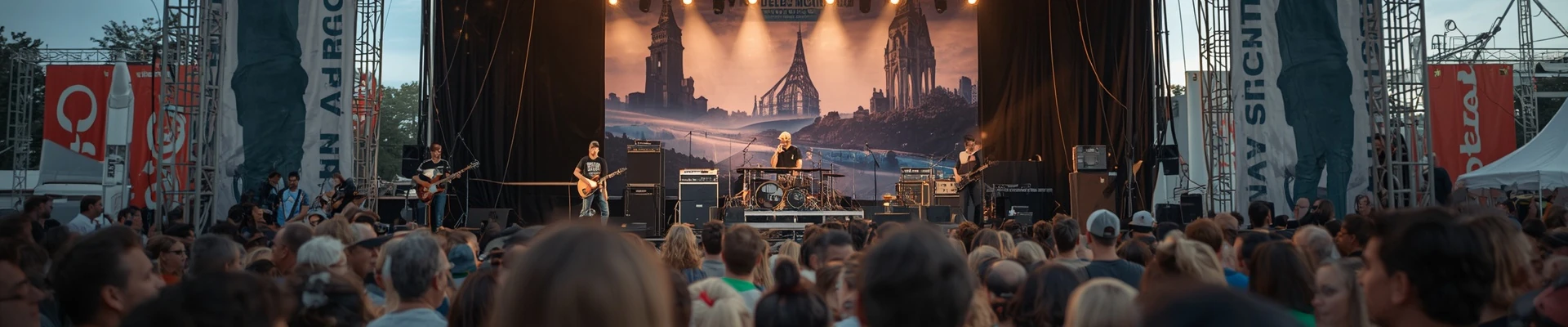
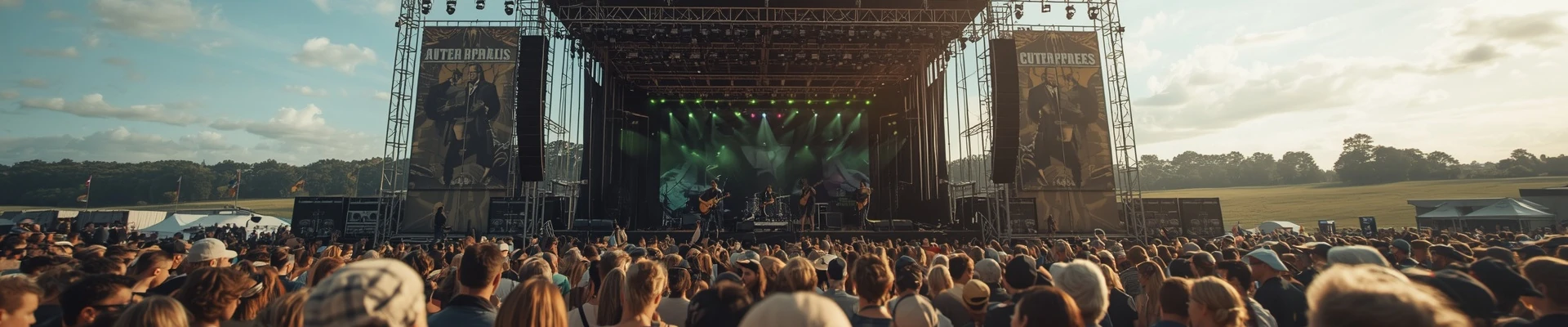
The city's most distinctly Pearland musical event is the Pearland Crawfish Festival — held annually in the spring at Zychlinski Park (named for the city's founder), it is one of the largest crawfish festivals in Texas, drawing crowds of tens of thousands and programming a lineup of Texas country, Cajun, and Southern rock acts across multiple stages. The festival reflects both the coastal proximity of Pearland to the Gulf's crawfish and shrimp culture and the broader Texas-Louisiana musical crossover that runs through southeast Texas. Country music has a permanent presence in Pearland through local bars and honky-tonks that program Texas singer-songwriters and touring country acts.
Maren Morris, the Grammy-winning country-pop superstar, was born in Arlington but is part of the broader DFW-to-Nashville Texas country pipeline that runs through the state. Pearland's own musical exports are not nationally prominent, but the city is young enough — and growing fast enough — that its first generation of natives is only now beginning to emerge into the Houston music scene. Travis Scott's Missouri City upbringing is the closest parallel to what Pearland's next decade may produce: a suburb-raised artist whose Houston-adjacent childhood shapes a global career.
Venues and neighborhoods
Pearland's venue landscape reflects its suburban character. The Pearland Town Center area around Broadway Street and Highway 288 anchors the city's commercial entertainment district, with chain restaurants and bars providing live music on weekends. The Shadow Creek Ranch corridor in north Pearland hosts upscale dining and entertainment. Old Townsite in the historic downtown area — around Broadway and Magnolia — is the most characterful district in the city, with a handful of local bars, restaurants, and community gathering spaces that occasionally program live music. The Barry Rose Recreation Center and Pearland Civic Center host community performances. Several local bars in Pearland — including venues along the 518 corridor and around the Town Center — program acoustic country, blues, and rock acts on weekends.
Beyond the city limits, the Houston Livestock Show and Rodeo (at NRG Stadium, one of the world's largest livestock shows, with a concert program that draws the biggest country and pop touring acts), Houston's House of Blues, Warehouse Live, Revention Music Center (now 713 Music Hall), and the club circuits of Midtown and Montrose are all within 30 minutes of Pearland on 288.
Festivals and signature events
The annual Pearland Crawfish Festival at Zychlinski Park is the city's flagship musical event — a multi-stage spring festival combining Louisiana-style crawfish boils with Texas country, Cajun, zydeco, and Southern rock programming. Pearland's Independence Day celebration at the Pearland Town Center draws large crowds with live entertainment. Diwali celebrations organised by Indian-American cultural associations are among the most visible community events in the city. The Lunar New Year festival reflects the growing Vietnamese and East Asian presence in the area. Juneteenth celebrations at the Pearland Recreation Center honour the city's Black community. The Pearland ISD performing arts programs — the high school marching bands, choir competitions, and musical theatre productions — are among the most actively attended community music events in the city, reflecting the investment that rapidly growing suburban communities make in scholastic arts infrastructure.
What ties it all together
Pearland's musical character is defined by two forces working simultaneously: the gravitational pull of Houston's massive and storied scene just 24 kilometres north, and the internal diversity of a community that arrived from everywhere and brought its music with it. Bollywood parties at Indian cultural centres, West African Afrobeats nights, norteño at neighbourhood bars, gospel at Black megachurches, country at the Crawfish Festival, Tejano at quinceañeras, and classical recitals at the Hindu temple — all of it co-existing in a city that did not exist at its current scale a generation ago. Pearland has no Dimebag Darrell, no legendary club, no genre-defining moment to call its own yet. What it has is the energy of a young, fast-growing, genuinely multicultural community still discovering what its musical identity will be — and a highway that runs straight to one of the most musically fertile cities in America.