

San Angelo is a West Texas city of roughly 100,000 residents sitting at the confluence of the North Concho, Middle Concho, and South Concho rivers in Tom Green County, about 275 kilometres west of Austin and 340 kilometres southwest of Fort Worth. It is the commercial, medical, and cultural hub of a wide swath of West Texas rangeland — the surrounding area is one of the most significant wool- and mohair-producing regions in the United States, and the city's economy blends ranching and agriculture with Goodfellow Air Force Base, the healthcare sector anchored by Shannon Medical Center, and the Angelo State University campus (roughly 10,000 students). The Concho River winds through the heart of the city, flanked by a string of lakes — Twin Buttes Reservoir, Lake Nasworthy, and O. C. Fisher Reservoir — that give San Angelo an unusually green, water-oriented quality for deep West Texas. The city's nickname, "The Oasis of West Texas," captures that contrast between the surrounding semi-arid Chihuahuan Desert scrubland and the river-fed green corridors at its core.
A brief history
The site where San Angelo stands was Comanche territory for centuries, and the wider region was a Comanche and Kiowa hunting ground well into the 1870s. Fort Concho was established in 1867 as a frontier military post on the eastern bank of the North Concho River, serving as a base for the Buffalo Soldiers (the 9th and 10th Cavalry and 24th and 25th Infantry regiments) who patrolled the frontier during the Red River War and the broader suppression of the southern Plains tribes. The settlement that grew on the west bank of the river — initially called "Over the River" and then Santa Angela — was a rough frontier trading and cattle town outside the fort's jurisdiction. It was officially incorporated as San Angelo in 1882, the same year the Galveston, Harrisburg and San Antonio Railway arrived and anchored its role as a West Texas market hub.
The late 19th century brought the wool and mohair trade, which transformed the region into one of the most productive sheep- and goat-ranching districts in the country. The early 20th century brought irrigation projects that expanded agricultural capacity, and the establishment of Goodfellow Field as an Army Air Forces training base in 1940 gave the city a permanent military anchor. Fort Concho's remarkable preservation — it stands today as one of the best-preserved frontier forts in the United States — has made it the city's most significant cultural landmark and a major heritage tourism draw. Angelo State University (founded as San Angelo College in 1928, elevated to university status in 1969, joined the Texas Tech University System in 2007) has brought a continuous infusion of students, faculty, and cultural programming to what might otherwise be a purely ranching-and-military economy.
Music identity
San Angelo's music scene is grounded in country in its multiple West Texas forms — from the honky-tonk and western swing traditions of the mid-20th century through the outlaw-country moment of the 1970s and the contemporary Americana and Texas country movements. The city has produced few musicians of international reputation but has been a formative stop and proving ground for the broader Texas country and outlaw-country circuit. The West Texas landscape — isolation, dust, hard light, Chihuahuan Desert expanse — has given the city's music a particular sonic flavour: spare, dry, lonesome, built for the open road between cities.
The city's Tejano and norteño tradition is the second pillar of the local scene. San Angelo has a substantial Hispanic population (roughly 40% of residents identify as Hispanic or Latino), and the Mexican-American community has sustained a continuous Tejano, conjunto, norteño, and regional Mexican scene through dance halls, clubs, and community events across the city. The Tejano tradition here draws from the same deep roots as San Antonio and the Rio Grande Valley — accordions, bajo sextos, polka rhythms — filtered through a distinctly West Texas sensibility shaped by the ranch and oil-field workforce demographics of Tom Green County.
Randy Travis spent formative years playing the circuit through West Texas, and San Angelo honky-tonks were part of the broader regional network that shaped the 1980s Neotraditional country movement. The singer-songwriter Terri Clark has a Texas connection through the country circuit, and the broader Texas Music scene — associated with artists like Robert Earl Keen, Pat Green, Cross Canadian Ragweed, and later Cody Jinks and Whitey Morgan — reaches San Angelo through regular touring stops and the Angelo State student audience.
The city's rock tradition is smaller but real. The ASU student scene has sustained an indie and alternative rock circuit through the campus and the cluster of clubs downtown and near the university. Local bands cycle through the club circuit, occasionally breaking into the broader West Texas-to-Austin pipeline. The blues tradition runs through the city's African American community and the handful of venues that program blues on weekends. Gospel — both the African American Baptist tradition and the Anglo evangelical tradition strong in West Texas — is a constant presence, with major church choirs and regular gospel events.
Fort Concho's annual Christmas at Old Fort Concho and the broader heritage event calendar bring a folk and traditional music dimension to the city, with fiddlers and old-time bands performing in period context alongside living history demonstrations. The Concho Valley region's fiddling tradition — West Texas old-time and western swing fiddle — connects the city to a string of regional music events.
Venues and neighborhoods
The venue ecosystem is modest in scale but functional for a city of San Angelo's size. At the top sit Foster Communications Coliseum (the 5,000-capacity arena that handles the largest touring acts to reach San Angelo), Stephens Arena at Angelo State (the 4,000-capacity campus arena used for student events and smaller touring acts), and the IBC Bank Amphitheater (an outdoor amphitheatre used for summer concerts and community events). The mid-size tier includes the McNease Convention Center (used for fairs, trade shows, and occasional concerts) and the San Angelo Coliseum complex.
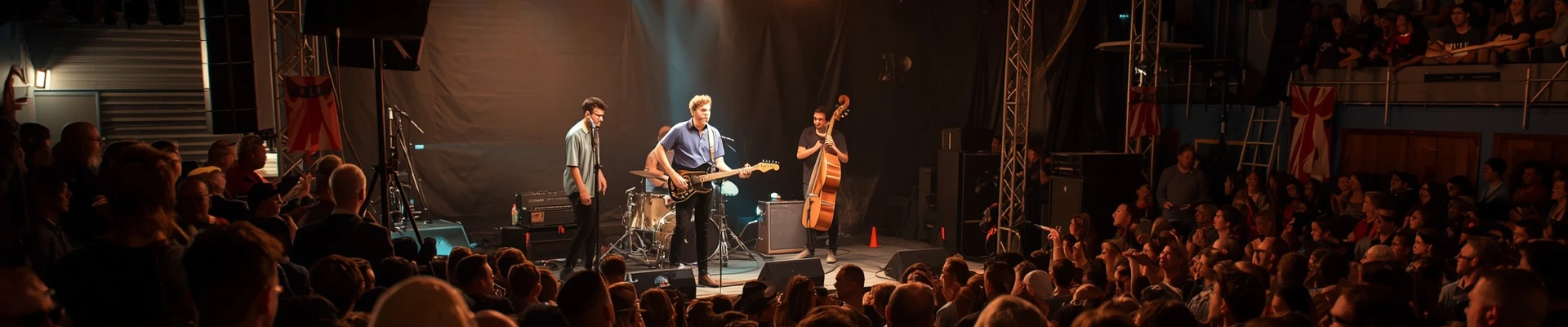
The club layer is centered on Chadbourne Street and the surrounding blocks of Downtown San Angelo, which anchor the live music bar scene. Venues like Blaine's Pub, Zentner's Daughter (the legendary steakhouse), and the cluster of bars along the downtown core have hosted decades of country, rock, and blues performers. The area around Angelo State University — particularly along Knickerbocker Road and the university district — sustains a younger bar and music scene oriented toward students. The Tejano club circuit runs through the south and west sides of the city, where community dance halls and Mexican restaurants with live music programming serve the Hispanic community.
Fort Concho National Historic Landmark — sixteen of the original fort buildings still standing in the heart of the city, adjacent to downtown — anchors the heritage and outdoor event circuit and provides a dramatic outdoor performance space for the city's major festivals.
Festivals and signature events
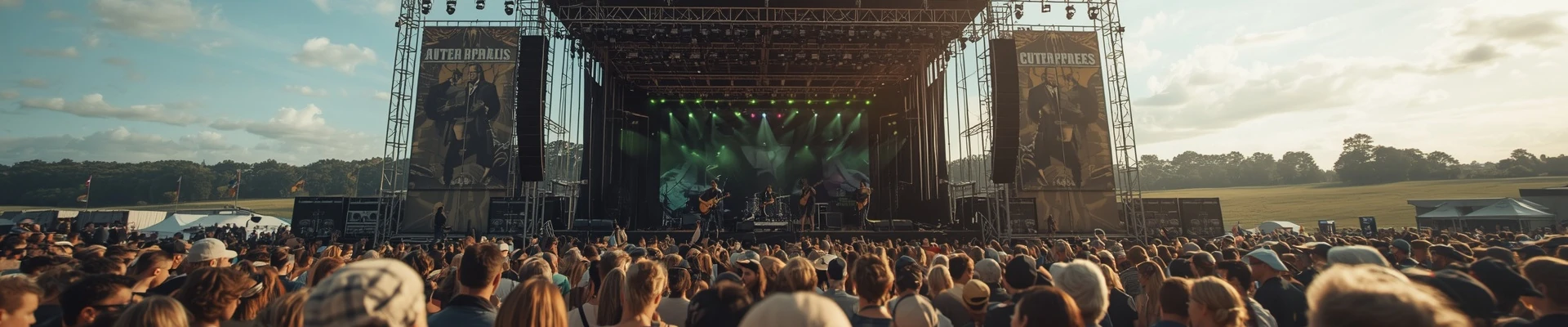
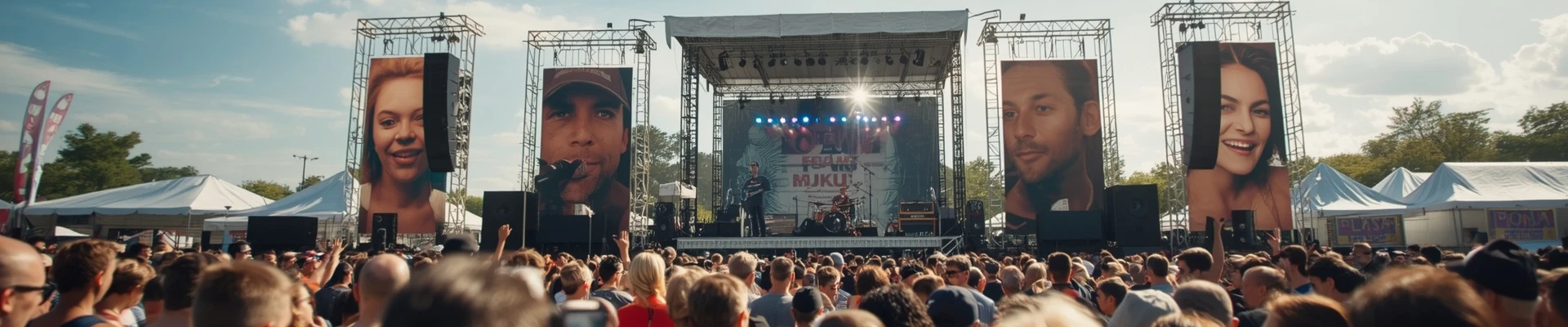
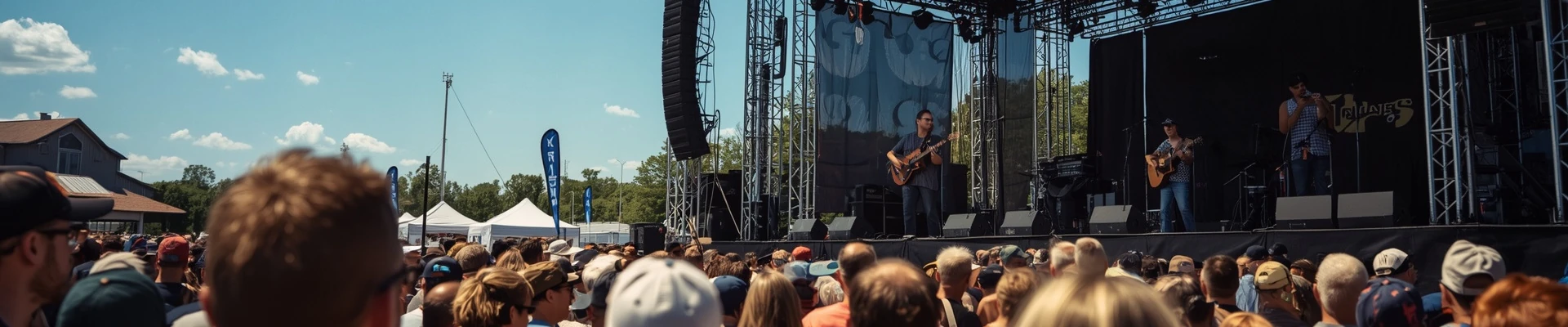
The city's signature event is San Angelo LIVE!, the outdoor music festival that has programmed a mix of country, rock, and Americana on the Concho River corridor. Christmas at Old Fort Concho — held annually in December at the historic fort — is one of the most beloved community events in West Texas, with tens of thousands of attendees over multiple weekends, live music across multiple stages, artisans, food, and living history. The San Angelo Rodeo (the San Angelo Stock Show and Rodeo, held at the Foster Communications Coliseum each February) is one of the oldest and largest rodeos in Texas and brings country and Texas music entertainment alongside the competition. The San Angelo Symphony programs classical and pops concerts at the San Angelo Performing Arts Center through the season.
The Fiesta del Concho, celebrating the city's Hispanic heritage and the Concho River setting, anchors the Tejano and regional Mexican music calendar alongside Cinco de Mayo events, Mexican Independence Day celebrations, and community festivals through the Rio Concho corridor. Angelo State University's homecoming, Rambelles Rodeo, and arts and music programming add a continuous campus event calendar through the academic year. The San Angelo Museum of Fine Arts programs cultural events, film, and occasional performance in the historic water pump station building on the Concho River.
What ties it all together
What defines San Angelo musically is the combination of West Texas country isolation and resilience — the honky-tonk tradition of a city that is the largest urban centre for a wide surrounding area, serving ranchers, oil-field workers, military personnel, and university students who all converge on the same clubs and dance halls — and the Tejano-country borderland quality of a city where Mexican-American and Anglo music traditions have coexisted and occasionally cross-pollinated for a century. San Angelo is not a city that has exported stars in bulk; it is a city that has sustained a local music ecosystem of genuine depth for its size, rooted in the land and the work and the long distances between places, and expressed through the country and Tejano and blues forms that have always spoken most directly to West Texas life. The Concho River trails, the Fort Concho parapets at Christmas, the Coliseum rodeo arena in February — these are the stages that have shaped what San Angelo sounds like.