

San Antonio is the second-largest city in Texas and the seventh-largest in the United States, with roughly 1.53 million residents inside the city limits and more than 2.6 million across the surrounding metropolitan area. Built around the springs at the head of the San Antonio River and the 18th-century Spanish missions of the San Antonio Missions National Historical Park (a UNESCO World Heritage site), it is the oldest major city in Texas and one of the most distinctly Mexican-American major cities in the United States. Roughly two-thirds of San Antonio's residents are Hispanic or Latino, the great majority of Mexican descent, and that demographic and cultural reality is the foundation of the city's musical identity. San Antonio is, more than any other place, the cradle of Tejano music — the South Texas Mexican-American genre that fused European accordion-and-bajo-sexto folk music with American country, blues, R&B, and rock and roll into something entirely its own.
A brief history
The springs at the head of the San Antonio River — known to the Payaya people as Yanaguana — were a meeting place for Indigenous peoples for thousands of years before Spanish missionaries and soldiers arrived in 1691 and established the Mission San Antonio de Valero (later known as the Alamo) in 1718. Five Spanish missions stretched south along the river, and the surrounding presidio and civilian settlement grew into the largest city in Spanish Texas. After Mexican independence in 1821, the Texas Revolution of 1835–36 (and the famous siege of the Alamo), and Texas's 1845 annexation to the United States, San Antonio remained the cultural capital of Mexican Texas — the place where Mexican, German, Czech, Polish, and Anglo-American settlers lived alongside one another for generations. The 19th-century arrival of German settlers brought accordion and brass-band traditions; Czech and Polish settlers brought polka; African-American migration from East Texas and the Deep South brought blues and gospel; and the long-standing Mexican and Mexican-American population brought corridos, rancheras, and the deep folk traditions of the Río Grande Valley. Through the 20th century, San Antonio's military bases (Fort Sam Houston, Lackland, Randolph, Brooks, and Kelly), the post-NAFTA expansion of the South Texas economy, and a steady stream of migration from Mexico and Central America have kept the city bilingual, working-class, and musically distinctive.
Music identity
The defining San Antonio musical innovation is conjunto — the Mexican-American accordion-and-bajo-sexto idiom that emerged in the late 19th and early 20th centuries when Mexican-American musicians took the German diatonic button accordion (introduced through Texas-German polka traditions) and fused it with the Mexican twelve-string bajo sexto, the tambora de rancho, and later the drum kit. Narciso Martínez of the Río Grande Valley, recording in the 1930s, is often called the father of conjunto. Santiago Jiménez Sr., born in San Antonio in 1913, helped center the genre in the city; his sons Flaco Jiménez and Santiago Jiménez Jr. carried the tradition into the international era, with Flaco winning multiple Grammy Awards and collaborating with everyone from Doug Sahm and Ry Cooder to the Rolling Stones. Valerio Longoria, Tony de la Rosa, Esteban "Steve" Jordan ("the Jimi Hendrix of the accordion"), Mingo Saldívar, and a dense lineage of San Antonio conjunto masters built the canon over the next half-century.
Running parallel to conjunto, the orquesta tejana tradition — big-band Mexican-American dance music descended from the Mexican orquesta típica and the swing-era American big band — produced Beto Villa, Isidro López, and the orchestras that filled San Antonio dance halls through the 1940s, 1950s, and 1960s. The fusion of conjunto, orquesta, and American R&B, country, and rock and roll became, by the 1970s and 1980s, the modern Tejano genre — the Spanish-language pop and dance music of South Texas. Little Joe y La Familia, Sunny & the Sunliners (Sunny Ozuna's "Talk to Me" remains a cornerstone of the West Side Sound), Ruben Ramos, Roberto Pulido, La Mafia, Mazz, David Lee Garza, Emilio Navaira, Jay Perez, Selena, and Ramón Ayala all built careers that ran through San Antonio's dance halls, ballrooms, and recording studios. The annual Tejano Music Awards (founded 1980 in San Antonio) and the Tejano Conjunto Festival (founded 1981 by the Guadalupe Cultural Arts Center) remain the genre's central institutions; San Antonio's KXTN "Tejano 107.5" has been one of the most influential Spanish-language radio stations in the United States.
San Antonio's contribution to non-Tejano American music is also remarkable. Doug Sahm, born in San Antonio in 1941, was a child prodigy who recorded with Hank Williams and went on to lead the Sir Douglas Quintet ("She's About a Mover," "Mendocino"), the Texas Tornados with Flaco Jiménez, Augie Meyers, and Freddy Fender, and decades of solo records that made him one of the foundational figures of roots rock, Tex-Mex rock and roll, and the cosmic American music of the 1960s and 1970s. Augie Meyers, his Vox Continental–playing collaborator, was equally central. The 1960s West Side Sound — a soul-doo wop-R&B style sung by Mexican-American teenagers in Spanish and English — produced Sunny & the Sunliners, the Royal Jesters, the Dell-Kings, Rene & Rene, and a vibrant local 45-rpm scene. Steve Earle, raised in Schertz outside San Antonio, came up through the city's folk and country circuit before moving to Nashville. Christopher Cross ("Sailing") is a San Antonio native and product of the city's pop-rock scene. George Strait, while based in nearby Cibolo and recording in Nashville, calls San Antonio home and headlined the AT&T Center's farewell concerts. Selena, though Corpus Christi–based, recorded extensively in San Antonio and made the Astrodome's annual Houston Rodeo concerts and her Texas tour stops central to her career.
San Antonio's rock, punk, and metal scenes are more locally famous but no less deep. The 1980s and 1990s produced bands like Butthole Surfers (formed at Trinity University in San Antonio), Pain Teens, Sons of Hercules, and a thriving punk and hardcore scene around clubs like Taco Land. Hip-hop has its own San Antonio lineage through South Park Mexican (raised in nearby Houston but with deep San Antonio ties), Frost (briefly San Antonio-based), Rob G, Worldwide, and a current generation of regional Mexican rappers and corridos tumbados artists. Latin urban, reggaeton, trap en español, and regional Mexican music — including a major norteño and banda scene — fill the city's clubs, dance halls, and arenas alongside the Tejano tradition.
Venues and neighborhoods
San Antonio's venue ecosystem reflects the city's range. At the top sit the Frost Bank Center (formerly the AT&T Center, home of the San Antonio Spurs and the city's largest concerts), the Alamodome, the Tobin Center for the Performing Arts (home of the San Antonio Symphony's successors and the San Antonio Opera), the Majestic Theatre, the Aztec Theatre, the Empire Theatre, the Lila Cockrell Theatre in the convention center, and the Whitewater Amphitheater in nearby New Braunfels. The midsize tier includes the Boeing Center at Tech Port, Stable Hall at Pearl, Sunken Garden Theater in Brackenridge Park, the Vibes Event Center, and the Espee at St. Paul Square. Beneath them is a deep club layer — Paper Tiger on St. Mary's Strip, Hi-Tones, Lonesome Rose, Sam's Burger Joint, the 502 Bar, the Squeezebox, Limelight, Faust Tavern, the Mix, Jazz, TX at the Pearl, the Cherrity Bar, and a dense network of dance halls, ice houses, and bars across the West, South, and East Sides. Conjunto and Tejano music have homes at the Guadalupe Theater (home of the Guadalupe Cultural Arts Center and the Tejano Conjunto Festival), Rosedale Park for the festival itself, and a long lineage of West Side dance halls, including the historic Lerma's Nite Club (which closed in 2010 but remains a touchstone of the genre).
Different neighborhoods carry different musical identities. The West Side — Prospect Hill, Westwood, and the historic Mexican-American neighborhoods west of downtown — is the heart of conjunto, Tejano, and the West Side Sound. The South Side anchors a deep regional Mexican, banda, and norteño scene alongside the city's African-American gospel and blues traditions. The East Side, historically the heart of Black San Antonio, sustains gospel, blues, R&B, and the city's jazz tradition through churches and venues like the Carver Community Cultural Center. Downtown, Southtown, and the St. Mary's Strip anchor the indie rock, punk, and DIY scenes. The Pearl, on the north side of downtown along the river, has emerged in the last decade as a high-end music and dining district through Stable Hall, Jazz, TX, and the Tobin Center. Government Hill, Beacon Hill, and the Deco District along Fredericksburg Road support smaller indie and punk venues.
Festivals and signature events
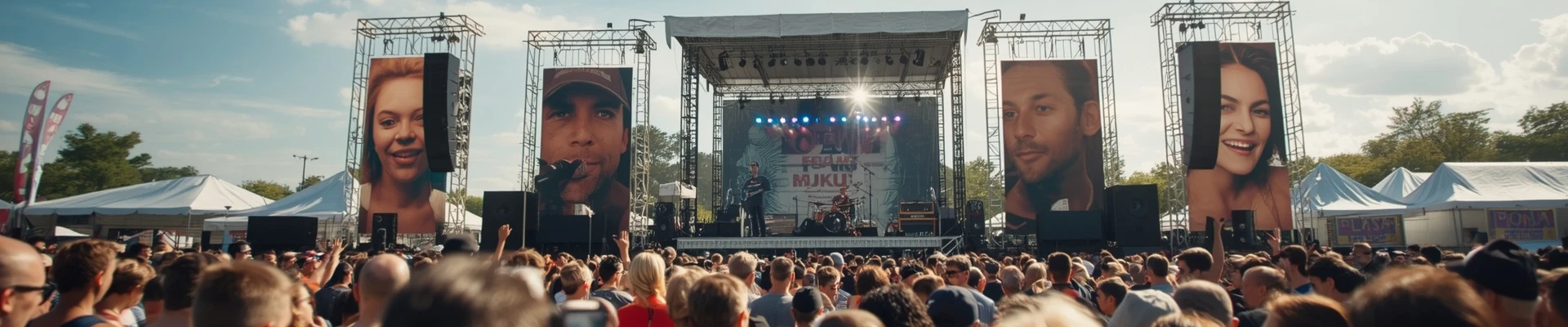
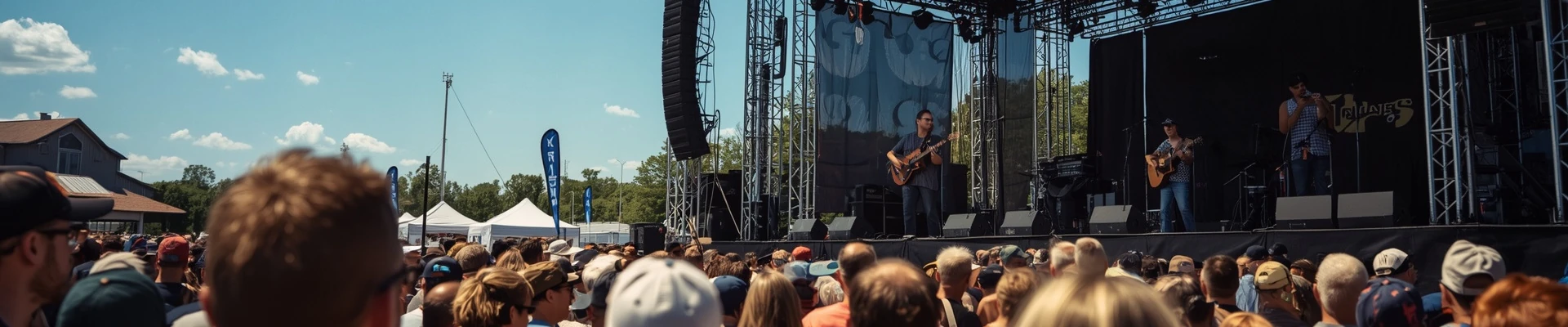
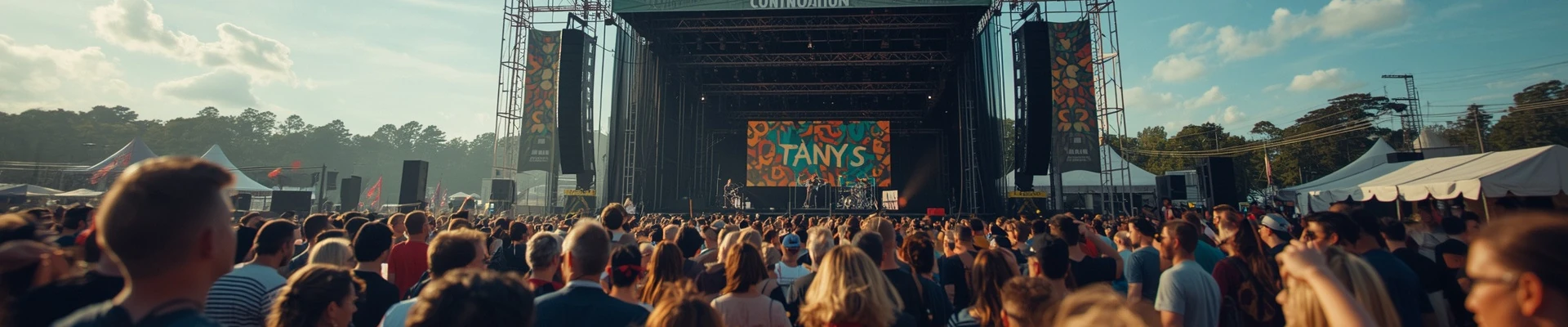
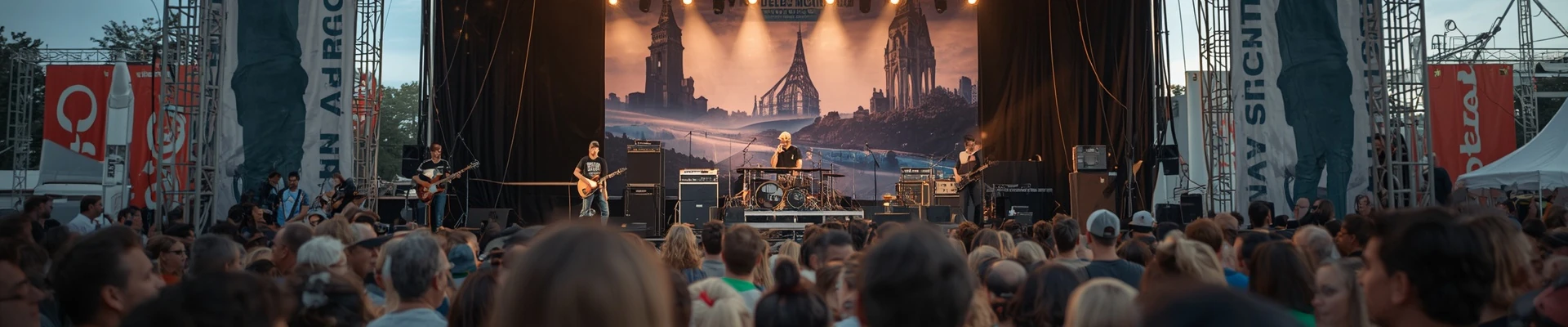
The festival calendar is anchored by Tejano and conjunto traditions. The Tejano Conjunto Festival at Rosedale Park, founded in 1981 by the Guadalupe Cultural Arts Center, is the oldest and most important conjunto festival in the world. The Tejano Music Awards Fan Fair at the Alamodome draws hundreds of thousands of Tejano fans each spring. Fiesta San Antonio, an 11-day citywide celebration each April that began in 1891, is one of the largest civic festivals in the United States, with parades, river floats, and music programming that runs from Tejano and conjunto to country, rock, and pop across dozens of stages. Maverick Music Festival at La Villita (and its various successors), NIOSA (A Night in Old San Antonio) during Fiesta, Día de los Muertos at Hemisfair and Muertos Fest, Diez y Seis for Mexican Independence Day, Cinco de Mayo programming, and Fiestas Patrias keep the Tejano and Latin calendar full. The San Antonio Stock Show & Rodeo at the Frost Bank Center each February draws major country, Tejano, and Latin acts over three weeks. Sound Cream Airwaves, Tobin Center's Riverwalk Sessions, Jazz, SA at Travis Park, and the Guadalupe Cultural Arts Center's year-round programming add jazz, Latin, and global music. Pride San Antonio, Juneteenth in San Antonio, and the Martin Luther King Jr. March (one of the largest in the country) add cultural and community programming.
What ties it all together is the city's deeply Mexican-American identity, its dance hall culture, and its position at the crossroads of South Texas, Northern Mexico, and the wider American South. San Antonio is the city where the German accordion was reinvented as a Mexican-American instrument, where Tejano was given its name and its institutions, where the West Side Sound bent doo-wop and soul through Spanish-English bilingual teenagers, and where conjunto and Tejano remain everyday music — playing on car radios, in restaurants, at quinceañeras, and at one of the world's great civic festivals every spring.