
Waco is a mid-sized city in Central Texas, the seat of McLennan County, with roughly 132,000 residents and a metropolitan area of around 270,000 spread across the Brazos River valley. It sits at the geographic crossroads of Texas — almost exactly halfway between Dallas (95 miles northeast) and Austin (100 miles south) on Interstate 35, the corridor that links Texas's major cities and has shaped the state's cultural and commercial bloodstream since the highway replaced the old Chisholm Trail. The Brazos River bends through downtown, and the Balcones Escarpment — where the Hill Country limestone meets the Blackland Prairie — marks Waco's western edge. Baylor University, one of the largest Baptist universities in the world, anchors the northern side of downtown and shapes the city's character, population, and cultural calendar in ways that permeate everything from the live music scene to local attitudes about alcohol licensing. Waco is also the home of Magnolia Market at the Silos — the retail empire of Chip and Joanna Gaines from the HGTV series Fixer Upper — which has transformed the city into an unlikely tourist destination drawing millions of visitors annually since 2016.
A brief history
The Waco area was home to the Waco (Huaco) people, a Wichita-speaking tribe who maintained a permanent village near the confluence of the Bosque and Brazos rivers. The Republic of Texas established a trading post called Fort Fisher near the site in 1837. The city of Waco was formally platted in 1849, and the completion of a suspension bridge across the Brazos in 1870 — then the longest single-span suspension bridge in the United States — made Waco the crucial crossing point on the Chisholm Trail, the great cattle drive route from South Texas to the Kansas railheads. For a generation, millions of longhorn cattle crossed that bridge and the surrounding economy boomed.
By the 1880s and 1890s Waco had earned the nickname "Six-Shooter Junction" for its rough-and-ready commerce district, but it was also developing into a regional educational and Baptist ecclesiastical centre with Baylor University (relocated to Waco in 1886) as its crown institution. Cotton agriculture and the railroad sustained Waco through the early 20th century. The city suffered one of the worst racial atrocities of the Jim Crow era in 1916 when Jesse Washington, a Black farmhand convicted of murder under a coerced confession, was burned alive in front of the city hall in an act of mob violence that drew national attention and helped galvanize the NAACP. The 1953 Waco tornado — one of the deadliest in U.S. history, killing 114 people — leveled much of downtown and triggered a wholesale urban renewal effort that reshaped the city's core. The 1993 Branch Davidian siege at the Mount Carmel Center outside the city put Waco in global headlines again and left a complicated civic memory.
Through these upheavals, the city's music life quietly persisted — fed by its highway position, its Black community along Valley Mills Drive and the East Waco corridor, its dance halls on the rural roads out of town, and its university students looking for entertainment.
Music identity
Waco's most direct claim on popular music history runs through Buddy Holly — not a Waco native (Holly was born in Lubbock), but a figure whose formative touring experience took him through Waco repeatedly in the mid-1950s as he drove the I-35 corridor between Lubbock and Dallas. The Waco audiences who heard Holly play the Heart O'Texas Coliseum in 1957 and 1958 were among the last Texas crowds to catch him before his career went national. More importantly, Waco's position on that same highway corridor made it a mandatory tour stop for virtually every Texas artist from Bob Wills's era through the contemporary alt-country wave. The discipline of playing Waco — mid-size, mid-state, mid-budget — shaped countless artists in ways the music press rarely credits.
The city's genuine musical output is rooted in country, roots rock, and outlaw-adjacent Americana. Slobberbone — the gravelly, emotionally bruising alt-country band formed in Denton but whose orbit constantly intersected with Waco venues and musicians — stands as the canonical example of the hard-driving Central Texas roots sound that Waco audiences sustained through the 1990s. Slobberbone frontman Brent Best drew deeply on Texas roadhouse aesthetics, and Waco's Scruffy Murphy's and the Backyard were key nodes in the circuit that band and its peers worked.
More recently, Midland — the retro country trio whose slick 1970s-throwback aesthetic and 2017 breakthrough single "Drinkin' Problem" earned them Grammy nominations — emerged from the Central Texas circuit with strong Waco area ties. Lead singer Mark Wystrach came up through the Texas country scene that used Waco as a regional hub, and the band's aesthetic sensibility (honky-tonk traditionalism delivered with a rock band's discipline) reflects exactly the hybrid sensibility that Central Texas dance hall culture produces.
Brave Combo — the Denton-based polka-salsa-cumbia collective that has made a career of genre-blending absurdism — has played Waco so frequently over the decades that they are essentially honorary local fixtures. Their willingness to play any room anywhere in Texas kept them in front of Waco audiences from the 1980s through the present.
The Baylor University music programs — including the Baylor University School of Music and the Diana R. Garland School of Social Work — produce a steady flow of classically and jazz-trained musicians who either stay in Waco or feed into the Texas performing arts ecosystem. The Baylor Symphony Orchestra and the Baylor Jazz Ensemble are the most visible institutional expressions of this pipeline.
The city also has a documented blues and gospel tradition rooted in East Waco's Black community. The Doris Miller Memorial Auditorium and the entertainment venues along LaSalle Avenue and Elm Street hosted African American touring artists throughout the segregation era, and local gospel choirs connected to Greater Mount Zion Baptist Church and other East Waco congregations have maintained that heritage into the present. Syl Johnson, the Chicago soul and blues singer, had Waco-area family connections and passed through the city on tour circuits during his peak years in the 1960s and 1970s.
Venues and neighborhoods
The Waco Hippodrome Theatre — a restored 1914 vaudeville house on Austin Avenue downtown — is Waco's flagship performing arts venue, hosting concerts, theatrical productions, and touring shows in a 1,100-seat setting with genuine historic character. The Backyard on Franklin Avenue was for years the city's go-to club for rock and alt-country, though it has operated under varying names and incarnations. Scruffy Murphy's served as the Irish pub anchor of the downtown bar district through the 2000s.
The Heart O'Texas Coliseum and Fairgrounds complex on Bosque Boulevard is the city's large-capacity venue — a 7,500-seat arena used for rodeos, fairs, and major touring country acts. The Waco Convention Center handles convention-scale performances and is the home of the annual Waco Cultural Arts Fest. Balcones Distilling, the craft whiskey operation housed in a converted downtown industrial building, has hosted live music events drawing on the brewery/distillery-as-venue model that has proliferated across Texas mid-cities since the mid-2010s.
The downtown corridor centered on Austin Avenue and Fifth Street is the hub of Waco's bar and music scene, with activity radiating outward toward the Baylor campus to the north and the Bridge Street district near the historic suspension bridge. East Waco — historically the city's African American neighborhood, now increasingly mixed as gentrification pressure moves outward from downtown — contains older entertainment infrastructure that once hosted the Black touring circuit and now sustains a handful of blues and gospel venues.
The area around Magnolia Market at the Silos has generated secondary retail and food/beverage activity — including rooftop bars and performance spaces — that didn't exist before 2016 and now draws tourist traffic that occasionally intersects with the music calendar.
Festivals and signature events
The Heart O'Texas Fair and Rodeo — held annually in October at the Heart O'Texas Coliseum — is the city's biggest recurring event, drawing roughly 150,000 visitors and featuring nightly country music headliners. Past performers have included Miranda Lambert, Thomas Rhett, Cody Johnson, and Parker McCollum. It is the largest fair in Central Texas outside of Houston and Dallas and represents Waco's most consistent pipeline for major touring country acts.
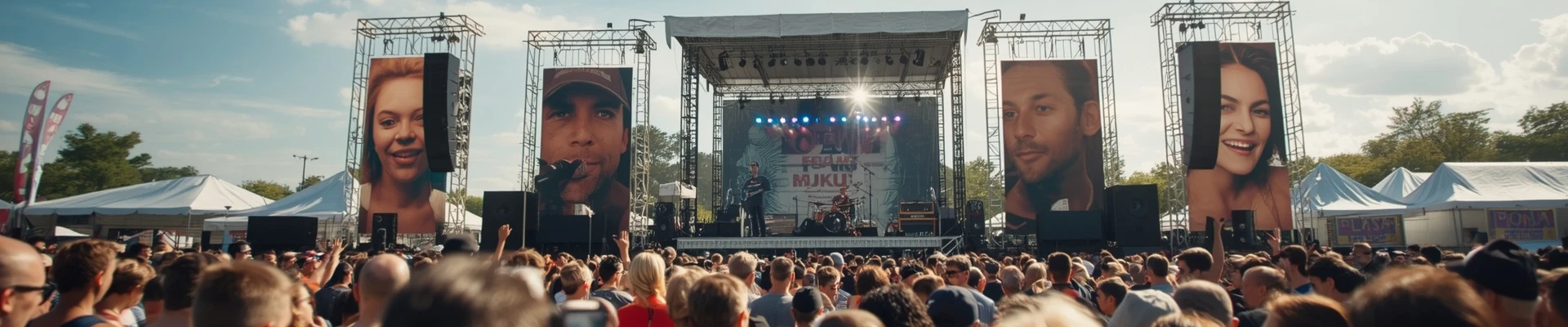
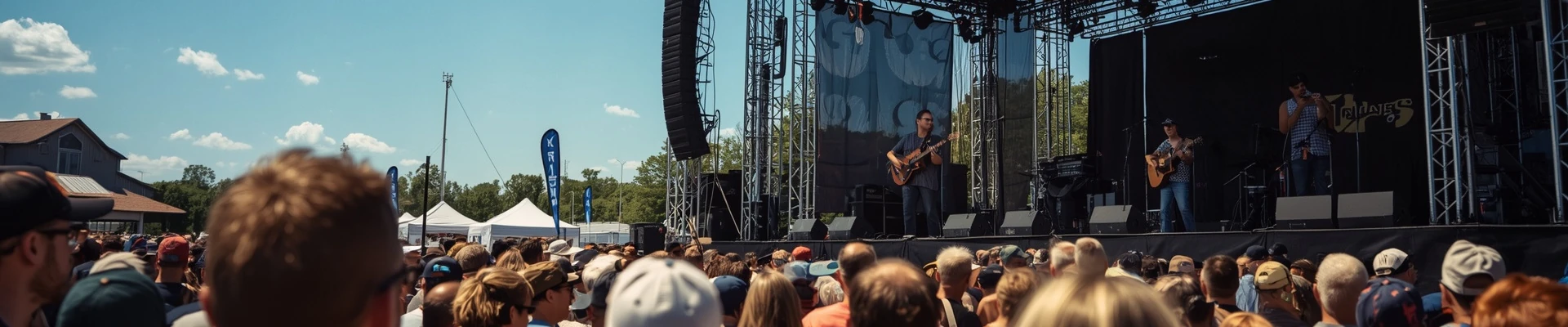
Wacky Waco Music Fest has served as a spring music festival gathering local and regional acts across multiple downtown venues in a club-crawl format similar to SXSW's unofficial showcase model. The Brazos Nights concert series runs summer shows along the riverfront. The Baylor Homecoming Concert — traditionally held in October during Baylor's homecoming weekend — draws national touring acts (primarily country and pop) capable of filling the Ferrell Center arena.
The Suspension Bridge Ceremony — an annual holiday event commemorating the 1870 bridge opening — incorporates outdoor performance and community music. The Waco Cultural Arts Fest is a late-spring outdoor event showcasing visual art alongside live music with a Central Texas roots emphasis.
What ties it all together
Waco is a highway city, and its music identity is inseparable from that fact. Interstate 35 made Waco a mandatory stop between Dallas and Austin — a rest point, a touring node, a place where musicians played to audiences who'd heard everything coming up from Austin and everything filtering down from Dallas. That pressure-cooker position produced a crowd with real ears and real expectations. The result is a city whose venues have hosted everyone from Bob Wills to Waylon Jennings to Slobberbone to Midland, and whose musical personality sits precisely at the intersection of country hardwood, outlaw grit, and Baptist restraint that defines the Central Texas corridor between the Hill Country and the Blackland Prairie. Waco will never be Austin. It doesn't need to be. It is exactly and specifically itself: a river city on the Brazos, twelve miles of highway from nowhere, three chords and a cloud of dust.