
Arlington, Virginia is not a city in the strict legal sense — it is an independent county and one of only two counties in the United States with no incorporated municipalities within its borders. But in every practical sense it is one of the most densely urban, transit-rich, and culturally layered communities on the East Coast. With roughly 238,000 residents packed into 67 square kilometres of land on the western bank of the Potomac River, directly opposite Washington D.C., Arlington functions as the capital region's most walkable and cosmopolitan suburb — and a city in all but name. The county seat sits along the Orange Line of the Washington Metro, and Metro stations have catalysed intense urban development in corridors like Rosslyn–Ballston, Clarendon, Virginia Square, Court House, and Pentagon City. Arlington is home to the Pentagon, Reagan National Airport, the Iwo Jima Memorial, and the United States Air Force Memorial. Its economy is driven by federal contracting, defence, technology, and consulting firms that crowd the gleaming towers of Crystal City and Pentagon City — an economic base that has made Arlington one of the wealthiest and most educated jurisdictions in the United States while also sustaining a remarkably vibrant arts and music culture.
A brief history
Before European settlement, the area was inhabited by the Doeg (Dogue) people, an Algonquian-speaking group. European colonists established tobacco plantations along the Potomac by the 17th century, and the land that is now Arlington was part of Fairfax County. In 1790, a ten-mile square was carved out to create the District of Columbia, and Arlington (then called Alexandria County) was included in the original federal district. In 1846, the Virginia portion was retroceded back to Virginia — separating what is now Arlington from the city of Alexandria. The county was renamed Arlington in 1920, taking its name from Arlington House, the estate of Robert E. Lee that overlooks the Potomac. During the Civil War, Union forces occupied Arlington immediately, and the grounds of Arlington House became Arlington National Cemetery, which remains one of the most visited sites in the region. The 20th century brought rapid suburbanisation, the construction of the Pentagon (1943), the expansion of the federal workforce, and then the Metro-driven urban intensification that began in the 1970s and accelerated through the 1990s and 2000s. Today, Arlington is a model of transit-oriented development, with some of the highest residential densities outside of Manhattan anywhere in the continental United States.
Music identity
Arlington's music scene is inseparable from the broader Washington D.C.–Baltimore corridor, one of the most musically fertile regions in America. The D.C. metro area gave the world go-go (the percussion-driven funk hybrid pioneered by Chuck Brown, Rare Essence, Trouble Funk, and Experience Unlimited), D.C. hardcore (the scene that grew from Dischord Records and bands like Minor Threat, Bad Brains, Fugazi, Rites of Spring, and Government Issue), and a long tradition of jazz, R&B, soul, and funk tied to the city's Black community. Arlington has been a resident and launching pad for artists across this spectrum.
The most internationally significant musical connection to Arlington is Dischord Records, the fiercely independent punk and hardcore label founded in 1980 by Ian MacKaye and Jeff Nelson while they were members of the Teen Idles (and later Minor Threat). Dischord was run out of a house in Arlington's Clarendon neighbourhood and defined the ethics and aesthetics of what became known as straight edge hardcore. Ian MacKaye — who went on to form Fugazi, one of the most influential independent rock bands of the 1990s — grew up in D.C. but Arlington's Dischord house was the nerve centre of a movement that spread from the basements and rec centres of the D.C. suburbs to every continent. Bands including Embrace, Rites of Spring, Dag Nasty, Shudder to Think, Jawbox, Lungfish, Unrest, and Burning Airlines were all part of the Dischord/D.C. indie ecosystem with roots or operations in Arlington and Northern Virginia.
Beyond the hardcore lineage, Arlington has produced or sheltered an eclectic roster of artists. Dave Grohl — frontman of Foo Fighters and former drummer of Nirvana — grew up in Springfield, Virginia, a close suburb, and attended Thomas Jefferson High School in nearby Fairfax; his Northern Virginia formation is part of what makes Arlington County's extended music culture a legitimate claim to one of rock's most consequential figures. Mary Timony of Helium and Ex Hex, one of the essential voices of 1990s indie rock, spent formative years in the D.C.–Arlington orbit. Wale, the Washington D.C. rapper who blended go-go rhythms with contemporary hip-hop and signed to Maybach Music Group (Rick Ross's imprint), built his fanbase across the D.C.–Arlington corridor. Shirley Horn, the legendary jazz vocalist and pianist, was based in D.C. and performed extensively in the Arlington–D.C. circuit. Nils Lofgren, the guitarist and songwriter who has been a member of Bruce Springsteen's E Street Band since 1984, was raised in Bethesda, Maryland, and performed extensively across the Arlington–D.C. area in his formative years.
The county has also been a significant home for Latin music. Arlington's large and established Central American immigrant population — particularly from El Salvador, Guatemala, and Honduras — has sustained a vibrant cumbia, salsa, merengue, and Latin pop scene, especially in the Columbia Pike corridor (sometimes called the city's most diverse street). The Columbia Pike strip, running southwest through Arlington, is lined with Latin American restaurants, nightclubs, and social venues that sustain active music cultures. The Salvadoran community in Arlington and the adjacent Northern Virginia suburbs is one of the largest and most established in the United States, and cumbia nights, marimba festivals, and Latin live-music programming are a regular feature of Columbia Pike's cultural calendar.
Venues and neighbourhoods
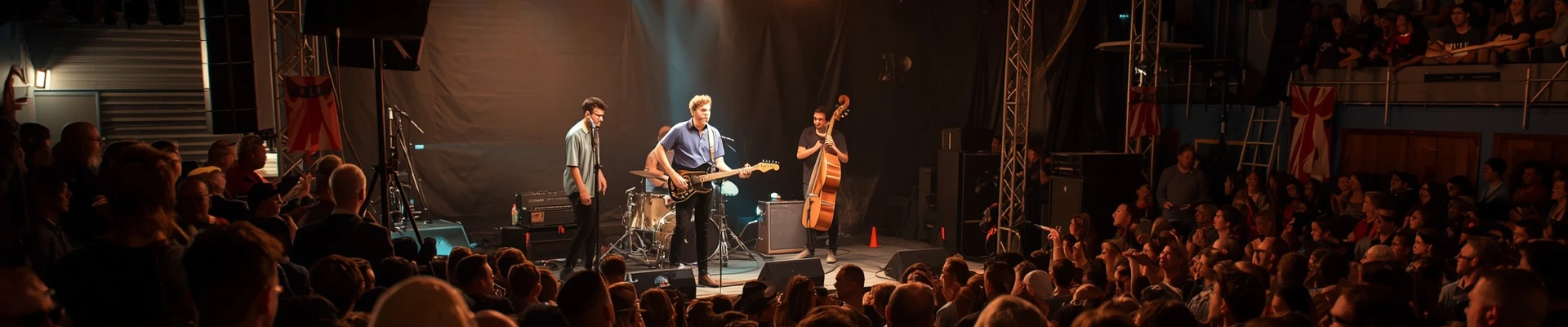
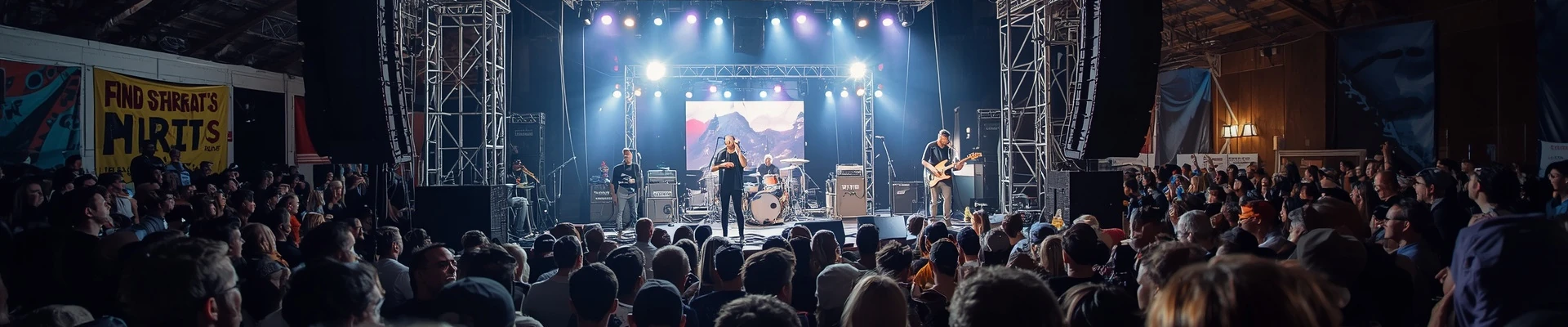
The Clarendon–Wilson Boulevard corridor was historically the heart of Arlington's live music scene and remains its entertainment spine. Iota Club and Café on Wilson Boulevard was for decades the most beloved small venue in Northern Virginia — a no-frills roots music room that hosted John Mayer in his pre-fame years, Ryan Adams, countless Americana, folk, indie rock, and singer-songwriter acts, and local bands seven nights a week. Iota closed in 2017 when its building was redeveloped, a loss mourned across the regional music community. Galaxy Hut, a tiny bar on Wilson Boulevard, became a beloved indie and alternative music room through the 1990s and 2000s, known for its eclectic bookings and fiercely independent spirit. The Ballroom at Clarendon (the former Clarendon Ballroom) is a larger mid-size space that has anchored the nightlife corridor.
Rosslyn — the cluster of office towers at the northern tip of Arlington directly across Key Bridge from Georgetown — has the Rosslyn Jazz Festival, an annual outdoor event held in Gateway Park that draws national jazz acts. The National Landing district (the rebranded Crystal City/Pentagon City corridor) has seen recent investment in entertainment venues as part of Amazon HQ2 development, which is transforming this part of Arlington into a new tech hub with attendant cultural programming.
The Columbia Pike corridor is Arlington's most culturally diverse strip, with Latin American music venues, cumbia and salsa nights, and community cultural events sustained by the Central American diaspora communities. The SIGNATURE THEATRE in Shirlington — a major regional professional theatre — programs musicals that have launched Broadway transfers and sustains a dedicated performing arts audience in the county's southern end.
Virginia Square is home to the GMU Arlington Campus and various arts programming tied to George Mason University, which has a main campus in nearby Fairfax and an Arlington presence that feeds arts and performance activity. The American Legion Post 139 in Nauck, Arlington's historically Black neighbourhood, has been a longtime anchor for community music and cultural events.
Festivals and events
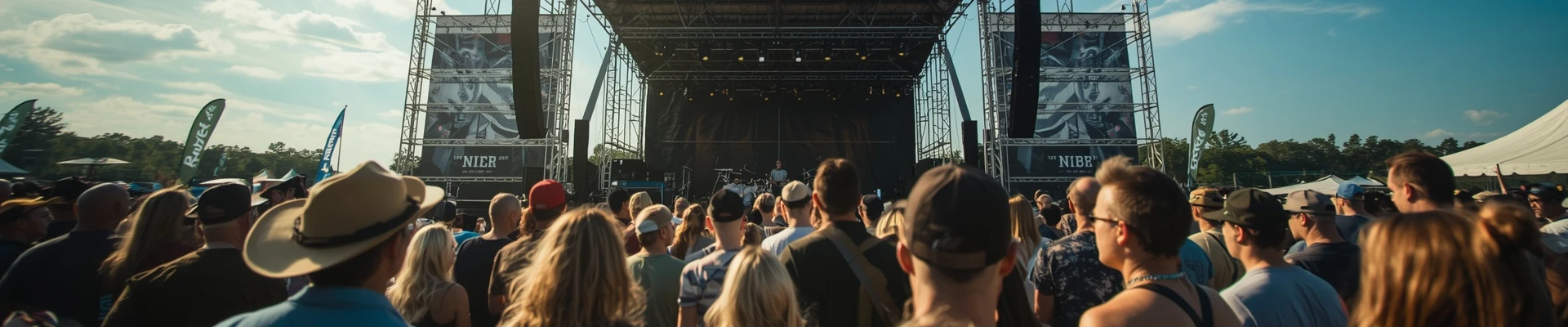
The Rosslyn Jazz Festival — held annually at Gateway Park in Rosslyn since 1992 — is the county's signature outdoor music event, drawing 10,000–15,000 attendees for a lineup of national and regional jazz, blues, and R&B artists against the backdrop of the Potomac and the D.C. skyline. The Columbia Pike Blues Festival, held on Columbia Pike, celebrates blues and roots music while anchoring the revitalisation efforts along that corridor. Cherrydale Day, the Shirlington Village Arts Fest, and various neighbourhood festivals program live music as a community staple throughout Arlington's summer calendar. The proximity to Wolf Trap National Park for the Performing Arts — a National Park Service-run outdoor amphitheatre in nearby Vienna, Virginia — brings internationally touring acts within easy distance of Arlington residents.
Jammin' Java in nearby Vienna, a listening-room-style venue, is regularly cited by touring singer-songwriters as one of the best small rooms in the region, and it feeds the broader culture of attentive, seated live music that Arlington audiences have long appreciated. The broader D.C. metro festival calendar — including Landmark Music Festival on the National Mall, AFROPUNK D.C., and Broccoli City Festival — draws heavily from Arlington County residents.
Neighbourhoods and community anchors
Clarendon is the cultural and nightlife heart — dense, walkable, lined with bars, restaurants, and former live music rooms. Rosslyn is the gateway between Arlington and Georgetown, a high-rise office district that softens at its riverfront edges with parks and festival space. Ballston anchors the western end of the transit corridor and has seen rapid residential growth. Crystal City and Pentagon City are the commercial and federal hub. Columbia Pike is the most diverse and community-rooted strip. Nauck (also called Green Valley) is Arlington's oldest and most historically significant Black neighbourhood, where community music and cultural events have deep roots. Lyon Village, Cherrydale, Bluemont, and Barcroft are established residential neighbourhoods with active community associations that program neighbourhood-scale arts and music.
The Arlington Arts Center, housed in a converted 1910 school building in Westover, provides gallery and performance space for local artists and acts as one of the county's civic anchors for the visual and performing arts.
What ties it all together
Arlington's musical identity is not built around a single scene or sound — it is built around proximity and density. It sits at the centre of one of the most educated, globally connected, and politically engaged metropolitan areas in the world, and that context shapes what its artists make and what its audiences demand. The hardcore ethics of Dischord — independent, uncompromising, community-built — echo through Arlington's stubborn support for small rooms and independent venues even as development pressure has claimed several of them. The Latin music corridors of Columbia Pike reflect the lived reality of a county where a third of residents are foreign-born and the cumbia beat competing with go-go rhythms on a Friday night is not a curiosity but a fact of life. From Ian MacKaye's straight-edge manifesto to the Rosslyn Jazz Festival's view of the Capitol dome, Arlington is a place where music carries weight precisely because everything else here — the Pentagon, the national cemetery, the machinery of government — carries so much of its own.