
Hampton is an independent city on the Virginia Peninsula, occupying the southeastern tip of land between the Hampton Roads harbor and the Chesapeake Bay, with roughly 137,000 residents and a position at the heart of one of the densest military and aerospace concentrations on the East Coast. Hampton sits within the Hampton Roads Metropolitan Statistical Area alongside Norfolk, Virginia Beach, Newport News, Chesapeake, Portsmouth, and Suffolk — a connected urban region of nearly 1.8 million people bound by water, bridges, tunnels, and the singular cultural identity that locals call the 757, after the area code that covers the entire metro. The city's terrain is shaped by tidal creeks, bay shoreline, and the wide mouth of the Hampton River meeting the harbor; bridges, overpasses, and causeways stitch Hampton to its neighbors across the water. NASA's Langley Research Center — the oldest of the American aeronautics laboratories, established in 1917 — sits entirely within Hampton and has been the research home of some of the most consequential aerospace work in history, including early supersonic flight research, wind tunnel engineering, and the training ground for America's first astronaut corps, the Mercury Seven.
A brief history
Hampton holds a uniquely layered claim as one of the earliest sites of English-speaking settlement in North America. Point Comfort — the tip of land at what is now Fort Monroe — was a landing point as early as 1607, the same year as Jamestown. Hampton itself was officially established as a town in 1610, making it the oldest continuously English-speaking municipality in the United States by most accounts. The land was home to the Kecoughtan people of the Powhatan Confederacy before English arrival, and the erasure and displacement of those communities through the early 17th century shaped the colonial landscape of the entire Peninsula.
The city's history is also central to the story of African American freedom in the South. In August 1619, the first documented Africans in English North America arrived at Point Comfort aboard the ship White Lion — a moment now recognized as a founding event in the history of African American life on this continent. And in May 1861, three enslaved men — Frank Baker, Shepard Mallory, and James Townsend — escaped to Fort Monroe (then a Union-held installation) and persuaded General Benjamin Butler to refuse their return under the Fugitive Slave Act by designating them "contraband of war." Word spread immediately, and within weeks hundreds and then thousands of enslaved people flooded to the fort seeking freedom, establishing what became known as the Grand Contraband Camp and laying the foundation for the Hampton Normal and Agricultural Institute — today's Hampton University, founded in 1868, one of the historically Black universities that shaped Black intellectual and artistic life in America for generations.
The Civil War largely destroyed the town of Hampton itself — residents burned it rather than let it fall intact to Union forces — but Fort Monroe remained a Union stronghold, and the post-war reconstruction produced a different Hampton: a city with a strong Black community, Hampton Institute at its center, and a harbor economy of fishing, oystering, and trade. Through the 20th century, Hampton grew with the expansion of the military and aerospace complexes — Langley Air Force Base (now Joint Base Langley-Eustis) established in 1917 and NASA Langley arrived in the same year, transforming the city into a center of engineering and defense contracting that still defines its economic character today.
Music identity
Hampton's music identity cannot be fully separated from the broader 757 sound — the regional musical culture that produced Missy Elliott, Timbaland, Pharrell Williams, Pusha T, Clipse, Teddy Riley, and a lineage of R&B, hip-hop, and gospel artists who together constitute one of the most disproportionately influential regional music scenes in American history. While Virginia Beach, Portsmouth, and Norfolk are the primary home cities of many of those figures, Hampton is woven into the same social and geographic fabric — the same schools, the same venues, the same radio stations, the same neighborhood networks — and the city's own musical contributions, particularly in gospel, R&B, and jazz, are deep and serious.
Hampton University has been the gravitational center of music education and Black artistic culture in the region for more than 150 years. The Hampton University Choir — one of the historically celebrated choral ensembles in American higher education — has performed for presidents, toured internationally, and sustained a tradition of sacred and classical choral music that directly shaped the gospel and R&B traditions of the wider region. The annual Hampton Jazz Festival, held each summer at the Hampton Coliseum since 1968, is one of the longest-running and most respected jazz festivals in the country — artists including Miles Davis, Ella Fitzgerald, B.B. King, Stevie Wonder, Lionel Hampton (no relation), Al Jarreau, Earth, Wind & Fire, Anita Baker, and Patti LaBelle have performed across its decades. For many Hampton Roads residents, the Jazz Festival is a summer institution as fundamental as the beach.
R&B and soul have deep roots in Hampton's Black community. The city's churches — and Hampton University's chapel tradition — produced generations of singers trained in gospel who moved into secular R&B and pop. The 757's new jack swing era of the late 1980s and early 1990s, driven by producer Teddy Riley (who grew up in Harlem but built his sound partially through his connections to the Virginia Beach–Hampton Roads circuit), created a template for urban pop production that artists across the region absorbed and built on. DeVante Swing of Jodeci — one of the defining vocal groups of the early 1990s — grew up in Charlotte but the group's Virginia connections ran through the 757 network. Hampton's own R&B scene operated through clubs, school talent shows, and the tight web of relationships between Virginia's HBCUs.
Hip-hop in Hampton has developed its own voice distinct from but related to the Virginia Beach and Norfolk scenes. The city's emcees and producers have circulated through the same mixtape culture, open mics, and radio platforms (WPTE Power 94.9, Hot 100.5, K92.8 in Norfolk) that defined 757 hip-hop. The tradition of freestyles on radio and battle rap culture has been as strong in Hampton as anywhere in the region. Local labels and independent artists have released work that circulates primarily within the 757 ecosystem — Hampton's contribution is real even if it is rarely lifted to national visibility separate from the broader regional identity.
Gospel music may be Hampton's most consistently strong genre tradition. The concentration of Black churches — Baptist, AME, Church of God in Christ — and the presence of Hampton University's choral programs has sustained a gospel ecosystem that is rich at the community level. Hampton's mass choirs perform at regional and national gospel conventions, and the city has produced individual gospel artists who have built careers on the national gospel circuit.
Venues and neighborhoods
The Hampton Coliseum — a distinctive circular arena opened in 1970 on Mercury Boulevard — is the city's flagship concert venue, with a capacity of around 13,800. The Coliseum has hosted the Hampton Jazz Festival for more than fifty years and is the primary large-format concert stop for any touring act covering the Hampton Roads market. Grateful Dead fans will recognize the Coliseum as one of the legendary Dead venues of the 1970s–1990s; the band played Hampton so many times, and the venue became so beloved within Dead culture, that Hampton fans called themselves Hampton Heads and the Hampton runs were treated as pilgrimages. The Coliseum hosted the Grateful Dead's first public show after Jerry Garcia's medical coma in 1986 (a moment of near-mythological status in Dead lore) and the 2009 Grateful Dead reunion concerts — the first shows under that name after Garcia's death — drew Dead fans from across the country.
Mill Point Park and the Hampton Waterfront host outdoor concerts and summer events tied to the city's tourism and waterfront development. The American Theatre in downtown Hampton is a mid-size restored venue used for performances, community events, and occasional concerts. Goodfella's and other downtown Hampton bars have served as smaller live music rooms for local and regional acts.
The Phoebus neighborhood — a distinct historic community within Hampton near Fort Monroe — has its own identity as an arts and dining district, with small galleries, independent restaurants, and a neighborhood character that distinguishes it from the highway-commercial sprawl of Mercury Boulevard and the Coliseum Central corridor. The neighborhood near Hampton University sustains Black-owned businesses and cultural spaces tied to the university community.
Festivals and signature events
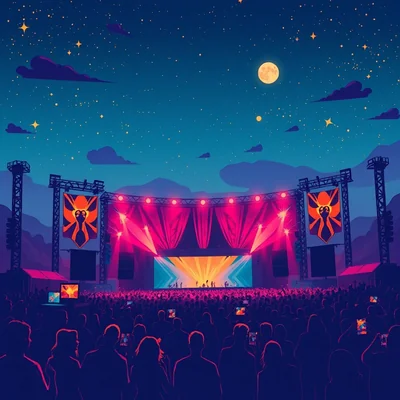
The Hampton Jazz Festival (since 1968) remains the city's signature annual cultural event — one of the oldest continuously running outdoor jazz festivals in the United States. Its multi-day format at the Hampton Coliseum draws tens of thousands of attendees from across the Mid-Atlantic and Southeast, with a booking philosophy that has always blended traditional jazz, R&B, soul, and gospel on the same bill. The festival's longevity and consistency make it a rare institution — it has survived economic downturns, changes in format, and the shifting fortunes of jazz as a commercial genre by remaining rooted in its Hampton Roads community base.
Bay Days is Hampton's annual waterfront festival — a community-focused event with live music, food, and arts on the harbor. The city also hosts Blackbeard Pirate Festival — a costumed historical event celebrating Hampton's maritime history and the pirate era of the Chesapeake — which draws a regional crowd and includes outdoor entertainment.
Hampton University Homecoming is one of the major annual events at the university, with concerts, step shows, and musical performances that draw alumni and students from across the country. HBCU homecomings in the 757 carry particular cultural weight — the Hampton University homecoming has historically featured gospel and R&B performances at the intersection of campus and city life.
What ties it all together
Hampton is a city that holds history with unusual density — the first Africans in English North America arrived here; one of America's oldest settlements is here; the research center that built the rockets for the space race is here; and the Jazz Festival that has anchored Black cultural life in Hampton Roads for over fifty years is here. Musically, Hampton's identity is inseparable from the 757 ecosystem that produced some of American music's most influential artists, and its own gospel, choral, and jazz traditions run deeper than its population would suggest. The Hampton Coliseum's status in Grateful Dead lore gives the city an unlikely but genuine claim in American rock history alongside its Black musical heritage. What holds it together is the bay — the water that made Hampton a landing point, a freedom port, and a summer concert grounds, and that still frames the city's sense of itself at the edge of the continent.