
Newport News, Virginia
Newport News sits at the tip of the Virginia Peninsula, wedged between the James River to the south and the York River watershed to the north, staring across Hampton Roads at Norfolk and Portsmouth. It is one of Virginia's independent cities — a jurisdictional quirk that makes it coextensive with no county — and its skyline is defined not by corporate towers but by the enormous gantry cranes of Newport News Shipbuilding, now a division of Huntington Ingalls Industries and the largest private-sector shipbuilder in the United States. The yard has launched aircraft carriers and nuclear submarines continuously since the late nineteenth century, and its workforce of tens of thousands has shaped the city's demographics, politics, and culture for over a century.
That industrial identity — blue-collar, Black, and deeply proud — turns out to be precisely the soil in which some of American popular music's most consequential innovations took root.
The Hampton Roads Nexus
Newport News does not exist in isolation. It is part of the sprawling Hampton Roads metropolitan area alongside Norfolk, Virginia Beach, Hampton, Portsmouth, Chesapeake, and Suffolk — seven independent cities sharing a harbor, a naval identity, and, as it turned out, an extraordinary concentration of musical talent. Understanding Newport News musically means understanding this nexus: artists moved fluidly between neighborhoods across the water, went to the same high schools (Woodside High, Menchville High, Ferguson High in Newport News; Booker T. Washington in Norfolk; Princess Anne in Virginia Beach), recorded in shared studios, and launched careers from the same regional hip-hop scene in the early 1990s.
What made Hampton Roads different from other mid-sized Southern metro areas was density: within a roughly thirty-mile radius, you had the ingredients for a self-sustaining ecosystem — military families bringing Northern and Midwestern influences, a historically Black college tradition (Hampton University sits in adjacent Hampton, Virginia), a deep gospel and church music culture in predominantly Black neighborhoods like Newsome Park and Marshall Courts, and an early hip-hop scene that came up simultaneously in Newport News, Norfolk, and Virginia Beach.
Timbaland and the Beatmaking Revolution
The most globally consequential musician to emerge from Newport News is Timbaland — born Timothy Zachary Mosley in Norfolk in 1972, but raised in Newport News, where he attended Sallye B. Booker Middle School and developed his early DJing and beatmaking skills. Timbaland's production sound — combining halting, polyrhythmic drum programming with Middle Eastern and African melodic samples, pitched-down vocals, and unexpected syncopated gaps — was so distinctive that it effectively defined a strand of late-1990s and early-2000s pop that influenced everything from R&B chart music to British dance records to Radiohead's Kid A-era experiments.
Timbaland's partnership with Missy Elliott — who grew up in Portsmouth — began in Virginia before either had a record deal. Their mutual friend Magoo (Melvin Barcliff, also from Newport News) formed a rap duo with Timbaland that released Welcome to Our World in 1997, but it was Timbaland's production work — for Aaliyah, Ginuwine, Jay-Z, Björk, Justin Timberlake, Madonna, Nelly Furtado, and dozens more — that made him a transformative figure in modern pop production. The "Virginia sound," as it came to be called informally, was really a Timbaland sound, and it had its roots in Newport News bedrooms and the halls of Sallye B. Booker and Woodside High School.
DeVante Swing and Jodeci
Before Timbaland broke nationally, another Hampton Roads figure had already cracked the R&B mainstream. DeVante Swing — born Donald DeGrate Jr. in Virginia Beach — assembled Jodeci with his brother K-Ci and two friends from Charlotte, and the group's debut Forever My Lady (1991) on Uptown Records launched a harder-edged, street-inflected New Jack Swing sound that dominated early 1990s R&B. DeVante's production aesthetic — heavy with 808 bass, minor-key menace, and aggressive sexual swagger — foreshadowed the darker direction R&B would take by mid-decade. Jodeci's Newport News and Virginia Beach connections kept them tied to the regional scene even as they became national stars, and DeVante's protégés included early Missy Elliott and Timbaland collaborations in the Da Bassment collective.
Clipse and the Neptunes' Shadow
While the Neptunes' Pharrell Williams and Chad Hugo were from Virginia Beach proper, their gravitational pull extended across the peninsula. Clipse — brothers Pusha T (Terrence Thornton) and No Malice (Gene Thornton) — grew up in Virginia Beach but spent formative time across Hampton Roads and recorded for Star Trak Entertainment, the label Pharrell founded. Clipse's Lord Willin' (2002) and Hell Hath No Fury (2006), both produced almost entirely by the Neptunes, made a strong case for the Hampton Roads region as a site of hip-hop sophistication: minimalist, ominous, lyrically dense tracks that stood apart from both East Coast boom-bap and Southern crunk. Newport News-area hip-hop fans claimed them as part of the regional fabric even though the Thornton brothers were technically Virginia Beach residents.
Local Hip-Hop and the Underground Scene
Newport News nurtured its own indigenous hip-hop scene separate from the crossover stars. Skillz (Channing La Rue Daniels), born and raised in Newport News, built a reputation as one of the sharpest battle rappers and freestylers of the 1990s, releasing From Where??? in 1996 and becoming famous for his annual "Rap Up" year-in-review tracks. Skillz's career traced the arc of many Newport News artists: regional recognition, occasional major-label flirtations, and a sustained underground profile built on craft rather than mainstream breakthrough.
The city's hip-hop scene has been sustained by a network of local studios, open mic nights, and community events rooted in neighborhoods like Newsome Park, Denbigh, and the East End. Regional labels and collectives cycle through regularly without achieving the national breakthrough that Timbaland achieved, but they sustain a scene that produces steady talent.
Gospel and Church Music Roots
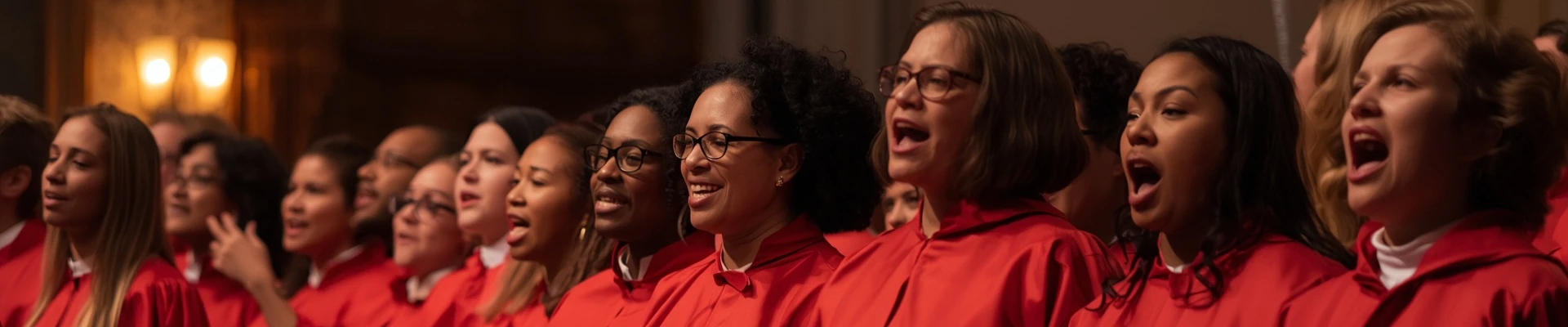
Any honest account of Newport News music must acknowledge the deep gospel tradition that underlies everything. The city's African American church community — concentrated in historic congregations across the East End and in neighborhoods adjacent to Newport News Shipbuilding — provided the vocal training, harmonic vocabulary, and performance experience that fed into R&B, soul, and hip-hop for generations. The relationship between churches like First Baptist Church of Denbigh and the secular music scene follows the classic American gospel-to-R&B pipeline: Sunday school harmonies becoming Saturday night performance, the call-and-response of the sanctuary reappearing in the groove.
Hampton University — just across the city line in Hampton — contributed a historically Black college gospel tradition that circulated through the region's choirs and inspired musicians across Newport News and the broader peninsula.
Venues and Live Music Infrastructure
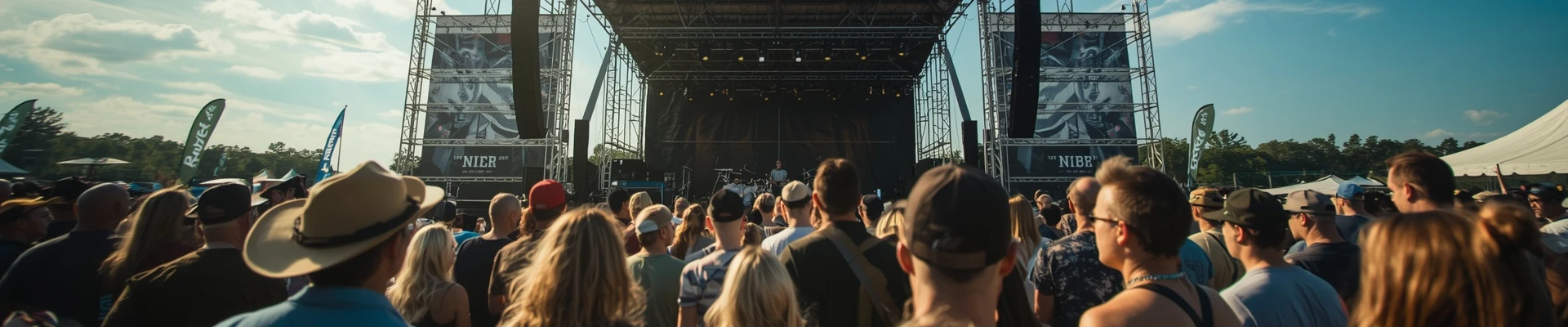
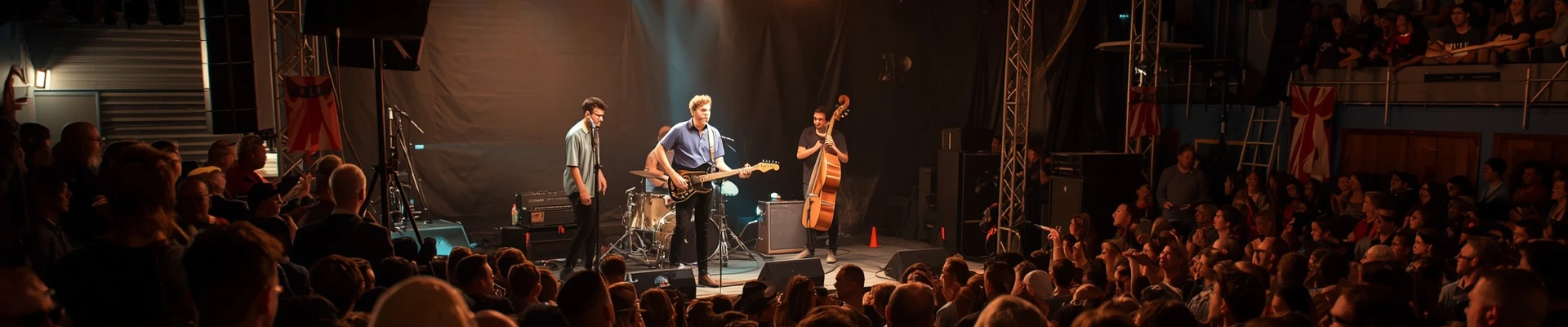
Newport News's live music infrastructure is modest relative to its population but real. The NorVa — technically located in Norfolk, a short drive through the Hampton Roads Bridge-Tunnel — functions as the de facto flagship mid-size venue for the entire region (1,500 capacity), hosting national touring acts across rock, hip-hop, and pop. Within Newport News itself, The Rotunda at CNU (Christopher Newport University) stages concerts and events, and the Ferguson Center for the Arts — also at CNU — hosts a broader performing arts calendar including nationally touring musicians.
The James River waterfront has seen development pressure with the Patrick Henry Mall and City Center at Oyster Point commercial districts drawing suburban traffic, but the city has not yet cultivated a dense venue corridor comparable to Norfolk's Granby Street or Virginia Beach's ViBe Creative District. Dive bars, church halls, and university stages handle most of the live music load.
Harbor Park (now TowneBank Park), home of the Norfolk Tides minor league baseball team across the water in Norfolk, has hosted outdoor concerts that serve the regional population. The Virginia Arts Festival operates across the metro area and brings classical, jazz, and world music programming to venues including those in Newport News.
Demographics and Musical Texture
Newport News is majority-minority, with Black residents constituting approximately 42 percent of the population and Hispanic residents a growing share, particularly in Denbigh and the northern sections of the city. This demographic reality — African American church and hip-hop traditions running alongside Latino musical influences — gives the city's music scene a texture that outsiders often miss when looking only at the crossover stars.
The shipyard workforce historically included significant migration from the Deep South and from Caribbean communities, and those migration streams brought musical influences — blues from Mississippi and Alabama, gospel variants from the Carolinas, and a general Southern Black musical inheritance that informed the vocal and harmonic sensibility of Newport News musicians for decades.
What Ties It All Together
Newport News does not have a single-genre musical identity the way Memphis has the blues or Detroit has techno. What it has is a production legacy — a particular way of approaching rhythm, texture, and space in recorded music — that traces directly to Timbaland and the Hampton Roads ecosystem that produced him. That legacy is about counterintuitive rhythmic placements, willingness to strip grooves down to near-nothing, and an ear for world music textures absorbed from Norfolk Naval Station's international personnel and the region's diverse immigrant communities. The city that builds nuclear carriers turns out to have built, alongside them, one of the most influential sonic templates in modern popular music — assembled in bedrooms, middle school hallways, and local studios rather than in New York or Los Angeles, which is precisely what makes it remarkable.