
Portsmouth is an independent city on the western bank of the Elizabeth River in Hampton Roads, Virginia, the great tidal estuary where the James, Elizabeth, and Nansemond rivers empty into Chesapeake Bay. With roughly 96,000 residents, it is the sixth-largest city in Virginia and one of the oldest continuously settled municipalities on the American East Coast. Portsmouth sits directly across the Elizabeth River from Norfolk — the two cities are connected by the Midtown Tunnel, the Downtown Tunnel, and a pedestrian/bike ferry — and together with Virginia Beach, Chesapeake, Suffolk, Hampton, and Newport News they form the Hampton Roads metro area of about 1.8 million people.
Portsmouth's economy has been shaped for more than two centuries by the Norfolk Naval Shipyard (known locally as NNSY or "the Shipyard"), which is not only the largest and oldest US naval shipyard still in operation but also, at its founding in 1767 under British colonial authority, one of the oldest dry docks in the Western Hemisphere. The Shipyard employs roughly 8,000 civilians and contractors and is the largest industrial employer in Hampton Roads. That naval and industrial identity — working-class, union-organized, military-adjacent, with a large African American workforce — has shaped the city's cultural character as persistently as any geography.
A brief history
The land along the Elizabeth River was Chesapeake Algonquian territory before English settlers established Norfolk County in 1637. The town of Portsmouth was formally established by the Virginia General Assembly in 1752, laid out across from the older town of Norfolk. The colonial-era Olde Towne neighborhood — bounded by the river, Crawford Street, Glasgow Street, and Washington Street — preserves one of the largest concentrations of 18th- and 19th-century architecture on the East Coast: Federal row houses, Greek Revival mansions, Victorian commercial blocks, and antebellum churches line its cobblestone-era streets. During the American Revolution both Norfolk and Portsmouth were burned and occupied. During the Civil War, the Confederacy seized the Shipyard — it was the origin of the ironclad CSS Virginia (the former USS Merrimack, rebuilt and armored at the Shipyard), which clashed with the USS Monitor at the Battle of Hampton Roads in March 1862 in the first engagement between ironclad warships. The Union retook Portsmouth in 1862 and held it for the remainder of the war.
The 20th century brought the Shipyard's massive expansion during both World Wars, waves of African American migration into the city's North End and Jeffry Wilson neighborhoods, and the post-WWII suburban flight that hollowed out the downtown corridor. Portsmouth's population peaked around 115,000 in 1970 and has declined gradually since, as suburban Chesapeake and Virginia Beach absorbed growth. The city has reinvested in Olde Towne as a heritage tourism and arts district since the 1990s, and the waterfront along the Elizabeth River has been redeveloped with the Harbor Center retail corridor, the Children's Museum of Virginia, and the Portside entertainment area.
Music identity
Portsmouth's most internationally consequential musical export is Missy Elliott — the rapper, singer, producer, and director who grew up in Portsmouth's Cavalier Manor neighborhood, attended Churchland High School, and went on to become one of the most innovative figures in the history of hip-hop and R&B. Elliott's experimental production aesthetic, her work with Timbaland (who grew up in Norfolk, across the river), and her string of platinum albums from Supa Dupa Fly (1997) through Miss E... So Addictive (2001) and Under Construction (2002) made her and Timbaland the defining creative axis of the Tidewater sound — the bounce-heavy, synth-warped, bass-forward production school that dominated mainstream hip-hop in the late 1990s and early 2000s. Elliott was inducted into the Rock and Roll Hall of Fame in 2023, one of the first two women inducted primarily as performers in the rap/hip-hop category. Cavalier Manor — the Portsmouth subdivision where she grew up — is now marked as a point of cultural significance to the city.
The Tidewater hip-hop connection runs deeper than Elliott alone. Timbaland (Timothy Mosley) grew up in Norfolk and met Elliott as teenagers through the DeVante Swing talent pipeline at Jodeci's Swing Mob collective. Teddy Riley, the New Jack Swing pioneer, was based in Hampton Roads for much of his career and operated Future Records studio in the area. The broader Hampton Roads hip-hop and R&B ecosystem — connecting Portsmouth, Norfolk, Virginia Beach, and Hampton — produced Clipse (Pusha T and No Malice, Virginia Beach), Pharrell Williams (Virginia Beach), Chad Hugo (of the Neptunes, Virginia Beach), D'Angelo (Richmond, but deeply connected to the Tidewater church R&B tradition), and dozens of regional artists who shaped the sound of the 1990s and 2000s.
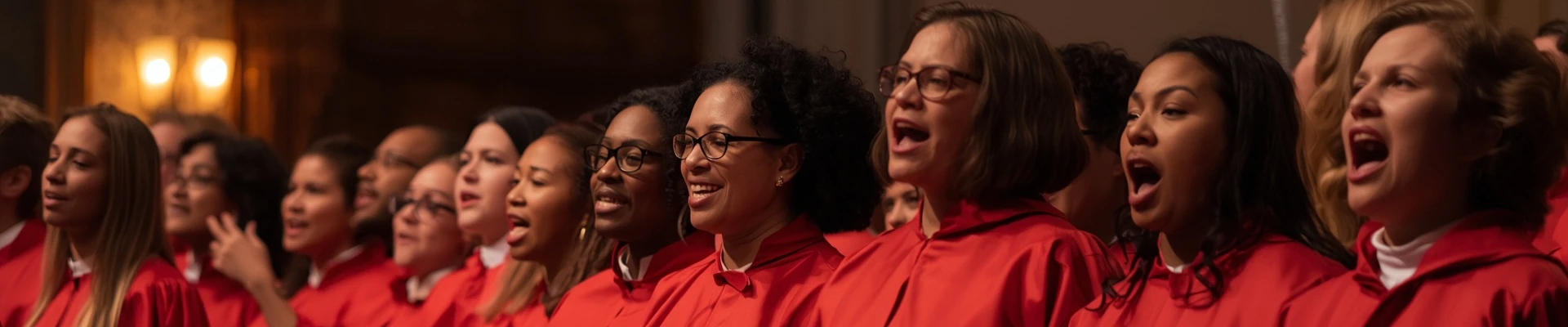
Portsmouth's Black church tradition runs through every corner of its music culture. The city's North End and Cavalier Manor neighborhoods are home to large Baptist and Pentecostal congregations with powerful choral traditions. Gospel music is the bedrock beneath the R&B and hip-hop, and the city's church choirs have fed musicians into both the secular music industry and the broader regional gospel circuit. The Portsmouth Civic Center (now the Chartway Arena — though the Civic Center is in Norfolk; Portsmouth's main performance venue is the Willett Hall) has hosted gospel concerts, traveling plays in the Black theatrical tradition, and community events.
Portsmouth also has a genuine country and bluegrass presence through its working-class white population in neighborhoods like Churchland and Cradock — the latter a planned industrial community built for Shipyard workers in the 1910s, with a distinct identity and a live-music bar culture. Cradock has historically sustained country and roots music through its neighborhood bars and community events.
The military music tradition runs through the Naval Station Norfolk Band (across the river) and various military ceremonial programs, with Portsmouth Shipyard workers historically attending Navy concerts and performances. Jazz has a continuous presence through the Tidewater Jazz Society (based in the Hampton Roads area) and the summer outdoor concert series that have run along the Portsmouth waterfront.
Venues and neighborhoods
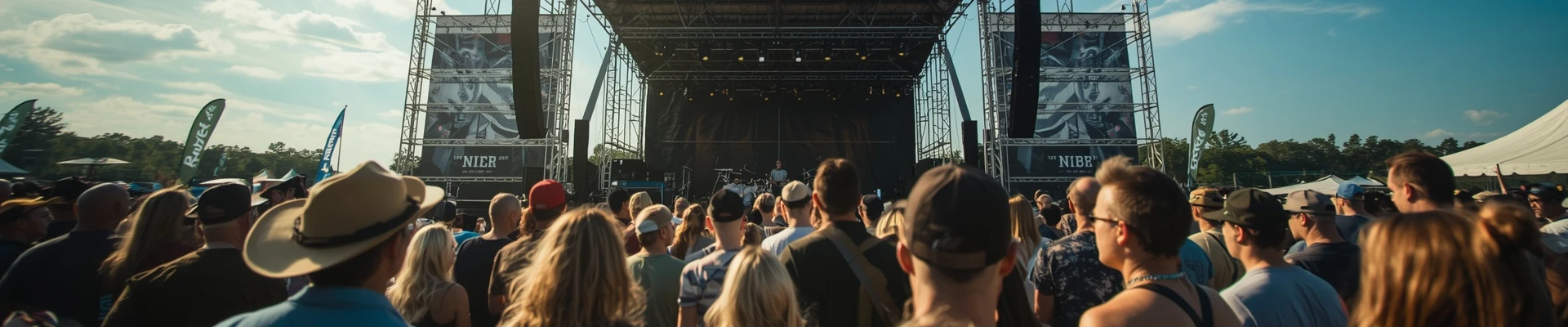
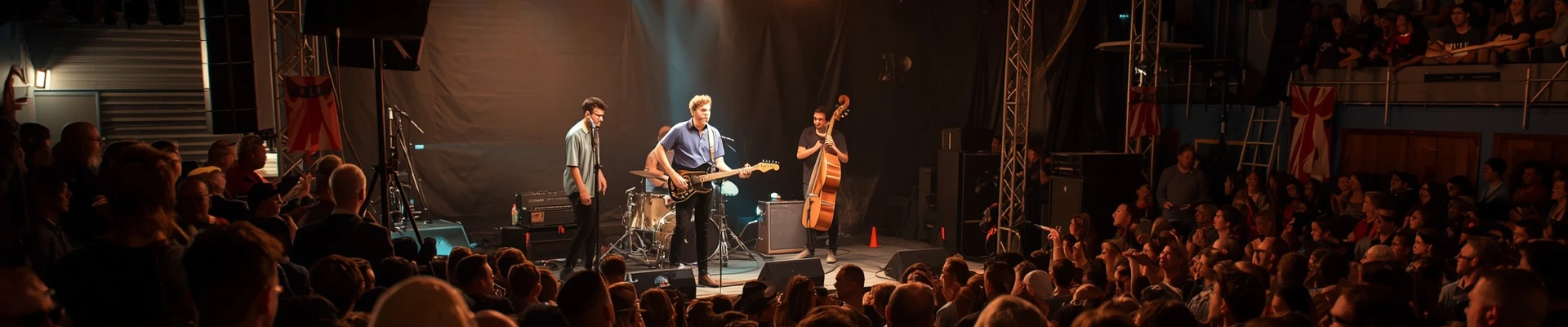
Portsmouth's venue ecosystem is modest relative to its cultural output. The main performance anchor is Willett Hall — the city-owned multi-purpose hall that hosts concerts, plays, community events, and traveling productions. The Olde Towne entertainment district along High Street and Court Street concentrates the city's bar and small live-music scene: The Bier Garden (the longstanding High Street beer bar and small-scale music venue), Gosport Tavern, The Bier Garden, and a handful of restaurants and bars that book local acoustic and rock acts. The Portsmouth Pavilion (the outdoor waterfront amphitheatre along the Elizabeth River, now called Atlantic Union Bank Pavilion — though that name attaches to the Norfolk side; Portsmouth's waterfront stage anchors summer festivals) programs outdoor concerts during the warm season.
Directly across the river, Norfolk's more robust venue infrastructure — The NorVa (mid-size rock theatre, 1,500 cap.), Chrysler Hall (2,500-seat classical and Broadway house), Chartway Arena (13,000-cap. arena), The Attucks Theatre (the historically Black performance hall in downtown Norfolk), The Granby Theater, and the broader Ghent and NEON District club scenes — functions as the region's primary concert ecosystem, easily accessible from Portsmouth via tunnel or ferry.
Cavalier Manor is the neighborhood most associated with Portsmouth's music legacy — where Missy Elliott grew up and where the Tidewater hip-hop story begins. Olde Towne is the architectural and arts-district heart. Cradock is the working-class music community with the strongest roots and country tradition. Churchland anchors the city's western suburban sprawl with its own bar and music scene.
Festivals and signature events
Portsmouth's annual calendar includes the Seawall Art Show (one of the largest outdoor juried art shows on the East Coast, held along the waterfront in Olde Towne every August, with live music stages throughout), the Olde Towne Wine Walk, Riverfest (the summer waterfront festival with live music and food vendors), and the Portsmouth Farmers Market live music series. Fourth of July celebrations along the Elizabeth River — with fireworks visible from both the Portsmouth and Norfolk waterfronts — draw tens of thousands. The Tidewater Voices Chorus and regional choral competitions round out the performing arts calendar.
Across the river in Norfolk, within easy access, the Norfolk Harborfest (the massive waterfront festival, one of the largest free festivals on the East Coast) and the Norfolk NATO Festival draw large regional attendance from Portsmouth residents.
What ties it all together
Portsmouth is a city that punches well above its weight in American music history because of the specific creative ecosystem that produced Missy Elliott — and because that ecosystem, rooted in the Black church tradition of the North End, the Tidewater hip-hop pipeline that connected Portsmouth teenagers to Norfolk's Timbaland and Virginia Beach's Pharrell, and the working-class, Navy-adjacent cultural density of Hampton Roads, was genuinely generative. The city is small enough that its waterfront and Olde Towne feel like a real neighborhood rather than a tourist district; the Shipyard defines its economic identity as completely as any single employer defines any American city; and the musical legacy of Cavalier Manor — the subdivision where one of the most important figures in the history of hip-hop learned to sing and rap and perform — gives Portsmouth a permanent claim on American music culture that no amount of suburban decline can erase. This is a city that shaped the sound of the late 1990s as surely as Atlanta or Houston, and it did it quietly, from the working-class side of the Elizabeth River.