
Spokane is the largest city in eastern Washington and the second-largest in the state overall, with approximately 229,000 residents within city limits and more than 575,000 across the greater Spokane metropolitan area. The city sits on the Spokane River where it plunges through Spokane Falls — a dramatic basalt canyon at the heart of downtown — on the eastern edge of Washington, roughly 18 miles west of the Idaho border and 280 miles east of Seattle. The surrounding region, branded as the Inland Northwest, extends into northern Idaho and encompasses Spokane Valley, Coeur d'Alene, and the agricultural eastern Washington plateau of the Palouse. Spokane is the regional hub for healthcare, retail, education, and finance across a vast rural catchment that stretches into Montana and British Columbia. Major employers include Providence Health and Services, MultiCare, Washington State University Spokane, and a cluster of Gonzaga University-anchored institutions. The university landscape — Gonzaga University, Washington State University (main campus in nearby Pullman), Eastern Washington University (in Cheney, 15 miles southwest), Whitworth University, and several others — drives an outsized music, arts, and cultural scene relative to the city's population.
A brief history
The Spokane Falls were a gathering site for the Spokane people — a Salish-speaking nation whose territory centered on the river's salmon runs — for thousands of years before Euro-American settlement. The first permanent American settlement at the falls came in 1871, and the arrival of the Northern Pacific Railway in 1881 catalyzed explosive growth. Spokane became the commercial hub for the silver and gold mining booms of the Coeur d'Alene Mountains, the agricultural wealth of the Palouse, and the timber industry of the Cascade and Rocky Mountain forests. A devastating fire in 1889 destroyed much of downtown, and the rapid rebuild produced the handsome Victorian and Craftsman commercial blocks that still define Spokane's downtown. The city hosted the 1974 World's Fair (Expo '74), which triggered a major urban renewal — transforming an industrial rail yard along the river into Riverfront Park, the green heart of the city. The park's outdoor pavilion, carousel, and amphitheatre remain central to Spokane's public event life. The decades following Expo '74 saw deindustrialization and population stagnation before a 1990s–2000s revival anchored by healthcare expansion, university growth, and downtown redevelopment.
Music identity
Spokane's most globally consequential musical contribution is Bing Crosby — the crooner whose baritone became one of the most commercially successful voices in the history of recorded music. Crosby was born in Tacoma in 1903 but raised in Spokane from infancy, attending Gonzaga Preparatory School and briefly Gonzaga University before dropping out to pursue music. His early Spokane years — singing in local church choirs, playing drums in informal bands, and absorbing the vaudeville and ragtime music of the era — formed the foundation of his career. Crosby's connection to the city is honored in the Bing Crosby Theater (the beautifully restored 1915 theater in downtown Spokane, mid-size, around 800 seats) and the Bing Crosby Research Center at Gonzaga University, which holds his personal archives, memorabilia, and recordings. Crosby remains Spokane's most famous musical son by an enormous margin, and his ghost haunts every corner of the city's musical self-image.
Beyond Crosby, Spokane's music identity is anchored in three interconnected currents: jazz, classical, and a university-driven indie and alternative rock scene that has thrived alongside the city's large student population.
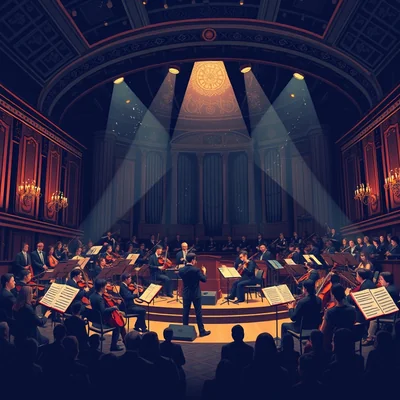
The Spokane Symphony Orchestra — founded in 1945 and based at the Martin Woldson Theater at the Fox (the stunning restored 1931 Fox Theater, now the city's premier classical venue, roughly 1,700 seats) — is considered one of the finest regional orchestras in the Pacific Northwest. The Symphony's season programming, education outreach to eastern Washington schools, and annual pops concerts at Riverfront Park make it a civic institution of genuine significance.
The Spokane Jazz Orchestra — a large ensemble performing big band and jazz standards — sustains the city's jazz tradition, and a network of jazz education programs at Gonzaga and EWU feeds a continuous stream of local players. The Spokane Club, historic downtown bars, and the Bing Crosby Theater host regular jazz programming.
The indie and alternative rock scene grew out of the university ecosystem through the 1990s and 2000s. The opening of the Knitting Factory Spokane in 2009 (a mid-size venue of roughly 1,600 capacity in the redeveloped downtown, part of the national Knitting Factory brand but locally operated) gave the city a dedicated rock-club-meets-theatre that programs national touring acts alongside local headline shows. Before the Knitting Factory, the city's rock circuit ran through venues like the Big Easy Concert House (the large downtown concert venue that dominated 1990s and 2000s Spokane rock programming) and a network of bars and clubs whose names have cycled through Spokane's entertainment districts over the decades.
The Perry District — a walkable commercial strip on Perry Street in south Spokane — has emerged since the mid-2010s as the city's arts and indie music neighborhood, with small bars, a record shop, coffee houses, and emerging venues that program local bands, folk nights, and acoustic acts. The Baby Bar (a small punk and indie DIY bar in Browne's Addition) anchors the underground and experimental music circuit. Borracho's, The Bartlett (an intimate listening room in the Browne's Addition neighborhood with serious programming of folk, Americana, singer-songwriter, and indie acts), and Zola carry the mid-tier live music scene.
Spokane's country and Americana scene reflects the city's position as hub for a vast agricultural and ranching region. The clubs and casinos of Spokane Valley and the surrounding rural communities sustain a continuous country circuit, and acts passing through eastern Washington invariably play Spokane as the regional anchor. The Northern Quest Resort and Casino in nearby Airway Heights (12 miles west of downtown) is the largest music venue in the region — with an outdoor amphitheatre of roughly 4,000 capacity and an indoor ballroom — and it programs major country, rock, and pop touring acts.
The city has a smaller but genuine hip-hop scene, rooted in the South Hill and West Central neighborhoods. Local labels and collectives program shows through downtown clubs, and the city's proximity to Seattle means touring hip-hop acts regularly route through. Spokane's Black community — roughly 3% of the population, concentrated in West Central and Hillyard — sustains gospel, R&B, and hip-hop traditions through churches and community organizations.
Native music is present through the Spokane Tribe of Indians (based on the Spokane Indian Reservation in Wellpinit, about 50 miles northwest of the city) and through Spokane's role as a regional gathering place for Native communities across eastern Washington, northern Idaho, and western Montana. The Tribe's Two Rivers Casino programs music and events, and powwows and cultural gatherings bring traditional music into the city's calendar.
Venues and neighborhoods
The venue landscape layers from arena to DIY. At the top sits the Spokane Arena (the 12,500-capacity arena that opened in 1995, home of the Spokane Chiefs WHL team, hosting major arena tours and large country and rock acts), and the Martin Woldson Theater at the Fox (the Symphony's home, the city's premier seated concert hall). The Northern Quest Resort and Casino in Airway Heights handles the larger amphitheatre circuit.
The middle tier runs through the Bing Crosby Theater (800-seat restored downtown theatre, programming jazz, folk, comedy, and mid-tier touring acts), the Knitting Factory Spokane (1,600-capacity downtown rock venue), INB Performing Arts Center (formerly the Spokane Opera House, 2,700-seat venue at the Spokane Convention Center complex, programming Broadway tours and large concerts), and the Spokane Civic Theatre (one of the oldest community theatres in Washington, programming musical theatre). The Spokane Veterans Memorial Arena (adjacent to the INB) handles medium-large concerts.
Riverfront Park — the 100-acre urban park on the Spokane River created from Expo '74 — hosts the Numerica Skate Ribbon in winter and outdoor concert series in summer. The park's Rotary Fountain Plaza and open-air spaces serve as informal concert grounds.
The Browne's Addition neighborhood — Spokane's oldest residential neighborhood, west of downtown — anchors the intimate live music scene with The Bartlett, Baby Bar, and a cluster of bars and coffee houses. Perry District on south Perry Street is the emerging arts neighborhood with record shops and small music venues. Downtown proper (along Riverside Avenue and Sprague) carries the main entertainment circuit — the Knitting Factory, Bing Crosby Theater, and a network of bars with live music.
Festivals and signature events
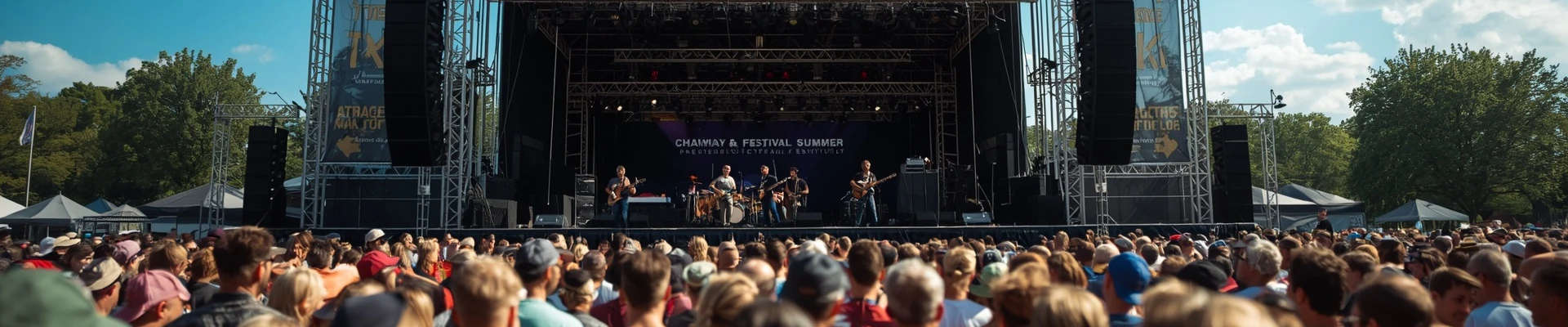
The festival calendar centers on summer and the outdoor opportunities Riverfront Park provides. Terrain (the annual multidisciplinary arts festival in downtown Spokane, programming visual art, performance, and music) is the city's flagship arts event. Pig Out in the Park (the Labor Day food festival in Riverfront Park, with continuous live music across multiple stages since 1983, drawing 200,000+) is Spokane's largest outdoor music event by attendance. The Spokane Symphony runs outdoor pops concerts through the summer. Hoopfest (the world's largest 3-on-3 basketball tournament, held downtown each June with outdoor music programming) transforms the city center into a festival. Spokane Pride programs live music as a central component. Boo at the Zoo, Valleyfest in Spokane Valley, and a network of neighborhood block parties and winery music series round out the calendar. The Sasquatch! Music Festival (held at the Gorge Amphitheatre in nearby George, WA — roughly 90 miles southwest) was the region's signature major festival until its 2018 cancellation, and Spokane served as the primary staging city for attendees.
What ties it all together
Spokane is defined by the contrast between its monumental natural setting — the roaring basalt gorge of Spokane Falls at the center of downtown, the pine forests of the Palouse just beyond the city limits — and its intimate, university-city scale. The city that formed Bing Crosby's ear in church choirs and vaudeville houses has spent the decades since nurturing a music scene that punches above its population weight: a Symphony of genuine regional stature, a jazz tradition anchored in Crosby's own archive at Gonzaga, and an indie rock and Americana circuit energized by tens of thousands of students cycling through the city's universities each year. The Knitting Factory and The Bartlett represent the two poles of Spokane's contemporary live music identity — the mid-size touring circuit and the intimate listening-room culture — and between them they cover almost everything that matters in a city where music, for generations, has meant the falls, the Fox, and the ghost of the Old Groaner.