
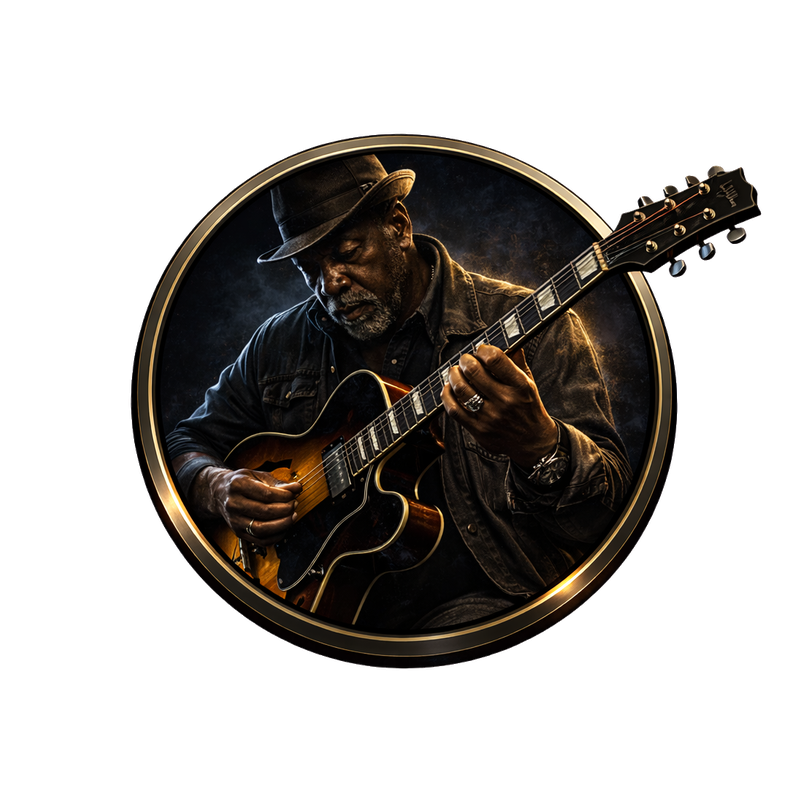

The blues emerged in the 1860s and 1870s in the rural Deep South of the United States, rooted in the work songs, field hollers, spirituals, and chants of African American communities navigating the aftermath of slavery and the hardships of sharecropping. These early musical expressions carried the weight of lived experience — sorrow, resilience, longing, and defiance — and gradually coalesced into a recognizable form built on repetitive chord patterns, bent "blue" notes, and a call-and-response vocal structure inherited from West African musical traditions.
By the early 20th century, the blues had developed distinct regional styles. The Mississippi Delta produced raw, intense performers like Robert Johnson, Son House, and Charley Patton, whose acoustic guitar work and haunting vocals became the archetype of the genre. The Piedmont style of the Southeast featured a more fingerpicked, ragtime-influenced approach. Texas blues, exemplified by Blind Lemon Jefferson and later T-Bone Walker, introduced a smoother, jazz-inflected sensibility. When the Great Migration carried millions of African Americans to northern cities, the blues electrified — literally. Muddy Waters, Howlin' Wolf, and Willie Dixon in Chicago, and B.B. King in Memphis, amplified the Delta sound with electric guitars, harmonicas, bass, and drums, creating the urban blues that would directly inspire rock and roll.
The blues' influence on subsequent genres is incalculable. Rock and roll, soul, R&B, funk, hip-hop, and country all draw from the blues' harmonic vocabulary, emotional directness, and performance ethos. The British blues revival of the 1960s, led by musicians like Eric Clapton, John Mayall, and The Rolling Stones, brought the genre to a new global audience and spurred a renewed appreciation of the original American artists. Stevie Ray Vaughan's explosive playing in the 1980s proved the genre's continued commercial viability and artistic power.
Today, the blues endures as both a living tradition and a vital influence on contemporary music. Artists like Gary Clark Jr., Christone "Kingfish" Ingram, and Fantastic Negrito carry the genre forward by honoring its roots while incorporating modern production and genre-blending sensibilities. The blues remains a reminder that some of the most powerful music in history was born from hardship, community, and the irreducible human need to transform suffering into art.